Bonding Applications in Electronics: Where Adhesives Beat Mechanical Fasteners
by
Published
Views:
Bonding applications in electronics now shape product design far beyond simple part joining. In compact devices, power modules, and battery systems, adhesives often outperform screws, clips, and rivets by saving space, distributing stress, and supporting cleaner automated assembly.
That shift matters because electronics are getting thinner, hotter, lighter, and more integrated. A fastening method is no longer just a mechanical choice. It also affects sealing, thermal behavior, vibration durability, compliance, and total production efficiency.
Within that context, bonding applications in electronics have become a practical decision area for both design review and sourcing analysis. The real question is not whether adhesives are modern, but where they deliver better performance than traditional fasteners.
Why adhesive bonding has moved to the center of electronics assembly
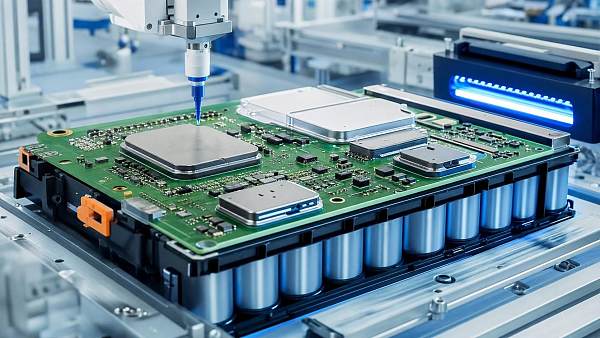
The strongest advantage of adhesive bonding is functional integration. One material can bond, seal, cushion, insulate, and sometimes transfer heat. Mechanical fasteners usually solve only the holding task and may create new design constraints.
In electronics, those constraints are costly. Holes, bosses, brackets, and threaded inserts consume valuable space. They can also introduce stress concentration, weaken thin housings, or complicate dust and moisture protection.
Advanced adhesives support dissimilar material bonding as well. Plastics, aluminum, glass, ceramics, flexible films, and coated surfaces often appear in one assembly. Bonding these combinations with mechanical fasteners alone is rarely elegant.
This is why platforms such as IADS have growing relevance. The discussion is no longer limited to chemistry. Material behavior, dispensing precision, curing conditions, line automation, and compliance all influence whether bonding applications in electronics succeed at scale.
Where adhesives clearly beat screws, clips, and rivets
Not every joint should abandon mechanical fastening. Even so, several electronics scenarios strongly favor adhesives because the performance target goes beyond pull strength.
Miniaturized consumer electronics
Smartphones, wearables, earbuds, cameras, and tablets demand thin profiles and precise alignment. Adhesives enable narrow bond lines, reduced part count, and better cosmetic design without visible hardware.
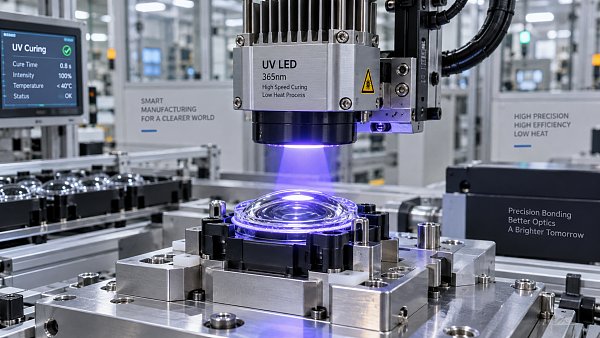
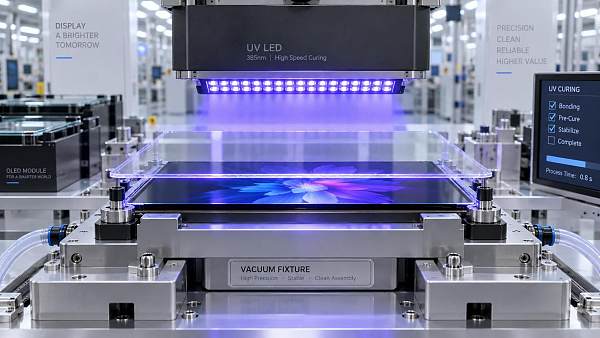
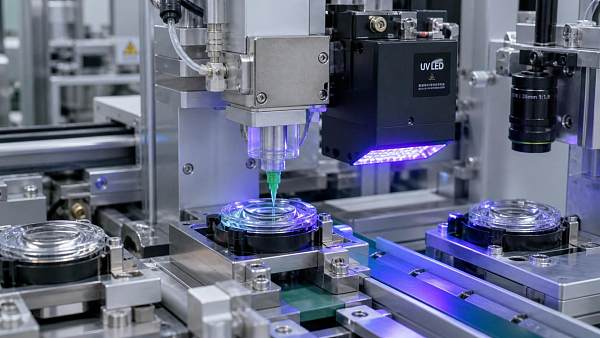
Screen bonding materials and UV-curing glues are especially valuable here. They improve optical assembly speed, support edge sealing, and help maintain alignment in high-volume production.
Printed circuit boards and component protection
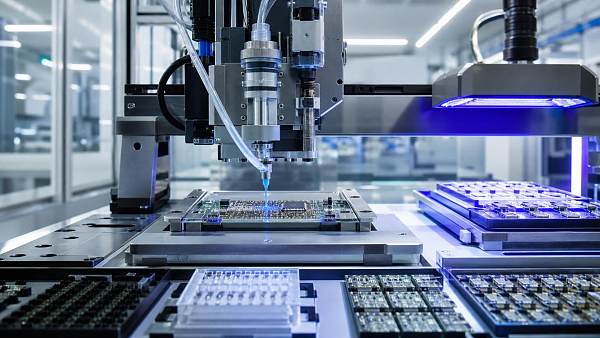
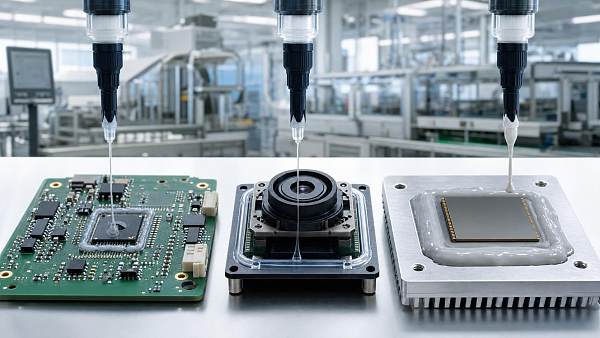
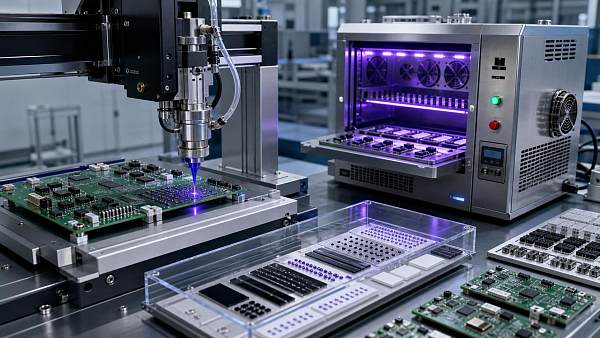
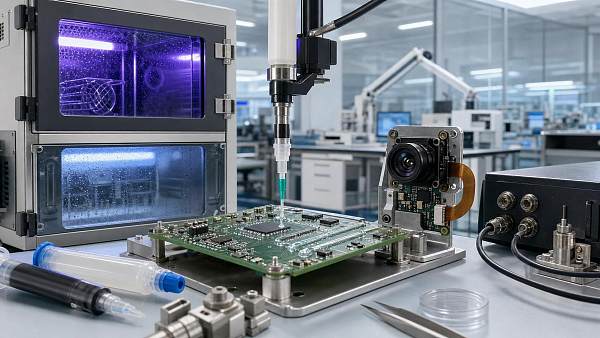
Board-level bonding applications in electronics include underfill, staking, corner bonding, and encapsulation. These materials protect fragile solder joints, reduce vibration risk, and improve resistance to thermal cycling.
A screw cannot stabilize a BGA package or manage capillary flow under a chip. Underfill materials and encapsulants are chosen because the failure mode is microscopic, not structural in the traditional sense.
EV batteries and power electronics
Battery packs, busbars, sensors, and control units face vibration, shock, heat, and strict safety demands. Potting compounds, flame-retardant encapsulants, and thermally conductive adhesives help secure components while supporting thermal management.
Mechanical fasteners may still appear in pack structure. However, they cannot replace materials designed to fill gaps, damp vibration, and manage heat transfer across sensitive electronic zones.
Sealing and lamination assemblies
Hot melt films, adhesive tapes, EVA films, and TPU films support clean lamination processes in displays, membrane structures, sensors, and flexible electronics. They reduce mess, shorten handling steps, and improve repeatability.
In these cases, bonding applications in electronics are also process decisions. A controlled film or tape can be easier to automate than multiple clips or rivets, especially in lightweight assemblies.
What changes when fastening becomes a materials decision
Adhesives create value differently from metal hardware. Instead of concentrating force at points, they spread load across a bonded area. That can reduce crack initiation, protect thin substrates, and improve long-term fatigue behavior.
They also support quieter, lighter products. Removing brackets and screws lowers weight and helps simplify part architecture. In mobile electronics and transport-related systems, that matters for both efficiency and packaging freedom.
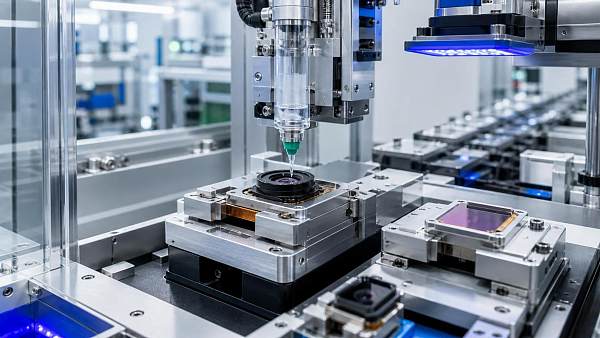
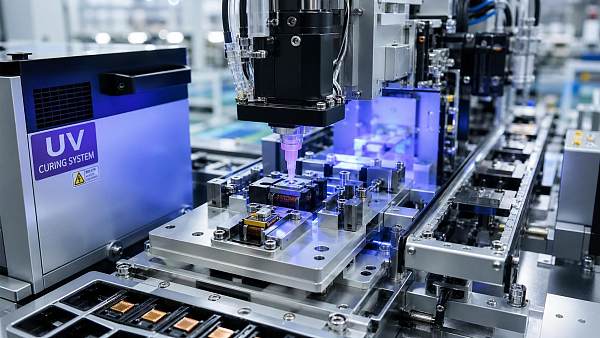
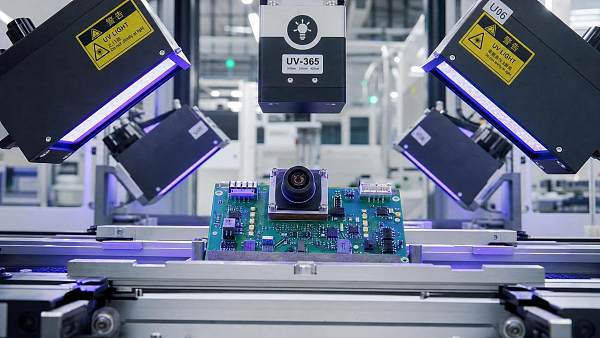
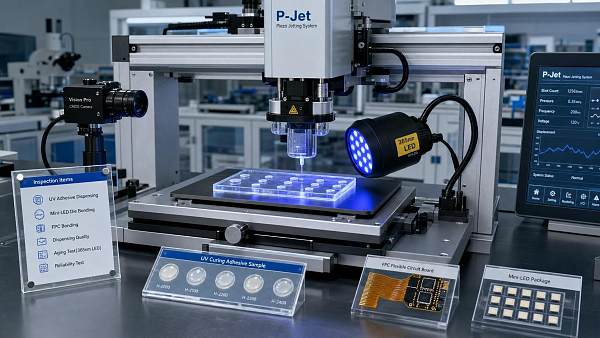
Another major shift is line speed. With the right UV system, jet valve, or automated dispensing setup, bonding applications in electronics can become highly repeatable. Microliter-level control is often more important than nominal material strength.
This is where IADS-oriented knowledge becomes useful. Material choice alone is not enough. Cure speed, static mixing, piezoelectric jetting, vision-guided placement, and fluid control stability can determine production yield.
Key selection factors before replacing mechanical fasteners
Switching from hardware to adhesive bonding should begin with the application environment, not a product catalog. The same adhesive family can behave very differently depending on substrate, gap size, cure exposure, and operating temperature.
A common mistake is to compare adhesive strength only with bolt strength. In real bonding applications in electronics, cure behavior, reworkability, outgassing, dielectric performance, and flow control may be equally decisive.
Common material routes in electronics bonding
Different chemistries solve different problems. No single option dominates every electronics assembly environment, which is why application mapping matters more than brand familiarity.
- Epoxy systems fit structural bonding, underfill, and rigid encapsulation where strength and chemical resistance are priorities.
- Silicone materials suit gap filling, thermal cycling, and flexible protection in sensitive electronics and battery-related assemblies.
- Polyurethane options balance flexibility and durability in assemblies exposed to movement, impact, or environmental sealing demands.
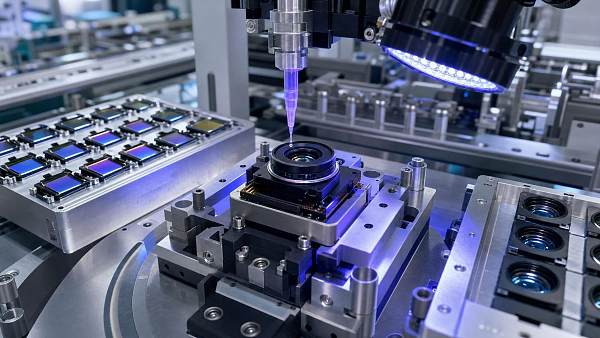
- UV-curing adhesives support rapid assembly, fine dispensing, and optical or camera module processes.
- Films and tapes work well when cleanliness, thickness control, and lamination speed are central process targets.
That variety explains why market intelligence matters. IADS connects polymer chemistry with dispensing systems, curing methods, and use-case analysis, which reflects how bonding applications in electronics are evaluated in practice.
How to read performance claims more critically
Supplier data sheets are essential, but they do not replace process context. A strong lap shear figure may look impressive, yet a real assembly could fail because of poor surface preparation, shadowed UV areas, or unstable dispense volume.
For that reason, better evaluation usually includes several questions:
- Does the adhesive bond the exact substrate finish used in production?
- Will the cure mechanism work within the actual line layout and cycle time?
- Is the material too rigid or too soft for thermal expansion differences?
- Can the dispensing system hold bead size or shot volume consistently?
- Do compliance documents match the target market and application sector?
When these questions are addressed early, bonding applications in electronics become easier to scale from pilot samples to stable mass production.
A practical next step for evaluating bonding options
A useful starting point is to separate the joint function into three layers: what must be held, what must be protected, and what must be controlled during production. That framework quickly clarifies whether adhesive bonding should replace hardware fully or work beside it.
From there, compare candidate materials by substrate fit, cure method, thermal behavior, dispensing requirements, and compliance readiness. In many cases, the best decision comes from matching the material and the process window, not from chasing the highest strength number.
As electronics designs continue to compress more function into less space, bonding applications in electronics will remain closely tied to automation, reliability, and design freedom. A more informed review of adhesive chemistry, dispense technology, and assembly conditions is usually the most effective next move.
Recommended News
 Oct 06, 2026How UV curing technology achieves fast curing without overheating partsUV curing technology fast curing: learn how wavelength matching, controlled energy, and thermal management protect sensitive parts while boosting reliable production speed.
 Sep 09, 2026How UV curing technology prevents bond-line shift in display bondingUV curing technology display bonding prevents bond-line shift with rapid green strength, controlled rheology, precise dispensing, and optimized light access. Explore proven process insights.
 Sep 08, 2026What an adhesive market intelligence report reveals about UV curing demandAdhesive market intelligence report: uncover where UV-curing demand delivers scalable value through automation, precision bonding, and process efficiency.
 Aug 17, 2026What affects yield most in the camera module bonding processCamera module bonding process yield depends most on dispensing accuracy, cleanliness, alignment, curing consistency, and stress control. Learn what really drives defects and how to improve output.
![]() Aug 15, 2026U.S. Safeguard Duty on Quartz Countertops Takes Effect August 15U.S. safeguard duty on quartz countertops takes effect August 15. See how it impacts sourcing, compliance, and supply chain planning.
Aug 15, 2026U.S. Safeguard Duty on Quartz Countertops Takes Effect August 15U.S. safeguard duty on quartz countertops takes effect August 15. See how it impacts sourcing, compliance, and supply chain planning. Jul 31, 2026How Fast Cure VCM Motor Bonding Affects Throughput and Alignment StabilityFast cure VCM motor bonding can boost throughput, but cure speed also shapes alignment stability, stress, and yield. Learn what engineers should evaluate before choosing a bonding system.
 Jul 16, 2026How to Choose Fast Curing Adhesive Bonding for Electronics Without Sacrificing ReliabilityFast curing adhesive bonding for electronics: learn how to boost assembly speed without sacrificing reliability, thermal stability, or long-term performance.
 Jul 12, 2026ECHA Adds Two SVHCs, Forcing UV Adhesive Export ReviewECHA adds two SVHCs, triggering urgent UV adhesive export review for the EU. Learn how TPO-L, Irgacure 819, SCIP filing, and customs risks may impact your shipments before October 2026.
 Jul 11, 2026UV Curing Adhesive Systems for Electronics: How to Reduce Shadow Cure RiskUV curing adhesive systems for electronics: learn how to reduce shadow cure risk with smarter material selection, cure mapping, and process control for reliable electronics assembly.
 Jul 11, 2026ECHA Adds 2 SVHCs, Raising UV Adhesive Export RisksECHA adds 2 SVHCs, raising UV adhesive export risks to the EU. Learn how REACH, SCIP, SDS updates, and the 0.1% threshold may impact compliance, suppliers, and distributors.
 Jul 10, 2026ECHA SVHC Update Puts UV Adhesive Exports Under ReviewUV adhesive exports to the EU face new scrutiny after the ECHA SVHC update. Learn how SCIP notification, supplier files, and REACH risks could impact shipments and sourcing.
 Jul 09, 2026ECHA Adds 2 SVHCs, Forcing UV Adhesive Export ReviewECHA adds 2 SVHCs, forcing UV adhesive export review for EU trade. Learn how REACH, SDS, and SCIP checks may impact customs clearance, supplier documents, and delivery plans.
 Jul 08, 2026Electronic Adhesive Materials Compared: Thermal, UV, and Bonding Trade-OffsElectronic adhesive materials compared for thermal performance, UV curing speed, and bond strength. Discover key trade-offs, process tips, and smarter selection insights.
![]() Jul 07, 2026UV Adhesive Manufacturing: Key Process Controls for Stable Cure QualityUV adhesive manufacturing relies on precise control of materials, viscosity, bond line geometry, and UV dose. Learn how to achieve stable cure quality, reduce scrap, and improve line reliability.
Jul 07, 2026UV Adhesive Manufacturing: Key Process Controls for Stable Cure QualityUV adhesive manufacturing relies on precise control of materials, viscosity, bond line geometry, and UV dose. Learn how to achieve stable cure quality, reduce scrap, and improve line reliability. Jul 06, 2026Camera Module Assembly for ADAS: Bonding Risks That Impact AlignmentCamera module assembly for ADAS depends on precise bonding control. Discover key adhesive risks that affect alignment, yield, and long-term reliability before launch.
 Jul 06, 2026UL 746E-2026 Mandates 10,000-Pulse UV Adhesive Life TestUL 746E-2026 makes the 10,000-pulse UV adhesive life test mandatory from July 1, 2026. Learn how it impacts EMS specs, UL certification, exports, and Tier-1 supplier access.
 Jul 05, 2026UL 746E-2026 Takes Effect for UV AdhesivesUL 746E-2026 takes effect for UV adhesives in North America, requiring third-party proof of curing stability after 500 hours of piezo jetting. Learn the compliance risks and business impact now.
 Jul 04, 2026UL 746E-2026 Makes UV Decay Testing MandatoryUL 746E-2026 makes UV decay testing mandatory for UV curing adhesives used with 5-Axis Dispensing Robots and Piezoelectric Jet Valves. See who is affected and how to stay compliant.
 Jul 03, 2026UV Curing Adhesive Systems for Electronics: Common Failure Modes and FixesUV curing adhesive systems for electronics often fail due to cure depth, surface contamination, and dispense variation. Discover common failure modes, practical fixes, and proven process controls.
 Jul 03, 2026UL 746E-2026 Makes Photodegradation Testing Mandatory for UV AdhesivesUL 746E-2026 now mandates photodegradation testing for UV adhesives used with Piezoelectric Jet Valves. Learn how this impacts OEM access, sourcing, and compliance.
 Jul 02, 2026UL 746E-2026 Makes UV Aging Test MandatoryUL 746E-2026 makes UV aging test mandatory for UV curing adhesives used with piezoelectric jet valves. Learn the 365 nm, 1,000-hour, 85% retention rule and what EMS, integrators, and suppliers must do before the July 31 UL listing deadline.
 Jul 01, 2026UL 746E-2026 Makes New UV Test MandatoryUL 746E-2026 makes the new UV test mandatory, raising compliance risks for UV curing adhesives in electronic module dispensing. Learn what suppliers must review now.
 Jun 30, 2026UL 746E Update Raises UV Adhesive Entry BarUL 746E update raises the UV adhesive entry bar with new 85C/85%RH and UV bond retention tests. See how certification deadlines affect electronics suppliers and Chinese exporters.
 Jun 28, 2026Choosing UV Camera Module Assembly Adhesives for Low Defect RatesUV camera module assembly adhesives: learn how to cut defects, improve optical stability, and choose formulations that support faster curing, cleaner bonding, and higher production yield.

Editor's Selection
The Archive Newsletter
Critical industrial intelligence delivered every Tuesday. Peer-reviewed summaries of the week's most impactful logistics and market shifts.