UV Curing Adhesives in 2026: Faster Cycles, New Limits
by
Published
Views:
UV curing adhesives in 2026 are moving from speed advantage to process strategy
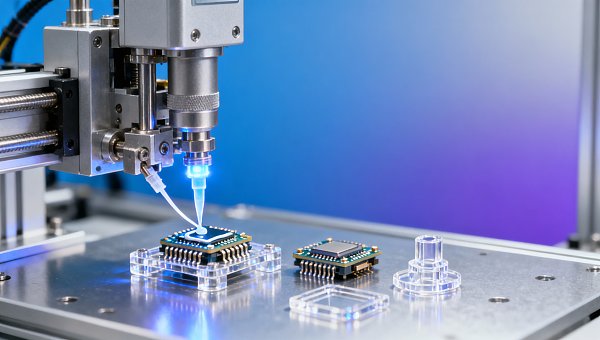
UV curing adhesives have long been valued for fast fixture times. In 2026, that speed alone is no longer the full story.
What is changing is the role they play inside industrial assembly. They are becoming a timing tool, a design enabler, and a yield variable at once.
Across electronics, EV subsystems, medical devices, optics, and compact consumer hardware, cycle compression is now tied to smaller tolerances and cleaner assembly logic.
That makes UV curing adhesives especially important in the broader shift toward screwless precision assembly and low-mass structures.
IADS has tracked this shift through the intersection of polymer cross-linking chemistry and microliter fluid control. That intersection is where 2026 becomes more demanding.
The opportunity is clear. Faster curing can cut work-in-progress, reduce clamp time, and support higher line takt. The constraint is equally clear. Process windows are narrowing.
For anyone evaluating UV curing adhesives, the key question is no longer just how fast they cure. It is how reliably they cure under real production conditions.
Why this shift is becoming more visible now
Several signals are converging at the same time. Device architectures are thinner. Assembly footprints are tighter. Thermal stress is higher. Rework tolerance is lower.
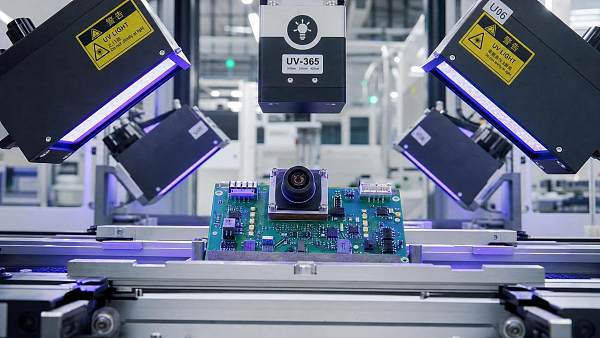
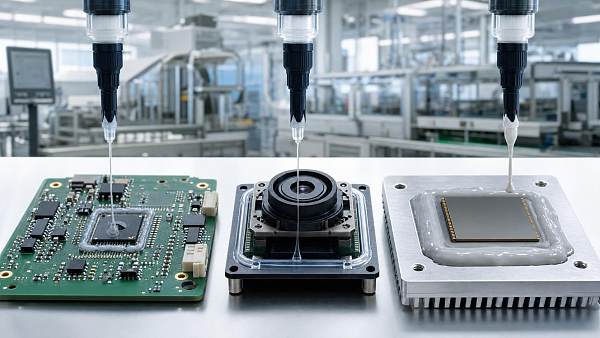
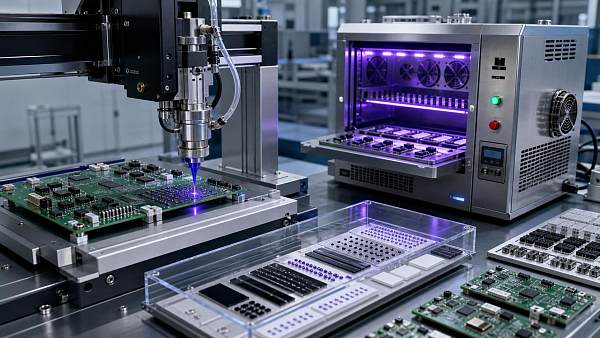
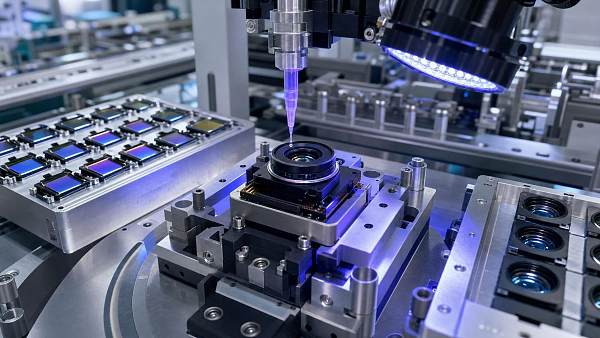
In 3C electronics, UV curing adhesives are being asked to secure camera modules, speaker parts, bezels, sensors, and flex-related components without adding thermal burden.
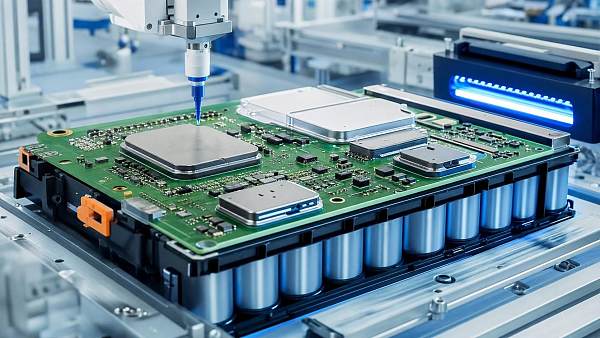
In EV-related production, they are appearing more often in sensor packaging, connector sealing, display bonding, and selective fastening around battery-adjacent electronics.
Precision manufacturing also favors UV curing adhesives because they support lower distortion than heat-dependent bonding in many miniature assemblies.
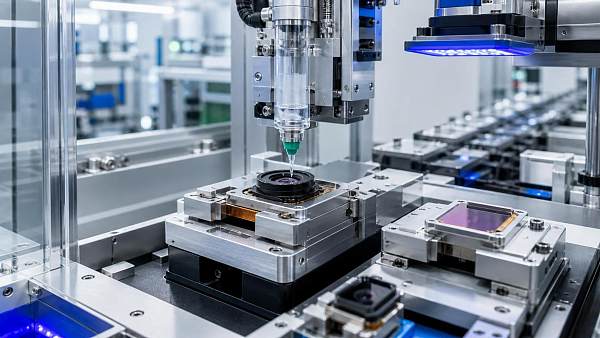
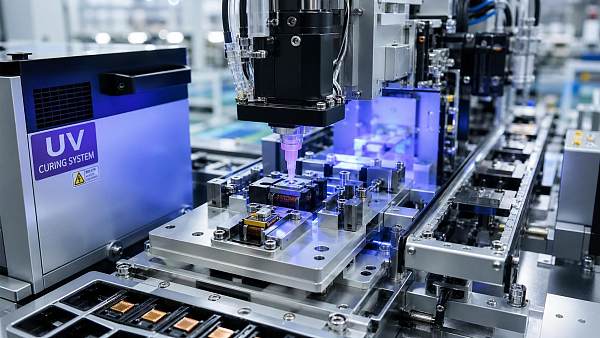
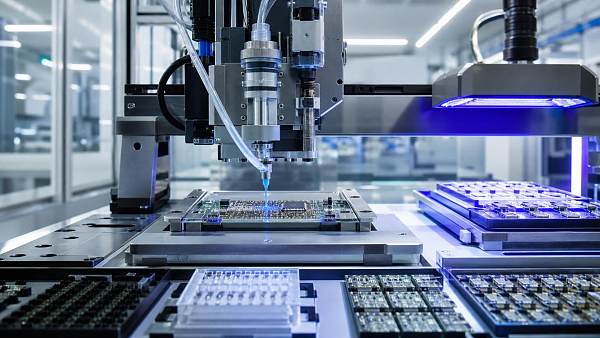
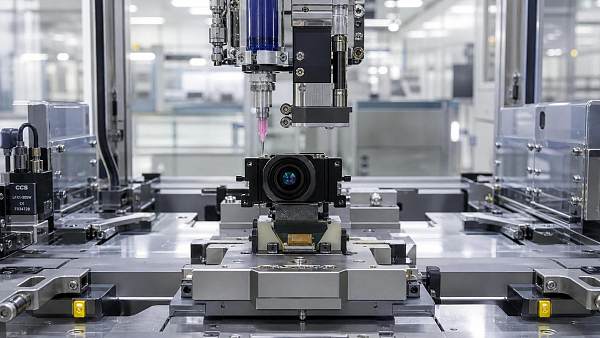
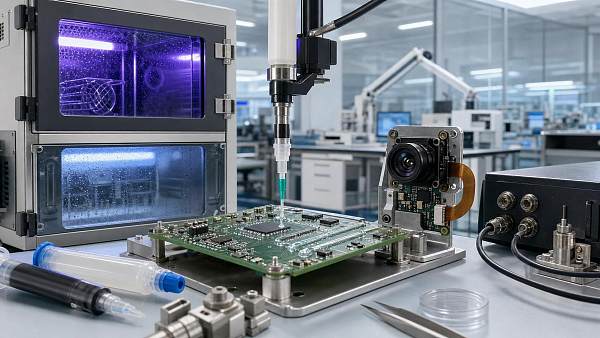
More importantly, automation has matured. High-frequency dispensing valves, vision-guided alignment, and tighter exposure control now make fast-curing materials easier to deploy at scale.
This is where the IADS perspective matters. Materials no longer act alone. Adhesive behavior, dispense pattern, light path, and compliance limits now shape the same decision.
The strongest drivers behind the 2026 push
- Shorter assembly cycles in high-mix electronics lines.
- Demand for lower-temperature bonding around sensitive parts.
- More use of transparent or semi-transparent substrates.
- Higher pressure for Zero-VOC and cleaner workshop conditions.
- Better dispensing hardware, including piezo jetting and micro-dose control.
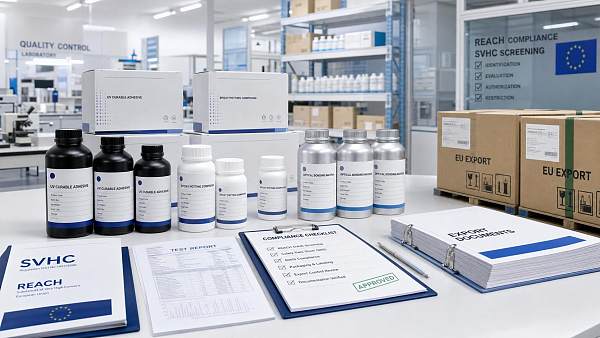
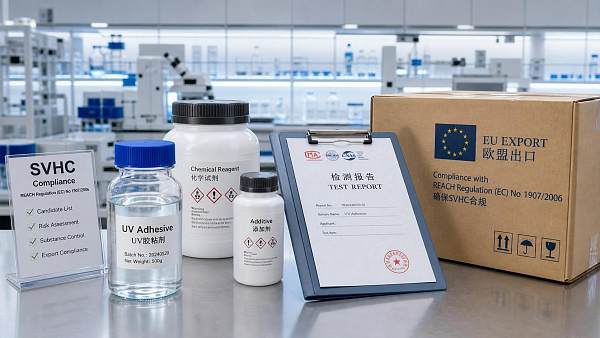
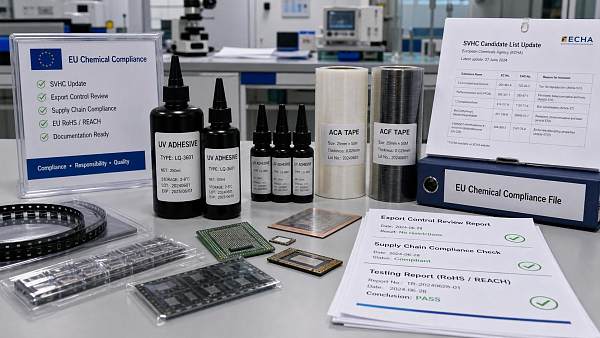
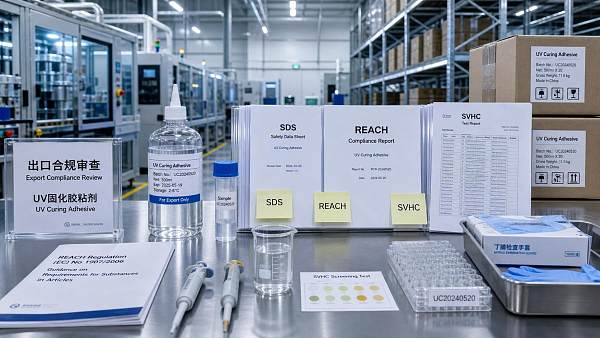
- Stricter compliance screening under REACH, RoHS, and customer-specific material lists.
Faster cycles are real, but the new limits are also real
The market narrative around UV curing adhesives often highlights one-second curing. In practice, 2026 decisions are increasingly shaped by what happens before and after that second.
Dispense consistency matters more because smaller bond lines leave less room for variation. Light access matters more because shadow zones are common in denser assemblies.
Surface energy is another limit. Faster lines expose contamination issues sooner, especially with coated metals, low-energy plastics, and fingerprint-sensitive optical parts.
Then there is shrinkage stress. A fast cure is helpful, but not if cross-linking pulls delicate components out of alignment.
This explains why some lines gain throughput after switching to UV curing adhesives, while others simply move their defects downstream.
The table reflects a wider shift. UV curing adhesives are no longer selected only by chemistry teams. They increasingly sit inside a joint material-equipment-quality discussion.
The impact is spreading beyond one production step
A useful way to read 2026 is to follow where UV curing adhesives change system behavior, not just bonding behavior.
On assembly lines, they reduce waiting time between placement and next handling. That helps takt planning and lowers fixture congestion.
On product design, they support thinner housings and fewer mechanical fasteners. That aligns with lightweighting and more integrated packaging.
On quality control, they move attention toward dose uniformity, photon delivery, shadow management, and long-term yellowing or brittleness risk.
On cost structure, they can save labor and floor time, yet they may raise demands on exposure systems, shielding, metrology, and validation.
Where the effects are showing up fastest
- Camera and sensor modules needing low-shift fixation.
- Wearables and compact electronics needing clean, low-profile bonding.
- Optical assemblies where heat distortion is unacceptable.
- Automotive displays and connectors needing controlled sealing speed.
- Medical disposables requiring precise, repeatable micro-bonding.
This broader impact also explains why UV curing adhesives often appear in the same discussion as dispensing valves, underfill behavior, and thermal management materials.
The common thread is precision. Modern assembly increasingly depends on invisible material functions delivered in microscopic volumes.
What deserves closer attention before performance claims
In actual evaluation work, the most useful questions are often not the headline ones. They are the questions that reveal failure modes early.
For UV curing adhesives, four areas stand out in 2026.
1. Cure depth and shadow tolerance
Complex geometries can block light, leaving partially cured zones. Secondary cure mechanisms or dual-cure systems are gaining attention for this reason.
2. Rheology under high-speed dispensing
A formulation that works with needle dispensing may behave differently under piezo jetting. Satellites, stringing, and dose drift can erase throughput gains.
3. Long-term reliability under mixed stress
Humidity, thermal cycling, and vibration remain critical. Fast cure should not be confused with durable cure, especially around electronics and mobile hardware.
4. Compliance and customer acceptance
Material restrictions are tightening. Halogen-free claims, extractables, and regional chemical reporting can become gating issues long after technical approval.
This is where the IADS intelligence model is useful. It reads UV curing adhesives as part chemistry, part fluid physics, part compliance pathway.
How to read the next phase without overreacting to hype
The next phase is unlikely to be defined by one dramatic material breakthrough. It will be defined by better integration.
Expect UV curing adhesives to improve through coordinated gains in oligomer design, photoinitiator efficiency, LED curing control, and AI-guided dispensing inspection.
There is also a quieter shift toward more application-specific formulations. General-purpose grades are losing ground where yield losses are expensive.
At the same time, not every assembly should move to UV curing adhesives. Opaque substrates, deep shadow zones, or severe thermal pathways may favor other chemistries.
That balanced view matters. The best 2026 decisions will come from matching material behavior to the full assembly environment, not chasing cure speed in isolation.
Practical checkpoints for the months ahead
- Map which assemblies truly benefit from sub-second handling gains.
- Compare cure robustness under different lamp ages and exposure distances.
- Test adhesive behavior with the intended dispensing method, not a lab substitute.
- Review restricted substance data before line qualification is complete.
- Track whether fixture savings are offset by validation or equipment demands.
By 2026, UV curing adhesives are not just becoming faster. They are becoming more conditional, more strategic, and more tightly linked to precision manufacturing economics.
That is the real shift worth watching. The winners will not be the lines with the fastest nominal cure. They will be the lines with the most stable cure outcome.
A sensible next step is to review current assemblies through three lenses at once: material fit, dispense physics, and compliance durability.
From there, it becomes easier to compare formulations, validate process windows, and judge whether UV curing adhesives can deliver both speed and resilience.
Recommended News
 Sep 09, 2026How UV curing technology prevents bond-line shift in display bondingUV curing technology display bonding prevents bond-line shift with rapid green strength, controlled rheology, precise dispensing, and optimized light access. Explore proven process insights.
 Sep 08, 2026What an adhesive market intelligence report reveals about UV curing demandAdhesive market intelligence report: uncover where UV-curing demand delivers scalable value through automation, precision bonding, and process efficiency.
 Aug 17, 2026What affects yield most in the camera module bonding processCamera module bonding process yield depends most on dispensing accuracy, cleanliness, alignment, curing consistency, and stress control. Learn what really drives defects and how to improve output.
![]() Aug 15, 2026U.S. Safeguard Duty on Quartz Countertops Takes Effect August 15U.S. safeguard duty on quartz countertops takes effect August 15. See how it impacts sourcing, compliance, and supply chain planning.
Aug 15, 2026U.S. Safeguard Duty on Quartz Countertops Takes Effect August 15U.S. safeguard duty on quartz countertops takes effect August 15. See how it impacts sourcing, compliance, and supply chain planning. Jul 31, 2026How Fast Cure VCM Motor Bonding Affects Throughput and Alignment StabilityFast cure VCM motor bonding can boost throughput, but cure speed also shapes alignment stability, stress, and yield. Learn what engineers should evaluate before choosing a bonding system.
 Jul 16, 2026How to Choose Fast Curing Adhesive Bonding for Electronics Without Sacrificing ReliabilityFast curing adhesive bonding for electronics: learn how to boost assembly speed without sacrificing reliability, thermal stability, or long-term performance.
 Jul 12, 2026ECHA Adds Two SVHCs, Forcing UV Adhesive Export ReviewECHA adds two SVHCs, triggering urgent UV adhesive export review for the EU. Learn how TPO-L, Irgacure 819, SCIP filing, and customs risks may impact your shipments before October 2026.
 Jul 11, 2026UV Curing Adhesive Systems for Electronics: How to Reduce Shadow Cure RiskUV curing adhesive systems for electronics: learn how to reduce shadow cure risk with smarter material selection, cure mapping, and process control for reliable electronics assembly.
 Jul 11, 2026ECHA Adds 2 SVHCs, Raising UV Adhesive Export RisksECHA adds 2 SVHCs, raising UV adhesive export risks to the EU. Learn how REACH, SCIP, SDS updates, and the 0.1% threshold may impact compliance, suppliers, and distributors.
 Jul 10, 2026ECHA SVHC Update Puts UV Adhesive Exports Under ReviewUV adhesive exports to the EU face new scrutiny after the ECHA SVHC update. Learn how SCIP notification, supplier files, and REACH risks could impact shipments and sourcing.
 Jul 09, 2026ECHA Adds 2 SVHCs, Forcing UV Adhesive Export ReviewECHA adds 2 SVHCs, forcing UV adhesive export review for EU trade. Learn how REACH, SDS, and SCIP checks may impact customs clearance, supplier documents, and delivery plans.
 Jul 08, 2026Electronic Adhesive Materials Compared: Thermal, UV, and Bonding Trade-OffsElectronic adhesive materials compared for thermal performance, UV curing speed, and bond strength. Discover key trade-offs, process tips, and smarter selection insights.
![]() Jul 07, 2026UV Adhesive Manufacturing: Key Process Controls for Stable Cure QualityUV adhesive manufacturing relies on precise control of materials, viscosity, bond line geometry, and UV dose. Learn how to achieve stable cure quality, reduce scrap, and improve line reliability.
Jul 07, 2026UV Adhesive Manufacturing: Key Process Controls for Stable Cure QualityUV adhesive manufacturing relies on precise control of materials, viscosity, bond line geometry, and UV dose. Learn how to achieve stable cure quality, reduce scrap, and improve line reliability. Jul 06, 2026Camera Module Assembly for ADAS: Bonding Risks That Impact AlignmentCamera module assembly for ADAS depends on precise bonding control. Discover key adhesive risks that affect alignment, yield, and long-term reliability before launch.
 Jul 06, 2026UL 746E-2026 Mandates 10,000-Pulse UV Adhesive Life TestUL 746E-2026 makes the 10,000-pulse UV adhesive life test mandatory from July 1, 2026. Learn how it impacts EMS specs, UL certification, exports, and Tier-1 supplier access.
 Jul 05, 2026UL 746E-2026 Takes Effect for UV AdhesivesUL 746E-2026 takes effect for UV adhesives in North America, requiring third-party proof of curing stability after 500 hours of piezo jetting. Learn the compliance risks and business impact now.
 Jul 04, 2026UL 746E-2026 Makes UV Decay Testing MandatoryUL 746E-2026 makes UV decay testing mandatory for UV curing adhesives used with 5-Axis Dispensing Robots and Piezoelectric Jet Valves. See who is affected and how to stay compliant.
 Jul 03, 2026UV Curing Adhesive Systems for Electronics: Common Failure Modes and FixesUV curing adhesive systems for electronics often fail due to cure depth, surface contamination, and dispense variation. Discover common failure modes, practical fixes, and proven process controls.
 Jul 03, 2026UL 746E-2026 Makes Photodegradation Testing Mandatory for UV AdhesivesUL 746E-2026 now mandates photodegradation testing for UV adhesives used with Piezoelectric Jet Valves. Learn how this impacts OEM access, sourcing, and compliance.
 Jul 02, 2026UL 746E-2026 Makes UV Aging Test MandatoryUL 746E-2026 makes UV aging test mandatory for UV curing adhesives used with piezoelectric jet valves. Learn the 365 nm, 1,000-hour, 85% retention rule and what EMS, integrators, and suppliers must do before the July 31 UL listing deadline.
 Jul 01, 2026UL 746E-2026 Makes New UV Test MandatoryUL 746E-2026 makes the new UV test mandatory, raising compliance risks for UV curing adhesives in electronic module dispensing. Learn what suppliers must review now.
 Jun 30, 2026UL 746E Update Raises UV Adhesive Entry BarUL 746E update raises the UV adhesive entry bar with new 85C/85%RH and UV bond retention tests. See how certification deadlines affect electronics suppliers and Chinese exporters.
 Jun 28, 2026Choosing UV Camera Module Assembly Adhesives for Low Defect RatesUV camera module assembly adhesives: learn how to cut defects, improve optical stability, and choose formulations that support faster curing, cleaner bonding, and higher production yield.
 Jun 26, 2026Bonding Applications in Electronics: Where Adhesives Beat Mechanical FastenersBonding applications in electronics help designers outperform screws and clips with stronger sealing, lighter assemblies, and better thermal reliability. Discover where adhesives win.

Editor's Selection
The Archive Newsletter
Critical industrial intelligence delivered every Tuesday. Peer-reviewed summaries of the week's most impactful logistics and market shifts.