UL 746E-2026 Makes UV Aging Test Mandatory
by
Published
Views:
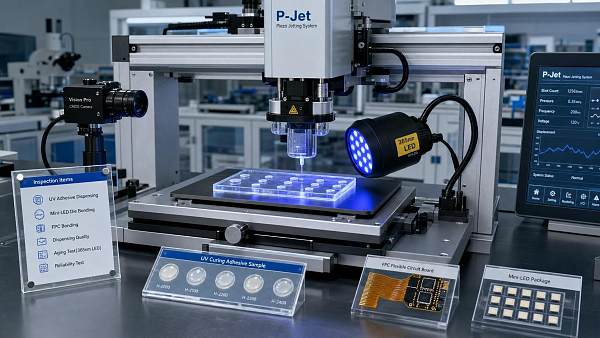
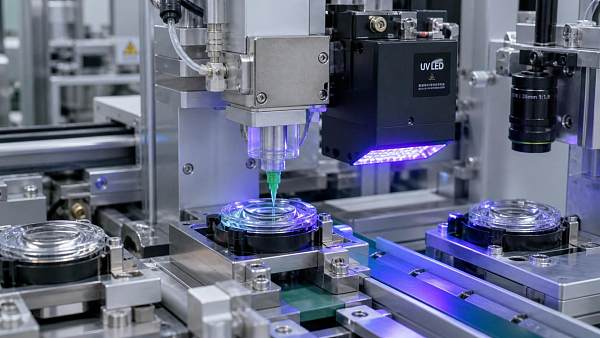
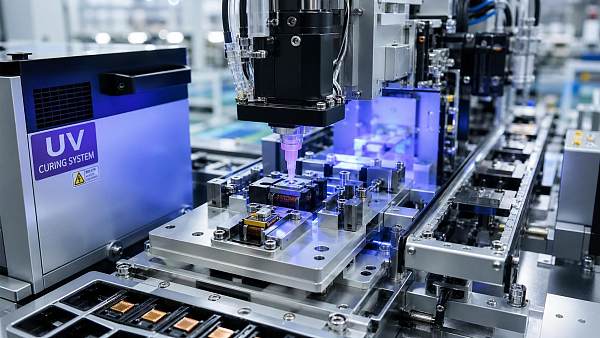
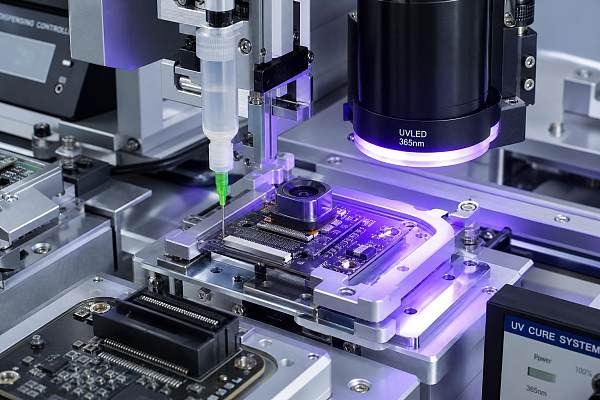
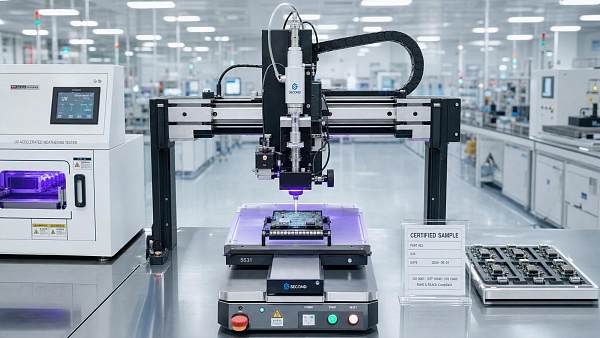
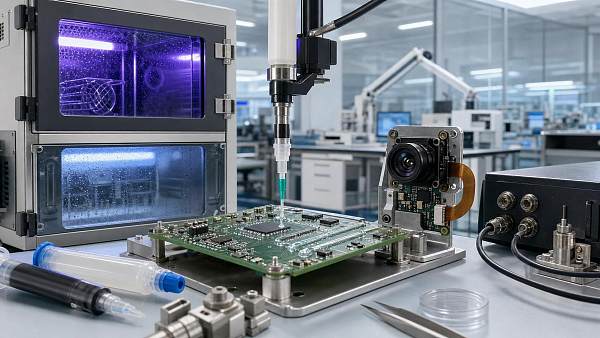
On July 1, 2026, UL began mandatory enforcement of UL 746E-2026, adding a new certification requirement for UV curing adhesives used with piezoelectric jet valves: light attenuation stability must now be verified under a 365 nm LED source for 1,000 hours, with bond strength retention of at least 85%. This matters directly to EMS factories and equipment integrators using Piezo-Jet processes in camera modules, FPC bonding, and Mini-LED packaging, while export-oriented UV curing adhesive suppliers in China face a near-term compliance deadline to complete supplemental testing and update their UL listings by July 31.
What the New Requirement Confirms
The confirmed change is straightforward: UL 746E-2026 became fully mandatory from 00:00 on July 1, 2026, and for the first time treats light attenuation stability as a compulsory certification item for UV curing adhesives matched with piezoelectric jet valves.
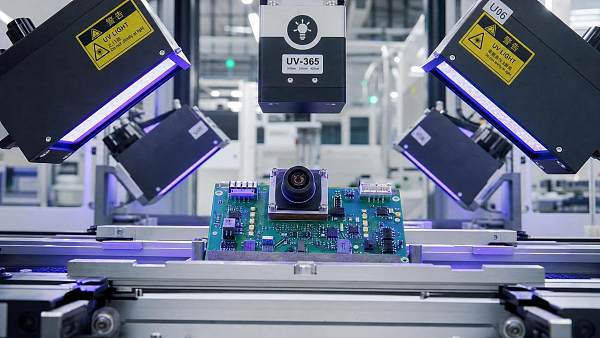
According to the provided information, the required test condition is irradiation under a 365 nm LED light source for 1,000 hours, and the adhesive must retain at least 85% of its bonding strength after that exposure.
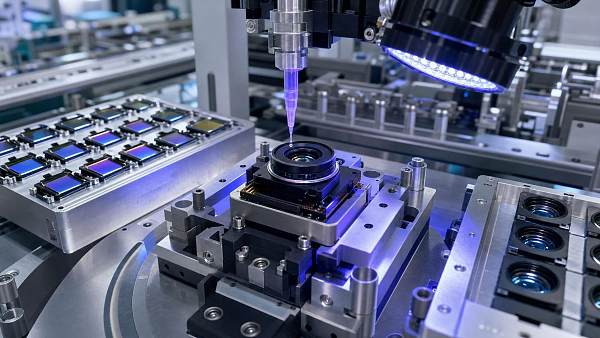
The requirement directly affects applications that use Piezo-Jet technology in camera module manufacturing, FPC bonding, and Mini-LED packaging. The provided information also confirms that Chinese manufacturers of export-oriented UV curing adhesives must complete supplemental testing and update their UL listings by July 31.
Where the Pressure Appears First in the Supply Chain
Adhesive suppliers face an immediate certification task
From an industry perspective, adhesive manufacturers are the first group under direct pressure because the rule is tied to certification status. The immediate impact is concentrated in testing, documentation, and UL listing updates rather than in general marketing or sales activity. What deserves closer attention is whether affected product lines intended for export are covered by supplemental verification within the stated timeline.
EMS plants need to check material continuity in production lines
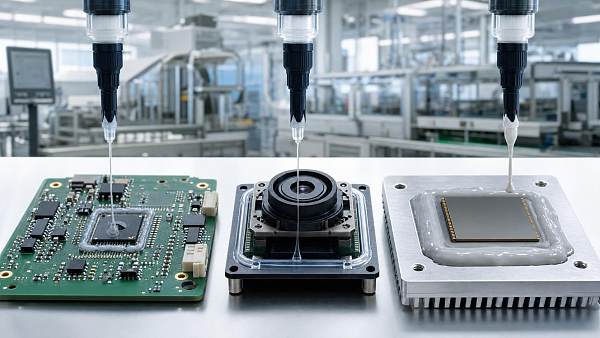
EMS factories using piezoelectric jet valves in camera modules, FPC bonding, or Mini-LED packaging may be affected at the material qualification and production continuity level. Analysis shows that even when dispensing equipment remains unchanged, the compliance status of the paired UV adhesive becomes a practical issue for approved process use, incoming material review, and customer-facing documentation.
Equipment integrators need closer alignment with material compatibility claims
For equipment integrators, the impact is likely to appear in solution delivery, application matching, and technical communication with end users. Observably, when a dispensing platform is sold or integrated around Piezo-Jet processing, the adhesive side can no longer be treated as a separate afterthought if certification expectations now include light attenuation performance under defined conditions.
Procurement and cross-border business teams may see tighter document checks
For procurement teams and export-focused commercial operations, the main issue is less about abstract standards language and more about whether listed materials, test status, and supporting documents remain current. What deserves closer attention is the handoff between supplier qualification, shipment planning, and customer compliance review.
What Companies Should Watch Now
The gap between mandatory enforcement and listing readiness
Analysis shows that July 1 marks the start of mandatory enforcement, while July 31 is the stated deadline for Chinese export-oriented UV curing adhesive suppliers to complete supplemental testing and update UL listings. For companies in active supply relationships, that gap matters operationally because the standard taking effect and the paperwork being fully refreshed are not the same thing.
Which product and process combinations are actually exposed
What deserves closer attention is not every UV adhesive in general, but the combinations specifically tied to piezoelectric jet valve applications. Companies should focus their review on materials and projects connected to camera modules, FPC bonding, and Mini-LED packaging, because those are the use cases explicitly identified in the provided information.
How customer and supplier communication is documented
Observably, one practical priority is whether suppliers can clearly communicate supplemental test completion and UL listing updates, and whether downstream users can map that information to the materials already approved in their lines. In real business terms, this affects qualification files, procurement confirmation, and delivery discussions.
Whether official wording or implementation details continue to evolve
Analysis shows that companies should separate the confirmed requirement from any broader interpretation. The confirmed facts are the standard version, the effective date, the light attenuation test condition, the affected application areas, and the July 31 update deadline for the specified supplier group. Any further implementation detail should still be checked against subsequent official wording and certification documentation.
Why This Reads as More Than a Routine Update
This article's analysis is that the change is not simply a formal revision to standard text. By making light attenuation stability a mandatory certification indicator, the rule links long-duration optical exposure performance more directly to approval status for UV adhesives used with piezoelectric jet valve processes.
It is more appropriate to understand this as both an immediate compliance event and a longer-term signal. The immediate part is clear: affected suppliers and users must deal with testing, listing, and material confirmation now. The longer-term signal is that performance under defined UV exposure conditions is being treated more explicitly in certification for this application context.
At the same time, this should not be overstated as a final industry outcome. Observably, the current information confirms a concrete compliance trigger, but the broader commercial and technical consequences still depend on how individual supply chains, customers, and approval workflows respond in practice.
How to Read the Signal at This Stage
At this stage, the most reasonable reading is that UL 746E-2026 has moved one specific performance metric from a technical consideration into a mandatory certification checkpoint for UV adhesives used with piezoelectric jet valves. That makes the development material for adhesive suppliers, equipment integrators, and EMS manufacturers with export exposure.
It is more appropriate to understand this news as a confirmed short-term compliance change with possible longer-term process implications, rather than as a fully settled shift in every downstream market. The practical value of the update lies in its effect on testing schedules, UL listing status, and supply-chain coordination over the coming weeks.
Basis of This Article
This article is based on the user-provided news title, event date, and event summary. The confirmed factual elements used here are limited to the effective date of UL 746E-2026, the newly mandatory light attenuation stability requirement, the stated test condition and threshold, the identified application scenarios, and the July 31 deadline for Chinese export-oriented UV curing adhesive manufacturers to complete supplemental testing and update UL listings.
For this type of industry update, source categories commonly worth checking include official notices, certification body materials, company announcements, industry association updates, authoritative media reporting, and standard organization documents. A specific official source link was not provided in the input, so it still requires ongoing verification. Follow-up attention should remain on any later official clarification, listing updates, and implementation wording connected to the new requirement.
Recommended News
 Oct 06, 2026How UV curing technology achieves fast curing without overheating partsUV curing technology fast curing: learn how wavelength matching, controlled energy, and thermal management protect sensitive parts while boosting reliable production speed.
 Sep 09, 2026How UV curing technology prevents bond-line shift in display bondingUV curing technology display bonding prevents bond-line shift with rapid green strength, controlled rheology, precise dispensing, and optimized light access. Explore proven process insights.
 Sep 08, 2026What an adhesive market intelligence report reveals about UV curing demandAdhesive market intelligence report: uncover where UV-curing demand delivers scalable value through automation, precision bonding, and process efficiency.
 Aug 17, 2026What affects yield most in the camera module bonding processCamera module bonding process yield depends most on dispensing accuracy, cleanliness, alignment, curing consistency, and stress control. Learn what really drives defects and how to improve output.
![]() Aug 15, 2026U.S. Safeguard Duty on Quartz Countertops Takes Effect August 15U.S. safeguard duty on quartz countertops takes effect August 15. See how it impacts sourcing, compliance, and supply chain planning.
Aug 15, 2026U.S. Safeguard Duty on Quartz Countertops Takes Effect August 15U.S. safeguard duty on quartz countertops takes effect August 15. See how it impacts sourcing, compliance, and supply chain planning. Jul 31, 2026How Fast Cure VCM Motor Bonding Affects Throughput and Alignment StabilityFast cure VCM motor bonding can boost throughput, but cure speed also shapes alignment stability, stress, and yield. Learn what engineers should evaluate before choosing a bonding system.
 Jul 16, 2026How to Choose Fast Curing Adhesive Bonding for Electronics Without Sacrificing ReliabilityFast curing adhesive bonding for electronics: learn how to boost assembly speed without sacrificing reliability, thermal stability, or long-term performance.
 Jul 12, 2026ECHA Adds Two SVHCs, Forcing UV Adhesive Export ReviewECHA adds two SVHCs, triggering urgent UV adhesive export review for the EU. Learn how TPO-L, Irgacure 819, SCIP filing, and customs risks may impact your shipments before October 2026.
 Jul 11, 2026UV Curing Adhesive Systems for Electronics: How to Reduce Shadow Cure RiskUV curing adhesive systems for electronics: learn how to reduce shadow cure risk with smarter material selection, cure mapping, and process control for reliable electronics assembly.
 Jul 11, 2026ECHA Adds 2 SVHCs, Raising UV Adhesive Export RisksECHA adds 2 SVHCs, raising UV adhesive export risks to the EU. Learn how REACH, SCIP, SDS updates, and the 0.1% threshold may impact compliance, suppliers, and distributors.
 Jul 10, 2026ECHA SVHC Update Puts UV Adhesive Exports Under ReviewUV adhesive exports to the EU face new scrutiny after the ECHA SVHC update. Learn how SCIP notification, supplier files, and REACH risks could impact shipments and sourcing.
 Jul 09, 2026ECHA Adds 2 SVHCs, Forcing UV Adhesive Export ReviewECHA adds 2 SVHCs, forcing UV adhesive export review for EU trade. Learn how REACH, SDS, and SCIP checks may impact customs clearance, supplier documents, and delivery plans.
 Jul 08, 2026Electronic Adhesive Materials Compared: Thermal, UV, and Bonding Trade-OffsElectronic adhesive materials compared for thermal performance, UV curing speed, and bond strength. Discover key trade-offs, process tips, and smarter selection insights.
![]() Jul 07, 2026UV Adhesive Manufacturing: Key Process Controls for Stable Cure QualityUV adhesive manufacturing relies on precise control of materials, viscosity, bond line geometry, and UV dose. Learn how to achieve stable cure quality, reduce scrap, and improve line reliability.
Jul 07, 2026UV Adhesive Manufacturing: Key Process Controls for Stable Cure QualityUV adhesive manufacturing relies on precise control of materials, viscosity, bond line geometry, and UV dose. Learn how to achieve stable cure quality, reduce scrap, and improve line reliability. Jul 06, 2026Camera Module Assembly for ADAS: Bonding Risks That Impact AlignmentCamera module assembly for ADAS depends on precise bonding control. Discover key adhesive risks that affect alignment, yield, and long-term reliability before launch.
 Jul 06, 2026UL 746E-2026 Mandates 10,000-Pulse UV Adhesive Life TestUL 746E-2026 makes the 10,000-pulse UV adhesive life test mandatory from July 1, 2026. Learn how it impacts EMS specs, UL certification, exports, and Tier-1 supplier access.
 Jul 05, 2026UL 746E-2026 Takes Effect for UV AdhesivesUL 746E-2026 takes effect for UV adhesives in North America, requiring third-party proof of curing stability after 500 hours of piezo jetting. Learn the compliance risks and business impact now.
 Jul 04, 2026UL 746E-2026 Makes UV Decay Testing MandatoryUL 746E-2026 makes UV decay testing mandatory for UV curing adhesives used with 5-Axis Dispensing Robots and Piezoelectric Jet Valves. See who is affected and how to stay compliant.
 Jul 03, 2026UV Curing Adhesive Systems for Electronics: Common Failure Modes and FixesUV curing adhesive systems for electronics often fail due to cure depth, surface contamination, and dispense variation. Discover common failure modes, practical fixes, and proven process controls.
 Jul 03, 2026UL 746E-2026 Makes Photodegradation Testing Mandatory for UV AdhesivesUL 746E-2026 now mandates photodegradation testing for UV adhesives used with Piezoelectric Jet Valves. Learn how this impacts OEM access, sourcing, and compliance.
 Jul 02, 2026UL 746E-2026 Makes UV Aging Test MandatoryUL 746E-2026 makes UV aging test mandatory for UV curing adhesives used with piezoelectric jet valves. Learn the 365 nm, 1,000-hour, 85% retention rule and what EMS, integrators, and suppliers must do before the July 31 UL listing deadline.
 Jul 01, 2026UL 746E-2026 Makes New UV Test MandatoryUL 746E-2026 makes the new UV test mandatory, raising compliance risks for UV curing adhesives in electronic module dispensing. Learn what suppliers must review now.
 Jun 30, 2026UL 746E Update Raises UV Adhesive Entry BarUL 746E update raises the UV adhesive entry bar with new 85C/85%RH and UV bond retention tests. See how certification deadlines affect electronics suppliers and Chinese exporters.
 Jun 28, 2026Choosing UV Camera Module Assembly Adhesives for Low Defect RatesUV camera module assembly adhesives: learn how to cut defects, improve optical stability, and choose formulations that support faster curing, cleaner bonding, and higher production yield.




Editor's Selection
The Archive Newsletter
Critical industrial intelligence delivered every Tuesday. Peer-reviewed summaries of the week's most impactful logistics and market shifts.