UL 746E-2026 Makes UV Decay Testing Mandatory
by
Published
Views:
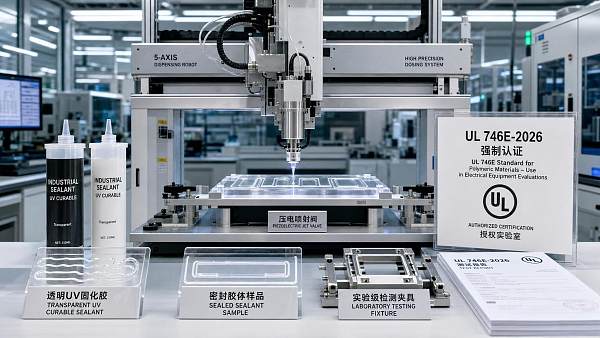
As of July 1, 2026, UL has formally made UL 746E-2026 mandatory, introducing a new certification requirement for UV curing adhesives used with 5-Axis Dispensing Robots and Piezoelectric Jet Valves. The key change is that UV adhesive performance under sustained high-frequency jet dispensing is no longer being treated only as a formulation issue, but as a certification condition tied to light-initiator decay life. For adhesive suppliers, dispensing system users, certification-related service providers, and North America-facing manufacturing programs, this matters because the rule directly affects product qualification, production-line introduction, and OEM approval pathways.
What the New UL Requirement Explicitly Covers
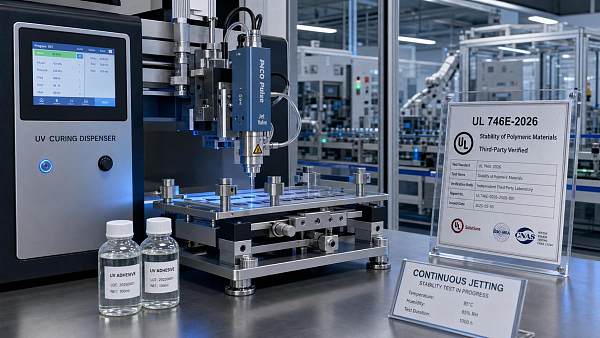
The confirmed facts are limited but clear. UL began mandatory enforcement of the revised UL 746E-2026 on July 1, 2026. Under this version, the decay life of photoinitiators in UV adhesives during continuous high-frequency dispensing through piezoelectric jet valves has been added as a compulsory certification item for the first time.
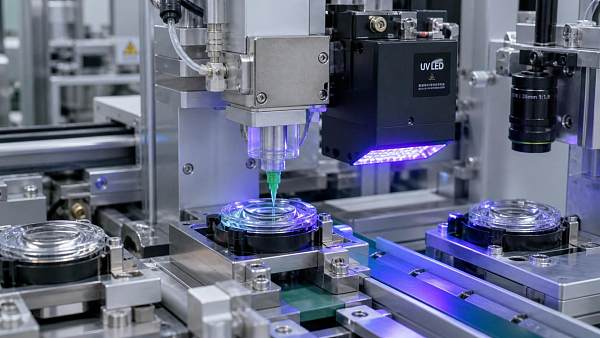
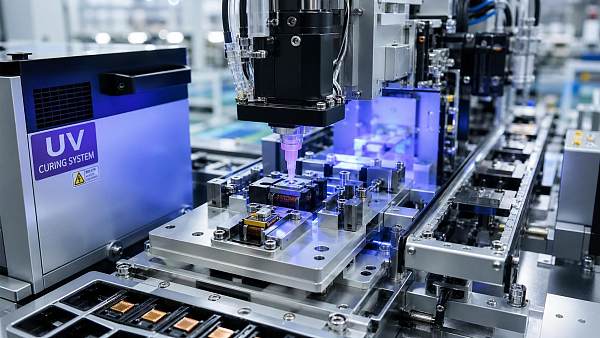
The requirement applies to UV Curing Adhesives used for 5-Axis Dispensing Robots and Piezoelectric Jet Valves. Products in scope must provide a third-party light-decay test report. The stated threshold is that, after at least 5 million dispensing cycles, the reduction in curing depth must be no more than 15%.
According to the provided event summary, products that do not meet this requirement will not be able to obtain UL recognition. The same summary states that this will affect production-line introduction at North American EMS factories and OEM certification.
Where the Pressure Will Show Up First in the Supply Chain
For adhesive suppliers, qualification files become part of market access
From an industry perspective, suppliers of UV curing adhesives are the most directly exposed to the rule change because the new test report is positioned as a required certification input rather than an optional supporting document. The immediate impact is likely to appear in product qualification files, customer submission packages, and certification readiness for materials intended for jet dispensing applications. What deserves closer attention is whether existing product portfolios already have third-party reports aligned with the new threshold, since missing documentation could interrupt customer approval even before broader commercial discussions move forward.
For EMS manufacturers and dispensing users, line-introduction risk moves upstream
Analysis shows that EMS factories and manufacturers using 5-Axis Dispensing Robots or Piezoelectric Jet Valves may feel the effect through incoming material selection and process validation. Because the event summary links non-compliant products to difficulties in North American line introduction and OEM certification, procurement, engineering, and quality teams will need to verify not only adhesive performance claims but also whether the required third-party report is available and current. In practice, the rule change may push compliance review earlier in the sourcing and line-setup process.
For OEM approval chains, certification alignment may tighten
Observably, OEM-facing programs may treat this change as a stricter documentation checkpoint. Where UV adhesives are specified for high-frequency jet dispensing, buyers and approval teams may need to align technical specifications, qualification documents, and certification evidence more closely. The main issue is not only whether the adhesive can perform in use, but whether its documented test basis matches the mandatory UL requirement now in force.
For testing and certification service participants, report readiness becomes more visible
Certification-related enterprises and testing service providers may also be affected because the new rule explicitly requires third-party light-decay testing evidence. Their role is likely to become more visible in supporting compliance documentation, report review, and timing coordination for customer submissions. Analysis shows that delivery schedules could be influenced where testing records are incomplete, outdated, or not aligned with the stated dispensing-cycle and curing-depth criteria.
What Companies Should Watch in Current Execution
Check whether in-scope products are clearly identified
It is more appropriate to understand this first as a scope-management issue. Companies should review which UV curing adhesives are being supplied, purchased, or specified for 5-Axis Dispensing Robots and Piezoelectric Jet Valves, because the event summary ties the mandatory requirement specifically to those applications. Where product use scenarios are mixed, internal classification and document control deserve attention.
Review compliance documents before shipment and approval milestones
Analysis shows that third-party light-decay test reports are now a practical checkpoint for commercial and technical workflows. Suppliers and buyers should pay closer attention to whether bid files, qualification packages, approval documents, and shipment-related technical records contain the required evidence. This is especially relevant where North American factory introduction or OEM approval is part of the delivery path.
Follow how certification language is reflected in customer requirements
The provided information confirms the mandatory rule, but it does not provide detailed implementation language for every downstream use case. For that reason, companies should continue watching how customers, certification reviewers, and procurement documents reference UL 746E-2026 in practice. What deserves closer attention is whether the requirement appears as a hard gate in technical specifications, sourcing terms, or onboarding checklists.
Factor compliance timing into procurement and delivery planning
Observably, any product lacking the required report may face delays in qualification or introduction. Even without broader implementation details, companies involved in export supply, material substitution, or new project launches should account for the possibility that compliance review will affect procurement timing, supplier approval, and delivery commitments tied to North American programs.
Why This Looks More Like an Execution Signal Than a Distant Trend
Analysis shows that this development is better read as a rule already entering execution, not as a preliminary consultation signal. The event summary gives a clear effective date and states that mandatory enforcement has begun. At the same time, it would be premature to treat all downstream consequences as settled, because the provided information does not include detailed enforcement practice, customer-specific interpretation, or market-wide implementation feedback.
From an industry perspective, the more useful takeaway is that a reliability characteristic under actual dispensing conditions has now been pulled into the certification boundary. That shifts attention from general adhesive claims to application-specific proof under repeated high-frequency jetting. The market will likely keep watching how this requirement is reflected in procurement files, certification reviews, and OEM acceptance language.
How This Update Is Best Understood Right Now
At this stage, the event is best understood as a concrete compliance change with immediate relevance for certified UV adhesives used in high-frequency piezoelectric jet dispensing scenarios. The confirmed impact is on UL recognition and, by extension, on North American EMS line introduction and OEM certification where these materials are in scope. The broader commercial effect still depends on how quickly companies align testing records, approval documents, and sourcing requirements with the new standard.
A measured reading is more appropriate than an exaggerated one: the rule change is real and operative, but the full industry response will depend on execution details, customer adoption in specifications, and follow-through across certification and procurement workflows.
Basis of This Article and What Still Needs Verification
This article is based on the user-provided news title, event date, and event summary. It has been written from those inputs only and does not add unverified background facts, company names, market figures, or external references.
For events of this type, source categories typically worth checking include official announcements, regulatory or certification body releases, standard-organization documents, industry association notices, trade or customs-related information channels, and reporting from authoritative industry media. However, a specific official source link was not provided in the input, so the exact official reference still needs to be verified on an ongoing basis.
Further observation is still needed on implementation details, certification interpretation, wording in tender and procurement documents, customer-specific approval practice, industry feedback, and the pace at which affected companies complete execution.
Recommended News
 Oct 06, 2026How UV curing technology achieves fast curing without overheating partsUV curing technology fast curing: learn how wavelength matching, controlled energy, and thermal management protect sensitive parts while boosting reliable production speed.
 Sep 09, 2026How UV curing technology prevents bond-line shift in display bondingUV curing technology display bonding prevents bond-line shift with rapid green strength, controlled rheology, precise dispensing, and optimized light access. Explore proven process insights.
 Sep 08, 2026What an adhesive market intelligence report reveals about UV curing demandAdhesive market intelligence report: uncover where UV-curing demand delivers scalable value through automation, precision bonding, and process efficiency.
 Aug 17, 2026What affects yield most in the camera module bonding processCamera module bonding process yield depends most on dispensing accuracy, cleanliness, alignment, curing consistency, and stress control. Learn what really drives defects and how to improve output.
![]() Aug 15, 2026U.S. Safeguard Duty on Quartz Countertops Takes Effect August 15U.S. safeguard duty on quartz countertops takes effect August 15. See how it impacts sourcing, compliance, and supply chain planning.
Aug 15, 2026U.S. Safeguard Duty on Quartz Countertops Takes Effect August 15U.S. safeguard duty on quartz countertops takes effect August 15. See how it impacts sourcing, compliance, and supply chain planning. Jul 31, 2026How Fast Cure VCM Motor Bonding Affects Throughput and Alignment StabilityFast cure VCM motor bonding can boost throughput, but cure speed also shapes alignment stability, stress, and yield. Learn what engineers should evaluate before choosing a bonding system.
 Jul 16, 2026How to Choose Fast Curing Adhesive Bonding for Electronics Without Sacrificing ReliabilityFast curing adhesive bonding for electronics: learn how to boost assembly speed without sacrificing reliability, thermal stability, or long-term performance.
 Jul 12, 2026ECHA Adds Two SVHCs, Forcing UV Adhesive Export ReviewECHA adds two SVHCs, triggering urgent UV adhesive export review for the EU. Learn how TPO-L, Irgacure 819, SCIP filing, and customs risks may impact your shipments before October 2026.
 Jul 11, 2026UV Curing Adhesive Systems for Electronics: How to Reduce Shadow Cure RiskUV curing adhesive systems for electronics: learn how to reduce shadow cure risk with smarter material selection, cure mapping, and process control for reliable electronics assembly.
 Jul 11, 2026ECHA Adds 2 SVHCs, Raising UV Adhesive Export RisksECHA adds 2 SVHCs, raising UV adhesive export risks to the EU. Learn how REACH, SCIP, SDS updates, and the 0.1% threshold may impact compliance, suppliers, and distributors.
 Jul 10, 2026ECHA SVHC Update Puts UV Adhesive Exports Under ReviewUV adhesive exports to the EU face new scrutiny after the ECHA SVHC update. Learn how SCIP notification, supplier files, and REACH risks could impact shipments and sourcing.
 Jul 09, 2026ECHA Adds 2 SVHCs, Forcing UV Adhesive Export ReviewECHA adds 2 SVHCs, forcing UV adhesive export review for EU trade. Learn how REACH, SDS, and SCIP checks may impact customs clearance, supplier documents, and delivery plans.
 Jul 08, 2026Electronic Adhesive Materials Compared: Thermal, UV, and Bonding Trade-OffsElectronic adhesive materials compared for thermal performance, UV curing speed, and bond strength. Discover key trade-offs, process tips, and smarter selection insights.
![]() Jul 07, 2026UV Adhesive Manufacturing: Key Process Controls for Stable Cure QualityUV adhesive manufacturing relies on precise control of materials, viscosity, bond line geometry, and UV dose. Learn how to achieve stable cure quality, reduce scrap, and improve line reliability.
Jul 07, 2026UV Adhesive Manufacturing: Key Process Controls for Stable Cure QualityUV adhesive manufacturing relies on precise control of materials, viscosity, bond line geometry, and UV dose. Learn how to achieve stable cure quality, reduce scrap, and improve line reliability. Jul 06, 2026Camera Module Assembly for ADAS: Bonding Risks That Impact AlignmentCamera module assembly for ADAS depends on precise bonding control. Discover key adhesive risks that affect alignment, yield, and long-term reliability before launch.
 Jul 06, 2026UL 746E-2026 Mandates 10,000-Pulse UV Adhesive Life TestUL 746E-2026 makes the 10,000-pulse UV adhesive life test mandatory from July 1, 2026. Learn how it impacts EMS specs, UL certification, exports, and Tier-1 supplier access.
 Jul 05, 2026UL 746E-2026 Takes Effect for UV AdhesivesUL 746E-2026 takes effect for UV adhesives in North America, requiring third-party proof of curing stability after 500 hours of piezo jetting. Learn the compliance risks and business impact now.
 Jul 04, 2026UL 746E-2026 Makes UV Decay Testing MandatoryUL 746E-2026 makes UV decay testing mandatory for UV curing adhesives used with 5-Axis Dispensing Robots and Piezoelectric Jet Valves. See who is affected and how to stay compliant.
 Jul 03, 2026UV Curing Adhesive Systems for Electronics: Common Failure Modes and FixesUV curing adhesive systems for electronics often fail due to cure depth, surface contamination, and dispense variation. Discover common failure modes, practical fixes, and proven process controls.
 Jul 03, 2026UL 746E-2026 Makes Photodegradation Testing Mandatory for UV AdhesivesUL 746E-2026 now mandates photodegradation testing for UV adhesives used with Piezoelectric Jet Valves. Learn how this impacts OEM access, sourcing, and compliance.
 Jul 02, 2026UL 746E-2026 Makes UV Aging Test MandatoryUL 746E-2026 makes UV aging test mandatory for UV curing adhesives used with piezoelectric jet valves. Learn the 365 nm, 1,000-hour, 85% retention rule and what EMS, integrators, and suppliers must do before the July 31 UL listing deadline.
 Jul 01, 2026UL 746E-2026 Makes New UV Test MandatoryUL 746E-2026 makes the new UV test mandatory, raising compliance risks for UV curing adhesives in electronic module dispensing. Learn what suppliers must review now.
 Jun 30, 2026UL 746E Update Raises UV Adhesive Entry BarUL 746E update raises the UV adhesive entry bar with new 85C/85%RH and UV bond retention tests. See how certification deadlines affect electronics suppliers and Chinese exporters.
 Jun 28, 2026Choosing UV Camera Module Assembly Adhesives for Low Defect RatesUV camera module assembly adhesives: learn how to cut defects, improve optical stability, and choose formulations that support faster curing, cleaner bonding, and higher production yield.








Editor's Selection
The Archive Newsletter
Critical industrial intelligence delivered every Tuesday. Peer-reviewed summaries of the week's most impactful logistics and market shifts.