Battery Potting Materials and Flame Safety Trade-Offs
by
Published
Views:
Choosing battery potting materials is rarely a single-parameter decision. In EV battery packs, thermal conductivity matters, but so do flame resistance, dielectric strength, cure stability, rework limits, and dispensing consistency. A material that moves heat efficiently may also change how a pack responds to ignition, smoke, or thermal runaway. That trade-off has become central to safer battery pack design.
Why flame safety now shapes material selection
Battery systems are carrying more energy in tighter spaces. Pack architectures are also becoming lighter, denser, and more integrated.
That changes the role of potting. It is no longer just a filler or gap material. It becomes part of the pack’s thermal, electrical, and fire-control strategy.
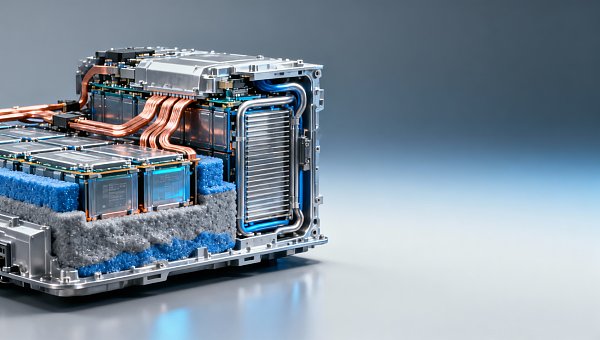
For this reason, battery potting materials now sit closer to the same decision layer as cooling plates, cell spacing, venting paths, and enclosure design.
From an industry view, this aligns with a broader shift seen across advanced adhesives and dispensing systems. Materials are expected to deliver structural, thermal, and compliance value at the same time.
What battery potting materials are expected to do
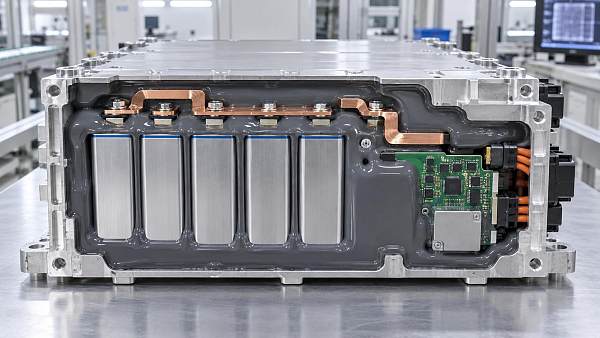
In practical terms, battery potting materials fill gaps around cells, modules, busbars, sensors, or power electronics.
They usually support several functions together:
- Heat transfer from hotspots to cooling structures
- Electrical insulation between conductive parts
- Shock and vibration damping
- Moisture and contamination protection
- Delay or suppression of flame spread
The challenge is that improving one function can reduce another. High filler loading may raise thermal conductivity, yet also affect viscosity, brittleness, and dispensing behavior.
Likewise, stronger flame-retardant packages may influence cure kinetics, density, smoke generation, or long-term reliability.
The main trade-offs behind flame-safe performance
Thermal conductivity versus fire behavior
Many battery potting materials use ceramic fillers to move heat away from cells. This helps reduce local temperature rise during charge and discharge cycles.
But thermal conductivity alone does not guarantee better flame safety. If a material transfers heat too effectively into adjacent zones, it can also support heat propagation.
The key question is not only how fast heat moves, but where it moves and under which failure scenario.
Flame retardancy versus mechanical resilience
A heavily flame-retarded formulation may pass burn tests, yet become stiffer or more fragile after aging.
In a vibrating battery pack, cracks and voids can create new risks. They may reduce dielectric protection or open unintended paths for moisture and gas.
Low viscosity versus filler settling
Process teams often want smooth flow for narrow gaps and high-throughput dispensing.
However, lower viscosity can make filler sedimentation harder to control. That leads to uneven thermal or flame performance within the same pack.
Fast cure versus internal stress
Fast curing supports takt time. Yet aggressive cure can trap bubbles, generate heat, and increase shrinkage.
In battery potting materials, those effects can reduce adhesion, weaken insulation, or create local defects that only appear after thermal cycling.
Common material families and what they imply
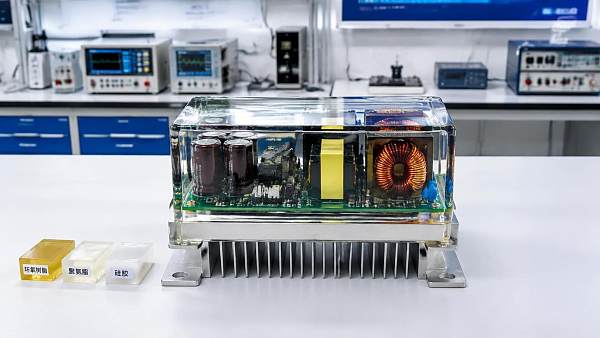
Most EV applications compare silicone, polyurethane, and epoxy systems. Each family brings a different balance.
No family is automatically safest. The real result depends on filler design, flame-retardant chemistry, cure profile, and pack geometry.
Why processing quality matters as much as formulation
A strong formulation can still fail if dispensing is unstable. In battery production, fluid control is part of safety performance.
This is where the IADS perspective is useful. Polymer chemistry and microliter-scale fluid control cannot be separated in advanced assembly.
For two-component battery potting materials, ratio accuracy, static mixing efficiency, pressure stability, and void control all affect final flame behavior.
A void near a hot cell is not just a cosmetic defect. It changes heat flow, weakens insulation, and may alter how gases move during failure.
That is why high-frequency valves, controlled metering, and process traceability deserve attention alongside UL or internal burn-test data.
What to verify beyond datasheets
Datasheets are useful, but they rarely show the full trade-off. Real validation needs multi-factor review.
- Check flame performance in the actual pack stack-up, not only coupon samples.
- Compare thermal conductivity before and after aging, moisture exposure, and vibration.
- Measure dielectric stability after repeated thermal shock.
- Observe smoke, char, dripping, and residue, not just pass or fail.
- Review dispensing window, filler settling tendency, and storage stability.
- Verify compliance needs such as REACH, RoHS, halogen policies, and OEM-specific restrictions.
In many cases, compliance limits also shape flame-retardant choices. A material can look strong technically, yet become difficult to qualify globally.
Typical decision scenarios inside EV battery programs
Selection priorities usually shift by battery architecture.
Cell-to-pack designs
These layouts often push for high thermal transfer and strict weight control. Battery potting materials must support cooling without encouraging lateral failure spread.
Module-based systems
Here, serviceability and compartmentalization may matter more. A slightly lower conductivity material may still be preferred if it improves isolation or fire containment.
Power electronics zones
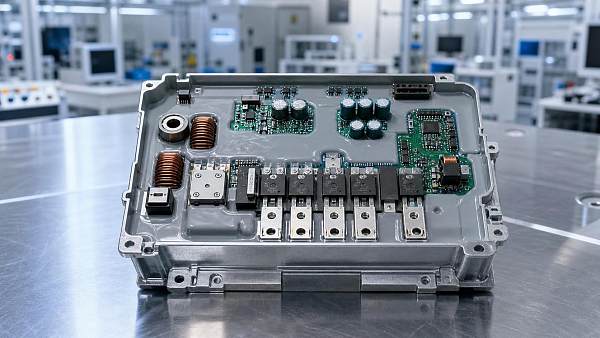
Inverters, BMS assemblies, and busbar interfaces often need finer dispensing, cleaner cure behavior, and stronger dielectric assurance than bulk cavity filling.
A practical framework for judging battery potting materials
A useful review starts with failure mode, not marketing claims.
- Define the dominant risk: overheating, arc risk, flame spread, vibration, moisture, or manufacturability.
- Map which zones need heat extraction and which zones need thermal blocking.
- Separate bulk potting needs from precision dispensing needs.
- Compare material behavior after aging, not only at day one.
- Include process capability and traceability in the approval gate.
This approach prevents a common mistake: selecting battery potting materials by one headline parameter, then discovering hidden safety or production costs later.
Where to focus next
The strongest decisions usually come from combining material data, dispensing behavior, and pack-level fire logic.
When comparing battery potting materials, it helps to build a short matrix around thermal path, flame response, insulation retention, process window, and regulatory fit.
That creates a clearer basis for lab trials, supplier discussions, and line validation. In a battery pack, flame safety is not added after material choice. It is built into the choice itself.
Recommended News
 Sep 13, 2026How flame-retardant PU potting improves battery safetyExplore how battery safety encapsulation materials, including flame-retardant PU potting, improve insulation, fault containment, vibration resistance, and battery pack reliability.
 Sep 07, 2026How to choose encapsulation materials for flame-sensitive electronicsEncapsulation materials guide for flame-sensitive electronics: compare fire safety, thermal control, insulation, adhesion, and processing to choose reliable protection.
 Aug 09, 2026ECHA Adds TBBPA Derivatives to REACH LimitsECHA Adds TBBPA Derivatives to REACH Limits: learn how the new 100 ppm rule affects EU-bound products, supply chains, and compliance planning before the February 2027 deadline.
 Aug 08, 2026ECHA Adds New SVHCs, Raising EU Compliance Bar for Potting MaterialsECHA Adds New SVHCs and raises EU compliance pressure for potting materials. Learn how the latest REACH update affects adhesives, encapsulants, and export documentation.
 Aug 07, 2026ECHA Adds TDBPT to Q3 2026 SVHC Candidate ListECHA adds TDBPT to the Q3 2026 SVHC Candidate List, impacting REACH compliance for EU-bound PU potting and silicone encapsulants. See what exporters must review now.
 Aug 06, 2026ECHA SVHC Update Triggers Review of FR Potting ExportsECHA SVHC update puts FR potting exports under urgent review. Learn how TBBPA derivatives, DBDPE, and EH-TBB may affect EU customs, SCIP updates, and market access.
 Aug 05, 2026ECHA Adds 3 SVHCs, Triggering Export ReviewECHA adds 3 SVHCs and triggers export review for EU-bound manufacturers. Learn how TCEP, decaBDE, and HBCDD affect SDS updates, notification, and supply-chain compliance before October 2026.
 Aug 04, 2026How to Choose Polyurethane Potting Compounds for Electronics in High-Heat ApplicationsPolyurethane potting compounds for electronics in high-heat applications: learn how to compare thermal stability, adhesion, moisture resistance, and process fit for longer-lasting performance.
 Aug 04, 2026ECHA Adds 3 SVHCs, Prompting Export ReviewECHA adds 3 SVHCs, triggering export review for EU-bound flame-retardant PU potting and silicone encapsulants. Check SCIP, REACH, SDS and CoC risks before November 2026.
 Aug 03, 2026How to Evaluate Thermal Runaway Protection for Battery ModulesThermal runaway protection for battery modules starts with mapping failure paths, heat, gas, and insulation risks. Learn how to compare materials and designs for safer, scalable modules.
 Aug 03, 2026ECHA Adds 3 SVHC Entries, Forcing Immediate Review of Brominated Flame-Retardant Potting and Encapsulation ExportsECHA adds 3 SVHC entries, forcing urgent REACH and SCIP review for brominated flame-retardant potting and encapsulation exports. See key risks, deadlines, and supplier checks.
 Aug 02, 2026ECHA Adds 3 SVHCs, Triggering Export ReviewECHA adds 3 SVHCs, triggering urgent export review for EU-bound materials. Learn how SCIP, 0.1% thresholds, and buyer declarations impact compliance now.
 Aug 01, 2026ECHA Adds 3 SVHCs, Prompting Review of FR Potting ExportsECHA adds 3 SVHCs to the Candidate List, raising urgent SCIP and compliance checks for flame-retardant PU potting and silicone encapsulant exports to the EU. See key risks now.
 Jul 31, 2026ECHA Adds 3 SVHCs, Prompting Export Compliance ReviewECHA adds 3 SVHCs, triggering urgent export compliance review for EU shipments. Learn REACH, SCIP, and supplier declaration risks before the October 31, 2026 deadline.
 Jul 30, 2026ECHA Adds DBDPE and BTBPE to SVHC ListECHA Adds DBDPE and BTBPE to SVHC List, raising urgent REACH and SCIP compliance questions for EU exporters. Learn the supply-chain risks, documentation impacts, and practical next steps.
 Jul 29, 2026ECHA Adds DBDPE and BTBPE to SVHC ListECHA Adds DBDPE and BTBPE to SVHC List: learn how this REACH update affects EU exports, SDS updates, supplier declarations, and delivery timelines for affected materials.
 Jul 28, 2026ECHA Adds DBDPE and BTBPE to SVHC ListECHA Adds DBDPE and BTBPE to SVHC List—learn how this REACH update impacts EU exports, SDS updates, SVHC declarations, and compliance for PU potting materials and silicone encapsulants.
 Jul 27, 2026ECHA Adds DBDPE and BTBPE to SVHC ListECHA Adds DBDPE and BTBPE to SVHC List: learn how the new REACH update impacts EU exports, CE marking, and compliance for adhesives, potting compounds, and electronic materials.
 Jul 20, 2026How to Evaluate a Battery Potting Compounds Supplier for Thermal and Fire SafetyBattery potting compounds supplier selection affects thermal control and fire safety. Learn how to compare test data, process stability, compliance, and support before qualifying.
 Jul 10, 2026Battery Safety Encapsulation for EV Packs: Fire Risk vs WeightBattery safety encapsulation for EV packs: compare fire containment, thermal control, process fit, and weight trade-offs to choose safer, lighter EV battery designs.
 Jul 08, 2026How to Choose Battery Pack Potting Materials for Heat and Fire RiskBattery pack potting materials guide: learn how to balance thermal control, flame resistance, insulation, processability, and cost for safer battery pack design.
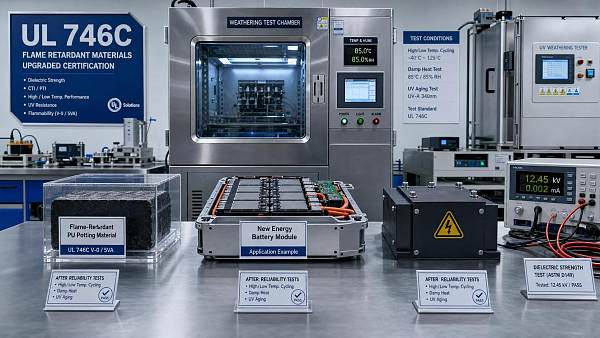
 Jul 08, 2026UL 746C Update Raises Bar for Flame-Retardant PU PottingUL 746C update raises the bar for flame-retardant PU potting with new aging and UV tests. Learn how it impacts UL certification, costs, lead times, and 2027 compliance planning.
 Jul 05, 2026Flame Retardant Potting and Sealing Solutions for Safer Power ElectronicsFlame retardant potting and sealing solutions for safer power electronics: compare epoxy, silicone, and polyurethane options to improve fire safety, reliability, and production performance.
 Jul 05, 2026ECHA SVHC Update Pressures EU-Bound PU Potting ComplianceECHA SVHC update raises new REACH risks for EU-bound Flame-retardant PU Potting. Learn how halogen-containing PU potting suppliers can protect compliance, customs clearance, and buyer approval.




Editor's Selection
The Archive Newsletter
Critical industrial intelligence delivered every Tuesday. Peer-reviewed summaries of the week's most impactful logistics and market shifts.