How to Evaluate a Battery Safety Encapsulation Supplier
by
Published
Views:
How to Evaluate a Battery Safety Encapsulation Supplier
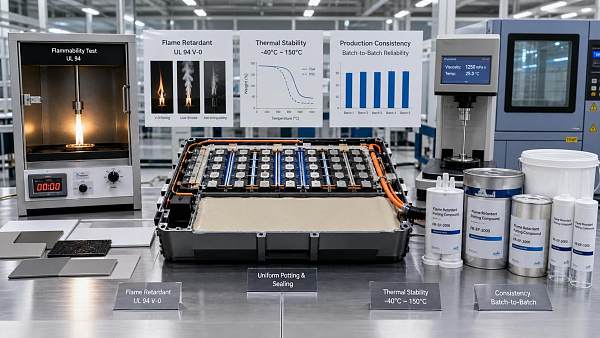
Choosing the right battery safety encapsulation supplier affects product safety, audit readiness, and field reliability.
That is especially true in EV packs, energy storage modules, and sensitive electronics.
A weak material or unstable process can trigger rework, certification delays, or serious thermal events.
So a battery safety encapsulation supplier should be judged by more than price and lead time.
You need evidence on flame retardancy, thermal stability, flow control, batch consistency, and production support.
In practice, the best supplier is the one that reduces both process risk and safety uncertainty.
This guide breaks down how to compare a battery safety encapsulation supplier with a practical decision framework.
Start with the Safety Function, Not the Product Name
Many buyers begin with chemistry names like silicone, epoxy, or polyurethane.
That helps, but it is not the right first filter.
First define the safety function the encapsulant must perform inside the battery system.
Some projects need flame resistance and cell-to-cell barrier performance.
Others need vibration damping, dielectric insulation, heat transfer, or moisture protection.
A qualified battery safety encapsulation supplier should ask about failure modes before recommending a grade.
That is usually an early signal of technical maturity.
- Define whether the material protects cells, busbars, BMS areas, or module edges.
- Set clear targets for thermal conductivity, UL performance, and dielectric strength.
- Confirm whether the process is potting, gap filling, dam-and-fill, or selective encapsulation.
Without this step, supplier comparison becomes vague and easily distorted by brochures.
Check Material Performance Under Real Battery Conditions
A battery safety encapsulation supplier should provide data beyond standard room-temperature values.
Battery environments create combined stress, not isolated laboratory conditions.
Look for performance data after thermal cycling, humidity aging, vibration, and chemical exposure.
More importantly, ask how those tests match your pack design and service environment.
Key properties worth verifying
- Flame retardancy level and test basis, such as UL 94 or internal pack standards.
- Thermal conductivity across the usable temperature range.
- Volume resistivity, dielectric strength, and insulation stability after aging.
- Shrinkage, crack resistance, and adhesion after repeated heat exposure.
- Outgassing behavior near sensitive electronics and sealed battery compartments.
A credible battery safety encapsulation supplier will explain tradeoffs openly.
For example, higher filler loading may improve heat transfer but reduce flow and dispensability.
That matters because a good formula can still fail in production if it traps voids.
Review Process Stability and Dispensing Compatibility
A battery safety encapsulation supplier is also a process partner.
Material performance on paper means little if the material behaves badly on the line.
This is where quality and safety teams often uncover hidden risk.
Ask the supplier how the encapsulant runs with your pumping, mixing, and dispensing setup.
Check whether the supplier has real experience with automated fluid control systems.
Questions that reveal process strength
- What viscosity drift appears during a normal production shift?
- How sensitive is the material to mix ratio deviation?
- What pot life, gel time, and cure window should operators expect?
- Can the material be vacuum processed to reduce voids?
- What cleaning method and maintenance interval are recommended?
From a risk standpoint, repeatability matters more than one impressive sample trial.
A reliable battery safety encapsulation supplier should support process capability studies and trial documentation.
That includes batch records, cure profiles, dispensing parameters, and defect analysis.
Validate Certification, Compliance, and Traceability
Safety evaluation is incomplete without compliance review.
A battery safety encapsulation supplier should provide documentation that is current, complete, and traceable.
Missing paperwork often becomes a bigger project delay than material testing.
This is even more important for exported battery products and multi-site manufacturing programs.
Core documents to request
- TDS with clear test methods and property ranges.
- SDS aligned with the destination market.
- RoHS, REACH, halogen-free, or other required declarations.
- UL or third-party fire performance reports where applicable.
- Lot traceability rules and change-notification procedures.
Also ask how often formulations, fillers, or raw material sources change.
A disciplined battery safety encapsulation supplier has a formal PCN or ECN process.
That process should define retest triggers, approval timing, and stock transition controls.
Assess Manufacturing Control and Supply Reliability
A battery safety encapsulation supplier may have strong lab results but weak delivery discipline.
That gap becomes visible during scale-up.
For safety-critical materials, procurement and quality review should stay tightly linked.
The question is not only whether the supplier can produce.
The real question is whether the supplier can produce consistently at the volume you need.
Operational checkpoints
- Production capacity by month and surge capacity during demand peaks.
- Raw material sourcing strategy for critical fillers and flame-retardant packages.
- Incoming inspection and in-process quality control methods.
- Retention samples, lot release criteria, and viscosity control windows.
- Shelf-life management and cold-chain or storage rules if required.
A capable battery safety encapsulation supplier should also discuss risk mitigation for shortages.
Dual sourcing of key raw materials is one useful indicator.
So is the ability to reserve safety stock for validated customer programs.
Compare Technical Support After Approval
Supplier evaluation should not end at first article approval.
Battery programs change, and the material partner must keep up.
A strong battery safety encapsulation supplier supports root-cause work, line tuning, and reliability updates.
This becomes critical when new cell formats or housing materials are introduced.
Look for support that includes
- On-site or remote troubleshooting during pilot and mass production.
- Failure analysis support for voids, delamination, cracking, or cure issues.
- Updated recommendations when equipment or cycle time changes.
- Clear escalation paths for urgent safety or quality incidents.
In actual sourcing decisions, response speed often separates average vendors from dependable ones.
A battery safety encapsulation supplier that answers slowly during trials may struggle during incidents.
Use a Practical Scorecard Before Final Selection
A scorecard keeps evaluation disciplined and easier to defend internally.
It also prevents one attractive sample result from overruling broader risk signals.
When comparing more than one battery safety encapsulation supplier, weight the factors by business impact.
This kind of framework makes supplier selection more objective and easier to audit later.
It also helps explain why the lowest quote may not be the lowest-risk option.
Final Decision: Choose the Supplier That Reduces Risk Over Time
The best battery safety encapsulation supplier is rarely just a material vendor.
It is a technical partner that supports safety targets, stable output, and compliance continuity.
Shortlist suppliers that understand battery hazards, process realities, and documentation pressure.
Then validate them with real data, line trials, and structured scoring.
That approach gives you a more reliable basis for selecting a battery safety encapsulation supplier.
More importantly, it lowers the chance of hidden safety, quality, and supply failures after launch.
Build your evaluation around risk reduction, not just purchase convenience, and the final decision becomes much clearer.
Recommended News
 Sep 16, 2026How to assess a battery safety encapsulation supplier’s fire performanceBattery safety encapsulation supplier evaluation guide: compare fire ratings, smoke, dielectric retention, curing controls, and proof-based support.
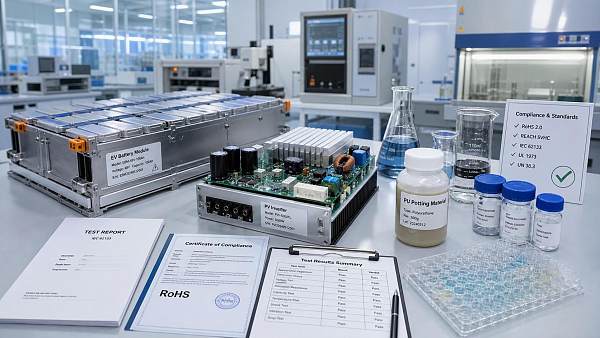
 Sep 13, 2026How flame-retardant PU potting improves battery safetyExplore how battery safety encapsulation materials, including flame-retardant PU potting, improve insulation, fault containment, vibration resistance, and battery pack reliability.
 Sep 16, 2026Is flame-retardant polyurethane potting suitable for under-hood automotive electronics?Is polyurethane potting suitable for automotive electronics? Discover why flame-retardant PU works *only* under strict thermal, chemical & process conditions—key insights for under-hood reliability.
 Sep 07, 2026How to choose encapsulation materials for flame-sensitive electronicsEncapsulation materials guide for flame-sensitive electronics: compare fire safety, thermal control, insulation, adhesion, and processing to choose reliable protection.
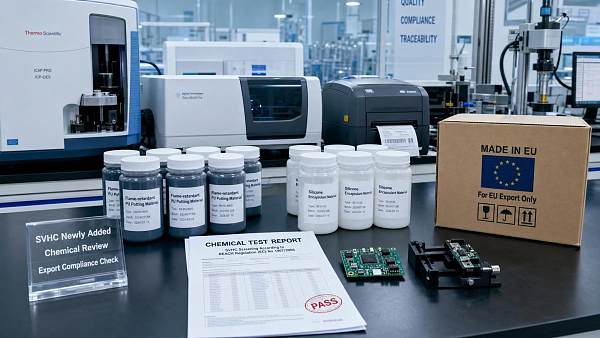
 Aug 09, 2026ECHA Adds TBBPA Derivatives to REACH LimitsECHA Adds TBBPA Derivatives to REACH Limits: learn how the new 100 ppm rule affects EU-bound products, supply chains, and compliance planning before the February 2027 deadline.
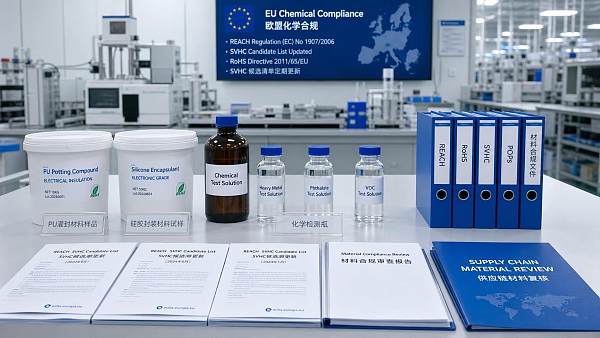
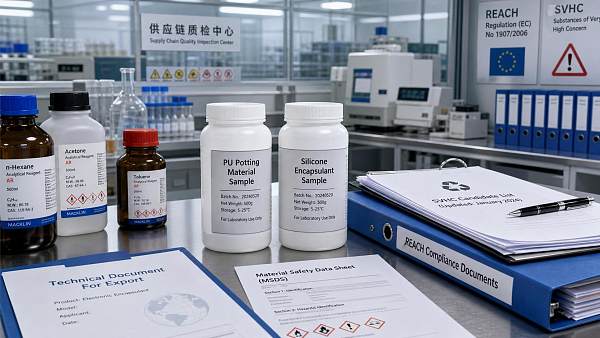
 Aug 08, 2026ECHA Adds New SVHCs, Raising EU Compliance Bar for Potting MaterialsECHA Adds New SVHCs and raises EU compliance pressure for potting materials. Learn how the latest REACH update affects adhesives, encapsulants, and export documentation.
 Aug 07, 2026ECHA Adds TDBPT to Q3 2026 SVHC Candidate ListECHA adds TDBPT to the Q3 2026 SVHC Candidate List, impacting REACH compliance for EU-bound PU potting and silicone encapsulants. See what exporters must review now.
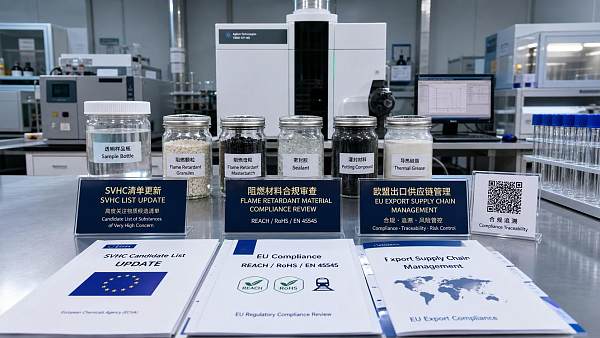
 Aug 06, 2026ECHA SVHC Update Triggers Review of FR Potting ExportsECHA SVHC update puts FR potting exports under urgent review. Learn how TBBPA derivatives, DBDPE, and EH-TBB may affect EU customs, SCIP updates, and market access.
 Aug 05, 2026ECHA Adds 3 SVHCs, Triggering Export ReviewECHA adds 3 SVHCs and triggers export review for EU-bound manufacturers. Learn how TCEP, decaBDE, and HBCDD affect SDS updates, notification, and supply-chain compliance before October 2026.
 Aug 04, 2026How to Choose Polyurethane Potting Compounds for Electronics in High-Heat ApplicationsPolyurethane potting compounds for electronics in high-heat applications: learn how to compare thermal stability, adhesion, moisture resistance, and process fit for longer-lasting performance.
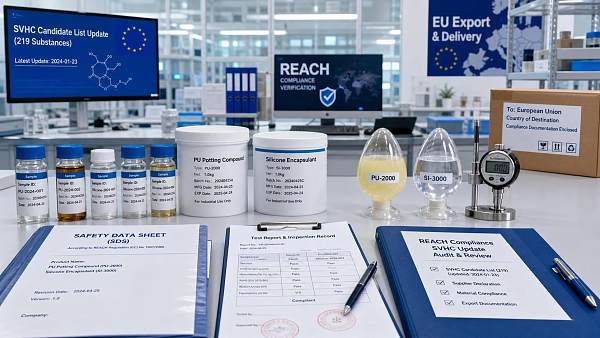
 Aug 04, 2026ECHA Adds 3 SVHCs, Prompting Export ReviewECHA adds 3 SVHCs, triggering export review for EU-bound flame-retardant PU potting and silicone encapsulants. Check SCIP, REACH, SDS and CoC risks before November 2026.
 Aug 03, 2026How to Evaluate Thermal Runaway Protection for Battery ModulesThermal runaway protection for battery modules starts with mapping failure paths, heat, gas, and insulation risks. Learn how to compare materials and designs for safer, scalable modules.
 Aug 03, 2026ECHA Adds 3 SVHC Entries, Forcing Immediate Review of Brominated Flame-Retardant Potting and Encapsulation ExportsECHA adds 3 SVHC entries, forcing urgent REACH and SCIP review for brominated flame-retardant potting and encapsulation exports. See key risks, deadlines, and supplier checks.
 Aug 02, 2026ECHA Adds 3 SVHCs, Triggering Export ReviewECHA adds 3 SVHCs, triggering urgent export review for EU-bound materials. Learn how SCIP, 0.1% thresholds, and buyer declarations impact compliance now.
 Aug 01, 2026ECHA Adds 3 SVHCs, Prompting Review of FR Potting ExportsECHA adds 3 SVHCs to the Candidate List, raising urgent SCIP and compliance checks for flame-retardant PU potting and silicone encapsulant exports to the EU. See key risks now.
 Jul 31, 2026ECHA Adds 3 SVHCs, Prompting Export Compliance ReviewECHA adds 3 SVHCs, triggering urgent export compliance review for EU shipments. Learn REACH, SCIP, and supplier declaration risks before the October 31, 2026 deadline.
 Jul 30, 2026ECHA Adds DBDPE and BTBPE to SVHC ListECHA Adds DBDPE and BTBPE to SVHC List, raising urgent REACH and SCIP compliance questions for EU exporters. Learn the supply-chain risks, documentation impacts, and practical next steps.
 Jul 29, 2026ECHA Adds DBDPE and BTBPE to SVHC ListECHA Adds DBDPE and BTBPE to SVHC List: learn how this REACH update affects EU exports, SDS updates, supplier declarations, and delivery timelines for affected materials.
 Jul 28, 2026ECHA Adds DBDPE and BTBPE to SVHC ListECHA Adds DBDPE and BTBPE to SVHC List—learn how this REACH update impacts EU exports, SDS updates, SVHC declarations, and compliance for PU potting materials and silicone encapsulants.
 Jul 27, 2026ECHA Adds DBDPE and BTBPE to SVHC ListECHA Adds DBDPE and BTBPE to SVHC List: learn how the new REACH update impacts EU exports, CE marking, and compliance for adhesives, potting compounds, and electronic materials.
 Jul 20, 2026How to Evaluate a Battery Potting Compounds Supplier for Thermal and Fire SafetyBattery potting compounds supplier selection affects thermal control and fire safety. Learn how to compare test data, process stability, compliance, and support before qualifying.
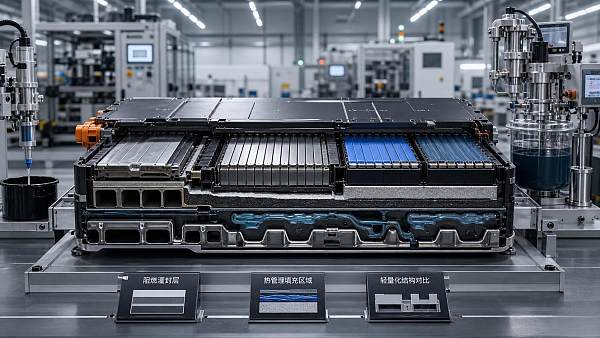
 Jul 10, 2026Battery Safety Encapsulation for EV Packs: Fire Risk vs WeightBattery safety encapsulation for EV packs: compare fire containment, thermal control, process fit, and weight trade-offs to choose safer, lighter EV battery designs.
 Jul 08, 2026How to Choose Battery Pack Potting Materials for Heat and Fire RiskBattery pack potting materials guide: learn how to balance thermal control, flame resistance, insulation, processability, and cost for safer battery pack design.
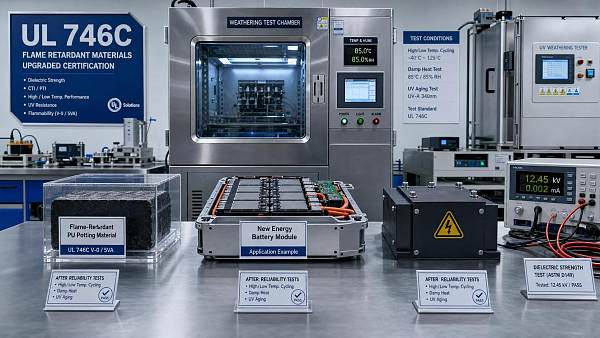
 Jul 08, 2026UL 746C Update Raises Bar for Flame-Retardant PU PottingUL 746C update raises the bar for flame-retardant PU potting with new aging and UV tests. Learn how it impacts UL certification, costs, lead times, and 2027 compliance planning.






Editor's Selection
The Archive Newsletter
Critical industrial intelligence delivered every Tuesday. Peer-reviewed summaries of the week's most impactful logistics and market shifts.