
China Tightens Export Checks on Key Adhesives
by
Published
Views:
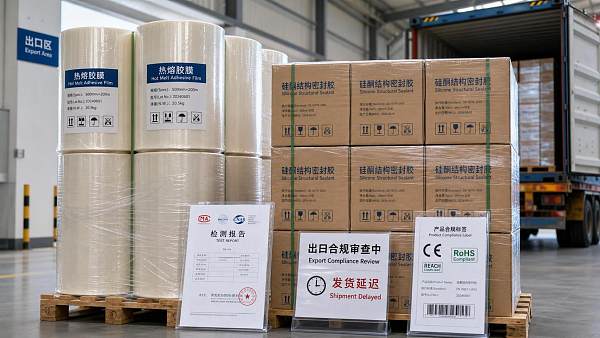
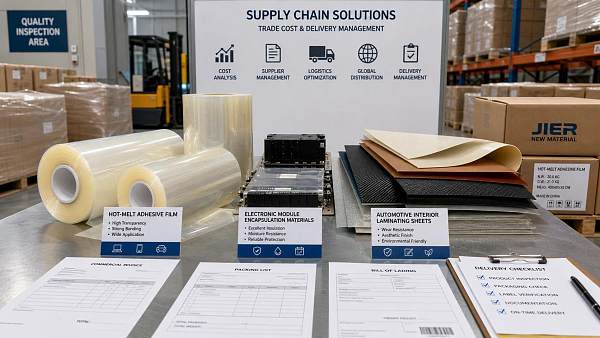
On July 3, 2026, China’s General Administration of Customs moved to strengthen export compliance checks for industrial adhesive products, placing Hot Melt Adhesive Films and Silicone Structural Sealants among the key categories under immediate pre-shipment inspection. For exporters, importers, compliance teams, and supply chain coordinators, this matters because the focus is not only on product movement but on supporting documents tied to RoHS/REACH declarations, VOC test reports, and packaging labels, with export lead times for affected shipments expected to extend by 3 to 5 working days.
What the new customs notice confirms
According to the information provided, the General Administration of Customs of China issued the Notice on Strengthening Quality and Safety Supervision of Industrial Adhesive Exports on July 3, 2026, under reference code Shu Jian Han [2026] No. 88. The notice took effect immediately.
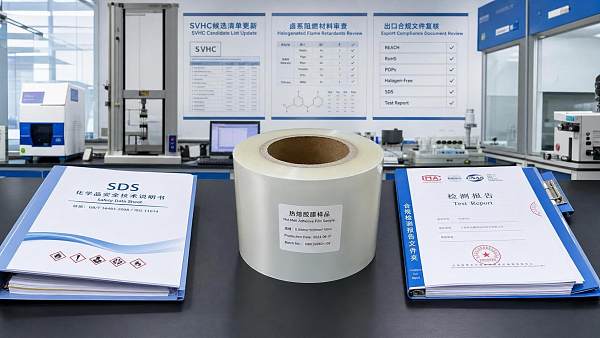
The measure applies pre-export compliance spot checks to 12 categories of high-export-value adhesives, including Hot Melt Adhesive Films and Silicone Structural Sealants. The key inspection items named in the summary are RoHS/REACH declarations of conformity, VOC content test reports, and packaging label compliance.
The same information indicates that affected exporters should expect shipment cycles to be extended by 3 to 5 working days. It also states that some importers in Southeast Asia and the Middle East have already received delivery warnings from Chinese suppliers.
Where the immediate pressure is likely to appear
Exporters facing documentation and timing risk
From an industry perspective, direct exporting companies are the first group likely to feel the impact because the new checks are tied to shipment release rather than only internal factory preparation. The practical effect is likely to show up in document review, test report readiness, packaging verification, and dispatch scheduling. What deserves closer attention is whether product files for the covered adhesive categories can be presented quickly and consistently when customs spot checks occur.
Import-side buyers dealing with delivery uncertainty
Buyers in overseas markets may be affected even when product specifications remain unchanged. Analysis shows that the immediate issue is delivery predictability rather than confirmed product shortage. For importers in Southeast Asia and the Middle East, the reported delivery warnings suggest that procurement, inventory planning, and project schedules may need closer coordination with Chinese suppliers while the checks are being implemented.
Supply chain and logistics teams managing handover delays
For logistics coordinators and supply chain service providers, the likely impact is concentrated around booking windows, warehouse handover timing, and communication between shipper, broker, and consignee. Observably, even a 3 to 5 working day extension can affect shipment sequencing when adhesive products are part of time-sensitive export orders or mixed cargo arrangements.
Downstream manufacturers watching continuity of supply
Processing manufacturers and end-use industrial customers that depend on adhesive inputs may need to monitor whether longer export clearance cycles affect replenishment timing. This is especially relevant where Hot Melt Adhesive Films or Silicone Structural Sealants are tied to project-based delivery, because any customs-related delay upstream may shift production or installation schedules downstream.
What companies should focus on now
Check whether current files match the named inspection points
Companies involved in the covered adhesive categories should first verify whether their existing RoHS/REACH declarations, VOC content test reports, and packaging labels are complete, current, and internally consistent. The notice, as summarized, points directly to these materials, so gaps here are likely to become the most immediate operational issue.
Separate regulatory signal from shipment execution risk
Analysis shows that the policy signal and the day-to-day shipping effect are related but not identical. The confirmed fact is that pre-export compliance spot checks have started immediately. The business question is how often a shipment will be selected and how quickly the exporter can respond. Companies should therefore pay attention both to official wording and to actual execution at the shipment level.
Adjust delivery communication with customers and distributors
Because the expected extension is 3 to 5 working days, exporters and traders may need to revise delivery communication, especially for markets already receiving lead-time warnings. What deserves closer attention is not only whether goods can ship, but whether contracts, purchase orders, and customer expectations allow enough buffer for customs-related review.
Track which product lines and destinations need the closest attention
The summary confirms that the checks cover 12 high-export-value adhesive categories, with Hot Melt Adhesive Films and Silicone Structural Sealants specifically highlighted. Companies should therefore monitor whether these named products, and shipments to markets already showing buyer concern, require tighter internal review before cargo is handed over for export.
Why this looks like more than a one-day notice
Observably, this development should not be read only as a one-off customs announcement. Analysis shows that the focus on conformity declarations, VOC testing, and packaging labels points to a more documentation-centered export control approach for industrial adhesives. That does not yet prove a long-term structural shift across the whole sector, but it does suggest that compliance readiness is becoming more visible at the export checkpoint.
It is more appropriate to understand this as an active regulatory signal with immediate operational effects, rather than as a fully settled long-term outcome. The current facts confirm tighter checks and longer export cycles for affected goods; the broader industry significance will depend on how consistently the inspections are carried out and whether further clarification follows.
How the market is likely to read this stage
At this stage, the most balanced reading is that the measure creates a short-term adjustment in export execution while also sending a longer-range message about documentation quality in adhesive trade. The confirmed impact today is procedural: more scrutiny before export, a defined set of compliance materials under review, and a likely 3 to 5 working day delay for affected shipments. Whether this develops into a broader and more durable compliance pattern still requires observation.
Basis of this article and what still needs verification
This article is based on the user-provided news title, event date, and event summary regarding China’s launch of a special compliance review for adhesive exports on July 3, 2026. For this type of industry update, relevant source categories would typically include official notices, company disclosures, industry association information, authoritative media reporting, and standards-related documents.
No specific official source link was provided in the input, so the exact publication page still requires follow-up verification. Continued monitoring should focus on whether customs authorities issue further clarification on covered product categories, inspection practice, documentation expectations, or implementation details affecting export timing.
Recommended News
 Oct 09, 2026How breathable lamination adhesive affects moisture vapor transmissionBreathable lamination adhesive can make or break MVTR. Discover how coating weight, chemistry, cure, and bond patterns affect moisture vapor transmission.
 Sep 18, 2026Why PUR-to-EVA Changeovers Affect Edge Bond Quality on BandersZhongding PUR and EVA edge banding equipment: learn how controlled PUR-to-EVA changeovers prevent weak bonds, glue lines, and edge lifting.
 Sep 11, 2026What documentation confirms REACH compliance for industrial adhesive films?What documents prove REACH compliance for adhesives? Discover the legally valid evidence—Annex VI declarations, updated SDS, and auditable conformity statements—required for EU market access.
 Jul 22, 2026How to Evaluate a Hot Melt Adhesive Film Manufacturer for Stable Bonding PerformanceHot melt adhesive film manufacturer evaluation starts with consistency, process fit, and test data. Learn how to choose a supplier for stable bonding and lower production risk.
 Jul 15, 2026Hot Melt Film for Textiles: How to Balance Bond Strength and Wash DurabilityHot melt film for textiles selection affects bond strength, softness, and wash durability. Learn how to match film chemistry, thickness, and process for reliable textile bonding.
 Jul 15, 2026ECHA Adds 3 SVHCs, Tightening EU Export Timing for Halogenated Hot Melt FilmsECHA adds 3 SVHCs, accelerating EU compliance for halogenated hot melt films. Learn how the 30-day SCIP deadline may affect exports, customs clearance, and delivery planning.
 Jul 14, 2026ECHA Adds SVHCs, Tightening EU Hot-Melt Film ExportsECHA adds new SVHCs, tightening EU hot-melt film exports from October 1, 2026. Learn how SCIP filing, SDS review, and supplier compliance checks may affect costs and shipments.
 Jul 13, 2026ECHA Adds 3 SVHCs, Tightening EU Compliance for Halogenated Hot Melt FilmsECHA adds 3 SVHCs, tightening REACH compliance for halogenated hot melt films. Learn how the EU update impacts exports, documentation, and supply-chain risk before October 2026.
 Jul 12, 2026SE Asia Anti-Dumping Ruling Hits China Hot-Melt FilmSE Asia anti-dumping ruling hits China hot-melt film: learn how the 18.7% duty affects Thailand, Vietnam, and Indonesia sourcing, landed costs, compliance, and supplier planning.
 Jul 11, 2026How to Compare TPU Adhesive Films Hot Melt for Lamination PerformanceTPU adhesive films hot melt comparison starts here: learn how to evaluate lamination performance, substrate fit, heat resistance, and process stability for smarter material selection.
 Jul 11, 2026ADCC Sets Provisional Duties on China Hot Melt Adhesive FilmADCC sets provisional duties on China hot melt adhesive film, reshaping pricing and shipments to Thailand, Vietnam, and Malaysia. See the latest anti-dumping impact and what exporters should do now.
 Jul 10, 2026ADCC Imposes 18.7% Temporary Duty on China Hot-Melt FilmADCC imposes 18.7% temporary duty on China hot-melt film. See how the EVA/TPU anti-dumping ruling affects import costs, compliance, sourcing, and delivery planning through Dec. 31, 2026.
 Jul 09, 2026Vietnam Issues Provisional Duty on Chinese Hot Melt Adhesive FilmsChinese Hot Melt Adhesive Films face a 18.7% provisional duty in Vietnam. See how the ruling affects HS 3906.90 trade, EVA/TPU film costs, delivery plans, and sourcing decisions.
 Jul 08, 2026ECHA Adds 3 SVHCs, Forcing Hot Melt Film ReviewECHA adds 3 SVHCs, forcing hot melt film review for EU exports. Learn compliance risks, substitute validation steps, and how to avoid customs delays and customer rejection.
![]() Jul 07, 2026ECHA Adds 3 SVHCs, Forcing EU Compliance Review for Halogen Hot Melt Adhesive FilmsECHA adds 3 SVHCs, putting halogen Hot Melt Adhesive Films under urgent EU compliance review. Learn the REACH, SDS, and SCIP actions exporters and buyers should verify now.
Jul 07, 2026ECHA Adds 3 SVHCs, Forcing EU Compliance Review for Halogen Hot Melt Adhesive FilmsECHA adds 3 SVHCs, putting halogen Hot Melt Adhesive Films under urgent EU compliance review. Learn the REACH, SDS, and SCIP actions exporters and buyers should verify now. Jul 06, 2026ECHA SVHC Update Puts Halogenated Hot Melt Film Exports Under ReviewECHA SVHC update puts halogenated hot melt film exports under review, raising urgent REACH, SDS, and EU importer notification risks. Learn what suppliers must check before October 2026.
 Jul 05, 2026China Tightens Export Checks on Key AdhesivesChina tightens export checks on key adhesives, including hot melt adhesive films and silicone structural sealants. Learn the compliance risks, document focus, and 3–5 day shipping impact.
 Jul 04, 2026ECHA SVHC Update Puts Halogenated Hot Melt Films Under ReviewECHA SVHC update puts halogenated Hot Melt Films under review. Learn how the new listing affects SDS, material declarations, SCIP duties, and export compliance before October 2026.
 Jul 03, 2026ECHA SVHC Update Forces Review of Halogenated HMA FilmsHot Melt Adhesive Films face urgent EU compliance pressure after the ECHA SVHC update. Learn how TBCP, DBDPE, and DPTE may affect SCIP filings, formulations, and export orders.
 Jul 02, 2026ECHA SVHC Update Puts Halogen Adhesive Film Exports Under ReviewECHA SVHC update puts Halogen Adhesive Film exports under review. Learn how SCIP rules, the 0.1% threshold, and SDS checks may affect EU market access by October 2026.
 Jul 01, 2026ECHA Adds 3 SVHCs, Triggering Hot Melt Film ReviewECHA adds 3 SVHCs, putting Hot Melt Adhesive Film exporters under urgent EU compliance review. Learn SCIP risks, shipment impacts, and key actions to protect market access.
 Jun 30, 2026China Customs Sets New HS Code for Hot Melt Adhesive FilmsChina Customs sets a new HS code for Hot Melt Adhesive Films. Learn how the 2026 rule changes declarations, clearance timelines, and export compliance for suppliers and buyers.
 Jun 29, 2026EVA vs TPU Hot Melt Films for Textile LaminationEVA TPU hot melt films for textiles: compare bonding strength, softness, wash resistance, processing, and cost to choose the right lamination film with confidence.
 Jun 26, 2026Textile Lamination Bonding Process: How to Reduce Delamination in ProductionTextile lamination bonding process guide: learn how to reduce delamination in production with better adhesive selection, heat-pressure-time control, and practical quality checks.















Editor's Selection
The Archive Newsletter
Critical industrial intelligence delivered every Tuesday. Peer-reviewed summaries of the week's most impactful logistics and market shifts.