Shandong Meat Expo Joins National Food Season Focus
by
Published
Views:
On July 3, 2026, the 2026 Shandong Meat Expo in Jinan drew industry attention after being included for the first time in the Ministry of Industry and Information Technology’s national consumption-promotion “Foodie Season” program for July 3–5. For packaging materials suppliers, equipment-related importers, food-contact compliance teams, and procurement departments, the more notable development is that the event is linking demand for meat-industry trade with explicit interest in compliant hot melt adhesive films and halogen-free sealants tied to food-contact and electronics-grade standards.
A procurement signal centered on compliant materials
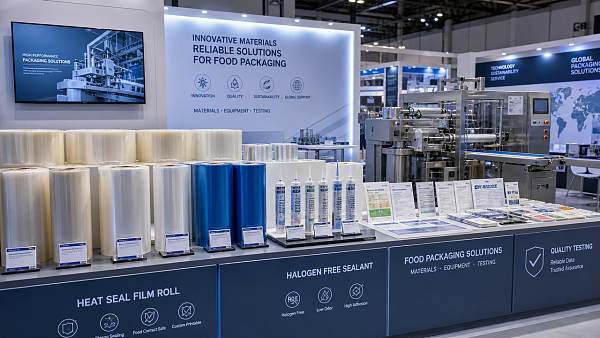
According to the provided event information, the 2026 Shandong Meat Expo will be held in Jinan from July 3 to July 5 and has been included for the first time in the Ministry of Industry and Information Technology’s national “Foodie Season” consumption-promotion campaign. The event is expected to attract more than 200 overseas importers of catering equipment and packaging products.
The expo has also set up a dedicated food-contact safety materials section. Its highlighted sourcing targets are products that comply with FDA 21 CFR §175.125 for hot melt adhesive films, EU 10/2011 for silicone encapsulation materials, and IEC 61249-2-21 for halogen-free flame-retardant PU potting materials.
The same information states that domestic suppliers of hot melt adhesive films and halogen-free sealants are accelerating efforts to obtain third-party food-grade and electronics-grade certifications in order to connect with incoming orders.
Where the impact is likely to be felt first
Importers and buyers may shift screening toward documentation
From an industry perspective, overseas importers attending the expo are likely to look beyond price and basic supply availability when evaluating packaging-related materials. The immediate business impact may appear in supplier screening, technical document review, and pre-order qualification, especially where product compliance needs to be matched with the cited standards.
Domestic materials suppliers face a more certification-led sales process
Analysis shows that suppliers of hot melt adhesive films and halogen-free sealants may be affected most directly at the quotation and order-conversion stage. If procurement interest is increasingly tied to third-party food-grade and electronics-grade certification, then product readiness alone may not be enough; supporting certification files and compliance evidence become part of the sales process.
Packaging and equipment-related service links may need closer coordination
Observably, the presence of more than 200 overseas importers of catering equipment and packaging products suggests that supply-chain service providers, technical support teams, and project coordinators may need to pay closer attention to material selection and communication around standards. The impact here is less about volume already confirmed and more about whether documentation, interpretation, and delivery coordination can keep pace with buyer inquiries.
What companies should watch as orders are discussed
Separate policy visibility from immediate transaction certainty
What deserves closer attention is the distinction between inclusion in a national consumption-promotion program and the actual closing of procurement orders. The event clearly raises visibility, but companies still need to track how buyer inquiries translate into specifications, sample requests, and formal purchase requirements.
Prepare standard-specific compliance materials in advance
For suppliers targeting this demand, the practical focus is not only on naming the relevant standards but on preparing usable certification and compliance documents tied to FDA 21 CFR §175.125, EU 10/2011, and IEC 61249-2-21 where applicable to the product category. In business terms, this affects pre-sales communication, qualification review, and response speed.
Match certification progress with delivery commitments
The provided information notes that domestic suppliers are accelerating third-party certification. Analysis shows that companies should pay attention to how certification timelines align with customer negotiation cycles, because a gap between certification readiness and delivery promises could complicate order intake or follow-up discussions.
Keep client communication precise across food-contact and electronics-grade uses
Because the sourcing focus spans both food-contact safety and electronics-grade requirements, suppliers and service teams may need to communicate clearly about which products correspond to which compliance path. This matters in quotation accuracy, sample matching, and expectation management with overseas buyers.
Why this looks like a signal worth tracking
Observably, this development is better understood as a near-term market signal rather than a fully formed industry outcome. The confirmed facts show stronger visibility for compliant materials within a meat-industry trade setting, but they do not yet prove a lasting shift in purchasing structure or volume.
Analysis shows that the more meaningful point is the convergence of trade promotion, overseas buyer presence, and standard-driven procurement language in one event setting. That combination suggests that compliance for adhesive films, silicone encapsulation materials, and halogen-free sealing or potting products is moving closer to frontline commercial discussion, not remaining only a technical back-office issue.
How to read the development for now
At this stage, it is more appropriate to understand the July 3, 2026 update as a practical demand signal with both short-term and longer-watch elements. In the short term, it may affect supplier screening, certification preparation, and buyer communication. Over a longer observation period, the key question is whether this standards-based sourcing focus becomes sustained across future trade activity rather than remaining concentrated around a single exhibition cycle.
Basis of this article
This article is based on the user-provided news title, event date, and event summary concerning the 2026 Shandong Meat Expo, its inclusion in the Ministry of Industry and Information Technology’s “Foodie Season” program, the participation of more than 200 overseas importers, the establishment of a food-contact safety materials section, the cited standards, and the certification efforts of domestic suppliers.
For this type of industry update, commonly relevant source categories may include official event announcements, company statements, industry association releases, authoritative media reports, and standard-organization documents. No specific official source link was provided in the input, so further verification remains necessary. Continued attention should focus on any subsequent official wording, procurement criteria, and whether certification-led sourcing requirements are maintained after the event period.
Recommended News
 Sep 11, 2026What documentation confirms REACH compliance for industrial adhesive films?What documents prove REACH compliance for adhesives? Discover the legally valid evidence—Annex VI declarations, updated SDS, and auditable conformity statements—required for EU market access.
 Jul 22, 2026How to Evaluate a Hot Melt Adhesive Film Manufacturer for Stable Bonding PerformanceHot melt adhesive film manufacturer evaluation starts with consistency, process fit, and test data. Learn how to choose a supplier for stable bonding and lower production risk.
 Jul 15, 2026Hot Melt Film for Textiles: How to Balance Bond Strength and Wash DurabilityHot melt film for textiles selection affects bond strength, softness, and wash durability. Learn how to match film chemistry, thickness, and process for reliable textile bonding.
 Jul 15, 2026ECHA Adds 3 SVHCs, Tightening EU Export Timing for Halogenated Hot Melt FilmsECHA adds 3 SVHCs, accelerating EU compliance for halogenated hot melt films. Learn how the 30-day SCIP deadline may affect exports, customs clearance, and delivery planning.
 Jul 14, 2026ECHA Adds SVHCs, Tightening EU Hot-Melt Film ExportsECHA adds new SVHCs, tightening EU hot-melt film exports from October 1, 2026. Learn how SCIP filing, SDS review, and supplier compliance checks may affect costs and shipments.
 Jul 13, 2026ECHA Adds 3 SVHCs, Tightening EU Compliance for Halogenated Hot Melt FilmsECHA adds 3 SVHCs, tightening REACH compliance for halogenated hot melt films. Learn how the EU update impacts exports, documentation, and supply-chain risk before October 2026.
 Jul 12, 2026SE Asia Anti-Dumping Ruling Hits China Hot-Melt FilmSE Asia anti-dumping ruling hits China hot-melt film: learn how the 18.7% duty affects Thailand, Vietnam, and Indonesia sourcing, landed costs, compliance, and supplier planning.
 Jul 11, 2026How to Compare TPU Adhesive Films Hot Melt for Lamination PerformanceTPU adhesive films hot melt comparison starts here: learn how to evaluate lamination performance, substrate fit, heat resistance, and process stability for smarter material selection.
 Jul 11, 2026ADCC Sets Provisional Duties on China Hot Melt Adhesive FilmADCC sets provisional duties on China hot melt adhesive film, reshaping pricing and shipments to Thailand, Vietnam, and Malaysia. See the latest anti-dumping impact and what exporters should do now.
 Jul 10, 2026ADCC Imposes 18.7% Temporary Duty on China Hot-Melt FilmADCC imposes 18.7% temporary duty on China hot-melt film. See how the EVA/TPU anti-dumping ruling affects import costs, compliance, sourcing, and delivery planning through Dec. 31, 2026.
 Jul 09, 2026Vietnam Issues Provisional Duty on Chinese Hot Melt Adhesive FilmsChinese Hot Melt Adhesive Films face a 18.7% provisional duty in Vietnam. See how the ruling affects HS 3906.90 trade, EVA/TPU film costs, delivery plans, and sourcing decisions.
 Jul 08, 2026ECHA Adds 3 SVHCs, Forcing Hot Melt Film ReviewECHA adds 3 SVHCs, forcing hot melt film review for EU exports. Learn compliance risks, substitute validation steps, and how to avoid customs delays and customer rejection.
![]() Jul 07, 2026ECHA Adds 3 SVHCs, Forcing EU Compliance Review for Halogen Hot Melt Adhesive FilmsECHA adds 3 SVHCs, putting halogen Hot Melt Adhesive Films under urgent EU compliance review. Learn the REACH, SDS, and SCIP actions exporters and buyers should verify now.
Jul 07, 2026ECHA Adds 3 SVHCs, Forcing EU Compliance Review for Halogen Hot Melt Adhesive FilmsECHA adds 3 SVHCs, putting halogen Hot Melt Adhesive Films under urgent EU compliance review. Learn the REACH, SDS, and SCIP actions exporters and buyers should verify now. Jul 06, 2026ECHA SVHC Update Puts Halogenated Hot Melt Film Exports Under ReviewECHA SVHC update puts halogenated hot melt film exports under review, raising urgent REACH, SDS, and EU importer notification risks. Learn what suppliers must check before October 2026.
 Jul 05, 2026China Tightens Export Checks on Key AdhesivesChina tightens export checks on key adhesives, including hot melt adhesive films and silicone structural sealants. Learn the compliance risks, document focus, and 3–5 day shipping impact.
 Jul 04, 2026ECHA SVHC Update Puts Halogenated Hot Melt Films Under ReviewECHA SVHC update puts halogenated Hot Melt Films under review. Learn how the new listing affects SDS, material declarations, SCIP duties, and export compliance before October 2026.
 Jul 03, 2026ECHA SVHC Update Forces Review of Halogenated HMA FilmsHot Melt Adhesive Films face urgent EU compliance pressure after the ECHA SVHC update. Learn how TBCP, DBDPE, and DPTE may affect SCIP filings, formulations, and export orders.
 Jul 02, 2026ECHA SVHC Update Puts Halogen Adhesive Film Exports Under ReviewECHA SVHC update puts Halogen Adhesive Film exports under review. Learn how SCIP rules, the 0.1% threshold, and SDS checks may affect EU market access by October 2026.
 Jul 01, 2026ECHA Adds 3 SVHCs, Triggering Hot Melt Film ReviewECHA adds 3 SVHCs, putting Hot Melt Adhesive Film exporters under urgent EU compliance review. Learn SCIP risks, shipment impacts, and key actions to protect market access.
 Jun 30, 2026China Customs Sets New HS Code for Hot Melt Adhesive FilmsChina Customs sets a new HS code for Hot Melt Adhesive Films. Learn how the 2026 rule changes declarations, clearance timelines, and export compliance for suppliers and buyers.
 Jun 29, 2026EVA vs TPU Hot Melt Films for Textile LaminationEVA TPU hot melt films for textiles: compare bonding strength, softness, wash resistance, processing, and cost to choose the right lamination film with confidence.
 Jun 26, 2026Textile Lamination Bonding Process: How to Reduce Delamination in ProductionTextile lamination bonding process guide: learn how to reduce delamination in production with better adhesive selection, heat-pressure-time control, and practical quality checks.
 Jun 24, 2026EVA TPU Hot Melt Films Price: What Drives Cost in 2026?EVA TPU hot melt films price in 2026 depends on resin, tolerance, compliance, yield, and logistics. Discover the real cost drivers and compare EVA vs TPU for smarter sourcing.
 Jun 20, 2026HMA Films Jump 9.2% in June as China Lead Times StretchHMA Films jumped 9.2% in June as China lead times stretched to 8–10 weeks. See what tighter EVA supply means for Q3 sourcing, delivery risk, and contract planning.












Editor's Selection
The Archive Newsletter
Critical industrial intelligence delivered every Tuesday. Peer-reviewed summaries of the week's most impactful logistics and market shifts.