How to Evaluate an Automated Dispensing Supplier
by
Published
Views:
How to Evaluate an Automated Dispensing Supplier
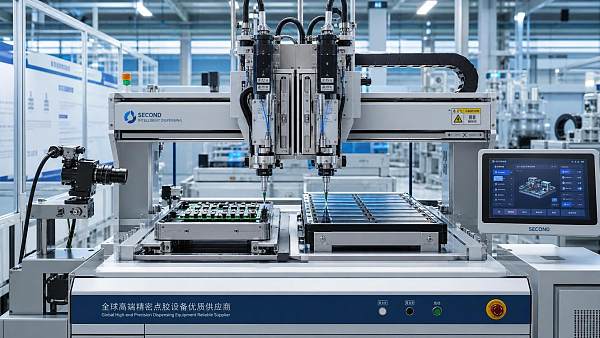
Choosing the right automated dispensing supplier can shape yield, takt time, maintenance cost, and future expansion.
That sounds obvious, but many sourcing decisions still lean too heavily on unit price.
In practice, the cheaper quote often becomes the more expensive project.
An automated dispensing supplier affects process stability, operator workload, scrap rate, and customer complaint risk.
For procurement and evaluation teams, the goal is not only to buy equipment.
The real goal is to secure a supplier that supports precision, uptime, and predictable cost.
This becomes even more important in electronics assembly, EV battery production, sealing, potting, and structural bonding lines.
In those settings, a small dispensing error can trigger large downstream losses.
A strong automated dispensing supplier should combine equipment capability with fluid knowledge and service discipline.
Start with the Real Process Requirement
Before comparing vendors, define the process in measurable terms.
This step filters out suppliers that look capable on paper but fail in production.
Ask for your core application data first:
- Fluid type, viscosity range, and filler content
- Required shot size, bead width, and repeatability
- Cycle time target and daily throughput
- Substrate material, part geometry, and access limits
- Cure method such as UV, moisture, heat, or two-part mixing
- Traceability, MES, and vision inspection needs
A credible automated dispensing supplier will ask these questions early.
If the discussion jumps straight to model numbers, that is a warning sign.
The right system depends on the behavior of the material and the tolerance window of the product.
Check Dispensing Precision, Not Just Speed
Many buyers focus on speed because throughput is easy to compare.
More meaningful, however, is stable performance over long runs.
An automated dispensing supplier should provide evidence for repeatability, accuracy, and process drift control.
For example, a jet valve may deliver impressive speed.
Yet it may not fit abrasive or highly filled materials without nozzle wear issues.
Likewise, volumetric pumps can improve consistency, but only when material feeding is controlled properly.
Ask each automated dispensing supplier for application-specific validation:
- Weight consistency across multiple cycles
- Bead profile stability over a production shift
- Performance after start-stop operation
- Tolerance results with your actual material
- Maintenance intervals affecting precision
Short demos can hide long-run problems.
A serious review should test warm-up behavior, material settling, bubble control, and cleaning frequency.
Evaluate Integration Capability Across the Line
A dispensing cell rarely works alone.
It must connect with upstream loading, downstream curing, inspection, and factory software.
This is where one automated dispensing supplier can outperform another, even with similar hardware.
Review the supplier’s ability to support:
- PLC communication and common industrial protocols
- Vision alignment and AI-guided dispensing correction
- Barcode or serial-level traceability
- Recipe management across multiple SKUs
- Robotic axes, conveyors, and safety interlocks
- Data logging for quality audits
Integration weakness usually shows up after installation.
Then the line loses time in debugging, handshaking issues, and repeated software revisions.
That is why interface documentation matters almost as much as the machine itself.
Look for Material and Application Expertise
The best automated dispensing supplier understands more than motion control.
It also understands how adhesives and fluids behave during dispensing and curing.
This matters when working with UV adhesives, silicone encapsulants, underfill, thermal potting compounds, or two-part epoxy systems.
A qualified partner should be able to discuss:
- Viscosity change over temperature and time
- Shear sensitivity and filler sedimentation
- Pot life, cure shrinkage, and bubble risk
- Static mixing behavior for 2K materials
- Nozzle selection and dead-volume reduction
- Contamination control for precision electronics
This expertise lowers trial-and-error cost.
It also improves process launch speed when new products enter production.
In real projects, application knowledge often separates a reliable automated dispensing supplier from a generic equipment vendor.
Review Compliance, Documentation, and Risk Control
For many industries, supplier evaluation now includes compliance readiness from day one.
This is especially true for automotive, electronics, energy storage, and export-focused manufacturing.
An automated dispensing supplier should provide complete and current technical documents.
That includes manuals, spare lists, calibration records, validation reports, and safety materials.
Where relevant, also check support for CE, RoHS, REACH, halogen-free, and plant-specific audit requirements.
Do not overlook cybersecurity and software access control.
As dispensing platforms become more connected, software risk becomes part of procurement risk.
A dependable automated dispensing supplier should explain how recipes are protected, updated, and backed up.
Measure Total Cost of Ownership, Not Purchase Price Alone
Cost evaluation needs a wider lens.
The machine price is only one part of the financial picture.
A low-cost automated dispensing supplier can still create high operating expense through downtime, material waste, and spare delays.
Build a practical cost model around these factors:
This kind of comparison makes supplier differences more visible.
It also gives procurement a stronger basis for negotiation.
Test Service Strength and Global Delivery Capability
Even excellent equipment loses value if support is slow.
For that reason, service readiness should be part of any automated dispensing supplier review.
Ask direct questions about response time, language coverage, spare stock, and field engineering resources.
If your plants are distributed, check whether the automated dispensing supplier can support multiple regions consistently.
This includes shipping reliability, customs familiarity, and local commissioning ability.
A few useful checks are easy to overlook:
- Average lead time for critical spare parts
- Availability of remote diagnostics
- Training quality for operators and maintenance teams
- Support during ramp-up and recipe changeovers
- References from similar industries or applications
Recent market shifts make this even more relevant.
Supply continuity is now a competitive issue, not just an operational detail.
Use a Practical Scorecard Before Final Selection
The final decision should be structured, not intuitive.
A scorecard keeps technical and commercial priorities aligned.
You can rate each automated dispensing supplier across weighted factors such as precision, integration, documentation, service, cost, and scalability.
Add a pilot or sample test where possible.
That creates a fact-based comparison instead of a sales-driven one.
A simple review flow works well:
- Define process needs and risk limits
- Shortlist each automated dispensing supplier by application fit
- Run validation with actual materials and parts
- Compare lifecycle cost and support terms
- Select the supplier with the best operational value
That approach reduces the chance of expensive surprises after PO release.
It also makes internal approval easier because the reasoning is visible and defensible.
Final Buying Direction
A good automated dispensing supplier is not simply a machine seller.
It is a process partner that helps control quality, cost, and production risk.
When you evaluate suppliers through precision, integration, material expertise, compliance, service, and total ownership cost, the decision becomes clearer.
In actual business terms, that clarity protects margin and supports scale.
Use the next supplier review to ask deeper questions, request real validation data, and compare long-term operating value.
That is usually how the right automated dispensing supplier reveals itself.
Recommended News
 Sep 14, 2026How to eliminate bubbles in silicone encapsulants during automated dispensing?How do I remove bubbles from silicone encapsulant? Discover proven, production-ready strategies for eliminating voids during automated dispensing—boost yield & reliability now.
 Jul 26, 2026How AI Vision Guided Dispensing Speed Impacts Accuracy and ThroughputAI vision guided dispensing speed affects more than cycle time. Learn how to evaluate accuracy, latency, fluid behavior, and defect control before trusting high-speed dispensing claims.
 Jul 13, 20265-Axis Dispensing Robot Orders Rise 37% on EV Battery Demand5-axis dispensing robot orders rise 37% as EV battery demand tightens precision standards. Learn how lead times, AI vision platforms, and sourcing risks are reshaping procurement.
 Jul 09, 2026AI Vision Guided Dispensing Supplier Checklist for High-Mix Production LinesAI vision guided dispensing supplier checklist for high-mix lines: compare vision accuracy, fluid control, integration strength, and changeover speed to cut risk and boost yields.
 Jul 03, 2026AI Vision Fluid Control Systems: When They Reduce Dispensing Defects and ReworkAI vision fluid control systems cut dispensing defects, scrap, and rework with real-time inspection and closed-loop correction. See when they deliver the best ROI.
 Jul 02, 2026AI Guided Dispensing Equipment: Accuracy, Throughput, and ROI ComparedAI guided dispensing equipment compared for accuracy, throughput, and ROI. Learn how smarter dispensing cuts scrap, improves yield, and speeds payback in modern production.
 Jun 28, 2026When a 5-Axis Glue Dispensing Robot Improves Cycle Time5-axis glue dispensing robot boosts cycle time by improving path control, bead consistency, and throughput on complex parts. Learn where it delivers ROI and how to reduce rework.
 Jun 28, 2026How to Compare 5-Axis Dispensing Systems for Precision Assembly5-axis dispensing systems compared for precision assembly: learn how to evaluate motion stability, fluid control, software, vision, and lifecycle support to choose the right platform.
 Jun 27, 2026How to Evaluate an Automated Dispensing SupplierAutomated dispensing supplier selection starts with process fit, precision, integration, and service. Learn how to compare vendors, reduce risk, and choose a partner that improves yield and uptime.
 Jun 17, 2026Vision Guided Dispensing Integration: Accuracy Gains vs Setup CostVision guided dispensing integration improves alignment, bead accuracy, and material control. Compare measurable accuracy gains, ROI factors, and setup costs before investing.
 Jun 04, 2026Dispensing Systems Upgrade Paths Without Full Line RebuildsDispensing systems upgrade paths that cut defects, improve accuracy, and boost throughput—learn how to retrofit valves, controls, motion, and traceability without a full line rebuild.


Editor's Selection
The Archive Newsletter
Critical industrial intelligence delivered every Tuesday. Peer-reviewed summaries of the week's most impactful logistics and market shifts.