2K Epoxy Adhesive Systems for Metal Bonding Compared
by
Published
Views:
Why 2K Epoxy Systems Matter in Metal Assembly
Choosing among 2K epoxy adhesive systems for metal bonding is rarely a simple material decision.
It affects joint strength, corrosion behavior, line speed, tooling cost, and how much design freedom a project can realistically support.
That is why the comparison often extends beyond adhesive brands.
It also includes welding, riveting, tapes, and hybrid fastening strategies used in automotive, electronics, rail, appliances, and industrial equipment.
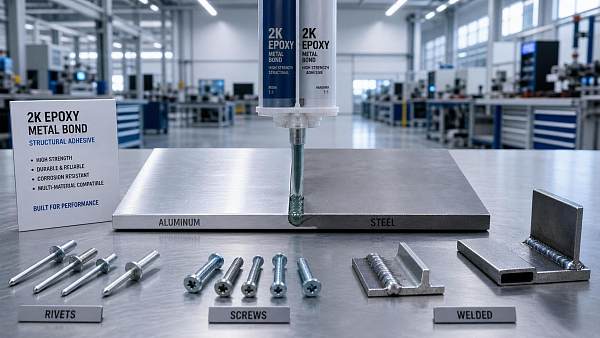
In practical terms, 2K epoxy adhesive systems for metal bonding combine resin and hardener at the point of use.
Once mixed, they begin cross-linking and form a structural bond with high load-bearing capability.
For assemblies using aluminum, steel, stainless steel, coated metals, or mixed substrates, that chemistry offers clear advantages.
It can spread stress across the bond line, reduce galvanic issues, and avoid heat distortion that welding may introduce.
This matters across the industrial sectors tracked by IADS, where lightweight structures, miniaturized electronics, EV battery assemblies, and automated production all depend on reliable joining methods.
What Buyers Are Really Comparing
The phrase 2K epoxy adhesive systems for metal bonding covers more than one performance profile.
Some systems are built for crash resistance and impact durability.
Others prioritize fast fixture time, lower viscosity, gap filling, or resistance to fuels, moisture, and thermal cycling.
A useful comparison starts with the joint itself.
Is the bond line thin or wide?
Does the assembly face peel stress, vibration, salt spray, or repeated temperature swings?
Will the adhesive be dispensed manually, through meter-mix equipment, or through an automated valve system?
These questions shape the shortlist far more than headline tensile data alone.
Typical comparison points
Where 2K Epoxy Outperforms Other Joining Options
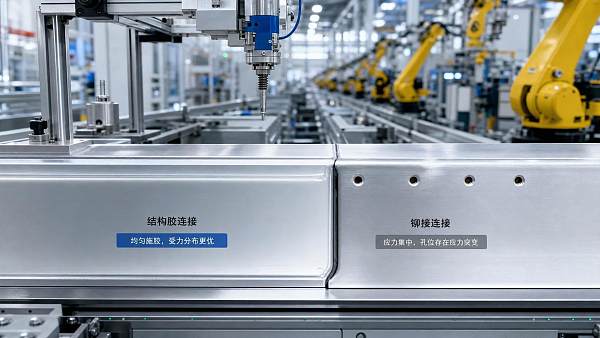
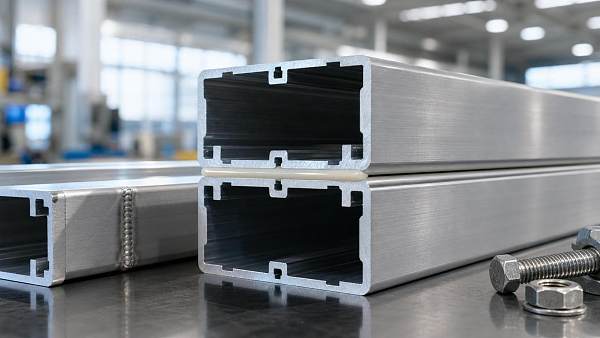
Compared with welding, 2K epoxy adhesive systems for metal bonding avoid local heat concentration.
That reduces warpage, protects coatings, and supports thinner substrates.
Compared with rivets or screws, they distribute load across a wider area.
That can improve fatigue performance and preserve cleaner surface appearance.
They are also useful for dissimilar materials, especially aluminum-to-steel combinations where direct mechanical joining may increase stress concentration.
Still, adhesives are not universal replacements.
Where immediate full strength, high peel exposure, or extreme service heat dominates, hybrid designs may be more reliable.
In many plants, the best answer is adhesive plus spot weld, adhesive plus rivet, or adhesive plus formed mechanical lock.
Performance areas that deserve attention
- Lap shear strength under realistic surface preparation conditions
- Peel and cleavage resistance in dynamic loading
- Durability after humidity and salt spray exposure
- Bond retention after oil contamination or process variation
- Compatibility with primer, e-coat, plating, or anodized layers
Process Reality Often Decides the Winning System
A technically strong adhesive can still fail during sourcing if the process window is too narrow.
This is where IADS coverage of dispensing equipment and fluid control becomes relevant.
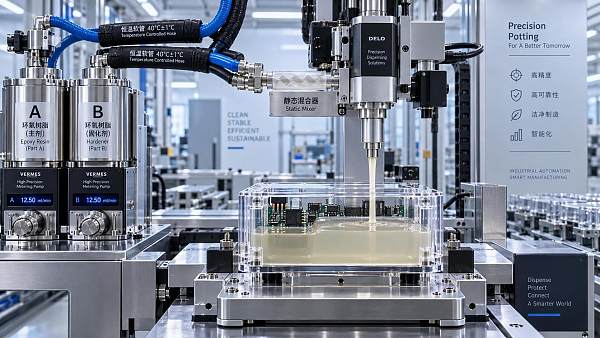
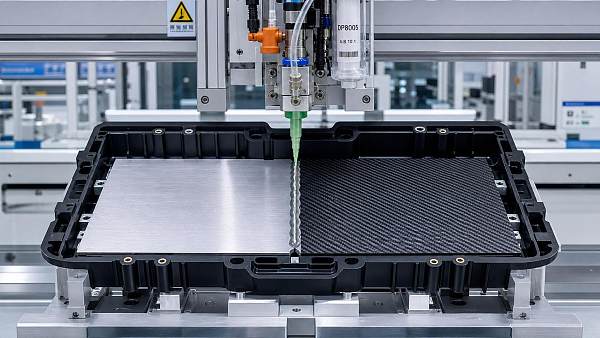
2K epoxy adhesive systems for metal bonding rely on stable ratio control, clean static mixing, and predictable bead placement.
When viscosity is high or cycle time is tight, dispensing method becomes part of the material decision.
Manual cartridges may suit maintenance or low-volume fabrication.
Automated meter-mix systems are usually better for repeatability, traceability, and cost control in continuous production.
More attention should also go to rework limits.
Once cured, structural epoxy is difficult to remove without damaging the assembly.
That raises the value of early line trials, operator training, and fixture design.
Questions that reduce sourcing risk
- Can the supplier provide cure data at the actual seasonal temperature range?
- How sensitive is the system to ratio drift or incomplete mixing?
- What surface preparation level is truly required for target performance?
- Is the adhesive validated with the intended dispensing hardware?
- Are REACH, RoHS, or halogen-related declarations needed?
Common Metal Bonding Scenarios
The same chemistry can serve very different assemblies.
Selection becomes clearer when the use case is defined by stress pattern, production speed, and regulatory expectations.
Automotive and EV structures
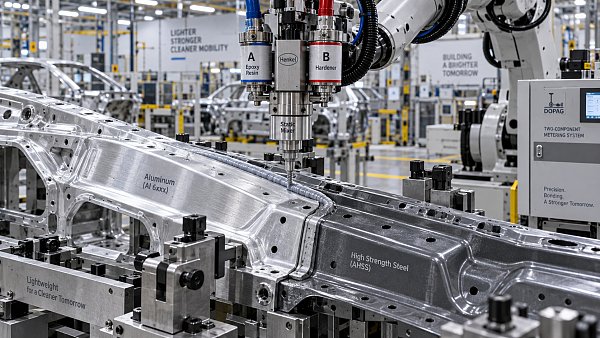
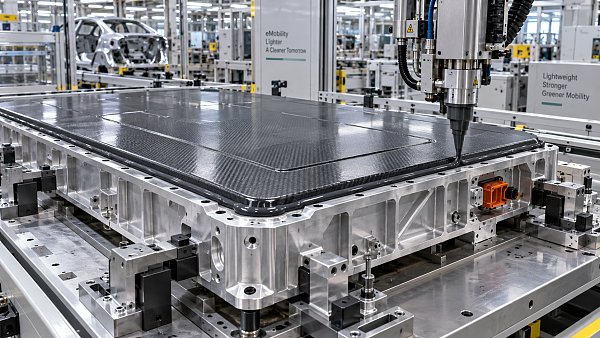
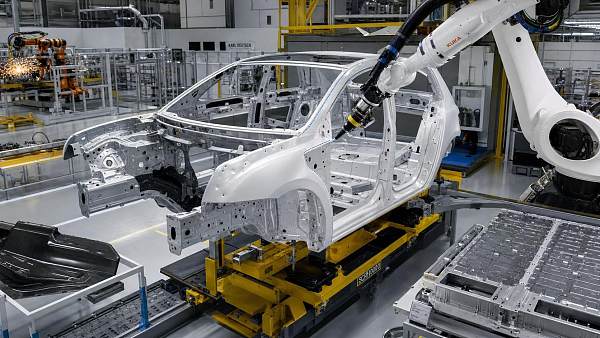
Lightweight body structures often use 2K epoxy adhesive systems for metal bonding to join aluminum panels, brackets, and reinforcement parts.
The target is not only strength.
It is also crash energy distribution, corrosion reduction, and cleaner mixed-material integration.
Electronics and enclosures
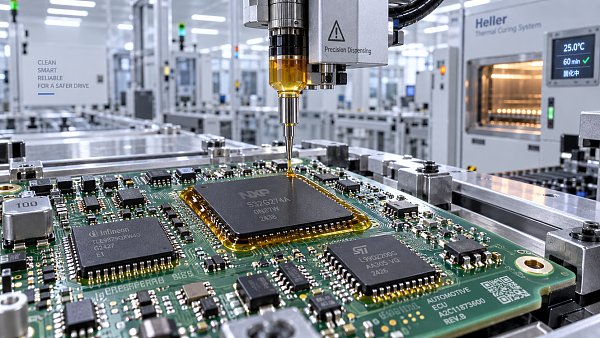
Metal housings, shields, frames, and brackets may need structural bonding without thermal damage.
In these builds, low-outgassing behavior, precise dispensing, and dimensional stability matter alongside mechanical strength.
Rail, wind, and heavy equipment
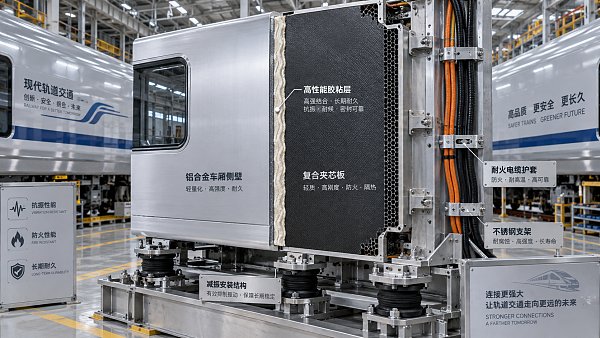
Larger assemblies usually care more about fatigue, vibration, moisture exposure, and field durability.
Here, bond line design and environmental testing often carry more weight than short-term lab strength values.
How to Compare Suppliers Without Reducing the Decision to Price
Unit price per kilogram is only one part of the picture.
A lower-cost adhesive may require stricter cleaning, slower cure, more scrap, or more expensive dispensing hardware.
That can erase any visible savings.
A stronger sourcing model compares total applied cost.
That includes material consumption, mixer waste, labor, fixture dwell time, maintenance, and failure risk.
IADS often frames adhesive evaluation this way because material chemistry and process economics are tightly linked.
A Practical Next Step for Evaluation
The best way to assess 2K epoxy adhesive systems for metal bonding is to narrow the decision to a few measurable conditions.
Start with substrate combination, surface state, joint geometry, required fixture time, service environment, and compliance needs.
Then compare candidate systems under the same dispensing and cure conditions expected in production.
That approach usually reveals more than a broad product catalog review.
For teams using IADS as a reference point, the most useful next move is to align adhesive selection with process capability, not just lab data.
When the comparison is built around real assembly constraints, 2K epoxy adhesive systems for metal bonding become easier to judge on performance, sourcing resilience, and long-term cost.
Recommended News
 Oct 08, 2026When do automotive adhesive lightweighting applications justify 2K epoxy?Adhesive lightweighting applications automotive: discover when 2K epoxy delivers durable, lightweight structural bonding for mixed-material vehicle designs.
 Sep 28, 2026How material characterization predicts structural adhesive bond durabilityStructural adhesive material characterization reveals how mechanical, thermal, cure, and environmental data predict bond durability—helping engineers select reliable solutions with confidence.
 Sep 25, 2026How to select epoxy structural bonding materials for high-load jointsEpoxy structural bonding materials: learn how to select durable solutions for high-load joints, balancing strength, toughness, surface prep, cure, and environmental resistance.
 Sep 20, 2026When 2K epoxy structural industrial bonding solutions make senseStructural industrial bonding solutions with 2K epoxy help engineers achieve durable, sealed joints for mixed materials. Explore selection, curing, and design insights.
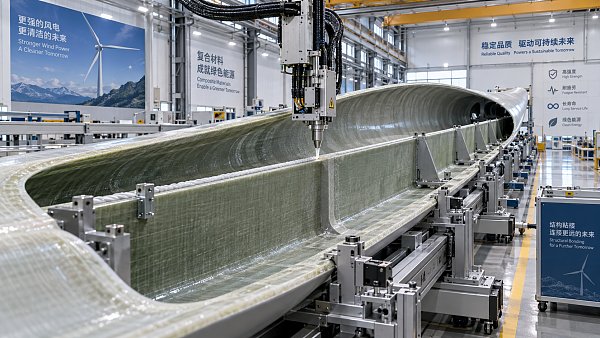
 Sep 18, 2026How bonding applications in wind energy prevent fatigue-related failuresBonding applications in wind energy help prevent fatigue-related failures through durable joint design, crack resistance, cure control, and reliable production processes.
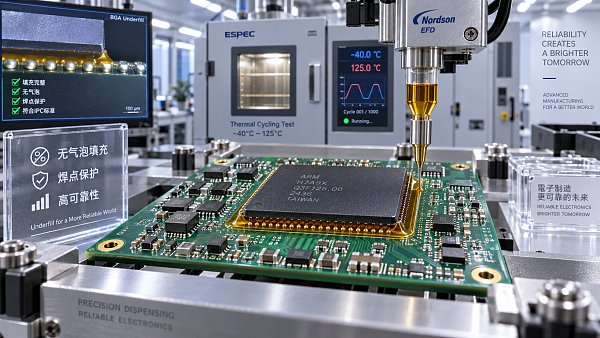
 Sep 23, 2026PCB Underfill Selection Guide for Fine-Pitch Components and Thermal CyclingPCB underfill selection guide for fine-pitch BGAs, CSPs, and flip-chip devices. Compare flow, CTE, modulus, adhesion, curing, and dispensing for reliable thermal cycling performance.
 Sep 23, 2026Circuit Board Level Underfill Market: Growth Drivers and Supply Chain OutlookExplore the electronic circuit board level underfill material market with actionable insights on reliability, dispensing precision, material selection, and supply chain resilience.
 Sep 20, 2026Rail Bonding Solutions for Vibration, Fire Safety, and Long-Term DurabilityBonding solutions for rail: explore proven strategies for vibration resistance, fire safety, durable joints, surface preparation, and production-ready validation.
 Sep 19, 2026Lightweight Adhesives for EVs: Reducing Mass Without Compromising Joint StrengthLight weighting adhesives for EVs help reduce vehicle mass while maintaining joint strength, durability, and production efficiency. Explore smarter bonding solutions for EV designs.
 Sep 15, 2026How fluid control engineering prevents voids in 2K epoxy sealantsFluid control engineering for sealants helps prevent voids in 2K epoxy systems. Explore practical methods for stable metering, mixing, pressure control, and air-free cavity filling.
 Sep 10, 2026When do adhesive lightweighting applications make sense in aerospace?Adhesive lightweighting applications aerospace: learn when bonded joints reduce mass, improve load transfer, and support durable, certifiable aircraft designs.
 Aug 28, 2026How to select an epoxy rail vehicle structural adhesive for fatigue loadsEpoxy rail vehicle structural adhesive selection for fatigue loads: evaluate toughness, joint design, surface prep, curing, and rail compliance for durable bonds.
 Aug 25, 2026When does BGA underfill technology for PCB assembly reduce field failures?BGA underfill technology for pcb assembly reduces field failures when thermal cycling, shock, or board flex drive solder fatigue. Learn when it boosts reliability—and when it adds cost without real gains.
 Aug 11, 2026How to Choose Epoxy Adhesive Systems for Metal Bonding Under Heat and VibrationEpoxy adhesive systems for metal bonding: learn how to compare heat resistance, vibration durability, cure profile, and dispensing fit to choose a more reliable solution.
 Aug 10, 2026Industrial Adhesive Technology Analysis: What Drives Bond Strength and Process Stability?Industrial adhesive technology analysis reveals what drives bond strength and process stability—from chemistry and surface prep to curing and dispensing. Learn how to reduce failure risk.
 Aug 05, 2026How to Evaluate Lightweight Structural Bonding for Composites Under Dynamic LoadsLightweight structural bonding for composites under dynamic loads demands more than static strength. Explore fatigue, impact, surface prep, and process factors to choose durable, weight-saving bonds.
 Jul 14, 2026How to Choose Lightweight Structural Bonding for PlasticsLightweight structural bonding for plastics explained: compare adhesive types, joint design, process control, and durability factors to choose lighter, stronger, production-ready assemblies.
 Jul 13, 2026Choosing an Adhesive for Automotive Supplier ProgramsAdhesive for automotive supplier programs affects strength, process stability, compliance, and launch risk. Learn how to choose the right solution for reliable, scalable production.
 Jul 11, 2026Automotive Adhesive Bonding Process: Key Steps That Prevent Bond FailureAutomotive adhesive bonding process essentials: learn the key steps that prevent bond failure, improve durability, and optimize surface prep, dispensing, and cure control in automotive assembly.
 Jul 09, 2026When Structural Adhesives Can Replace Riveting in Metal AssembliesStructural adhesive replacement riveting: learn when bonded metal assemblies can outperform rivets in fatigue, corrosion control, weight reduction, and automation.
 Jul 08, 2026Best Ways to Bond Dissimilar Material Composites Without CrackingDissimilar material bonding composites: learn how to prevent cracks in metal, plastic, battery, and laminate assemblies with smarter adhesive, process, and stress-control strategies.
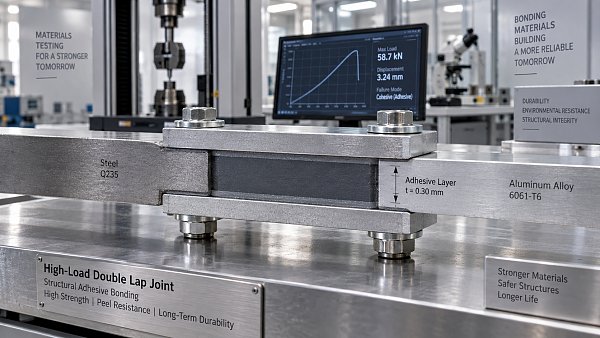
![]() Jul 07, 2026How Lap Shear Testing Reveals Structural Adhesive Joint Failure RisksLap shear structural adhesive joint testing reveals hidden failure risks before launch. Learn how process conditions, substrates, and aging affect joint reliability.
Jul 07, 2026How Lap Shear Testing Reveals Structural Adhesive Joint Failure RisksLap shear structural adhesive joint testing reveals hidden failure risks before launch. Learn how process conditions, substrates, and aging affect joint reliability. Jul 06, 2026Can Automotive Adhesive Replace Welding in Body Assembly?Automotive adhesive replacement for welding can improve multi-material body assembly with better sealing, lower corrosion risk, and more design flexibility. See where bonding beats welding.
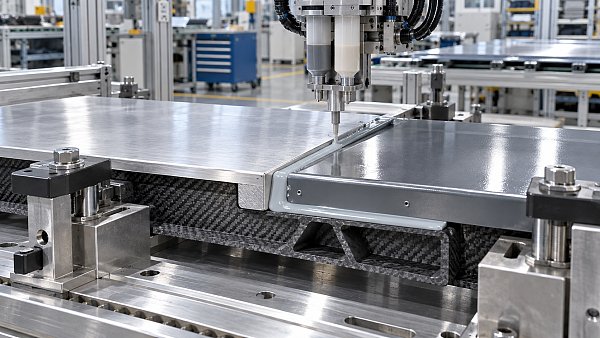
 Jul 04, 2026Structural Bonding for Aluminum: When 2K Epoxy Outperforms Welding and FastenersStructural bonding for aluminum with 2K epoxy can outperform welding and fasteners by reducing distortion, corrosion risk, and weight—see where it delivers stronger ROI.


Editor's Selection
The Archive Newsletter
Critical industrial intelligence delivered every Tuesday. Peer-reviewed summaries of the week's most impactful logistics and market shifts.