Improving Fluid Dispensing Precision Without Raising Assembly Cost
by
Published
Views:
Why does fluid dispensing precision matter more than ever?
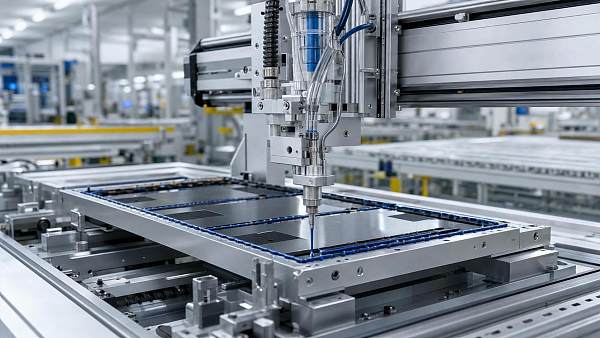
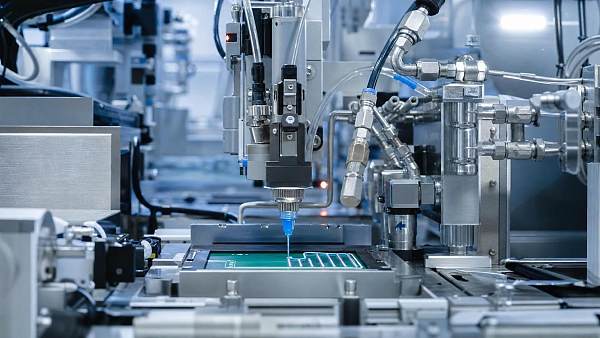
Improving fluid dispensing precision affects more than process capability. It directly shapes scrap rate, rework cost, throughput stability, and field reliability.
That is especially true where adhesives, sealants, encapsulants, underfills, and thermal potting materials must land within narrow tolerances.
In electronics assembly, a slight volume shift can create overflow, voids, weak bonding, or contamination of nearby components.
In EV battery production, poor bead control can affect heat transfer, insulation, and vibration resistance at the same time.
The common concern is cost. Many teams assume better fluid dispensing precision requires a costly equipment upgrade.
In practice, the first gains usually come from process discipline, valve matching, fluid handling, and material consistency.
That is why industry platforms such as IADS often connect dispensing accuracy with chemistry, curing behavior, automation, and compliance.
A dispensing line is rarely limited by one component alone. The real issue is usually interaction across the full application system.
Where do precision losses usually begin?
Many searches start with the valve, but the root cause often appears earlier in the process.
Fluid dispensing precision can drift because of viscosity change, air entrapment, unstable pressure, poor needle selection, or inconsistent part positioning.
For UV-curing glues and electronic adhesives, temperature variation can change flow behavior enough to alter dot size and line width.
For 2K materials, mix ratio variation and pot life can introduce a different problem: the system dispenses, but the cured result becomes inconsistent.
A practical way to diagnose loss points is to separate them into four layers:
- Material condition: viscosity, filler settling, moisture sensitivity, and shelf-life control.
- Feed stability: reservoir pressure, cartridge changeover, air bubbles, and hose length.
- Dispensing hardware: valve type, nozzle wear, needle diameter, and response speed.
- Motion and substrate: part flatness, fixture accuracy, vision alignment, and gap consistency.
When these layers are reviewed together, the solution often costs less than a full machine replacement.
Can better fluid dispensing precision be achieved without buying premium equipment?
Yes, but only if the baseline process is measured carefully. Precision improves when variation is removed, not simply when hardware becomes more expensive.
One common improvement is material conditioning. Holding adhesive temperature within a narrow range can reduce shot-to-shot variation quickly.
Another gain comes from valve-to-fluid matching. High-viscosity filled materials behave differently from low-viscosity UV adhesives or anaerobic sealants.
Using a general-purpose valve for every product usually lowers fluid dispensing precision over time.
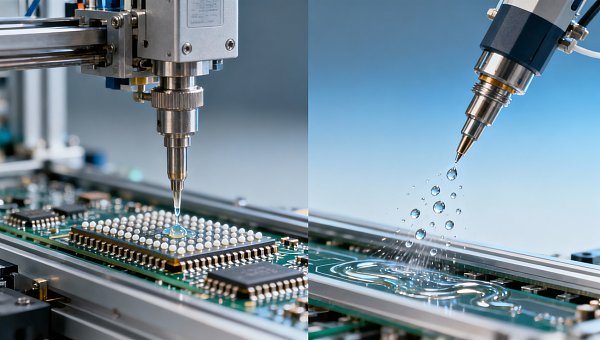
In smaller dose applications, piezoelectric jet valves may improve repeatability without slowing cycle time. They also reduce substrate contact.
For continuous beads, pressure-time systems can still perform well if the nozzle, pressure regulation, and motion path are controlled tightly.
The more realistic question is not whether advanced equipment works. It is whether the process can use that added capability.
The table below helps compare lower-cost actions before larger capital spending.
How should dispensing equipment be compared when cost control matters?
The useful comparison is total process value, not list price alone.
A lower-cost dispenser can become expensive if it causes adhesive waste, line stoppages, rework, or inconsistent curing.
Fluid dispensing precision should be evaluated against the actual application window. That includes volume tolerance, placement accuracy, takt time, and maintenance burden.
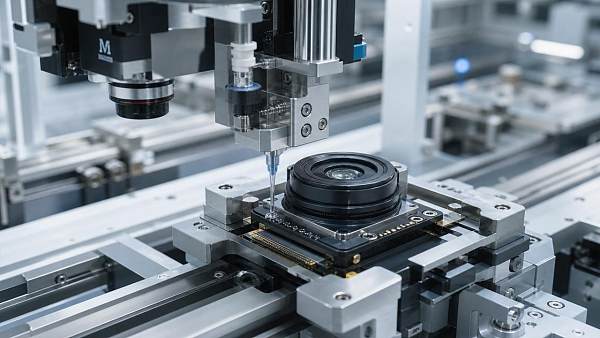
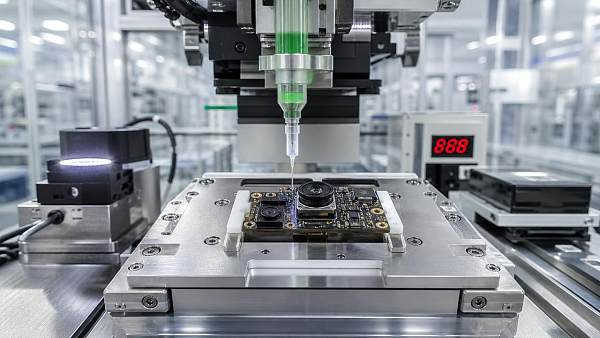
For camera modules, chip packaging, and fine electronic assemblies, the tolerance window is narrow enough that repeatability matters more than raw speed.
For automotive sealing or hot melt film support operations, uptime and bead continuity may matter more than micron-level placement.
A disciplined comparison usually includes these checks:
- Can the system handle current and future fluid families?
- How often do consumables need replacement?
- Is the valve proven with filled, abrasive, or moisture-sensitive materials?
- Does it support vision guidance, ratio control, or data logging if needed later?
- What is the cost of cleaning, flushing, and planned downtime?
IADS often frames this issue well because material selection and dispensing hardware should be reviewed together, not as separate purchases.
What mistakes reduce fluid dispensing precision even when the machine is capable?
One repeated mistake is focusing on machine specification while ignoring fluid behavior over time.
Adhesives can settle, separate, react with humidity, or change viscosity during long production runs. Precision fades before the operator notices it.
Another mistake is underestimating substrate variation. A stable bead on flat coupons may fail on warped housings or uneven battery trays.
There is also a documentation gap in many lines. Settings are copied, but process windows are not formally defined.
That makes fluid dispensing precision dependent on operator habit instead of controlled parameters.
The most preventable errors are usually these:
- Changing adhesive batch without confirming viscosity range.
- Using one needle size across different substrates.
- Skipping purge checks after material refill.
- Ignoring nozzle wear with abrasive thermal compounds.
- Treating cure quality as separate from dispensing quality.
In real production, fluid dispensing precision is a process control topic, not only a hardware topic.
Which applications benefit most from precision upgrades first?
Not every line needs the same level of improvement at the same time.
The best candidates are applications where fluid overuse is expensive, quality escapes are hard to detect, or rework damages the assembly.
Examples include BGA underfill, camera module bonding, display edge sealing, conformal coating start-stop points, and EV battery thermal interface dispensing.
These processes consume specialized materials and often run close to design limits.
The financial case becomes stronger when three signals appear together:
- Material cost per unit is high.
- Defects appear late in inspection or field use.
- Current process capability depends on frequent manual correction.
Where these conditions exist, better fluid dispensing precision often pays back through less waste before labor savings are even counted.
What is a practical next step before making a buying decision?
Start with a process map, not a catalog comparison.
List the fluid type, viscosity range, target volume, shot frequency, cure method, substrate tolerance, and acceptable defect modes.
Then compare current loss points against what actually drives assembly cost. Sometimes that is adhesive waste. Sometimes it is downtime or false rejects.
A useful review should also include compliance and sourcing factors, especially for halogen-free, RoHS, or REACH-sensitive applications.
That broader view is where a technical intelligence source such as IADS becomes valuable, because material data, valve options, and application cases can be assessed in one framework.
The goal is simple: improve fluid dispensing precision where it changes unit economics, while avoiding upgrades that add capability the line will never use.
A measured trial, clear acceptance criteria, and a realistic cost model usually lead to the best decision.
Recommended News
 Sep 11, 2026How can adhesive waste be reduced on SMT lines using precision piezoelectric jet valves?How can I reduce adhesive waste on an EMS line? Discover how precision piezoelectric jet valves cut consumption by 20–30%, slash rework, and boost yield—learn the physics behind smarter dispensing.
 Sep 04, 2026When is a piezoelectric jet valve the right choice for adhesive dispensing?Discover when dispensing valve technology for adhesives benefits from piezoelectric jetting. Compare speed, precision, fluid compatibility, and validation factors for reliable production.
 Aug 27, 2026When does a piezoelectric jet valve outperform contact dispensing?Dispensing valve technology for adhesives: discover when piezoelectric jet valves improve precision, speed, and yield over contact dispensing.
 Jul 27, 2026How to Choose Low Viscosity Adhesives for Fast, Accurate DispensingLow viscosity adhesives for fast, accurate dispensing: learn how to evaluate rheology, wetting, cure, and equipment fit to reduce defects and improve production performance.
![]() Jul 07, 2026Improving Fluid Dispensing Precision Without Raising Assembly CostFluid dispensing precision can improve without raising assembly cost. Learn practical ways to cut waste, boost consistency, and compare upgrades before you invest.
Jul 07, 2026Improving Fluid Dispensing Precision Without Raising Assembly CostFluid dispensing precision can improve without raising assembly cost. Learn practical ways to cut waste, boost consistency, and compare upgrades before you invest. Jul 04, 2026Dispensing Precision for Jet Valves: Key Causes of Dot Size Variation and How to Control ThemDispensing precision for jet valves explained: discover the key causes of dot size variation, practical control methods, and proven steps to improve yield, consistency, and product reliability.
 Jun 27, 2026How to Improve Dispensing Accuracy Testing ResultsDispensing accuracy testing improves when you control fluid behavior, valve response, pressure stability, and measurement methods. Learn practical steps to get more reliable, production-ready results.
 Jun 19, 2026Fluid Control Systems Electronics: Selection Factors That Affect YieldFluid control systems electronics selection can make or break yield. Learn how fluid behavior, valve design, pressure control, and automation integration drive accuracy, uptime, and better production results.
 Jun 16, 2026Shanghai Show Opens With ±0.25μL Piezo Jet Valve DebutShanghai Show opens with a piezo jet valve debut featuring ±0.25μL repeatability. Explore how this dispensing innovation could reshape EMS and semiconductor packaging sourcing.
 Jun 15, 2026Non Contact Micro Dispensing Applications in Camera Module AssemblyNon contact micro dispensing applications in camera module assembly improve precision, cleanliness, and yield. Explore key use cases, process checks, and smart selection tips.
 Jun 13, 2026Micro Dispensing for Medical Devices: Accuracy Risks and Process TipsMicro dispensing for medical devices demands more than tiny shot sizes. Learn key accuracy risks, valve selection tips, process controls, and validation steps to improve repeatability and reduce production risk.
 Jun 12, 2026BIS Tightens AI Chip Export Rules for China-Headquartered FirmsBIS Tightens AI Chip Export Rules for China-Headquartered Firms: learn how the new BIS rule affects AI chip licensing, exports, compliance, and delivery planning.
 Jun 11, 2026How to Choose Low Viscosity Adhesives for Precision Dispensing ApplicationsLow viscosity adhesives for precision dispensing: learn how to balance flow, wetting, cure speed, and process stability to improve bond accuracy, reduce defects, and choose with confidence.
 Jun 04, 2026Dispensing Valves vs Piezo Jetting: Which Cuts Rework?Dispensing valves vs piezo jetting: learn which method cuts rework faster, lowers fluid waste, and improves precision for electronics, EV battery assembly, and automated production lines.

Editor's Selection
The Archive Newsletter
Critical industrial intelligence delivered every Tuesday. Peer-reviewed summaries of the week's most impactful logistics and market shifts.