Automotive Lightweighting: Where Adhesives Cut Weight Most
by
Published
Views:
Automotive lightweighting has moved from engineering ambition to business necessity. Lower vehicle mass now influences emissions targets, EV driving range, crash strategy, and assembly economics at the same time.
That shift explains why adhesives matter more than before. They do not reduce weight simply by adding a lighter joining material. Their real value comes from enabling different designs, thinner sections, and fewer fasteners.
For companies comparing joining options, the central question is practical: where do adhesives cut weight most, and under what conditions do they outperform welding, bolts, rivets, or tapes used alone?
Why lightweighting and bonding are now closely linked
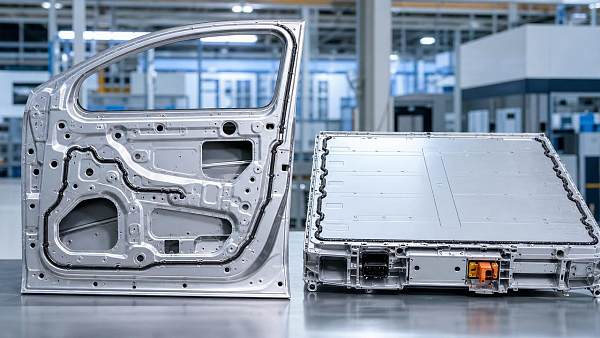
Automotive lightweighting is no longer about one material replacing another. It is about how the whole body, battery system, interior module, and closure assembly are designed, joined, and produced.
Mechanical fastening often adds hidden mass. A fastener has its own weight, but it also drives overlap zones, reinforcements, and local thickness increases around drilled or punched areas.
Structural adhesives change that equation. By spreading load across a broader bond line, they can reduce point stress and support lighter substrates, especially in mixed-material platforms.
This is especially relevant in body-in-white programs using aluminum, high-strength steel, composites, and engineered plastics together. Traditional joining between dissimilar materials often creates both weight and corrosion challenges.
From an industrial perspective, this is where platforms such as IADS become useful. The subject is not only adhesive chemistry, but also dispensing accuracy, cure behavior, compliance, and process integration.
Where adhesives usually cut the most weight
Not every bonded part delivers the same benefit. The biggest gains typically appear where fasteners force extra material, or where joining methods limit geometry and material selection.
Body structure and closures
Doors, hoods, liftgates, roofs, and floor assemblies are strong candidates. Here, adhesives can replace some spot welds, rivets, and hem flange reinforcements while improving stiffness distribution.
A bonded hem flange can allow thinner panels or fewer secondary brackets. On aluminum closures, adhesive bonding also helps manage fatigue and galvanic corrosion risks at material interfaces.
Battery packs and EV enclosures
In EV platforms, automotive lightweighting depends heavily on the battery pack. Adhesives, sealants, and thermal potting compounds help reduce bracket count, simplify module retention, and improve pack integration.
A well-designed bond can combine structural support, sealing, vibration damping, and thermal management. That creates a multi-function benefit that mechanical joining rarely delivers on its own.
Interior and exterior modules
Instrument panels, lighting units, camera housings, trim assemblies, and aerodynamic components also benefit. Here, weight savings often come from part consolidation rather than direct fastener replacement alone.
Thin bond lines, hot melt films, and specialized tapes can support cleaner lamination and lower visible hardware count. The result is lighter assembly with fewer cosmetic constraints.
The real advantage is design freedom
The strongest case for automotive lightweighting through adhesives is usually indirect. Adhesives give design teams more freedom to choose lighter substrates and reshape assemblies around performance instead of fastener access.
That matters when replacing steel with aluminum or composites. A bolted joint may require inserts, washers, added thickness, or localized supports. A structural adhesive can reduce many of those penalties.
It also matters in crash and NVH performance. Bonded joints can increase stiffness continuity and reduce vibration paths. In some programs, that allows downstream savings in damping materials or added reinforcements.
This does not mean adhesives work alone in every case. Hybrid joining remains common, especially where peel loads, serviceability, grounding, or immediate handling strength are critical.
What decision-makers should evaluate before changing the joining strategy
Automotive lightweighting projects can underperform when teams focus only on adhesive datasheets. Weight reduction depends on the full system, including geometry, process window, cure profile, and production takt time.
Material compatibility
The first check is the substrate mix. Steel, aluminum, composite, coated metal, and engineering plastics all behave differently in bonding, thermal cycling, and corrosion exposure.
Mechanical load profile
Shear, peel, impact, fatigue, and crash loads should be reviewed together. A joint that looks efficient in static testing may fail under vibration, thermal expansion mismatch, or edge peel conditions.
Dispensing and cure control
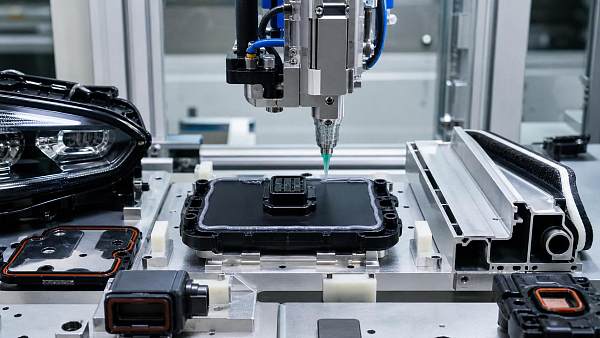
The best material can still create scrap if fluid control is unstable. Automated dispensing systems, static mixers, jet valves, and vision-guided paths strongly influence bond consistency and final mass balance.
This is one reason the IADS view is relevant. Adhesive performance, polymer cross-linking, flow control, and line automation need to be assessed together, not as isolated procurement decisions.
Compliance and durability
Programs should also screen for REACH SVHC, RoHS, halogen-free requirements, flame retardancy, and aging behavior. Lightweight parts that fail compliance or durability targets rarely remain cost-effective.
- Compare total joined assembly weight, not adhesive weight alone.
- Measure whether fastener elimination also removes brackets or overlap length.
- Validate cure time against line speed and fixture strategy.
- Check if thermal and structural functions can be combined.
- Review repair, recycling, and end-of-life implications early.
How the market is changing around automotive lightweighting
The market is moving beyond simple bonding strength claims. Current demand favors systems that combine structural adhesion with cleaner processing, low VOC profiles, precision dispensing, and digital traceability.
EV growth reinforces that trend. Battery safety, thermal management, and pack sealing now sit beside classic body lightweighting goals. The joining decision increasingly affects safety, manufacturability, and warranty risk.
Suppliers that can explain both chemistry and application behavior have an advantage. In practice, the useful comparison is no longer adhesive versus weld alone, but integrated joining architecture versus legacy assembly logic.
That is why industry intelligence matters. Platforms covering structural adhesives, potting compounds, hot melt films, tapes, and dispensing equipment help teams compare technologies across the full production chain.
A practical next step for evaluating opportunities
A useful starting point is to map where current vehicle programs carry unnecessary joining mass. Focus on assemblies with dense fastener counts, mixed materials, high overlap length, or separate sealing and reinforcement steps.
Then compare candidate solutions at system level: joint performance, line speed, thermal behavior, compliance readiness, and total manufacturing cost. That approach gives automotive lightweighting a clearer commercial basis.
Adhesives cut the most weight where they remove more than hardware. They create lighter architectures, fewer parts, and more integrated functions. The next gains will come from understanding those trade-offs early and testing them rigorously.
Recommended News
 Jul 18, 2026ECHA Draft Tightens Phthalate Limits for Sealant ExportsECHA Draft Tightens Phthalate Limits for Sealant Exports, cutting REACH Annex XVII thresholds to 0.01%. See how EU compliance risks may impact exporters, importers, and sourcing decisions.
 Jul 14, 2026CPSC Cuts Lead Limit for PU Windshield SealantsCPSC cuts lead limit for PU windshield sealants from 90 ppm to 5 ppm, creating urgent import, testing, and sourcing risks. Learn what the new rule means for compliance and shipments.
 Jun 29, 2026Japan JIS T 2810:2026 Adds Moist-Heat Test for PU Blade SealantsJapan JIS T 2810:2026 adds a moist-heat test for PU blade sealants, directly affecting certification, supplier approval, and export access. See what wind industry teams must review now.
 Jun 28, 2026Japan Enforces JIS T 2810:2026 for PU Blade SealantsJIS T 2810:2026 now governs PU blade sealants in Japan, setting a strict 85/85 durability threshold. Learn how TEPCO and MHI procurement rules affect compliance, exports, and market access.
 Jun 27, 2026JIS T 2810:2026 Raises Entry Bar for PU Blade SealantsJIS T 2810:2026 raises the compliance bar for PU blade sealants with new moisture-heat cycling and third-party test rules. See how it impacts certification, bidding, exports, and delivery planning.
 Jun 16, 2026Flexible Adhesive for Automotive: What Prevents Bond Failure?Flexible adhesive for automotive selection goes beyond initial strength. Learn what prevents bond failure under heat, vibration, moisture, and real production conditions.
 Jun 15, 2026Automotive Lightweighting: Where Adhesives Cut Weight MostAutomotive lightweighting starts with smarter joining. Discover where adhesives cut the most weight in body structures, EV battery packs, and modules for better performance and lower assembly cost.
Editor's Selection
The Archive Newsletter
Critical industrial intelligence delivered every Tuesday. Peer-reviewed summaries of the week's most impactful logistics and market shifts.