Structural Bonding for Enclosures: When Silicone Beats Epoxy
by
Published
Views:
Structural Bonding for Enclosures: When Silicone Beats Epoxy
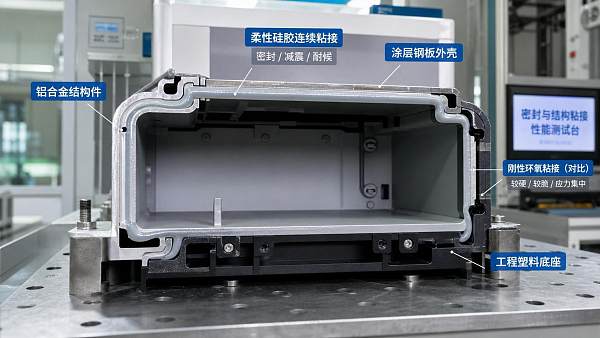
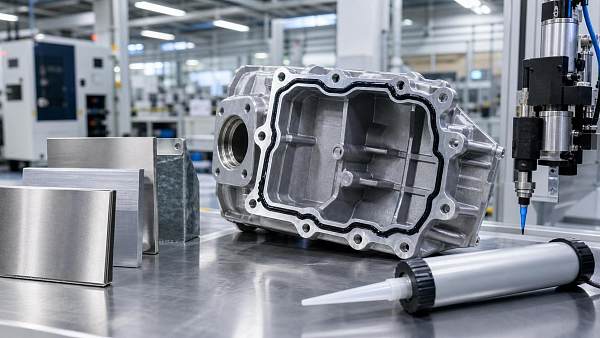
In structural bonding for enclosures, material choice shapes reliability, takt time, and cost control.
Epoxy often leads the conversation because it offers high strength and a familiar qualification path.
Yet many enclosure programs fail for reasons that pure strength data does not predict.
Thermal cycling, vibration, sealing demand, and mixed-material interfaces often decide field performance.
That is where silicone can outperform epoxy in structural bonding for enclosures.
The better question is not which chemistry is stronger on paper.
The real question is which one protects the enclosure through its full service life.
For selection decisions, that shift in thinking changes material ranking very quickly.
Why epoxy is still the default in structural bonding for enclosures
Epoxy earned its position for solid reasons.
It delivers high lap shear strength, stiffness, and strong adhesion to many metals and composites.
It also supports gap filling and load transfer in rigid enclosure assemblies.
For static, rigid structures, epoxy can be exactly the right answer.
It fits programs where substrates match closely in thermal expansion and sealing is secondary.
Many sourcing teams also prefer epoxy because supplier comparisons are easier.
Still, structural bonding for enclosures rarely happens in a perfectly rigid environment.
Once heat, shock, moisture, and material mismatch appear, stiffness can become a liability.
When silicone beats epoxy in enclosure design
Silicone wins when the bond line must absorb movement without cracking.
That matters in structural bonding for enclosures used outdoors, near motors, or around heat-generating electronics.
Compared with epoxy, silicone typically offers far better elongation and stress relaxation.
This reduces stress concentration at corners, fastener transitions, and thin-wall sections.
It also helps maintain bond integrity when enclosure parts expand at different rates.
A few common cases stand out:
- Aluminum bonded to coated steel, glass, or engineering plastics
- Outdoor control boxes facing daily temperature swings
- Electronics housings needing both bonding and environmental sealing
- Battery, rail, or automotive enclosures exposed to vibration
- Large panels where dimensional tolerance creates variable bond gaps
In these situations, structural bonding for enclosures is not only a strength problem.
It is a movement, sealing, and fatigue-management problem.
1. Thermal cycling resistance changes the outcome
Many enclosure failures begin after repeated heating and cooling, not after a one-time load test.
Epoxy can lose performance when cyclic stress builds at a rigid bond line.
Silicone handles thermal expansion mismatch much more gracefully.
For structural bonding for enclosures near power electronics, this can be decisive.
2. Sealing and bonding can be combined
Epoxy is a strong adhesive, but it is not always the best long-term sealant.
Silicone often delivers both structural support and durable sealing in one material step.
That can simplify BOM structure and reduce process complexity.
3. Dissimilar material bonding becomes less risky
Enclosure platforms increasingly mix metal, coated surfaces, composites, and plastics.
Rigid adhesives struggle when those materials move differently during service.
Silicone reduces interface stress and lowers the chance of brittle debonding.
Decision criteria for structural bonding for enclosures
A useful selection process starts with application demands, not supplier brochures.
For structural bonding for enclosures, five criteria usually separate silicone from epoxy.
This comparison helps narrow options before laboratory trials begin.
It also prevents overbuying stiffness where flexibility would protect the assembly better.
Common selection mistakes in structural bonding for enclosures
Several sourcing errors appear again and again in enclosure programs.
- Choosing by peak strength only. High initial strength may hide poor fatigue behavior.
- Ignoring sealing duty. Water ingress can damage a good bond system.
- Skipping real substrate tests. Coatings and surface energy often change adhesion ranking.
- Underestimating process variation. Gap changes can alter cure and stress distribution.
- Treating lab coupons like field reality. Actual enclosure geometry creates very different stress paths.
In practical terms, structural bonding for enclosures should be qualified as a system.
That means adhesive chemistry, joint design, dispensing control, cure conditions, and test profile must align.
How to evaluate silicone versus epoxy in a real program
A simple decision framework keeps evaluation grounded and comparable.
Define the true failure mode
Start by asking what failure matters most.
Is it cracking, leakage, loss of stiffness, corrosion exposure, or debonding after cycling?
That answer usually points toward the right chemistry faster than raw datasheet comparison.
Test on production-relevant joints
Use actual substrates, target gap, and intended surface treatment.
For structural bonding for enclosures, corner sections and flange geometries are especially important.
Include aging, not just initial performance
Run thermal cycling, humidity exposure, and vibration where relevant.
Silicone often shows its advantage after these tests, not before them.
Review process economics
Material price alone is a poor basis for choice.
Also compare dispensing ease, rework impact, fixture time, sealing elimination, and warranty risk.
A silicone system may lower total cost even when its unit price looks higher.
A practical rule for structural bonding for enclosures
Use epoxy when the enclosure behaves like a rigid structure and stiffness drives performance.
Use silicone when the enclosure must survive movement, seal reliably, and bond mixed materials over time.
That rule is simple, but it matches many real-world outcomes.
In structural bonding for enclosures, the winning material is the one that stays functional after stress accumulates.
Before final release, compare silicone and epoxy on the exact joint, environment, and production method you plan to use.
That decision path is more defensible, easier to communicate, and far less likely to create late-stage enclosure risk.
Recommended News
 Sep 26, 2026What to verify before selecting a structural adhesive systems manufacturerChoose a structural adhesive systems manufacturer with confidence. Verify joint performance, cure control, dispensing, compliance, quality traceability, and expert engineering support.
 Jul 12, 2026UL 1977-2026 Takes Effect for Structural SiliconeUL 1977-2026 takes effect for structural silicone, introducing a tougher durability test that can impact certification, bidding access, exports, and procurement planning.
 Jul 11, 2026Industrial Sealants for Metal: What Affects Service Life and Rework CostIndustrial sealants for metal affect more than purchase price. Learn what drives service life, downtime risk, and rework cost so buyers can choose longer-lasting, lower-cost sealing solutions.
 Jul 11, 2026UL 1977-2026 Takes Effect for Structural SealantsUL 1977-2026 takes effect for structural sealants, reshaping North American bidding, procurement, and compliance. See what exporters, manufacturers, and buyers must review now.
 Jul 10, 2026Structural Bonding for Enclosures: When Silicone Beats EpoxyStructural bonding for enclosures explained: discover when silicone outperforms epoxy in thermal cycling, vibration, sealing, and mixed-material designs for longer-lasting enclosure performance.
 Jul 10, 2026UL 1977-2026 Takes Effect for Silicone SealantsUL 1977-2026 takes effect for silicone sealants, reshaping compliance for curtain walls, PV frames, and EV battery packs. See who is affected, what to verify, and how to protect market access.
 Jul 09, 2026Rail Vehicle Adhesive Bonding: Key Failure Risks and Control PointsRail vehicle adhesive bonding: learn the key failure risks, control points, inspection methods, and process tips to improve safety, durability, and production consistency.
 Jul 09, 2026UL 1977-2026 Takes Effect for Silicone Structural SealantsUL 1977-2026 takes effect for silicone structural sealants, adding new durability testing and a strict October 2026 sales cutoff. Learn who is affected, what to check now, and how to stay eligible for the North American market.
 Jul 08, 2026Rail Vehicle Bonding Sealants: Key Failure Risks in Long-Service JointsRail vehicle bonding sealants face hidden long-service risks from movement, moisture, UV, and process variation. Learn the key failure triggers and smarter selection logic.
 Jul 08, 2026China Tightens Export Checks on Structural Silicone SealantsChina Tightens Export Checks on Structural Silicone Sealants: learn how new VOC and lead/cadmium limits may disrupt exports, compliance, and delivery planning.
![]() Jul 07, 2026China Tightens Export Checks on Structural SealantsChina tightens export checks on structural sealants from Aug 1, 2026. Learn how batch inspections, VOC and phthalate limits may delay customs and raise compliance costs.
Jul 07, 2026China Tightens Export Checks on Structural SealantsChina tightens export checks on structural sealants from Aug 1, 2026. Learn how batch inspections, VOC and phthalate limits may delay customs and raise compliance costs. Jul 06, 2026China Tightens Export Checks on Structural Silicone SealantsChina Tightens Export Checks on Structural Silicone Sealants, triggering 100% batch inspections, stricter VOC and phthalate limits, and possible shipping delays. Learn what exporters and buyers must do now.
 Jun 26, 2026East China Silicone Output Curbs Extend Export Lead TimesEast China silicone output curbs are extending export lead times as 107 rubber supply tightens. Learn how silicone structural sealants and high-temperature silicone gel supply chains may be affected.
![]() Jun 25, 2026East China Output Curbs Extend Silicone Export Lead TimesEast China output curbs are extending silicone export lead times from 4 weeks to 6–8 weeks. Learn how DMC cuts, rush fees, and tighter supply may impact buyers, exporters, and delivery planning.
Jun 25, 2026East China Output Curbs Extend Silicone Export Lead TimesEast China output curbs are extending silicone export lead times from 4 weeks to 6–8 weeks. Learn how DMC cuts, rush fees, and tighter supply may impact buyers, exporters, and delivery planning. Jun 24, 2026Structural Adhesives Market Outlook: Where Growth and Margin Are ShiftingStructural adhesives market trends are shifting toward higher-value applications in EVs, electronics, and automation. Discover where growth, margins, and competitive advantage are moving now.
 Jun 13, 2026Zhuhai Flags Rising TRO Risks in Cross-Border E-CommerceZhuhai flags rising TRO risks in cross-border e-commerce to the U.S. Learn how trademark filing, labeling, and certification gaps may trigger Amazon or Walmart complaints.
 Jun 11, 2026Acrylic Structural Adhesives Explained: Best Uses, Strengths, and LimitsAcrylic structural adhesives explained: discover their best uses, key strengths, and limits for fast, durable bonding in mixed-material assemblies.
 Jun 04, 2026Structural Adhesives: When Bond Strength Fails in ServiceStructural adhesives can lose bond strength in service due to heat, moisture, fatigue, and process errors. Learn key failure causes, inspection clues, and repair insights.



Editor's Selection
The Archive Newsletter
Critical industrial intelligence delivered every Tuesday. Peer-reviewed summaries of the week's most impactful logistics and market shifts.