Acrylic Structural Adhesives Explained: Best Uses, Strengths, and Limits
by
Published
Views:
Why are acrylic structural adhesives getting so much attention?
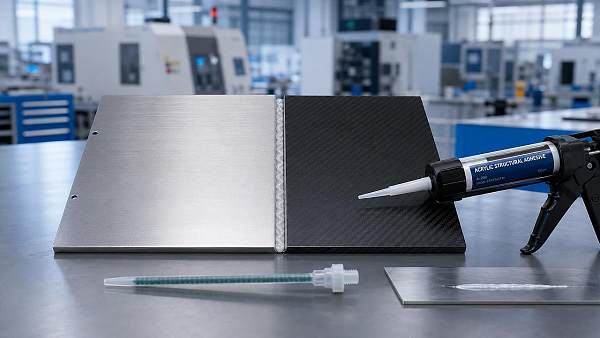
Acrylic structural adhesives sit in an interesting middle ground between speed, strength, and process flexibility.
They are often chosen when welding adds heat risk, riveting adds weight, or mechanical fastening complicates mixed-material assembly.
That is why they appear so often in vehicle parts, metal fabrications, composite panels, appliances, and industrial enclosures.
In simple terms, acrylic structural adhesives are reactive bonding materials designed to create load-bearing joints.
They usually bond quickly, tolerate less-than-perfect surfaces better than some alternatives, and perform well on dissimilar substrates.
That matters in real production lines, where ideal surface preparation is not always realistic.
Across industrial intelligence platforms such as IADS, this category is frequently discussed alongside epoxy systems, dispensing equipment, and lightweight assembly methods.
The reason is practical, not theoretical.
When teams compare bonding materials, they rarely ask only about chemistry.
They want to know cure speed, shear strength, gap tolerance, automation fit, compliance impact, and long-term durability.
Acrylic structural adhesives deserve attention because they can solve several of those questions at once, but not all of them.
What exactly makes acrylic structural adhesives different from other bonding options?
The short answer is balanced performance.
Compared with many epoxies, acrylic structural adhesives usually cure faster and need less aggressive surface treatment.
Compared with polyurethanes, they often deliver higher structural strength and faster handling.
Compared with silicones, they are far more suitable for load-bearing joints.
Their chemistry also helps them bond metals, plastics, and composites in combinations that are difficult for fastening alone.
This is one reason acrylic structural adhesives are common in mixed-material designs.
Another point is stress distribution.
Instead of concentrating force at a rivet or screw point, the adhesive spreads load across the bonded area.
That can improve fatigue resistance and preserve thinner substrates.
Still, “different” does not mean universally better.
Some acrylic structural adhesives have strong odor, limited high-temperature resistance, or shorter open time than slower-curing systems.
Those trade-offs should be part of the selection process from the beginning.
A quick comparison helps clarify the choice
This kind of comparison is useful because material choice rarely happens in isolation.
It usually sits inside a wider decision about automation, throughput, compliance, and lifecycle performance.
Where do acrylic structural adhesives usually make the most sense?
They make the most sense where strong bonds are needed without the penalties of heat or extra hardware.
Automotive components are a common example.
Bonding brackets, body panels, composite parts, and lightweight assemblies often benefits from acrylic structural adhesives.
In industrial equipment, they are useful for metal housings, access panels, and structural subassemblies.
In transportation and construction products, they are often selected for sandwich panels, trims, and reinforced composite structures.
A more specific advantage appears when dissimilar materials meet.
Aluminum-to-composite, steel-to-plastic, or coated metal-to-fiber parts can be difficult to join efficiently with only fasteners.
Acrylic structural adhesives help reduce drilling, improve appearance, and support broader stress distribution.
In actual process planning, the best fit usually includes these conditions:
- The assembly needs fast fixture or handling strength.
- Surface preparation must stay practical rather than laboratory-perfect.
- Joint design benefits from impact or peel resistance.
- Welding heat could distort parts or damage coatings.
- Mixed materials are part of the design strategy.
This is also why discussions on IADS often connect structural adhesives with dispensing valves, static mixers, and automated fluid control.
A good adhesive still depends on consistent application volume, bead quality, and cure management.
How do you judge whether acrylic structural adhesives are the right choice?
A common mistake is to compare only datasheet strength numbers.
A better approach is to match the adhesive to the real joint, process window, and service environment.
Start with the substrates.
Are the parts bare metal, coated metal, thermoplastic, composite, or a combination?
Then check the load type.
Shear, peel, impact, vibration, and thermal cycling do not stress a joint in the same way.
After that, look at manufacturing reality.
Does the line need a long working time or very fast fixture?
Will dispensing be manual, meter-mix, or fully automated?
Is there ventilation support for odor-sensitive environments?
The most useful decision points can be summarized like this:
- Check lap shear, peel, and impact data on the actual substrate pair.
- Review temperature exposure, humidity, and chemical contact.
- Confirm gap-filling ability and tolerance for part variation.
- Evaluate pot life, open time, and fixture time against line speed.
- Verify dispensing compatibility with mixers, cartridges, or automated systems.
- Screen for REACH, RoHS, and other application-specific compliance needs.
This broader view matters because an adhesive can look ideal in the lab and still fail economically on the production floor.
What are the main strengths people often overlook?
Fast cure is the obvious benefit, but it is not the only one.
Acrylic structural adhesives also offer useful toughness.
That toughness helps the bond tolerate shock, vibration, and dynamic loads better than more brittle systems in some designs.
Another overlooked strength is reduced dependence on perfect surface preparation.
This does not mean surface preparation can be ignored.
It means acrylic structural adhesives can remain practical where slight oil residue or variable shop conditions exist.
That can lower process complexity compared with stricter structural systems.
They also support cleaner aesthetics.
No weld marks, fewer visible fasteners, and less distortion can improve product finish.
For market analysis and supplier comparison, these practical strengths often matter as much as raw bond strength.
A material that saves process steps may create more value than one with a slightly higher datasheet number.
Where do acrylic structural adhesives reach their limits?
This is the question that prevents expensive mistakes.
Acrylic structural adhesives are strong, but they are not the default answer for every structural joint.
High continuous temperature exposure is one common limit.
If the bonded part sits near engines, power electronics, or other heat-intensive zones, an epoxy may hold properties better.
Odor and workplace handling can also become a concern.
Some formulations require tighter control of ventilation, storage, and operator exposure conditions.
Open time is another issue.
Very fast systems improve throughput, but they can reduce assembly flexibility on larger or more complex parts.
Bond line thickness and exotherm should also be checked carefully in larger-volume applications.
The practical warning signs usually include:
- Continuous high heat beyond the adhesive’s validated range.
- Exposure to aggressive chemicals without test data.
- Very large assemblies needing long alignment time.
- Poor joint design that relies on peel-heavy loading.
- Unverified automation settings that change mix ratio or bead consistency.
More often than not, failures blamed on the adhesive actually come from design mismatch, poor dispensing control, or unrealistic cure assumptions.
What is the smartest next step before choosing one?
The smartest next step is not to ask for the “strongest” grade.
It is to define the joint, environment, and process in enough detail to compare options fairly.
Acrylic structural adhesives can be excellent when fast bonding, mixed-material joining, and practical production speed all matter.
They can also disappoint when heat resistance, long open time, or chemical durability are underestimated.
A useful evaluation path is to shortlist several chemistries, test them on real substrates, and review dispensing fit at the same time.
That is where industry resources like IADS become valuable.
They help connect adhesive chemistry with process equipment, compliance context, and realistic application benchmarks.
If the goal is better material judgment, focus on these final checks:
- Map the exact substrate pair and service conditions.
- Compare acrylic structural adhesives against epoxy and mechanical joining, not in isolation.
- Validate cure speed, handling strength, and long-term durability together.
- Include dispensing method, ventilation, and compliance review in the decision.
That approach leads to a better answer than simply following a trend or a headline strength claim.
Recommended News
 Jul 12, 2026UL 1977-2026 Takes Effect for Structural SiliconeUL 1977-2026 takes effect for structural silicone, introducing a tougher durability test that can impact certification, bidding access, exports, and procurement planning.
 Jul 11, 2026Industrial Sealants for Metal: What Affects Service Life and Rework CostIndustrial sealants for metal affect more than purchase price. Learn what drives service life, downtime risk, and rework cost so buyers can choose longer-lasting, lower-cost sealing solutions.
 Jul 11, 2026UL 1977-2026 Takes Effect for Structural SealantsUL 1977-2026 takes effect for structural sealants, reshaping North American bidding, procurement, and compliance. See what exporters, manufacturers, and buyers must review now.
 Jul 10, 2026Structural Bonding for Enclosures: When Silicone Beats EpoxyStructural bonding for enclosures explained: discover when silicone outperforms epoxy in thermal cycling, vibration, sealing, and mixed-material designs for longer-lasting enclosure performance.
 Jul 10, 2026UL 1977-2026 Takes Effect for Silicone SealantsUL 1977-2026 takes effect for silicone sealants, reshaping compliance for curtain walls, PV frames, and EV battery packs. See who is affected, what to verify, and how to protect market access.
 Jul 09, 2026Rail Vehicle Adhesive Bonding: Key Failure Risks and Control PointsRail vehicle adhesive bonding: learn the key failure risks, control points, inspection methods, and process tips to improve safety, durability, and production consistency.
 Jul 09, 2026UL 1977-2026 Takes Effect for Silicone Structural SealantsUL 1977-2026 takes effect for silicone structural sealants, adding new durability testing and a strict October 2026 sales cutoff. Learn who is affected, what to check now, and how to stay eligible for the North American market.
 Jul 08, 2026Rail Vehicle Bonding Sealants: Key Failure Risks in Long-Service JointsRail vehicle bonding sealants face hidden long-service risks from movement, moisture, UV, and process variation. Learn the key failure triggers and smarter selection logic.
 Jul 08, 2026China Tightens Export Checks on Structural Silicone SealantsChina Tightens Export Checks on Structural Silicone Sealants: learn how new VOC and lead/cadmium limits may disrupt exports, compliance, and delivery planning.
![]() Jul 07, 2026China Tightens Export Checks on Structural SealantsChina tightens export checks on structural sealants from Aug 1, 2026. Learn how batch inspections, VOC and phthalate limits may delay customs and raise compliance costs.
Jul 07, 2026China Tightens Export Checks on Structural SealantsChina tightens export checks on structural sealants from Aug 1, 2026. Learn how batch inspections, VOC and phthalate limits may delay customs and raise compliance costs. Jul 06, 2026China Tightens Export Checks on Structural Silicone SealantsChina Tightens Export Checks on Structural Silicone Sealants, triggering 100% batch inspections, stricter VOC and phthalate limits, and possible shipping delays. Learn what exporters and buyers must do now.
 Jun 26, 2026East China Silicone Output Curbs Extend Export Lead TimesEast China silicone output curbs are extending export lead times as 107 rubber supply tightens. Learn how silicone structural sealants and high-temperature silicone gel supply chains may be affected.
![]() Jun 25, 2026East China Output Curbs Extend Silicone Export Lead TimesEast China output curbs are extending silicone export lead times from 4 weeks to 6–8 weeks. Learn how DMC cuts, rush fees, and tighter supply may impact buyers, exporters, and delivery planning.
Jun 25, 2026East China Output Curbs Extend Silicone Export Lead TimesEast China output curbs are extending silicone export lead times from 4 weeks to 6–8 weeks. Learn how DMC cuts, rush fees, and tighter supply may impact buyers, exporters, and delivery planning. Jun 24, 2026Structural Adhesives Market Outlook: Where Growth and Margin Are ShiftingStructural adhesives market trends are shifting toward higher-value applications in EVs, electronics, and automation. Discover where growth, margins, and competitive advantage are moving now.
 Jun 13, 2026Zhuhai Flags Rising TRO Risks in Cross-Border E-CommerceZhuhai flags rising TRO risks in cross-border e-commerce to the U.S. Learn how trademark filing, labeling, and certification gaps may trigger Amazon or Walmart complaints.
 Jun 11, 2026Acrylic Structural Adhesives Explained: Best Uses, Strengths, and LimitsAcrylic structural adhesives explained: discover their best uses, key strengths, and limits for fast, durable bonding in mixed-material assemblies.
 Jun 04, 2026Structural Adhesives: When Bond Strength Fails in ServiceStructural adhesives can lose bond strength in service due to heat, moisture, fatigue, and process errors. Learn key failure causes, inspection clues, and repair insights.


Editor's Selection
The Archive Newsletter
Critical industrial intelligence delivered every Tuesday. Peer-reviewed summaries of the week's most impactful logistics and market shifts.