Structural Adhesives: When Bond Strength Fails in Service
by
Published
Views:
Structural adhesives are expected to hold load paths for years, sometimes for the full life of a product. Yet service reality is harsher than laboratory data. Heat cycles, water ingress, vibration, impact, chemical exposure, and small process errors can all reduce bond strength long after assembly.
That matters across transport, electronics housings, wind energy, consumer devices, industrial equipment, and EV systems. When a bonded joint weakens in service, the issue is rarely just adhesive strength on paper. It is usually the interaction between material choice, surface condition, geometry, cure history, and the operating environment.
For service inspection and repair work, understanding how structural adhesives fail is essential. It supports safer repair decisions, sharper root-cause analysis, and better prevention of repeat failures.
Why service failure of structural adhesives deserves closer attention
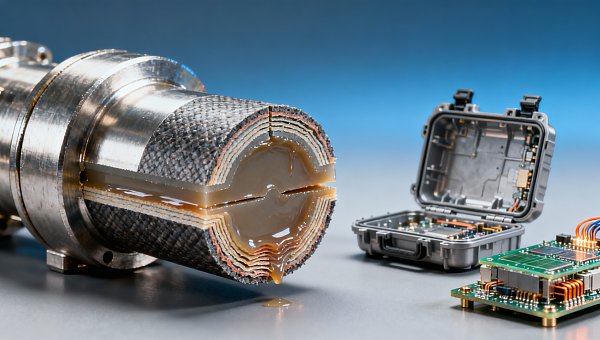
Modern assembly uses bonded joints in places once dominated by rivets, bolts, or welds. That shift is especially visible in lightweight structures, mixed-material designs, and precision assemblies where stress concentration must be controlled.
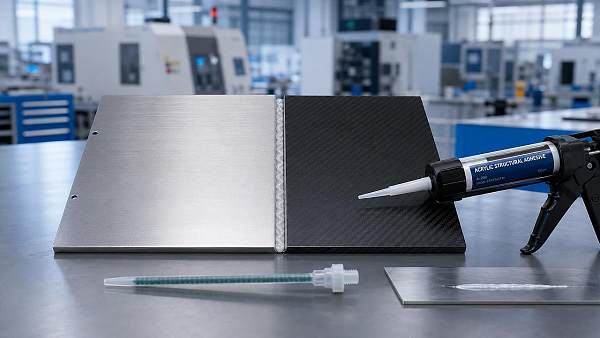
In heavy applications, 2K epoxy systems can join aluminum, steel, and composites without drilling extra holes. In smaller assemblies, adhesive design also supports sealing, vibration damping, and dimensional control.
This broader role changes maintenance thinking. A failed bond may not look dramatic at first. A slight edge lift, local whitening, movement under load, or moisture staining can be an early signal of a deeper structural problem.
The topic is also gaining visibility because Industry 4.0 manufacturing has pushed bond consistency higher, while field conditions remain variable. IADS often frames this gap well: polymer cross-linking and fluid control can be extremely precise in production, but service exposure still tests every joint in uncontrolled ways.
What bond strength failure really means in practice
When people say structural adhesives failed, they may mean different things. Complete separation is only one case. More often, the bond has lost enough stiffness, toughness, or adhesion to no longer meet the intended safety margin.
A joint can still appear attached while carrying far less load than designed. That is why visual appearance alone can be misleading, especially after thermal aging or cyclic fatigue.
Failure usually appears in three broad forms:
- Adhesive failure, where the bond releases from one substrate surface.
- Cohesive failure, where the adhesive breaks within its own cured layer.
- Substrate-related failure, where the base material, coating, or primer fails first.
This distinction matters because the repair response changes. Rebonding a contaminated surface is different from addressing an underspecified adhesive, a weak coating, or excessive joint movement.
The most common in-service failure mechanisms
Most structural adhesives do not fail for one reason alone. Service breakdown usually develops through several linked stresses over time.
Heat and thermal cycling
High temperature can soften some adhesive chemistries and reduce modulus. Repeated hot-cold cycling also creates expansion mismatch between bonded materials.
That mismatch is serious in aluminum-to-composite joints, battery enclosures, rail components, and electronics housings. Microcracks may begin at edges, corners, or thickness transitions.
Moisture and chemical ingress
Water can plasticize the bondline, attack the interface, or spread through damaged coatings. Cleaning fluids, road salts, oils, and process chemicals can accelerate that loss.
In service, moisture damage often starts where sealing is incomplete. Once the edge is compromised, adhesion loss can move inward without obvious external change.
Fatigue and vibration
Repeated low-level loading is one of the most overlooked risks. A joint that survives a static pull test may still degrade under millions of small cycles.
Vibration from motors, transport movement, blade flex, and road shock gradually grows cracks. These usually start at stress concentrations, not at the center of a well-designed bondline.
Impact and overload
Sudden loads can exceed the adhesive’s toughness, especially in peel or cleavage conditions. A bonded joint may be strong in shear but weak when a prying force is introduced.
This is common after accidental drops, collision events, improper lifting, or local deformation of panels and housings.
Poor surface preparation and cure defects
Many field failures trace back to the beginning, not the end. Oil film, oxidation, mold release, weak paint, incorrect primer use, or poor mix ratio can leave a hidden weakness.
In two-part systems, mixing quality and dispense control matter greatly. Uneven ratio, trapped air, or expired material can create local under-cured zones that age badly in service.
Inspection clues that help separate symptom from cause
A failed bond should be read like evidence. The joint surface, surrounding materials, and service history often reveal more than a simple pass or fail judgment.
Where available, compare the failed area with an untouched reference joint. Even simple differences in hardness, color, thickness, or fracture pattern can be useful.
Why application context changes the failure picture
Structural adhesives behave differently depending on where they are used. The same chemistry may perform well in one assembly and fail early in another.
In rail and wind structures, bondlines face long fatigue life, thermal cycling, and weather exposure. In EV packs, structural bonding may sit close to thermal management demands, sealing duties, and fire-safety design.
In electronics-adjacent hardware, smaller joints may still be called structural because they retain housings, frames, shields, or heat-spreading components. There, cure speed and dispense precision become part of reliability.
This is where the broader IADS perspective is useful. Bond durability is not only about polymer chemistry. It also depends on how accurately the material was metered, mixed, placed, and cured in the first place.
Practical steps to restore reliability after a bond problem
A repair should not begin with adhesive replacement alone. The first task is to decide whether the original design basis still makes sense under current service conditions.
- Document location, load direction, environment, and time-to-failure.
- Identify fracture mode before cleaning the failed parts.
- Check whether coatings, primers, or substrates degraded before the adhesive.
- Review cure history, mix ratio, pot life, and storage records.
- Confirm whether the joint experienced peel, impact, or unintended flex.
- Use the service environment, not catalog strength alone, to select replacement material.
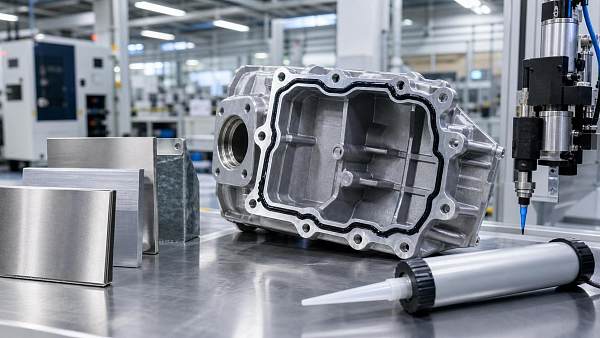
If rebonding is approved, surface preparation deserves the most discipline. Remove degraded adhesive fully, verify substrate soundness, control cleanliness, and restore the specified preparation method rather than improvising.
Where failures repeat, it may be necessary to change more than the adhesive. Joint geometry, overlap length, edge sealing, fixture method, or dispense accuracy may be the true corrective action.
What to monitor before the next failure happens
The best maintenance outcome is not a better repair. It is catching bond degradation before separation occurs.
Useful monitoring points include movement at joint edges, new noise under vibration, visible gap growth, coating blisters, thermal discoloration, moisture tracks, and recurring loosening of adjacent parts.
Where critical bonded assemblies are involved, failure review should also feed back into process control. Structural adhesives are highly sensitive to consistency in mixing, dispensing, and cure conditions.
That feedback loop matters even more as industrial designs become lighter, more compact, and more dependent on screwless assembly. The closer a product moves toward high-performance bonding, the less room there is for hidden variation.
A sensible next step is to build a simple bond-failure checklist around substrate, environment, joint geometry, and process traceability. That creates a clearer basis for deciding whether to repair, redesign, or requalify the bonded connection.
Recommended News
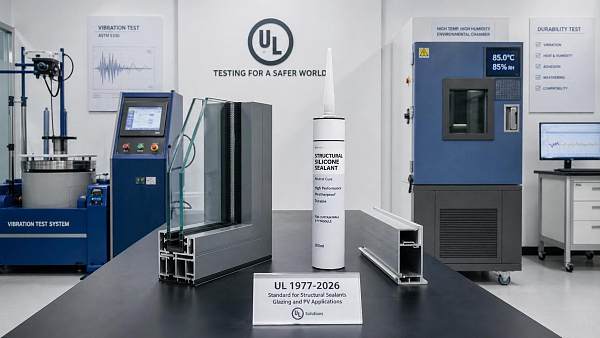
 Jul 12, 2026UL 1977-2026 Takes Effect for Structural SiliconeUL 1977-2026 takes effect for structural silicone, introducing a tougher durability test that can impact certification, bidding access, exports, and procurement planning.
 Jul 11, 2026Industrial Sealants for Metal: What Affects Service Life and Rework CostIndustrial sealants for metal affect more than purchase price. Learn what drives service life, downtime risk, and rework cost so buyers can choose longer-lasting, lower-cost sealing solutions.
 Jul 11, 2026UL 1977-2026 Takes Effect for Structural SealantsUL 1977-2026 takes effect for structural sealants, reshaping North American bidding, procurement, and compliance. See what exporters, manufacturers, and buyers must review now.
 Jul 10, 2026Structural Bonding for Enclosures: When Silicone Beats EpoxyStructural bonding for enclosures explained: discover when silicone outperforms epoxy in thermal cycling, vibration, sealing, and mixed-material designs for longer-lasting enclosure performance.
 Jul 10, 2026UL 1977-2026 Takes Effect for Silicone SealantsUL 1977-2026 takes effect for silicone sealants, reshaping compliance for curtain walls, PV frames, and EV battery packs. See who is affected, what to verify, and how to protect market access.
 Jul 09, 2026Rail Vehicle Adhesive Bonding: Key Failure Risks and Control PointsRail vehicle adhesive bonding: learn the key failure risks, control points, inspection methods, and process tips to improve safety, durability, and production consistency.
 Jul 09, 2026UL 1977-2026 Takes Effect for Silicone Structural SealantsUL 1977-2026 takes effect for silicone structural sealants, adding new durability testing and a strict October 2026 sales cutoff. Learn who is affected, what to check now, and how to stay eligible for the North American market.
 Jul 08, 2026Rail Vehicle Bonding Sealants: Key Failure Risks in Long-Service JointsRail vehicle bonding sealants face hidden long-service risks from movement, moisture, UV, and process variation. Learn the key failure triggers and smarter selection logic.
 Jul 08, 2026China Tightens Export Checks on Structural Silicone SealantsChina Tightens Export Checks on Structural Silicone Sealants: learn how new VOC and lead/cadmium limits may disrupt exports, compliance, and delivery planning.
![]() Jul 07, 2026China Tightens Export Checks on Structural SealantsChina tightens export checks on structural sealants from Aug 1, 2026. Learn how batch inspections, VOC and phthalate limits may delay customs and raise compliance costs.
Jul 07, 2026China Tightens Export Checks on Structural SealantsChina tightens export checks on structural sealants from Aug 1, 2026. Learn how batch inspections, VOC and phthalate limits may delay customs and raise compliance costs. Jul 06, 2026China Tightens Export Checks on Structural Silicone SealantsChina Tightens Export Checks on Structural Silicone Sealants, triggering 100% batch inspections, stricter VOC and phthalate limits, and possible shipping delays. Learn what exporters and buyers must do now.
 Jun 26, 2026East China Silicone Output Curbs Extend Export Lead TimesEast China silicone output curbs are extending export lead times as 107 rubber supply tightens. Learn how silicone structural sealants and high-temperature silicone gel supply chains may be affected.
![]() Jun 25, 2026East China Output Curbs Extend Silicone Export Lead TimesEast China output curbs are extending silicone export lead times from 4 weeks to 6–8 weeks. Learn how DMC cuts, rush fees, and tighter supply may impact buyers, exporters, and delivery planning.
Jun 25, 2026East China Output Curbs Extend Silicone Export Lead TimesEast China output curbs are extending silicone export lead times from 4 weeks to 6–8 weeks. Learn how DMC cuts, rush fees, and tighter supply may impact buyers, exporters, and delivery planning. Jun 24, 2026Structural Adhesives Market Outlook: Where Growth and Margin Are ShiftingStructural adhesives market trends are shifting toward higher-value applications in EVs, electronics, and automation. Discover where growth, margins, and competitive advantage are moving now.
 Jun 13, 2026Zhuhai Flags Rising TRO Risks in Cross-Border E-CommerceZhuhai flags rising TRO risks in cross-border e-commerce to the U.S. Learn how trademark filing, labeling, and certification gaps may trigger Amazon or Walmart complaints.
 Jun 11, 2026Acrylic Structural Adhesives Explained: Best Uses, Strengths, and LimitsAcrylic structural adhesives explained: discover their best uses, key strengths, and limits for fast, durable bonding in mixed-material assemblies.
 Jun 04, 2026Structural Adhesives: When Bond Strength Fails in ServiceStructural adhesives can lose bond strength in service due to heat, moisture, fatigue, and process errors. Learn key failure causes, inspection clues, and repair insights.




Editor's Selection
The Archive Newsletter
Critical industrial intelligence delivered every Tuesday. Peer-reviewed summaries of the week's most impactful logistics and market shifts.