
Camera Module Bonding: How to Reduce Shift and Fogging
by
Published
Views:
Camera Module Bonding: How to Reduce Shift and Fogging
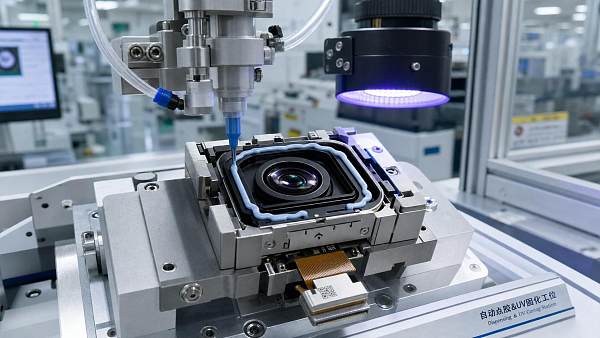
In camera module bonding, small defects create large downstream costs. A few microns of movement can change optical alignment. Light fogging can reduce contrast, color accuracy, and long-term image stability.
That is why camera module bonding needs more than a strong adhesive. The full process must control flow, wetting, curing stress, outgassing, and material interaction under real production conditions.
In practice, shift and fogging often come from the interface between chemistry and equipment. Material selection matters, but so do dispense path, valve stability, UV dose, thermal profile, and fixture design.
For technical evaluation, the useful question is simple. Which variables in camera module bonding cause movement or vapor contamination, and which process controls reduce those risks without hurting cycle time?
The answer usually sits in a balanced combination of adhesive behavior, dispensing precision, compatible substrates, and staged curing. When those elements match, yield improves and rework pressure drops.
Why Shift Happens in Camera Module Bonding
Shift is rarely caused by one factor alone. More often, several small deviations add up during dispensing, placement, pre-cure, and final cure.
A low-viscosity adhesive may spread beyond the designed bond line. A fast placement speed may disturb the bead. A high-shrinkage cure may then pull the lens barrel or holder off center.
Camera module bonding becomes more sensitive as modules shrink. Tighter packages leave less room for adhesive overflow, cure stress release, or mechanical compensation.
Common root causes
- Inconsistent dispense volume at microliter level
- Poor bead symmetry around the bonding area
- Adhesive thixotropy that does not match the vertical or sidewall geometry
- Rapid curing that locks parts before self-leveling is complete
- Excess cure shrinkage or unbalanced UV exposure
- Fixture tolerance that allows slight movement during cure
From a process view, camera module bonding needs stable bead placement before any optical adjustment drifts. This is especially important for autofocus structures and compact consumer imaging assemblies.
Why Fogging Appears After Bonding or Curing
Fogging is usually linked to volatile residue, incomplete cure, or thermal exposure after assembly. It shows up on lens surfaces, cover glass, or nearby optical paths.
In camera module bonding, this problem often starts with outgassing. Low molecular weight components, residual solvents, or reaction byproducts can migrate and condense on cooler surfaces.
The risk rises when the module later sees heat soak, reflow-adjacent exposure, or long storage in sealed conditions. What looks clean after cure may haze after aging.
Typical fogging triggers
- High-outgassing adhesive chemistry
- Insufficient UV penetration through shadowed areas
- Thermal cure profiles that trap volatiles before release
- Contamination from primers, cleaning agents, or packaging materials
- Substrate surfaces that absorb and later release condensed species
This is why camera module bonding validation should include outgassing and haze checks, not only adhesion strength. Optical cleanliness is a separate performance target.
Adhesive Selection Rules That Actually Reduce Risk
Adhesive choice should begin with failure mode, not marketing labels. For camera module bonding, the best material is the one that keeps alignment stable and stays optically clean across the product life cycle.
Low shrinkage is usually a priority. So is low ionic contamination, low outgassing, and predictable cure depth. Viscosity must also fit the actual dispense pattern and gap design.
What to check during material screening
- Viscosity window across working temperature and production shift changes
- Thixotropic recovery after jetting or needle dispensing
- UV cure speed and shadow cure capability, if dual-cure systems are used
- Volatile content, condensable residue, and aging behavior
- Shrinkage stress versus alignment tolerance
- Compatibility with plastics, metals, glass, coatings, and sensor-adjacent parts
UV-curing adhesives are common in camera module bonding because they support fast tacking and high throughput. Still, fast cure alone is not enough. Uniform cure matters more than headline speed.
In many cases, a staged process works better. A short tack cure can hold alignment. A controlled post-cure can then complete cross-linking with lower movement risk.
Dispensing Strategy: Where Camera Module Bonding Wins or Fails
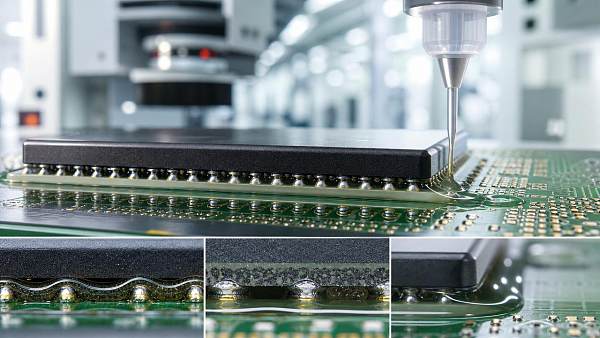
Even the right adhesive will underperform with unstable fluid delivery. Camera module bonding depends heavily on bead repeatability, start-stop control, and clean cutoff behavior.
The main target is consistent geometry. Volume accuracy matters, but bead shape often matters more because asymmetry creates force imbalance during placement and cure.
Useful process controls
- Use a valve matched to viscosity and shot size stability
- Control reservoir pressure and fluid temperature tightly
- Reduce needle contact disturbance during part approach
- Verify dot or ring symmetry with inline vision inspection
- Track dispense drift by lot, time, and maintenance interval
For very small deposits, piezoelectric jetting may improve cycle time and placement flexibility. But camera module bonding still requires validation of splash behavior, satellite droplets, and fluid response over time.
When tolerances are tight, automated dispensing systems should be evaluated together with material rheology. Looking at either one in isolation usually misses the real process window.
Curing and Fixturing Methods That Minimize Movement
Cure strategy directly affects alignment. In camera module bonding, the goal is to lock the assembly without creating uneven shrink stress or thermal distortion.
A high-intensity UV burst can freeze one side faster than the other. If the optical stack is lightly constrained, that difference may pull the part slightly off position.
Better curing practice
- Apply a low-energy pre-cure to stabilize the part
- Use balanced exposure from multiple directions where possible
- Complete final cure only after alignment confirmation
- Control thermal ramp rate during secondary cure
- Use fixtures that support location without overconstraining the module
More importantly, fixturing should be measured, not assumed. Small tolerance stack-ups in nests, clamps, or pickup tools can become camera module bonding defects that look like adhesive problems.
How to Build a Practical Evaluation Plan
A useful qualification plan should reflect actual use conditions. Lab pass results mean little if the module later fails after aging, vibration, humidity, or thermal cycling.
For camera module bonding, evaluation should connect material data with equipment behavior and optical output. That cross-check is where many weak processes are exposed.
Recommended checks
- Bond line measurement before and after cure
- Optical alignment shift after tack cure and final cure
- Condensable fogging test after heat aging
- Shear or pull performance after temperature and humidity exposure
- Dispense capability study across multiple production hours
- Material compatibility with coatings, housings, and cleaning steps
It also helps to compare failure signatures. If image quality drops without obvious misalignment, fogging or contamination may be the first suspect. If focus or centering shifts, cure stress is more likely.
What Good Camera Module Bonding Looks Like in Production
A robust line does not rely on a single premium adhesive to solve every issue. Good camera module bonding comes from matching chemistry, dispensing, curing, and inspection as one controlled system.
The strongest signal is repeatability. Stable bead geometry, balanced cure, low haze after aging, and consistent alignment retention usually indicate that the full process window is understood.
In current electronics assembly, miniaturization keeps raising the bar. That means camera module bonding decisions should be made with real equipment trials, not only with datasheet comparison.
A practical path is to screen for low-shrink, low-outgassing materials first. Then optimize dispense symmetry, use staged curing, and confirm results with aging and optical verification.
When these steps are built into evaluation early, camera module bonding becomes easier to scale. Yield improves, fogging risk drops, and alignment stays stable from pilot runs to mass production.
Recommended News
 Oct 05, 2026How to assess a chip packaging adhesives manufacturer for ACF reliabilityChip packaging adhesives manufacturer selection starts with ACF reliability: compare bonding windows, validation data, lot control, and process support to reduce yield risk.
 Oct 02, 2026When can conductive solder replacement adhesives meet joint resistance targets?Conductive solder replacement adhesives can meet joint resistance targets when material, bond-line control, curing, and reliability testing align. Explore the key evaluation factors.
 Aug 19, 2026What affects yield most in the screen bezel bonding processScreen bezel bonding process yield depends most on surface cleanliness, dispensing consistency, alignment, and cure control. Learn how to reduce defects and improve bonding reliability.
 Aug 14, 2026Display Bonding for LCD: How to Reduce Optical Mura and Air Gap RiskDisplay bonding for LCD explained: reduce optical mura, eliminate air gaps, and improve bonding clarity with practical process tips.
 Aug 08, 2026How to Evaluate a Display Bonding Materials Supplier for Optical Clarity and YieldDisplay bonding materials supplier evaluation starts with optical clarity and yield. Learn how to compare process support, reliability, cure control, and production fit.
 Jul 30, 2026How to Evaluate Conductive Electronic Adhesives for Fine-Pitch BondingConductive electronic adhesives for fine-pitch bonding demand more than high conductivity. Learn how to assess rheology, cure, adhesion, and stability to reduce shorts and improve yield.
 Jul 25, 2026Capillary Underfill Bonding: Key Process Risks and Control PointsCapillary underfill bonding explained: discover key process risks, void causes, cure challenges, and control points to improve assembly yield, reliability, and package performance.
 Jul 21, 2026Industrial Adhesive Market Trends in Electronics for 2026Industrial adhesive market trends electronics in 2026 reveal how faster curing, precision dispensing, and compliance shape reliability, cost, and smart sourcing in electronics manufacturing.
 Jul 10, 2026Display Bonding: Key Failure Modes and Material Trade-OffsDisplay bonding failure modes explained: compare OCA, LOCA, and material trade-offs affecting optics, durability, yield, and process control across demanding display applications.
![]() Jul 07, 2026Camera Module Sensor Bonding: Choosing Adhesives for Low Stress and Clean OpticsCamera module sensor bonding guide: learn how to choose low-stress, low-outgassing adhesives for clean optics, higher yield, and more reliable camera module assembly.
Jul 07, 2026Camera Module Sensor Bonding: Choosing Adhesives for Low Stress and Clean OpticsCamera module sensor bonding guide: learn how to choose low-stress, low-outgassing adhesives for clean optics, higher yield, and more reliable camera module assembly. Jul 06, 2026Screen Bezel Bonding Adhesive: Key Checks for Strength and Display FinishScreen bezel bonding adhesive selection starts with more than strength. Learn the key checks for gap control, curing consistency, aging durability, and cleaner display finish.
 Jul 05, 2026Underfill Material Manufacturer Checklist for Consistent Bond ReliabilityUnderfill material manufacturer checklist for stronger bond reliability: compare flow stability, quality control, compliance, and supply support to reduce defects and choose with confidence.
 Jul 03, 2026Consumer Electronics Bonding Supplier Checklist: Quality, Lead Time, and Process FitConsumer electronics bonding supplier selection starts with quality, lead time, and process fit. Discover a practical checklist to reduce risk, improve yield, and choose with confidence.
 Jun 29, 2026Camera Module Bonding: How to Reduce Shift and FoggingCamera module bonding guide to reduce shift and fogging with better adhesive selection, dispensing, and curing control. Learn practical steps to improve yield and optical stability.
 Jun 26, 2026Solder Replacement Adhesives for SMT: Process Limits, Reliability, and ROISolder replacement adhesives for SMT: explore process limits, reliability, and ROI to see where low-heat bonding can cut defects, protect sensitive assemblies, and justify targeted adoption.
 Jun 26, 2026Display Bonding Adhesive Material Selection: Optical Clarity vs. Rework RiskDisplay bonding adhesive material selection shapes clarity, yield, and rework cost. Explore how to balance optical performance with repair risk for smarter, higher-value display assemblies.
 Jun 25, 2026Vietnam Adhesives Show to Spotlight ACA/ACF, UV Line FitVietnam Adhesives Show will spotlight ACA/ACF and UV line fit at VIASEAL Vietnam 2026, revealing localized electronics assembly solutions, certification readiness, and Southeast Asia sourcing opportunities.
 Jun 24, 2026Vietnam Adhesives Show Opens Aug. 5 With ACA/ACF FocusVietnam Adhesives Show opens Aug. 5 in Hanoi, spotlighting ACA/ACF, UV camera module adhesives, and RoHS 3 plus TCVN 7837:2025 compliance for EMS buyers and suppliers.
 Jun 23, 2026Vietnam Adhesives Expo Highlights ACA/ACF and UV Curing ShiftVietnam Adhesives Expo spotlights ACA/ACF conductive adhesives and 365 nm UV curing trends, revealing how Vietnam electronics supply chains are redefining qualification, certification, and sourcing opportunities.
 Jun 21, 2026IEC 62776:2026 Tightens LED Adhesive TestingIEC 62776:2026 tightens LED adhesive testing with mandatory halogen, ion migration, and silver migration checks. See how ACA/ACF and UV-curable adhesive suppliers can stay export-ready.
 Jun 18, 2026Display Bonding Adhesives: Key Checks Before Final Material SelectionDisplay bonding adhesives: discover the key checks before final material selection, from optical stability and curing to dispensing, reliability, and supplier readiness.
 Jun 15, 2026How to Evaluate a Camera Module VCM Bonding SupplierCamera module VCM bonding supplier selection affects yield, focus stability, and contamination control. Learn the key technical and sourcing checks before you shortlist.
 Jun 14, 2026Silver Filled Solder Replacement Adhesives: When Lower Heat Improves Assembly YieldSilver filled solder replacement adhesives help reduce heat stress, warpage, and yield loss in sensitive assemblies. Learn where they outperform solder and how to qualify them with confidence.
 Jun 13, 2026BGA Underfill for Flip Chip: Common Voiding Causes and FixesBGA underfill for flip chip: learn the most common voiding causes, from trapped air to cure issues, and discover practical fixes to improve yield, reliability, and process stability.











Editor's Selection
The Archive Newsletter
Critical industrial intelligence delivered every Tuesday. Peer-reviewed summaries of the week's most impactful logistics and market shifts.