When Fatigue Resistant Structural Bonding Pays Off
by
Published
Views:
When Fatigue Resistant Structural Bonding Pays Off
For many industrial buyers, the real question is not whether adhesive bonding works. It is whether fatigue resistant structural bonding lowers total cost over time.
That question matters more when assemblies face vibration, thermal cycling, repeated loading, moisture, or mixed-material design constraints.
In those cases, a low upfront fastening cost can turn expensive after failures, warranty claims, line stoppages, or field maintenance.
Fatigue resistant structural bonding becomes valuable when it spreads stress, protects thin substrates, and extends service life without adding too much process complexity.
From a procurement angle, the decision should be based on lifecycle economics, not only material price per kilogram or cost per part.
This is especially true in transportation, electronics, energy equipment, and lightweight industrial assemblies where fatigue failures are rarely isolated events.
A single weak joint can trigger rework, scrap, downtime, and reputation damage across a broader supply chain.
Why repeated stress changes the cost equation
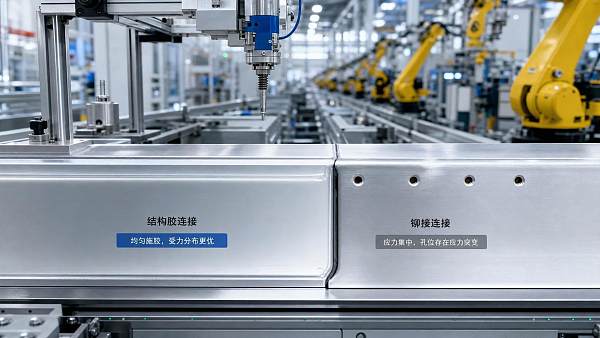
Standard mechanical joining often concentrates stress at holes, edges, weld zones, or rigid contact points.
Under repeated load, those areas may crack first, even when the assembly passes initial static strength tests.
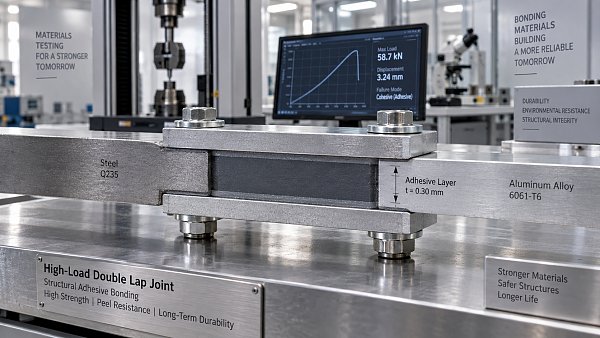
Fatigue resistant structural bonding works differently. It distributes load across a wider bond area and reduces local stress peaks.
That change can delay crack initiation and slow crack growth, which is often where the real economic benefit appears.
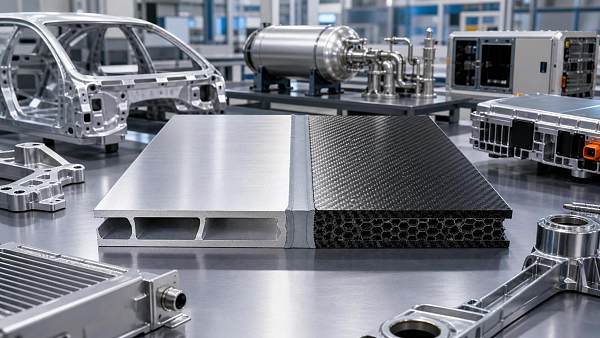
More importantly, bonded joints can support dissimilar materials without introducing the same distortion seen in welding or the same perforation required by rivets.
This matters when manufacturers use aluminum, composites, coated steel, glass, engineered plastics, or battery-related housings.
In practical sourcing terms, fatigue resistant structural bonding pays off when three factors appear together:
- cyclic loading is significant,
- joint failure has high downstream cost,
- and design freedom brings measurable production or weight benefits.
Where fatigue resistant structural bonding creates the strongest return
The return is usually highest in products exposed to motion, shock, thermal expansion mismatch, or long operating cycles.
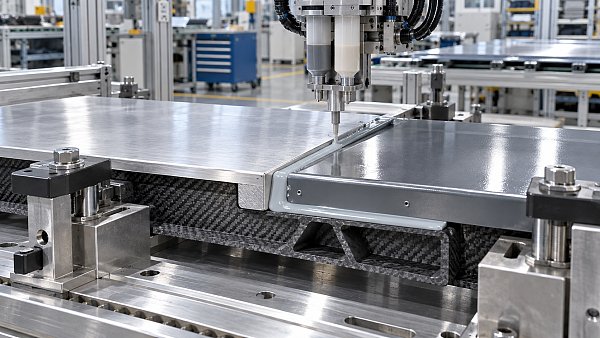
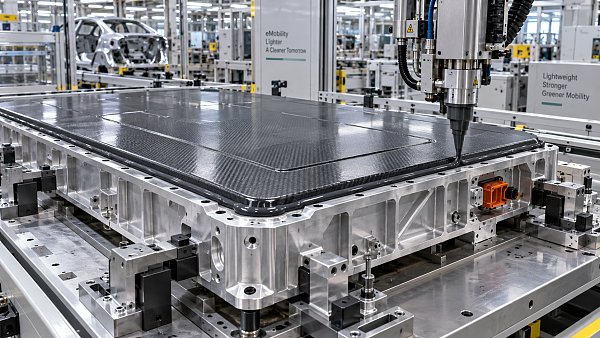
Automotive subassemblies are a clear example. Doors, liftgates, battery pack components, trims, and hybrid material structures benefit from better fatigue behavior.
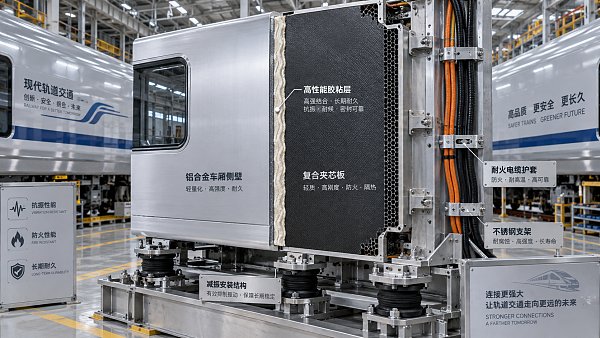
Rail equipment follows a similar pattern. Repeated vibration, outdoor exposure, and difficult service access raise the value of durable bonded joints.
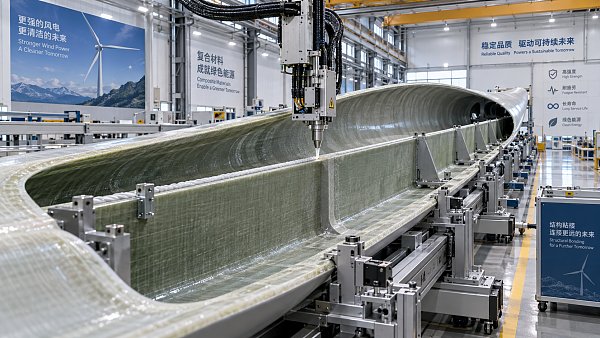
Wind blade manufacturing also favors fatigue resistant structural bonding because long-term cyclic loads define the application.
In electronics and electrical systems, the loading profile is different, but the logic still holds.
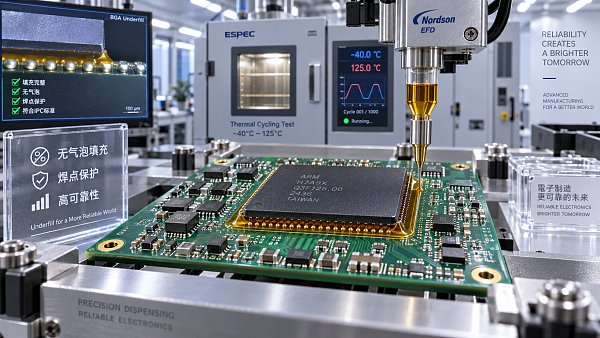
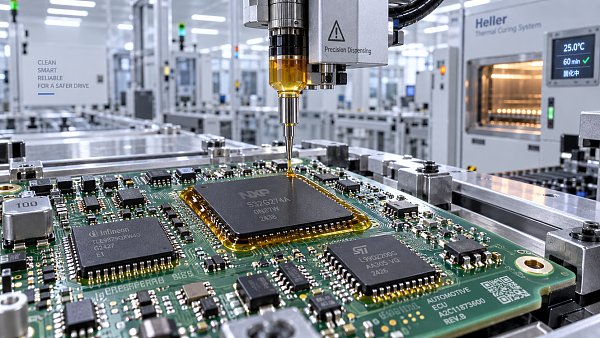
Miniaturized components, housings, sensors, and modules often face thermal cycling and vibration at the same time.
A brittle joint may survive shipment but fail after months of field use.
That is why fatigue resistant structural bonding is increasingly reviewed alongside dispensing precision, cure control, and substrate preparation.
The strongest use cases usually include:
- lightweight multi-material assemblies,
- parts where drilling or welding damages performance,
- sealed joints that also need structural contribution,
- components with costly field replacement,
- and products carrying warranty risk from fatigue-related failure.
What buyers should compare beyond adhesive price
Material price alone gives a distorted view. Fatigue resistant structural bonding should be evaluated against the entire joining system.
That system includes surface treatment, dispensing equipment, cure time, fixturing, operator training, scrap rate, inspection, and service performance.
In many projects, the adhesive itself is only one piece of the cost picture.
A cheaper formulation can become expensive if it creates short open time, inconsistent mixing, poor wet-out, or excessive rework.
Likewise, a premium system may still be economical if it reduces fastener count, lowers part weight, or shortens assembly steps.
A practical supplier review should cover these points:
- Fatigue test data under relevant load conditions, not only lap shear values.
- Compatibility with actual substrates, coatings, primers, and contamination limits.
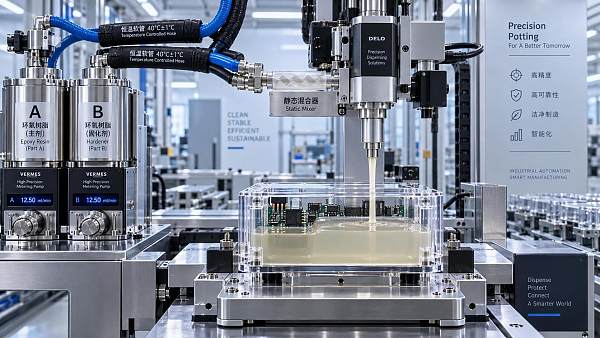
- Process fit with current dispensing systems, mixers, valves, and cure windows.
- Environmental resistance to humidity, salt spray, chemicals, and temperature cycling.
- Supply stability, shelf life, packaging format, and regional technical support.
These details separate a promising lab sample from a stable production solution.
A simple total cost framework for fatigue resistant structural bonding
Procurement decisions become clearer when costs are grouped into upfront, operating, and failure-related categories.
When this framework is used honestly, fatigue resistant structural bonding often looks stronger in medium and high reliability programs.
It may look less attractive in low-duty, low-risk products where service life expectations are modest.
Common buying mistakes that erase the benefit
The biggest mistake is buying by datasheet headline numbers alone.
Static shear strength is useful, but it does not fully predict fatigue durability under realistic motion and environmental stress.
Another common issue is underestimating process discipline. Surface cleanliness, mix ratio accuracy, bead geometry, and cure conditions all affect outcomes.
Even a proven fatigue resistant structural bonding material can disappoint if dispensing is unstable or assembly gaps are uncontrolled.
A third mistake is ignoring compliance and logistics. Storage requirements, shelf life, hazardous handling rules, and export support can add hidden friction.
In real purchasing cycles, those practical limits influence supplier performance as much as technical claims do.
A better approach is to ask each supplier for an application-specific validation path.
- Request fatigue data under expected load frequency and temperature range.
- Confirm dispensing and mixing compatibility with current equipment.
- Review bondline thickness tolerance and surface preparation requirements.
- Compare failure mode, not just ultimate strength.
When fatigue resistant structural bonding clearly pays off
The payoff becomes clear when a bonded joint prevents expensive fatigue failures and supports a better overall product design.
That may mean fewer fasteners, lighter assemblies, quieter operation, sealed interfaces, or longer maintenance intervals.
It also means a more stable sourcing decision when suppliers can back performance with process guidance and repeatable production support.
For cost-focused evaluations, the most reliable signal is simple.
If joint failure is expensive, if cyclic stress is unavoidable, and if design flexibility creates measurable value, fatigue resistant structural bonding usually earns its place.
The next step is not a broad material search. It is a narrow, evidence-based comparison tied to substrates, duty cycle, process capability, and lifecycle cost.
That is where stronger procurement decisions are made, and where fatigue resistant structural bonding moves from technical option to financial advantage.
Recommended News
 Oct 08, 2026When do automotive adhesive lightweighting applications justify 2K epoxy?Adhesive lightweighting applications automotive: discover when 2K epoxy delivers durable, lightweight structural bonding for mixed-material vehicle designs.
 Sep 28, 2026How material characterization predicts structural adhesive bond durabilityStructural adhesive material characterization reveals how mechanical, thermal, cure, and environmental data predict bond durability—helping engineers select reliable solutions with confidence.
 Sep 25, 2026How to select epoxy structural bonding materials for high-load jointsEpoxy structural bonding materials: learn how to select durable solutions for high-load joints, balancing strength, toughness, surface prep, cure, and environmental resistance.
 Sep 20, 2026When 2K epoxy structural industrial bonding solutions make senseStructural industrial bonding solutions with 2K epoxy help engineers achieve durable, sealed joints for mixed materials. Explore selection, curing, and design insights.
 Sep 18, 2026How bonding applications in wind energy prevent fatigue-related failuresBonding applications in wind energy help prevent fatigue-related failures through durable joint design, crack resistance, cure control, and reliable production processes.
 Sep 23, 2026PCB Underfill Selection Guide for Fine-Pitch Components and Thermal CyclingPCB underfill selection guide for fine-pitch BGAs, CSPs, and flip-chip devices. Compare flow, CTE, modulus, adhesion, curing, and dispensing for reliable thermal cycling performance.
 Sep 23, 2026Circuit Board Level Underfill Market: Growth Drivers and Supply Chain OutlookExplore the electronic circuit board level underfill material market with actionable insights on reliability, dispensing precision, material selection, and supply chain resilience.
 Sep 20, 2026Rail Bonding Solutions for Vibration, Fire Safety, and Long-Term DurabilityBonding solutions for rail: explore proven strategies for vibration resistance, fire safety, durable joints, surface preparation, and production-ready validation.
 Sep 19, 2026Lightweight Adhesives for EVs: Reducing Mass Without Compromising Joint StrengthLight weighting adhesives for EVs help reduce vehicle mass while maintaining joint strength, durability, and production efficiency. Explore smarter bonding solutions for EV designs.
 Sep 15, 2026How fluid control engineering prevents voids in 2K epoxy sealantsFluid control engineering for sealants helps prevent voids in 2K epoxy systems. Explore practical methods for stable metering, mixing, pressure control, and air-free cavity filling.
 Sep 10, 2026When do adhesive lightweighting applications make sense in aerospace?Adhesive lightweighting applications aerospace: learn when bonded joints reduce mass, improve load transfer, and support durable, certifiable aircraft designs.
 Aug 28, 2026How to select an epoxy rail vehicle structural adhesive for fatigue loadsEpoxy rail vehicle structural adhesive selection for fatigue loads: evaluate toughness, joint design, surface prep, curing, and rail compliance for durable bonds.
 Aug 25, 2026When does BGA underfill technology for PCB assembly reduce field failures?BGA underfill technology for pcb assembly reduces field failures when thermal cycling, shock, or board flex drive solder fatigue. Learn when it boosts reliability—and when it adds cost without real gains.
 Aug 11, 2026How to Choose Epoxy Adhesive Systems for Metal Bonding Under Heat and VibrationEpoxy adhesive systems for metal bonding: learn how to compare heat resistance, vibration durability, cure profile, and dispensing fit to choose a more reliable solution.
 Aug 10, 2026Industrial Adhesive Technology Analysis: What Drives Bond Strength and Process Stability?Industrial adhesive technology analysis reveals what drives bond strength and process stability—from chemistry and surface prep to curing and dispensing. Learn how to reduce failure risk.
 Aug 05, 2026How to Evaluate Lightweight Structural Bonding for Composites Under Dynamic LoadsLightweight structural bonding for composites under dynamic loads demands more than static strength. Explore fatigue, impact, surface prep, and process factors to choose durable, weight-saving bonds.
 Jul 14, 2026How to Choose Lightweight Structural Bonding for PlasticsLightweight structural bonding for plastics explained: compare adhesive types, joint design, process control, and durability factors to choose lighter, stronger, production-ready assemblies.
 Jul 13, 2026Choosing an Adhesive for Automotive Supplier ProgramsAdhesive for automotive supplier programs affects strength, process stability, compliance, and launch risk. Learn how to choose the right solution for reliable, scalable production.
 Jul 11, 2026Automotive Adhesive Bonding Process: Key Steps That Prevent Bond FailureAutomotive adhesive bonding process essentials: learn the key steps that prevent bond failure, improve durability, and optimize surface prep, dispensing, and cure control in automotive assembly.
 Jul 09, 2026When Structural Adhesives Can Replace Riveting in Metal AssembliesStructural adhesive replacement riveting: learn when bonded metal assemblies can outperform rivets in fatigue, corrosion control, weight reduction, and automation.
 Jul 08, 2026Best Ways to Bond Dissimilar Material Composites Without CrackingDissimilar material bonding composites: learn how to prevent cracks in metal, plastic, battery, and laminate assemblies with smarter adhesive, process, and stress-control strategies.
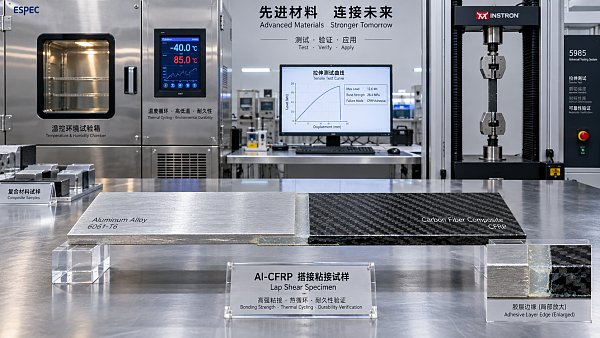
![]() Jul 07, 2026How Lap Shear Testing Reveals Structural Adhesive Joint Failure RisksLap shear structural adhesive joint testing reveals hidden failure risks before launch. Learn how process conditions, substrates, and aging affect joint reliability.
Jul 07, 2026How Lap Shear Testing Reveals Structural Adhesive Joint Failure RisksLap shear structural adhesive joint testing reveals hidden failure risks before launch. Learn how process conditions, substrates, and aging affect joint reliability. Jul 06, 2026Can Automotive Adhesive Replace Welding in Body Assembly?Automotive adhesive replacement for welding can improve multi-material body assembly with better sealing, lower corrosion risk, and more design flexibility. See where bonding beats welding.
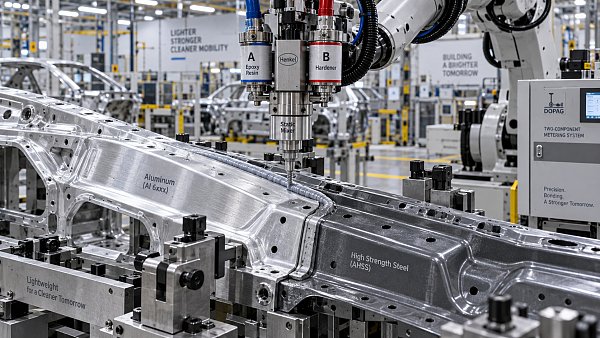
 Jul 04, 2026Structural Bonding for Aluminum: When 2K Epoxy Outperforms Welding and FastenersStructural bonding for aluminum with 2K epoxy can outperform welding and fasteners by reducing distortion, corrosion risk, and weight—see where it delivers stronger ROI.





Editor's Selection
The Archive Newsletter
Critical industrial intelligence delivered every Tuesday. Peer-reviewed summaries of the week's most impactful logistics and market shifts.