Choosing Adhesive for Wire Harness Wrapping
by
Published
Views:
Choosing Adhesive for Wire Harness Wrapping

Choosing the right adhesive for wire harness wrapping affects more than bundle appearance.
It shapes abrasion resistance, heat performance, vibration life, and line-side handling.
That matters in automotive, electronics, industrial controls, and equipment wiring.
In practice, adhesive for wire harness wrapping is rarely a one-material decision.
You are usually balancing tape construction, adhesive chemistry, cable movement, and assembly speed.
A harness near an engine needs something very different from a harness inside a display unit.
This is why material selection should start with use conditions, not product claims.
The good news is that the selection process becomes simpler once a few variables are clear.
What Adhesive for Wire Harness Wrapping Actually Needs to Do
A wire harness wrap does two jobs at the same time.
It keeps the bundle organized, and it protects wires from the surrounding environment.
Because of that, adhesive for wire harness wrapping must hold firmly without becoming a service problem later.
A weak system can lift, unwind, slide, or leave exposed sections during use.
An overly aggressive system can make rework difficult or damage insulation during removal.
So the target is controlled adhesion, not maximum tack in every case.
- Stable bonding through heat cycles and vibration
- Good conformability around bends and branch points
- Resistance to abrasion, fluids, and surface contamination
- Fast, repeatable application on the line
- Acceptable noise, odor, and residue behavior
- Compatibility with harness diameter changes over time
That last point is often missed.
Some harnesses expand or shift slightly after installation, especially in warm environments.
If the wrap cannot move with the bundle, edge lift becomes more likely.
Common Adhesive Systems Used in Harness Wrapping
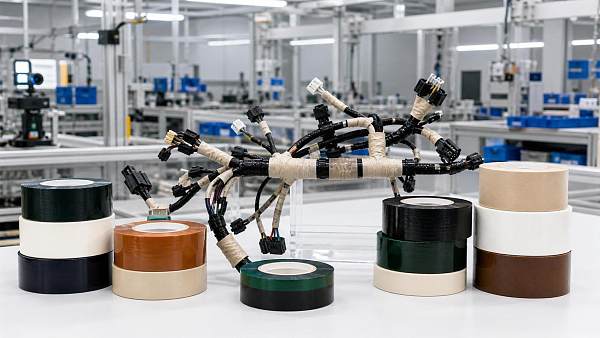
Most adhesive for wire harness wrapping falls into pressure-sensitive tape systems.
The backing may be cloth, PET fleece, PVC, film, or foam, but adhesive chemistry drives performance.
The three most common chemistries are acrylic, rubber-based, and silicone.
Acrylic Adhesive
Acrylic adhesive for wire harness wrapping is widely used in automotive and electronics assembly.
It offers balanced aging resistance, temperature stability, and decent chemical resistance.
It also handles long-term service better than many rubber systems.
When the harness sees regular heat exposure, acrylic is often the safer baseline choice.
Rubber-Based Adhesive
Rubber-based systems give fast grab and strong initial tack.
That can help when surfaces are slightly dusty or when fast manual wrapping is needed.
However, high heat aging and some oil exposure can limit long-term reliability.
It works best in milder environments or cost-sensitive interior applications.
Silicone Adhesive
Silicone adhesive for wire harness wrapping is a more specialized option.
It performs well under extreme temperature conditions and on difficult surfaces.
The tradeoff is usually higher cost and narrower supply options.
For routine harness work, it is often more material than the job really needs.
How to Match the Adhesive to the Working Environment
The fastest way to choose adhesive for wire harness wrapping is to map the real service environment.
Do not start with brand preference.
Start with heat, movement, fluid exposure, and installation conditions.
Temperature Range
Check both continuous temperature and short peak temperature.
A harness near motors, batteries, or power electronics can see brief spikes.
If peaks matter, short-term test data becomes as important as the nominal rating.
Vibration and Flexing
Static harnesses and moving harnesses should not use the same logic.
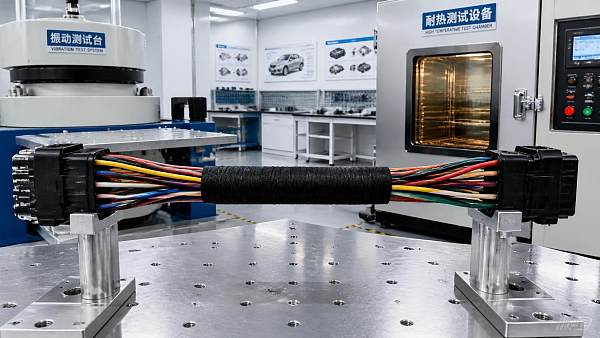
In high-vibration zones, the wrap needs enough flexibility to move without edge cracking.
A stiff wrap may look neat on day one and fail earlier in the field.
Exposure to Oil, Moisture, and Chemicals
Some adhesive for wire harness wrapping loses holding power after fluid contact.
That is especially relevant in engine bays, industrial machinery, and outdoor equipment.
If contamination is likely, request chemical resistance data tied to your actual fluid list.
Noise and Surface Feel
In vehicle interiors, anti-rattle performance can influence tape choice.
Cloth-backed systems are often selected because they reduce squeak and buzz.
Here, backing texture and adhesive behavior work together.
Selection Questions That Prevent Expensive Mistakes
A practical evaluation should be simple enough to use on the shop floor.
Before approving adhesive for wire harness wrapping, ask these questions.
- What is the maximum continuous temperature at the installation point?
- Will the harness be fixed, flexed, or exposed to repeated vibration?
- Are oil, coolant, cleaners, or humidity part of normal service?
- Does the wrap need low-noise performance or abrasion damping?
- Is fast hand application more important than long-term removability?
- Will operators apply the tape on clean, controlled surfaces every time?
- Is rework expected during assembly or service?
These questions quickly narrow the candidate list.
They also reveal whether the real issue is adhesive chemistry, backing style, or process control.
Quick Comparison Table for Daily Selection
This table is only a starting point.
The final choice still depends on testing the actual harness layout and work method.
Application Tips That Improve Wire Harness Wrapping Performance
Even the right adhesive for wire harness wrapping can fail if application is inconsistent.
From recent production trends, process discipline matters more than many teams expect.
- Wrap with steady overlap, not random tension changes
- Avoid trapping dust, release liner fragments, or oil
- Do not overstretch tape around tight corners
- Press edges firmly at branch transitions
- Store materials within recommended temperature limits
- Validate new lots before full production release
Small habits like these reduce unwind issues and improve consistency between operators.
They also help separate a material problem from an application problem.
How to Make the Final Decision
The best adhesive for wire harness wrapping is the one that fits the real operating window.
That means matching chemistry, backing, and process to the harness environment.
For many applications, acrylic systems offer the most balanced choice.
For fast indoor assembly, rubber-based options can still make sense.
For extreme heat, silicone may justify its added cost.
The clearer signal is this: do not choose only by initial tack or unit price.
Choose by service risk, handling efficiency, and repeatable field performance.
When comparing candidates, run a short line trial, check edge lift after aging, and review rework behavior.
That approach turns adhesive for wire harness wrapping into a controlled decision, not a guess.
Recommended News
 Oct 10, 2026How to choose industrial adhesive tape for wire harness abrasion resistanceIndustrial adhesive tape for wire harness protection: compare abrasion resistance, adhesive durability, heat performance, flexibility, and validation steps for reliable applications.
 Sep 11, 2026What causes edge lifting in high-adhesion PSA tapes on curved metal substrates?How do I prevent adhesive tape edge lifting? Discover science-backed strategies for curved metal substrates—thermal, surface, and application levers that stop delamination before it starts.
 Sep 12, 2026Are cleanroom-grade PSA tapes validated for ISO Class 5 assembly environments?Are pressure sensitive adhesive tapes suitable for cleanroom assembly? Discover why ISO Class 5 validation—not just 'cleanroom-grade' labels—makes all the difference.
 Sep 13, 2026Do pressure-sensitive masking tapes comply with RoHS 2026 requirements for electronics assembly?Does adhesive tape meet RoHS requirements? Spoiler: There’s no RoHS 2026—only real, enforceable RoHS 2011/65/EU. Get layer-specific compliance insights for electronics-grade masking tapes.
 Aug 31, 2026How to choose an adhesive for wire harness tape bondingAdhesive for wire harness tape bonding: learn how to select durable, compliant solutions for heat, vibration, moisture, insulation compatibility, and efficient assembly.
 Jul 12, 2026How to Evaluate a Pressure Sensitive Tape Manufacturer for Harness MaskingPressure sensitive tape manufacturer selection for harness masking: learn how to compare clean removal, heat resistance, compliance, and process cost to choose a reliable supplier.
 Jun 27, 2026Choosing Adhesive for Wire Harness WrappingAdhesive for wire harness wrapping: learn how to choose acrylic, rubber, or silicone options for heat, vibration, and abrasion resistance to improve harness reliability.
 Jun 14, 2026Zhejiang Tape Makers Advance Halogen-Free ComplianceZhejiang tape makers advance halogen-free compliance under IEC 61249-2-21:2025, boosting supplier access for automotive harness and electronics buyers. See what it means for sourcing.

Editor's Selection
The Archive Newsletter
Critical industrial intelligence delivered every Tuesday. Peer-reviewed summaries of the week's most impactful logistics and market shifts.