
How does mixing affect quality in epoxy adhesive manufacturing?
by
Published
Views:
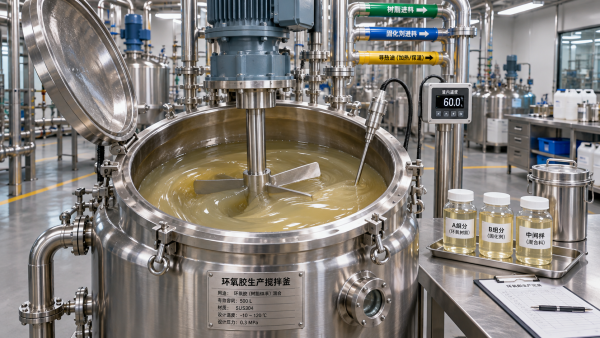
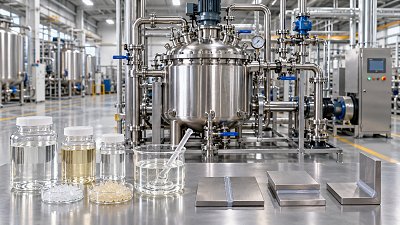
Mixing determines whether epoxy adhesive ingredients are distributed consistently enough to cure as intended. In adhesive manufacturing, inaccurate proportions, poor dispersion, excessive heat, and entrained air can change viscosity, shorten working life, weaken cured material, and create batch-to-batch variation.
The relevant controls depend on the production stage: blending an epoxy resin or hardener component, combining the two components before application, or mixing them through a dispensing system. A uniform-looking mixture is not proof of a correct ratio or complete cure. Reliable quality depends on controlling the formulation, equipment, process conditions, and verification methods together.
Why mixing matters in epoxy adhesive manufacturing
Epoxy adhesives cure when reactive epoxy groups and a suitable hardener form a crosslinked polymer network. The formulation establishes the intended balance of reactive groups, but mixing determines whether those ingredients meet throughout the material.
Where the resin and hardener are poorly combined, local regions can contain too much of one component. Those regions may remain soft or cure differently from the surrounding adhesive, even when the total quantities weighed into the vessel were correct. Incorrect proportions can also affect the final network, although the consequences depend on the chemistry and the size of the deviation.
Mixing has a separate role when manufacturing a two-component product. Fillers, pigments, tougheners, and other additives must be dispersed consistently within the component specified by the formulation. Resin and hardener are then kept separate until use; homogeneity within each package does not guarantee that the customer’s final mix will be correct.
How process variables change adhesive quality
Resin-to-hardener ratio and measurement basis
Each formulation has a specified mixing ratio based on its chemistry. The ratio may be given by weight or by volume, and the two are not interchangeable unless the component densities make them equivalent.
For example, a 2:1 volume ratio means two measured volumes of resin to one volume of hardener; it does not automatically mean two kilograms of resin to one kilogram of hardener. Temperature-dependent density, metering equipment, and filler content can affect the practical conversion. Use the supplier’s specified basis and validated measurement method rather than converting ratios by assumption.
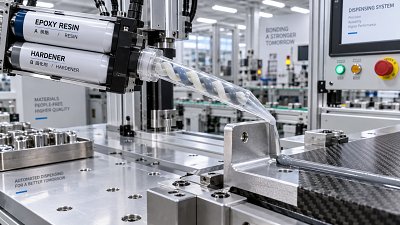
On a production line, check scale calibration or metering accuracy across the intended operating range. For a dispensing system, verify the delivered ratio under representative pressure, flow, and temperature conditions; a correct machine setting alone does not establish that the correct quantities leave the outlets.
Mixing energy, time, and vessel geometry
Mixing must move material through the entire vessel while breaking down agglomerates where necessary. Low circulation can leave unmixed material near the walls, base, shaft, or surface; excessive speed can draw in air or create unwanted heat.
Time and rotational speed are useful set points, but neither guarantees equivalence between different vessels or batch sizes. Impeller design, fill level, viscosity, baffles, and the distance from the impeller to the vessel wall all affect flow. A validated process should specify the equipment configuration and operating range, not merely a mixing time.
High shear can help disperse difficult powders, but it is not always beneficial. It may increase temperature, change viscosity, damage shear-sensitive constituents, or introduce air. The appropriate sequence and energy level must therefore be established for the specific formulation.
Temperature, reaction, and usable life
Temperature influences viscosity and reaction rate. Cold components may be difficult to pump or blend consistently, while warmer material generally flows more readily but can react faster once resin and hardener are combined.
After the reactive components are mixed, curing releases heat. In a large or poorly cooled mass, heat accumulation can accelerate the reaction, generate still more heat, and shorten the available working time. In severe circumstances, an uncontrolled exotherm can cause fumes, container damage, or burns.
Pot life is conditional, not a universal timer. It depends on the formulation and test conditions, including temperature and mixed quantity. Define a maximum mixed quantity and use period for the actual operation, and follow the product’s safety and technical documentation.
Filler dispersion and air control
Fillers can influence adhesive flow, shrinkage, electrical behavior, and thermal conductivity. Poor dispersion or settling can create local differences in composition; in a thermally conductive adhesive, for example, a nominal filler loading does not guarantee a continuous or uniform heat-transfer path.
Air can enter during powder addition, liquid transfer, high-speed agitation, or filling. Bubbles and voids may reduce effective bonded area, interfere with dispensing, or weaken cured material. Vacuum deaeration can remove entrained gas where suitable, but it must be validated for the formulation: pressure, temperature, and time affect both bubble removal and the behavior of volatile ingredients.
Recognizing mixing-related defects
These observations are diagnostic leads, not proof of a mixing fault. A weak bond, for instance, can also result from contamination, poor substrate preparation, unsuitable adhesive selection, or an incorrect cure schedule. Avoid adjusting mixer settings until the competing causes have been assessed.
Build a verification plan around the process
A useful control plan separates incoming material checks, in-process measurements, and finished-product testing. Sampling locations and timing matter: a single sample from the top of a vessel may miss poorly mixed material at the bottom or walls.
- Before mixing: confirm material identity, batch status, storage condition, component temperature, equipment cleanliness, and the approved formulation revision.
- During mixing: record actual quantities, addition sequence, equipment configuration, speed, duration, temperature, and any vacuum conditions required by the process.
- After mixing: use a defined sampling plan to check properties such as appearance, viscosity, density, or filler distribution where relevant. Compare results with formulation-specific acceptance limits.
- After cure: assess the required properties using controlled specimen preparation and cure conditions. Depending on the application, these may include hardness, bond strength, glass transition behavior, or inspection for voids.
Where a two-component adhesive is packaged separately, test each component for consistency and stability, then prepare a representative combined mix to check cure and performance. Record component lot numbers and preserve traceability through packaging and release. Rework, if permitted, should follow an approved procedure that defines limits and retesting rather than relying on visual judgment.
Standards and test methods: use them within scope
Published standards can make results more comparable, but a test method is not automatically a product acceptance specification. The selected edition, specimen preparation, conditioning, cure schedule, equipment, and reporting requirements must match the intended use and any contractual requirements.
- ASTM D1002 describes a single-lap-joint shear test for adhesively bonded metal specimens. Results are sensitive to joint preparation and geometry and should not be treated as a complete description of performance in every service condition.
- ASTM D2196 covers rheological properties of non-Newtonian materials using rotational viscometers. The instrument, spindle, speed, temperature, and measurement procedure need to be specified for meaningful comparison.
- ISO 11357-2 addresses determination of glass transition temperature by differential scanning calorimetry. The thermal history and test procedure affect interpretation; a transition measurement alone does not establish bond durability.
Use the current applicable editions and verify their scope before incorporating them into a specification. Set release limits from product requirements and process validation, rather than assuming the standard supplies a universal pass or fail value.
Control exposure and change without losing consistency
Epoxy resins, hardeners, and additives present formulation-specific hazards, including skin and eye exposure; some ingredients can cause sensitization. Review the safety data sheets for all components and use appropriate containment, ventilation, protective equipment, and spill procedures. Do not assume that the hazards of the mixed product are identical to those of either component alone.
Temperature excursions, unexpected viscosity rise, or an abnormal reaction require predefined stop and escalation criteria. Keep unapproved material out of the release stream, isolate it safely, and follow site procedures for handling reactive waste; do not seal an overheating mixture in a closed container.
Changes to raw materials, mixer geometry, batch size, processing temperature, or dispensing hardware can invalidate an established mixing window. Evaluate the effect on dispersion, temperature, air content, cure, and final performance before routine production. The goal is not maximum mixing intensity, but a repeatable process that delivers the required composition and properties without creating avoidable safety risks.
Have questions about the global trade trends discussed here, or planning your expansion and supply chain strategy? Leave a message below and let the trade experts at IADS guide you.
We respect your privacy. Your information is strictly confidential.
Recommended News
 Nov 24, 2026How does mixing affect quality in epoxy adhesive manufacturing?Adhesive manufacturing quality starts with the right mix. Discover how ratio, temperature, dispersion and air control affect epoxy performance.
 Nov 23, 2026When should you use 2K epoxy for automotive bonding?Explore automotive industrial bonding solutions and learn when 2K epoxy delivers reliable performance, from joint design and surface preparation to cure and testing.
 Nov 21, 2026When are 2K epoxies a good choice for high-strength structural bonding?Explore high strength structural bonding materials and learn when 2K epoxies deliver durable joints, plus key tips on surface prep, cure time, and joint design.
 Nov 16, 2026What drives demand for epoxy adhesive exports to the USA?Explore the adhesive export market USA and discover how electronics, automotive and infrastructure demand shape opportunities for epoxy suppliers.
 Nov 13, 2026When are 2K epoxy adhesives suitable for lightweight assembly?Lightweight manufacturing adhesive assembly: discover when 2K epoxy is suitable, how to design reliable bonds, and what to check before production.
 Nov 11, 2026How to select a 2K epoxy adhesive for wind blade bonding in GermanyWind blade bonding Germany: discover how to select a 2K epoxy adhesive based on joint strength, cure time, production conditions and qualification.
 Nov 08, 2026Epoxy Structural Adhesives Outlook to 2035: Lightweighting and Renewables Drive GrowthExplore the epoxy structural adhesives outlook to 2035 and discover how automotive lightweighting and wind energy could shape demand and supply planning.
 Nov 07, 2026When should you use 2K epoxy for composite structural bonding?Composite structural bonding with 2K epoxy: discover when to use it, how to assess joint loads and surfaces, and what it takes to achieve a reliable cure.
 Oct 29, 2026China Epoxy Resin Prices Ease on October 29 as Liquid Resin Falls 1.15%China epoxy resin prices eased on October 29, with liquid resin down 1.15% and solid resin steady. Explore the latest prices and raw material drivers.
 Oct 28, 2026Choosing structural bonding epoxies for composites under cyclic loadsCompare composite structural bonding solutions for cyclic loads. Learn how epoxy toughness, fatigue data, and process control guide reliable joint design—and choose with confidence.
 Oct 26, 2026Resonac Agrees to Transfer Selected Polyurethane and Epoxy Adhesives Businesses to SikaResonac agrees to transfer selected polyurethane and epoxy adhesives businesses to Sika. Explore the deal’s scope in Japan, mainland China and Taiwan, and what customers should watch.
 Oct 24, 2026Kangda New Materials Reports 13.16% Revenue Growth for First Nine Months of 2026Kangda New Materials reports 13.16% revenue growth for the first nine months of 2026. Explore adhesives and specialty resins performance, key drivers and profitability factors to watch.
 Oct 23, 2026When to choose 2K epoxy for bonding lightweight automotive panelsExplore automotive lightweight bonding with 2K epoxy. Learn when it suits mixed-material panels, which cure and durability checks matter, and how to choose with confidence.
 Oct 20, 2026When to use 2K epoxy in multi-material lightweight manufacturingExplore when to use 2K epoxy in multi material lightweight manufacturing. Learn how joint design, surface preparation, and cure control support durable bonds—and when to choose alternatives.
 Oct 11, 2026When does a 2K epoxy adhesive system need a static mixer?Learn when 2K epoxy adhesive systems need a static mixer to ensure reliable curing, bond strength, sealing performance, and consistent dispensing.
 Oct 08, 2026When do automotive adhesive lightweighting applications justify 2K epoxy?Adhesive lightweighting applications automotive: discover when 2K epoxy delivers durable, lightweight structural bonding for mixed-material vehicle designs.
 Sep 28, 2026How material characterization predicts structural adhesive bond durabilityStructural adhesive material characterization reveals how mechanical, thermal, cure, and environmental data predict bond durability—helping engineers select reliable solutions with confidence.
 Sep 25, 2026How to select epoxy structural bonding materials for high-load jointsEpoxy structural bonding materials: learn how to select durable solutions for high-load joints, balancing strength, toughness, surface prep, cure, and environmental resistance.
 Sep 20, 2026When 2K epoxy structural industrial bonding solutions make senseStructural industrial bonding solutions with 2K epoxy help engineers achieve durable, sealed joints for mixed materials. Explore selection, curing, and design insights.
 Sep 18, 2026How bonding applications in wind energy prevent fatigue-related failuresBonding applications in wind energy help prevent fatigue-related failures through durable joint design, crack resistance, cure control, and reliable production processes.
 Sep 23, 2026PCB Underfill Selection Guide for Fine-Pitch Components and Thermal CyclingPCB underfill selection guide for fine-pitch BGAs, CSPs, and flip-chip devices. Compare flow, CTE, modulus, adhesion, curing, and dispensing for reliable thermal cycling performance.
 Sep 23, 2026Circuit Board Level Underfill Market: Growth Drivers and Supply Chain OutlookExplore the electronic circuit board level underfill material market with actionable insights on reliability, dispensing precision, material selection, and supply chain resilience.
 Sep 20, 2026Rail Bonding Solutions for Vibration, Fire Safety, and Long-Term DurabilityBonding solutions for rail: explore proven strategies for vibration resistance, fire safety, durable joints, surface preparation, and production-ready validation.
 Sep 19, 2026Lightweight Adhesives for EVs: Reducing Mass Without Compromising Joint StrengthLight weighting adhesives for EVs help reduce vehicle mass while maintaining joint strength, durability, and production efficiency. Explore smarter bonding solutions for EV designs.



Editor's Selection
The Archive Newsletter
Critical industrial intelligence delivered every Tuesday. Peer-reviewed summaries of the week's most impactful logistics and market shifts.