When 2K epoxy structural industrial bonding solutions make sense
by
Published
Views:
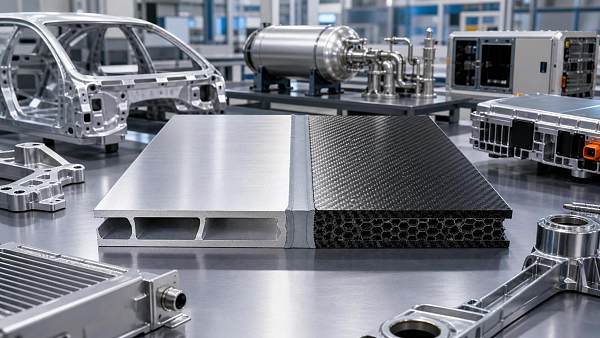
A two-component epoxy is worth considering when an assembly must carry meaningful load over time and the joint cannot rely on a simple, rigid contact between identical materials. Typical triggers include a welded bracket that distorts a thin panel, a riveted housing that leaks around fasteners, or a mixed-material assembly where aluminum, steel, composite, and coated components must act as one structure. In these situations, 2K epoxy structural industrial bonding solutions make sense when the joint can be designed to use the adhesive in shear, compression, or controlled peel rather than as a substitute for every fastening method.
The decision is not based on tensile strength alone. A technically strong epoxy can still fail in production if the substrate preparation is inconsistent, the mixing ratio drifts, the adhesive cannot wet the surface, or the joint sees peel forces beyond its design range. The useful evaluation question is therefore: can the material, joint geometry, curing process, and service environment work together without creating a new manufacturing risk?
Where a two-component epoxy earns its place
Two-component epoxy systems cure through a reaction between resin and hardener. Unlike one-part heat-curing structural products, they can often cure at room temperature or with moderate heat acceleration. Unlike UV adhesives, they do not need light access through the joint. This makes them practical for enclosed assemblies, opaque substrates, thick bond lines, and large components where a UV source cannot reach the entire adhesive layer.
They are particularly relevant where production teams are trying to remove localized stress concentrations. A bolt, rivet, or spot weld transfers load through discrete points. A properly designed adhesive bond spreads force across a broader overlap area. That can be useful for thin sheet metal, composite skins, cast components, structural inserts, and housings that cannot tolerate distortion or visible fastening marks.
- Dissimilar materials: aluminum bonded to fiber-reinforced composite, steel bonded to coated metal, or metal inserts bonded into polymer structures.
- Vibration-prone equipment: enclosures, frames, rail interiors, industrial machinery covers, and assemblies where repeated movement can loosen mechanical fasteners.
- Gap-filling joints: parts with tolerances, uneven surfaces, or controlled stand-off requirements that do not permit intimate contact everywhere.
- Sealed structural joints: assemblies that benefit from both load transfer and a barrier against moisture, dust, or fluid entry.
- Heat-sensitive fabrication: components that may warp, discolor, lose coating performance, or suffer property changes during welding.
That does not mean epoxy should automatically replace every mechanical joint. A joint that must be disassembled for maintenance, carries highly concentrated impact loading, or has no practical overlap area may still require screws, clips, welding, or a hybrid adhesive-fastener design. The adhesive becomes valuable when it addresses a real weakness in the existing joining method rather than being selected because it appears to simplify the bill of materials.
Start with the loads, not the adhesive data sheet
A common evaluation mistake is to compare only published lap-shear values. Lap-shear testing is useful for comparison, but it does not reproduce every production joint. Structural bonds often experience a combination of shear, peel, cleavage, compression, torsion, vibration, and thermal expansion. The joint’s weakest loading mode usually matters more than its best laboratory number.
Consider a long metal cover bonded to a composite base. During use, the two materials may expand at different rates as temperature changes. The adhesive needs enough stiffness to transfer load, but enough toughness or flexibility to tolerate strain at the ends of the bond line. A very rigid formulation may look attractive in static testing while becoming more vulnerable to crack initiation at the edge of a joint exposed to cycling.
Before shortlisting products, define the actual load path and ask:
- Will the adhesive see sustained load, repeated cycling, shock, or intermittent handling forces?
- Is the dominant force shear across an overlap, or peel at an exposed edge?
- Can the bonded area be increased, or is packaging space fixed?
- Will a stiff substrate be bonded to a flexible one?
- Does the joint need to preserve alignment while the adhesive reaches handling strength?
Where possible, redesign the joint before seeking a stronger chemistry. A longer overlap, a flange, a recessed bonding channel, or a fillet at the exposed edge can reduce peel stress significantly. Adhesive selection and joint design are inseparable. A formulation that performs well in a favorable joint may be unsuitable in a butt joint that forces the bond line into peel or cleavage.
The cure profile must fit the assembly line
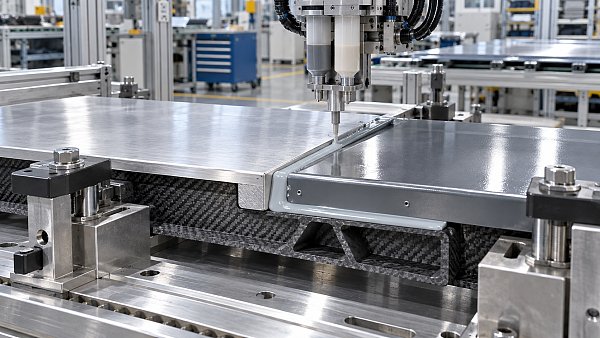
Two-component epoxy gives process flexibility, but it also imposes process discipline. Resin and hardener must be supplied at the correct ratio, mixed thoroughly, dispensed within usable working time, and allowed to cure under conditions the formulation can tolerate. “Room-temperature cure” should not be interpreted as “fully ready for service immediately after application.” Handling strength, fixture release, functional cure, and final property development may occur at different times.
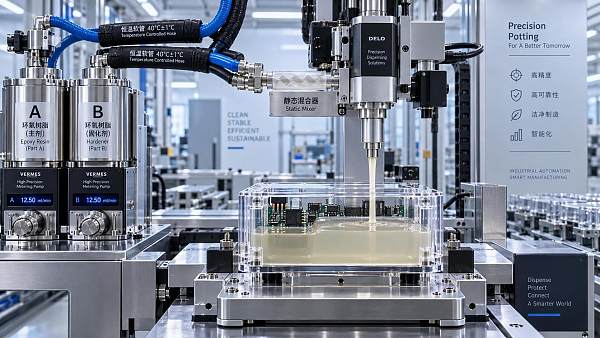
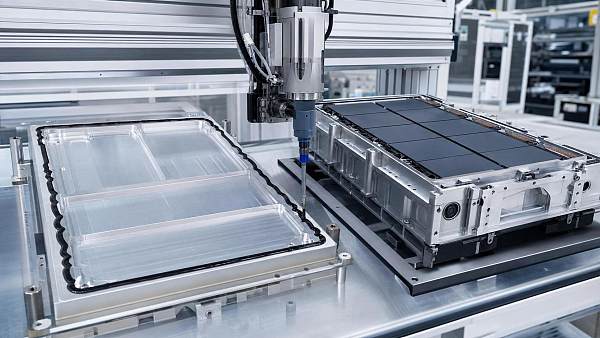
For a manual or low-volume operation, cartridge systems with static mixers can reduce operator variation. The mixer must match the material viscosity and mix ratio, and the first dispensed portion is commonly managed according to the process procedure to ensure stable mixing. For automated production, meter-mix equipment requires control of ratio accuracy, line flushing, material temperature, pressure, and dispense repeatability. An epoxy that works in a bench trial may create unacceptable waste or downtime if its pot life is too short for the actual dispensing path.
Temperature control deserves special attention. Cold material can become more viscous, change flow behavior, and place additional load on dispensing equipment. Cold parts may also collect condensation, which can interfere with surface quality. Excessively warm material may shorten working time. A stable material-conditioning routine is often more valuable than repeatedly adjusting dispense pressure to compensate for avoidable viscosity variation.
Surface condition is often the real reason a bond underperforms
Structural epoxy does not erase poor surface preparation. Oil, mold release, fingerprints, oxide layers, machining fluid, polishing residue, dust, and weak paint layers can all produce adhesion failure even when the cured adhesive itself appears sound. The failure location tells an important story: adhesive remaining mostly on one substrate may indicate poor adhesion or contamination, while cohesive failure within the adhesive can indicate that interfacial bonding was stronger than the cured bulk material under that test condition.
Surface preparation should be defined by substrate, not treated as a generic cleaning step. Some metals need degreasing and controlled abrasion; some coated metals require confirmation that the coating itself is securely attached; composites may need removal of release residues; engineered plastics may need plasma, flame, chemical treatment, or a suitable primer. Any proposed treatment must be evaluated with the actual material grade, finish, and production handling sequence.
Questions to resolve before approving a substrate combination
- Is the metal bare, anodized, galvanized, painted, passivated, or treated with a conversion coating?
- Does the polymer contain internal mold release, plasticizer, reinforcement, or a low-surface-energy additive?
- Will operators touch the bonding area after cleaning?
- Can abrasion create debris that remains trapped in the joint?
- Does the process need a primer, and can its application and drying time be controlled consistently?
Do not approve a bonding process solely from freshly prepared laboratory coupons. Production surfaces may arrive from different suppliers, have storage variation, or carry changes in coating chemistry. Evaluators should establish acceptable incoming surface conditions and a practical way to verify that the preparation method is being followed. The verification may be procedural, visual, or based on process controls; the right method depends on the component and risk level.
Choosing between rigid, toughened, and flexible epoxy behavior
“Epoxy” covers a wide range of mechanical behavior. Some formulations are highly rigid and suited to stable, close-fitting metal joints. Others are toughened to resist crack growth and vibration. More flexible products may accommodate movement, but may not provide the same stiffness or heat resistance as a rigid structural grade. The correct choice depends on the role of the bond in the assembly.
A rigid epoxy may make sense where dimensional stability is essential, the substrates are similar in thermal expansion, and the joint has broad shear area. A toughened grade becomes more compelling where impact, vibration, thermal cycling, or mixed substrates introduce crack-driving forces. A lower-modulus formulation can help where bonded materials move differently, but it should not be assumed to be structurally interchangeable with a high-strength rigid system.
Gap size also changes the answer. Some products are intended for thin bond lines and close-fitting components. Others contain fillers or rheology modifiers that support larger gaps without sagging. An adhesive that is too fluid may run from a vertical assembly or starve a wide gap. One that is too thick may fail to wet fine surface texture and leave voids. The intended bond-line thickness should be designed and controlled with spacers, beads, glass media, part features, or fixture geometry where appropriate.
Environmental exposure can overturn an otherwise good choice
Many early evaluations focus on initial strength, then discover later that the actual service environment is more severe. Heat, humidity, water immersion, cleaning agents, oils, fuels, salt exposure, electrical requirements, and outdoor weathering can affect the adhesive, the substrate, or the interface between them. The relevant question is not whether epoxy is “resistant” in general; it is whether the selected formulation retains acceptable performance in the specific exposure pattern the assembly will experience.
For example, a bond near a heat source may need to tolerate repeated temperature changes rather than merely a single elevated-temperature exposure. A sealed enclosure may trap humidity against the bond line. A painted substrate may survive the chemical environment while its coating-to-metal interface becomes the weak link. Where electrical insulation, flame behavior, low outgassing, or chemical compliance matters, these requirements should be included in the initial specification rather than added after mechanical testing is complete.
A practical approval route before production release
Technical evaluators can reduce uncertainty by moving from the real assembly backward, rather than beginning with a broad product catalogue. Define the substrates, their surface states, bond geometry, minimum and maximum gap, expected loads, service temperatures, exposure conditions, and production timing. Then select a manageable number of candidate chemistries that can actually be dispensed and cured within those constraints.
- Build representative specimens. Use actual production materials, realistic surface preparation, and the intended bond-line thickness. Flat coupons are useful, but they should not be the only evidence for a complex part.
- Confirm process windows. Test material conditioning, mixing, open time, placement time, fixture pressure, and cure schedule. Include realistic pauses that may occur on the line.
- Examine failure mode. Record whether failure occurs in the adhesive, at one interface, in a coating, or in the substrate. A force value without failure observation can hide the actual weakness.
- Condition before retesting. Assess specimens after the environmental exposures that matter for the application, especially thermal cycling, humidity, chemical contact, or vibration where relevant.
- Validate dispensing repeatability. Confirm bead placement, volume control, mix consistency, and void prevention under normal operating conditions rather than relying only on hand-applied samples.
2K epoxy structural industrial bonding solutions are most defensible when they solve a defined load-transfer, sealing, distortion, or mixed-material problem and when the manufacturing process can control their use. The strongest candidate is not necessarily the product with the highest published strength. It is the one that maintains reliable adhesion on the real substrates, tolerates the joint’s stress pattern, reaches the required cure state within the production cycle, and continues to perform after the conditions the assembly is expected to face.
Recommended News
 Sep 20, 2026When 2K epoxy structural industrial bonding solutions make senseStructural industrial bonding solutions with 2K epoxy help engineers achieve durable, sealed joints for mixed materials. Explore selection, curing, and design insights.
 Sep 18, 2026How bonding applications in wind energy prevent fatigue-related failuresBonding applications in wind energy help prevent fatigue-related failures through durable joint design, crack resistance, cure control, and reliable production processes.
 Sep 20, 2026Rail Bonding Solutions for Vibration, Fire Safety, and Long-Term DurabilityBonding solutions for rail: explore proven strategies for vibration resistance, fire safety, durable joints, surface preparation, and production-ready validation.
 Sep 19, 2026Lightweight Adhesives for EVs: Reducing Mass Without Compromising Joint StrengthLight weighting adhesives for EVs help reduce vehicle mass while maintaining joint strength, durability, and production efficiency. Explore smarter bonding solutions for EV designs.
 Sep 15, 2026How fluid control engineering prevents voids in 2K epoxy sealantsFluid control engineering for sealants helps prevent voids in 2K epoxy systems. Explore practical methods for stable metering, mixing, pressure control, and air-free cavity filling.
 Sep 10, 2026When do adhesive lightweighting applications make sense in aerospace?Adhesive lightweighting applications aerospace: learn when bonded joints reduce mass, improve load transfer, and support durable, certifiable aircraft designs.
 Aug 28, 2026How to select an epoxy rail vehicle structural adhesive for fatigue loadsEpoxy rail vehicle structural adhesive selection for fatigue loads: evaluate toughness, joint design, surface prep, curing, and rail compliance for durable bonds.
 Aug 25, 2026When does BGA underfill technology for PCB assembly reduce field failures?BGA underfill technology for pcb assembly reduces field failures when thermal cycling, shock, or board flex drive solder fatigue. Learn when it boosts reliability—and when it adds cost without real gains.
 Aug 11, 2026How to Choose Epoxy Adhesive Systems for Metal Bonding Under Heat and VibrationEpoxy adhesive systems for metal bonding: learn how to compare heat resistance, vibration durability, cure profile, and dispensing fit to choose a more reliable solution.
 Aug 10, 2026Industrial Adhesive Technology Analysis: What Drives Bond Strength and Process Stability?Industrial adhesive technology analysis reveals what drives bond strength and process stability—from chemistry and surface prep to curing and dispensing. Learn how to reduce failure risk.
 Aug 05, 2026How to Evaluate Lightweight Structural Bonding for Composites Under Dynamic LoadsLightweight structural bonding for composites under dynamic loads demands more than static strength. Explore fatigue, impact, surface prep, and process factors to choose durable, weight-saving bonds.
 Jul 14, 2026How to Choose Lightweight Structural Bonding for PlasticsLightweight structural bonding for plastics explained: compare adhesive types, joint design, process control, and durability factors to choose lighter, stronger, production-ready assemblies.
 Jul 13, 2026Choosing an Adhesive for Automotive Supplier ProgramsAdhesive for automotive supplier programs affects strength, process stability, compliance, and launch risk. Learn how to choose the right solution for reliable, scalable production.
 Jul 11, 2026Automotive Adhesive Bonding Process: Key Steps That Prevent Bond FailureAutomotive adhesive bonding process essentials: learn the key steps that prevent bond failure, improve durability, and optimize surface prep, dispensing, and cure control in automotive assembly.
 Jul 09, 2026When Structural Adhesives Can Replace Riveting in Metal AssembliesStructural adhesive replacement riveting: learn when bonded metal assemblies can outperform rivets in fatigue, corrosion control, weight reduction, and automation.
 Jul 08, 2026Best Ways to Bond Dissimilar Material Composites Without CrackingDissimilar material bonding composites: learn how to prevent cracks in metal, plastic, battery, and laminate assemblies with smarter adhesive, process, and stress-control strategies.
![]() Jul 07, 2026How Lap Shear Testing Reveals Structural Adhesive Joint Failure RisksLap shear structural adhesive joint testing reveals hidden failure risks before launch. Learn how process conditions, substrates, and aging affect joint reliability.
Jul 07, 2026How Lap Shear Testing Reveals Structural Adhesive Joint Failure RisksLap shear structural adhesive joint testing reveals hidden failure risks before launch. Learn how process conditions, substrates, and aging affect joint reliability. Jul 06, 2026Can Automotive Adhesive Replace Welding in Body Assembly?Automotive adhesive replacement for welding can improve multi-material body assembly with better sealing, lower corrosion risk, and more design flexibility. See where bonding beats welding.
 Jul 04, 2026Structural Bonding for Aluminum: When 2K Epoxy Outperforms Welding and FastenersStructural bonding for aluminum with 2K epoxy can outperform welding and fasteners by reducing distortion, corrosion risk, and weight—see where it delivers stronger ROI.
 Jul 03, 2026How to Choose Adhesive for Automotive Trim That Survives Heat and VibrationAdhesive for automotive trim selection made practical: learn how to choose solutions that resist heat, vibration, aging, and substrate mismatch for durable, cleaner-looking bonds.
 Jul 01, 2026Wind Blade Web Bonding: Common Gaps That Weaken StrengthWind blade web bonding failures often start with small gaps. Learn the most common causes, structural risks, and practical fixes to improve bond strength and reduce rework.
 Jul 01, 2026Wind Blade Bonding: How to Reduce Joint Failure RiskWind blade bonding best practices to reduce joint failure risk. Learn how adhesive choice, surface prep, bondline control, and curing improve blade reliability and long-term performance.
 Jun 30, 2026When Fatigue Resistant Structural Bonding Pays OffFatigue resistant structural bonding pays off when vibration, thermal cycling, and repeated loads make joint failure costly. Learn how it cuts lifecycle cost and improves reliability.
 Jun 30, 2026Lightweight Bonding Solutions for Aluminum: What Matters MostLightweight bonding solutions for aluminum: discover how to match adhesives, films, and tapes to load, heat, corrosion, and production speed for stronger, smarter assemblies.



Editor's Selection
The Archive Newsletter
Critical industrial intelligence delivered every Tuesday. Peer-reviewed summaries of the week's most impactful logistics and market shifts.