How material characterization predicts structural adhesive bond durability
by
Published
Views:
Introduction: Structural adhesive material characterization gives technical evaluators a clearer basis for predicting bond durability before a design reaches production.
By linking mechanical strength, thermal behavior, cure response, chemical resistance, and surface interaction data to operating conditions, teams can identify failure risks early.
This approach supports more reliable material selection for lightweight structures, dissimilar substrates, and demanding bonded assemblies across transportation, electronics, energy, and industrial equipment applications.
Start With the Failure Question, Not the Adhesive Datasheet
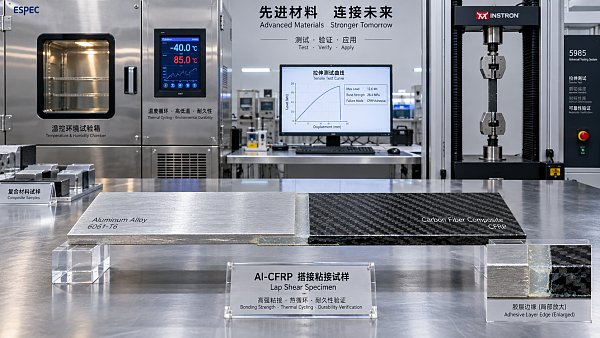
Technical evaluators should begin by asking how the bonded assembly could fail during its intended service life, rather than comparing only advertised strength values.
A structural adhesive may show excellent lap shear strength in laboratory conditions while losing durability after moisture exposure, thermal cycling, vibration, fuel contact, or sustained loading.
The central purpose of structural adhesive material characterization is to connect measurable material properties with realistic stresses experienced by the complete bonded structure.
This means evaluating the adhesive, substrates, surface preparation, bondline geometry, curing process, and environmental exposure as an interacting system rather than isolated variables.
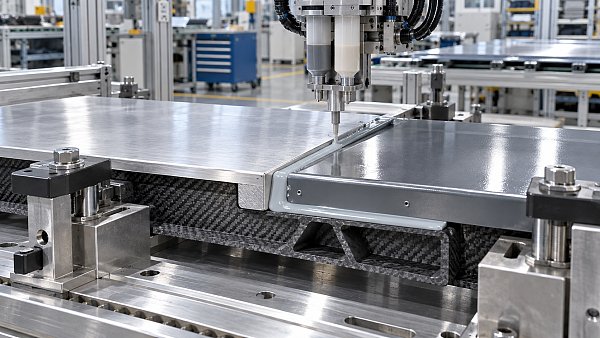
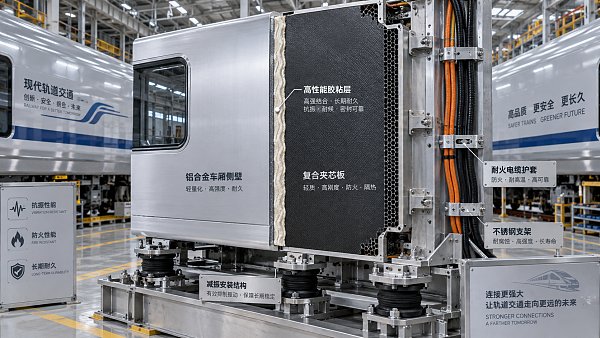
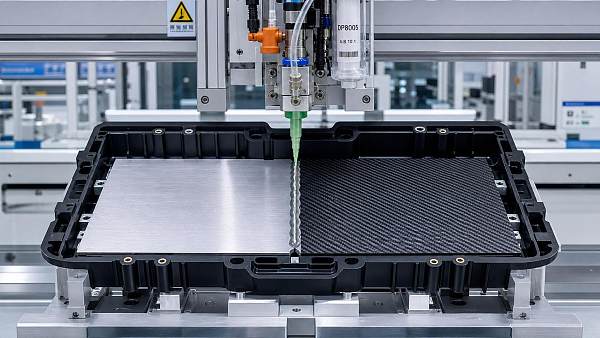
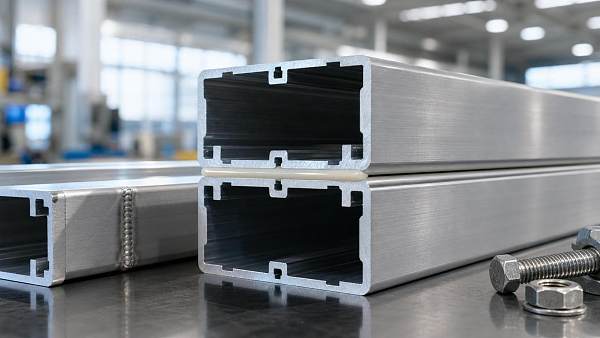
For example, an automotive aluminum-to-composite joint faces thermal expansion mismatch, road vibration, humidity, salt exposure, and occasional impact loads throughout its service period.
An epoxy selected solely for room-temperature strength can become too rigid under cold conditions or develop interfacial stress during repeated temperature changes.
Likewise, a polyurethane adhesive can provide strong flexibility and peel resistance but may require careful moisture-control procedures to ensure repeatable cure behavior.
Durability predictions become more credible when evaluators define the dominant failure modes first, then choose characterization methods that directly address those modes.
Mechanical Tests Show More Than Initial Bond Strength
Initial mechanical strength remains important, but it is only the first indicator of whether a structural adhesive can withstand long-term service demands.
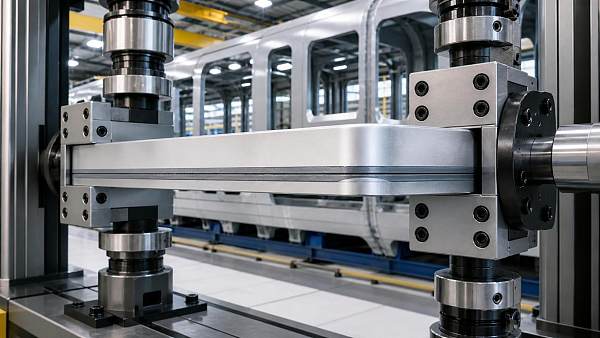
Lap shear testing is widely used because it is practical and comparable, yet its stress distribution does not fully represent real bonded structures.
Evaluators should review lap shear results alongside tensile strength, tensile modulus, elongation at break, peel resistance, fracture toughness, and impact resistance.
These properties reveal whether the adhesive behaves as a rigid load-bearing material, a flexible stress-relief layer, or a balanced formulation between both requirements.
High modulus often benefits stiffness and load transfer, particularly in metal structures, but excessive rigidity can concentrate stresses near bondline edges.
Lower modulus materials may better accommodate differential thermal movement between aluminum, steel, glass fiber composites, carbon fiber composites, and engineering plastics.
Peel and cleavage resistance deserve special attention because many practical joints experience edge lifting, panel flexing, vibration, and localized deformation.
A bond with high shear strength but weak peel performance may fail prematurely when an assembly is loaded outside its ideal laboratory orientation.
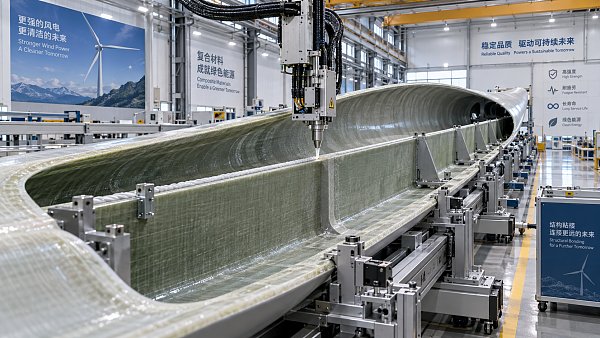
Fracture toughness testing helps evaluators understand crack growth resistance, which is especially relevant for safety-critical transportation, wind energy, and rail assemblies.
Where possible, teams should compare cohesive failure, adhesive interfacial failure, and substrate failure after every mechanical test rather than recording force values alone.
Cohesive failure can indicate good interfacial adhesion, although it does not automatically prove that the adhesive retains performance after aging or chemical exposure.
Interfacial failure often points toward insufficient surface preparation, contamination, incomplete wetting, unsuitable primers, or an adhesive chemistry incompatible with the substrate surface.
Thermal Characterization Predicts Stress During Real Service
Temperature changes affect both adhesive properties and the strain relationship between bonded substrates, making thermal characterization essential for durability prediction.
Differential scanning calorimetry, commonly called DSC, helps identify curing behavior, residual reaction potential, glass transition temperature, and thermal history effects.
For many structural epoxies, the glass transition temperature is a critical screening parameter because stiffness can decline substantially as service temperatures approach it.
A joint operating near or above its glass transition temperature may experience creep, reduced load transfer, stress relaxation, and accelerated damage under constant loads.
However, selecting the highest possible glass transition temperature is not automatically the best decision for every design or processing environment.
Very high-temperature formulations can be brittle, require aggressive cure schedules, or create residual stresses as the adhesive cools after oven curing.
Dynamic mechanical analysis provides a more detailed view by measuring storage modulus, loss modulus, damping behavior, and transitions across a temperature range.
This information helps technical evaluators determine whether an adhesive remains sufficiently stiff, tough, and energy-absorbing under both low and elevated service temperatures.
Thermomechanical analysis and coefficient of thermal expansion measurements further clarify how adhesive movement compares with the movement of adjoining substrates.
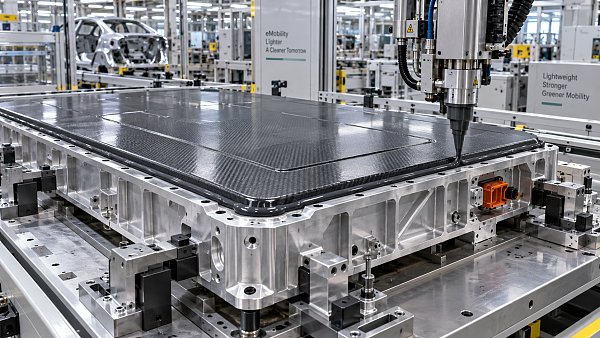
Large expansion differences are common in aluminum-to-composite, steel-to-plastic, and battery housing assemblies involving metals, polymers, thermal pads, or encapsulated electronics.
Repeated thermal cycling can generate fatigue damage even when the joint is never exposed to a single overload event during normal operation.
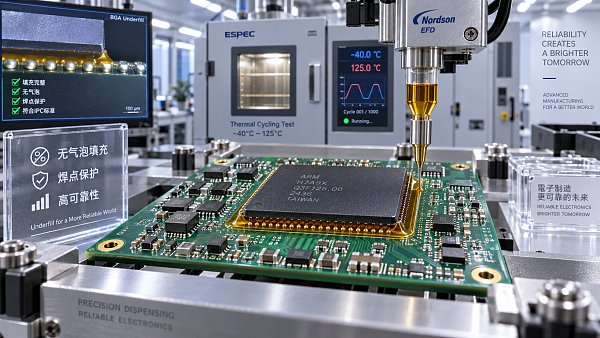
Therefore, material characterization should pair thermal property data with thermal-cycle mechanical testing using temperatures, dwell times, and cycle counts relevant to the application.
Cure Characterization Determines Whether Laboratory Performance Reaches Production
Many bond durability problems originate during processing, when the adhesive does not reach the cure state assumed by the original material qualification data.
Cure characterization establishes how temperature, time, humidity, mixing ratio, UV dose, substrate heat capacity, and bondline thickness affect final network formation.
For two-component epoxy structural adhesives, mix ratio control is particularly important because off-ratio material can reduce cross-link density and chemical resistance.
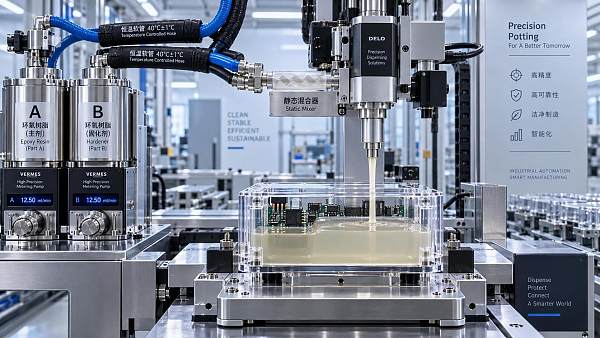
Static mixer performance, dispensing accuracy, material viscosity, pot life, and bead placement consistency can all influence local cure quality across production assemblies.
DSC can identify exothermic reaction peaks and residual heat of reaction, helping teams assess whether a chosen cure schedule achieves sufficient conversion.
Infrared spectroscopy, hardness development, gel time testing, and dynamic mechanical analysis can provide additional confirmation of cure progression and batch consistency.
In thick bonds or large assemblies, exotherm must be assessed carefully because internal temperatures may exceed oven setpoints and damage sensitive substrates.
Conversely, a large metal component can absorb heat rapidly, leaving adhesive sections under-cured despite a nominally compliant oven cycle.
UV-curing structural adhesives require separate attention to wavelength compatibility, intensity distribution, exposure time, shadowed regions, and secondary cure mechanisms.
A fast surface cure does not confirm adequate through-cure where opaque substrates, pigments, fillers, or deep bondlines limit light transmission.
Production validation should use representative substrates and realistic part geometries rather than relying only on small coupon tests cured under ideal conditions.
When cure data are linked to process-control limits, technical evaluators can define measurable acceptance criteria instead of depending on operator judgment alone.
Moisture, Chemicals, and Corrosion Often Drive Long-Term Failure
Environmental resistance is frequently the largest uncertainty in structural adhesive bond durability, especially where joints face humidity, fluids, salt spray, or cleaning chemicals.
Water can plasticize polymer networks, reduce glass transition temperature, weaken interfacial adhesion, and promote corrosion beneath susceptible metallic bondlines.
Moisture absorption testing provides useful baseline data, but evaluators should also measure retained mechanical strength after controlled humidity or water immersion exposure.
Testing only dry specimens creates an incomplete picture for outdoor equipment, vehicle structures, marine components, battery enclosures, and industrial process machinery.
Environmental aging conditions should reflect the actual operating environment, including expected chemicals such as coolants, oils, fuels, electrolytes, detergents, or hydraulic fluids.
For electric vehicle battery assemblies, resistance to coolant leaks, thermal management fluids, condensation, and electrolyte-related exposure may all require consideration.
Salt spray alone should not be treated as a universal corrosion qualification because real corrosion mechanisms depend on crevices, coatings, galvanic couples, and trapped moisture.
Aluminum, steel, magnesium, and carbon fiber composites can create complex corrosion risks when conductive paths and moisture are present near bonded interfaces.
Surface characterization methods such as contact-angle measurement, microscopy, and elemental analysis help identify poor wetting, residues, oxides, or treatment inconsistencies.
Durability testing should inspect bondline edges because environmental attack often begins where exposed adhesive, surface defects, and capillary moisture pathways intersect.
Mechanical retesting after aging is essential, but fracture surface analysis is equally valuable because it identifies whether damage migrated from cohesive to interfacial failure.
That change can expose an interface stability problem before strength data alone show a dramatic decline in measured load capacity.
Surface Characterization Explains Why Similar Materials Produce Different Results
Structural adhesives do not bond to material names such as aluminum or polyamide; they bond to the actual surface condition delivered to production.
Two aluminum panels with the same alloy designation may behave differently because of lubricants, oxide layers, conversion coatings, storage conditions, or cleaning history.
Surface energy influences adhesive wetting, but contact-angle results should be interpreted alongside chemistry, roughness, contamination risk, and process repeatability.
A high-energy surface generally promotes wetting, yet good wetting alone cannot guarantee durable chemical interaction at the adhesive-substrate interface.
Techniques including X-ray photoelectron spectroscopy, Fourier-transform infrared spectroscopy, optical microscopy, and scanning electron microscopy can support root-cause investigations.
These methods are usually most valuable when qualification tests reveal unexpected variability, environmental degradation, or recurring adhesive failure after otherwise controlled processing.
For routine manufacturing, simpler controls are often more practical, including water-break tests, dyne testing, controlled abrasion, plasma treatment verification, and cleanliness audits.
Technical evaluators should request evidence that surface-treatment performance is stable across suppliers, shifts, storage periods, and production equipment maintenance cycles.
Primer selection also requires characterization because primers can improve adhesion, corrosion resistance, and durability while adding application, drying, and compliance requirements.
A primer should be evaluated as part of the complete bonding system, including substrate pretreatment, adhesive chemistry, cure schedule, and anticipated environmental exposure.
Use Accelerated Aging Carefully When Predicting Service Life
Accelerated aging is necessary because teams cannot wait years for every adhesive qualification, but acceleration must preserve relevant failure mechanisms.
Higher temperatures, humidity, chemical concentrations, and loading frequencies can shorten tests, yet unrealistic conditions may produce misleading damage modes.
For example, excessive heat can cause adhesive degradation that would never occur in service, while failing to reproduce moisture-driven interfacial corrosion.
A credible aging plan begins with a service profile covering temperature range, thermal cycling, load spectrum, vibration, humidity, ultraviolet exposure, and chemical contact.
Test conditions can then be selected to accelerate specific risks without changing the fundamental relationship between material behavior and field exposure.
Combined-stress testing is often more informative than isolated tests because real assemblies commonly experience load, temperature, and moisture at the same time.
Examples include sustained shear loading during high humidity, vibration after thermal cycling, or impact testing after chemical immersion and elevated-temperature exposure.
Creep testing is especially important for joints carrying continuous loads because strength measured during a short test does not predict long-term deformation.
Fatigue testing addresses repeated loading, which can initiate cracks at stress concentrations long before static strength limits are reached.
Retention targets should be defined before testing begins, such as minimum residual strength, allowable displacement, acceptable failure mode, or crack-growth threshold.
Evaluators should avoid treating one successful accelerated test as final proof of lifetime because durability confidence depends on test relevance and result consistency.
Field returns, prototype inspections, and service data should continuously refine qualification assumptions, especially when materials, suppliers, or process conditions change.
Build a Characterization Plan That Supports a Defensible Material Decision
An effective structural adhesive material characterization plan does not require every available test; it requires the right evidence for the specific assembly risk.
First, define the substrates, joint geometry, service environment, load cases, required lifetime, production method, and applicable regulatory or customer requirements.
Next, identify the likely limiting conditions, such as low-temperature impact, high-temperature creep, salt exposure, chemical contact, or thermal expansion mismatch.
Then select screening tests that measure initial compatibility and deeper validation tests that simulate the most consequential service conditions and failure mechanisms.
Material suppliers should provide more than a technical datasheet, including cure guidance, aging data, substrate compatibility information, processing windows, and batch-control documentation.
Technical evaluators should also ask whether published results were generated using comparable substrates, pretreatments, bondline thicknesses, cure profiles, and testing standards.
A strong decision matrix assigns practical weight to durability, manufacturability, dispensing behavior, cycle time, rework limits, compliance status, supply continuity, and total cost.
This prevents teams from selecting an adhesive with impressive strength data that creates costly problems in mixing, automated dispensing, cure energy, inspection, or repair.
For automated assembly, rheology characterization is particularly useful because viscosity, thixotropy, sag resistance, and flow behavior affect bead accuracy and bondline consistency.
Dispensing systems, static mixers, jet valves, and temperature conditioning equipment should be included in process validation when they influence deposited material quality.
Documenting the relationship between material properties and process limits also makes future change control faster when suppliers, equipment, or component designs evolve.
The final qualification record should state not only which adhesive was selected, but why its characterized behavior is appropriate for the expected failure conditions.
Conclusion: Durability Is Predicted Through Evidence, Not Peak Strength
Structural adhesive bond durability is best predicted by combining mechanical, thermal, cure, environmental, and surface characterization with realistic assembly-level testing.
Technical evaluators gain the most useful evidence when they focus on retention of performance after relevant exposure rather than initial strength alone.
The key question is not whether an adhesive can bond two materials today, but whether the complete bonded system remains reliable throughout service.
A disciplined structural adhesive material characterization program reveals weaknesses early, supports defensible supplier decisions, and reduces the cost of late-stage failures or redesigns.
When test methods reflect actual substrates, process conditions, and operating stresses, characterization becomes a practical tool for designing durable bonded structures with confidence.
Recommended News
 Oct 08, 2026When do automotive adhesive lightweighting applications justify 2K epoxy?Adhesive lightweighting applications automotive: discover when 2K epoxy delivers durable, lightweight structural bonding for mixed-material vehicle designs.
 Sep 28, 2026How material characterization predicts structural adhesive bond durabilityStructural adhesive material characterization reveals how mechanical, thermal, cure, and environmental data predict bond durability—helping engineers select reliable solutions with confidence.
 Sep 25, 2026How to select epoxy structural bonding materials for high-load jointsEpoxy structural bonding materials: learn how to select durable solutions for high-load joints, balancing strength, toughness, surface prep, cure, and environmental resistance.
 Sep 20, 2026When 2K epoxy structural industrial bonding solutions make senseStructural industrial bonding solutions with 2K epoxy help engineers achieve durable, sealed joints for mixed materials. Explore selection, curing, and design insights.
 Sep 18, 2026How bonding applications in wind energy prevent fatigue-related failuresBonding applications in wind energy help prevent fatigue-related failures through durable joint design, crack resistance, cure control, and reliable production processes.
 Sep 23, 2026PCB Underfill Selection Guide for Fine-Pitch Components and Thermal CyclingPCB underfill selection guide for fine-pitch BGAs, CSPs, and flip-chip devices. Compare flow, CTE, modulus, adhesion, curing, and dispensing for reliable thermal cycling performance.
 Sep 23, 2026Circuit Board Level Underfill Market: Growth Drivers and Supply Chain OutlookExplore the electronic circuit board level underfill material market with actionable insights on reliability, dispensing precision, material selection, and supply chain resilience.
 Sep 20, 2026Rail Bonding Solutions for Vibration, Fire Safety, and Long-Term DurabilityBonding solutions for rail: explore proven strategies for vibration resistance, fire safety, durable joints, surface preparation, and production-ready validation.
 Sep 19, 2026Lightweight Adhesives for EVs: Reducing Mass Without Compromising Joint StrengthLight weighting adhesives for EVs help reduce vehicle mass while maintaining joint strength, durability, and production efficiency. Explore smarter bonding solutions for EV designs.
 Sep 15, 2026How fluid control engineering prevents voids in 2K epoxy sealantsFluid control engineering for sealants helps prevent voids in 2K epoxy systems. Explore practical methods for stable metering, mixing, pressure control, and air-free cavity filling.
 Sep 10, 2026When do adhesive lightweighting applications make sense in aerospace?Adhesive lightweighting applications aerospace: learn when bonded joints reduce mass, improve load transfer, and support durable, certifiable aircraft designs.
 Aug 28, 2026How to select an epoxy rail vehicle structural adhesive for fatigue loadsEpoxy rail vehicle structural adhesive selection for fatigue loads: evaluate toughness, joint design, surface prep, curing, and rail compliance for durable bonds.
 Aug 25, 2026When does BGA underfill technology for PCB assembly reduce field failures?BGA underfill technology for pcb assembly reduces field failures when thermal cycling, shock, or board flex drive solder fatigue. Learn when it boosts reliability—and when it adds cost without real gains.
 Aug 11, 2026How to Choose Epoxy Adhesive Systems for Metal Bonding Under Heat and VibrationEpoxy adhesive systems for metal bonding: learn how to compare heat resistance, vibration durability, cure profile, and dispensing fit to choose a more reliable solution.
 Aug 10, 2026Industrial Adhesive Technology Analysis: What Drives Bond Strength and Process Stability?Industrial adhesive technology analysis reveals what drives bond strength and process stability—from chemistry and surface prep to curing and dispensing. Learn how to reduce failure risk.
 Aug 05, 2026How to Evaluate Lightweight Structural Bonding for Composites Under Dynamic LoadsLightweight structural bonding for composites under dynamic loads demands more than static strength. Explore fatigue, impact, surface prep, and process factors to choose durable, weight-saving bonds.
 Jul 14, 2026How to Choose Lightweight Structural Bonding for PlasticsLightweight structural bonding for plastics explained: compare adhesive types, joint design, process control, and durability factors to choose lighter, stronger, production-ready assemblies.
 Jul 13, 2026Choosing an Adhesive for Automotive Supplier ProgramsAdhesive for automotive supplier programs affects strength, process stability, compliance, and launch risk. Learn how to choose the right solution for reliable, scalable production.
 Jul 11, 2026Automotive Adhesive Bonding Process: Key Steps That Prevent Bond FailureAutomotive adhesive bonding process essentials: learn the key steps that prevent bond failure, improve durability, and optimize surface prep, dispensing, and cure control in automotive assembly.
 Jul 09, 2026When Structural Adhesives Can Replace Riveting in Metal AssembliesStructural adhesive replacement riveting: learn when bonded metal assemblies can outperform rivets in fatigue, corrosion control, weight reduction, and automation.
 Jul 08, 2026Best Ways to Bond Dissimilar Material Composites Without CrackingDissimilar material bonding composites: learn how to prevent cracks in metal, plastic, battery, and laminate assemblies with smarter adhesive, process, and stress-control strategies.
![]() Jul 07, 2026How Lap Shear Testing Reveals Structural Adhesive Joint Failure RisksLap shear structural adhesive joint testing reveals hidden failure risks before launch. Learn how process conditions, substrates, and aging affect joint reliability.
Jul 07, 2026How Lap Shear Testing Reveals Structural Adhesive Joint Failure RisksLap shear structural adhesive joint testing reveals hidden failure risks before launch. Learn how process conditions, substrates, and aging affect joint reliability. Jul 06, 2026Can Automotive Adhesive Replace Welding in Body Assembly?Automotive adhesive replacement for welding can improve multi-material body assembly with better sealing, lower corrosion risk, and more design flexibility. See where bonding beats welding.
 Jul 04, 2026Structural Bonding for Aluminum: When 2K Epoxy Outperforms Welding and FastenersStructural bonding for aluminum with 2K epoxy can outperform welding and fasteners by reducing distortion, corrosion risk, and weight—see where it delivers stronger ROI.



Editor's Selection
The Archive Newsletter
Critical industrial intelligence delivered every Tuesday. Peer-reviewed summaries of the week's most impactful logistics and market shifts.