When do automotive adhesive lightweighting applications justify 2K epoxy?
by
Published
Views:
When Do Automotive Adhesive Lightweighting Applications Justify 2K Epoxy?
Automotive adhesive lightweighting applications justify 2K epoxy when vehicle designers need durable structural bonding across dissimilar materials without adding fasteners, weld distortion, or unnecessary mass. For technical evaluators, the decision is rarely about whether epoxy can produce high strength in a laboratory coupon. The harder question is whether a two-component epoxy system improves the complete joint: crash behavior, fatigue life, corrosion resistance, manufacturing tolerance, repair strategy, and cost per vehicle.
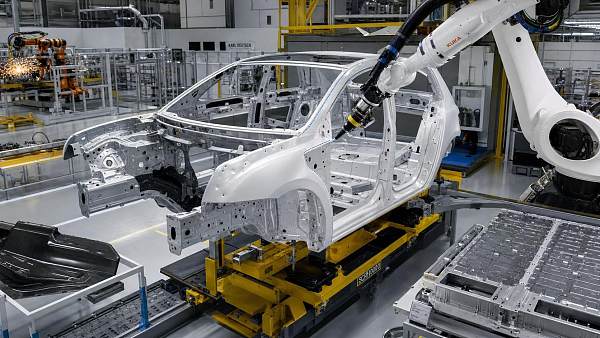
That distinction matters because lightweight vehicle programs often combine materials with very different behavior. High-strength steel, aluminum, coated steel, castings, fiber-reinforced composites, and engineering thermoplastics do not expand, deform, or accept surface preparation in the same way. A fastening-only strategy can create stress concentrations, add local reinforcement, consume cycle time, and complicate sealing. Welding may be fast for compatible metals, but it can damage coatings, introduce heat distortion, or be impractical around aluminum and composite components.
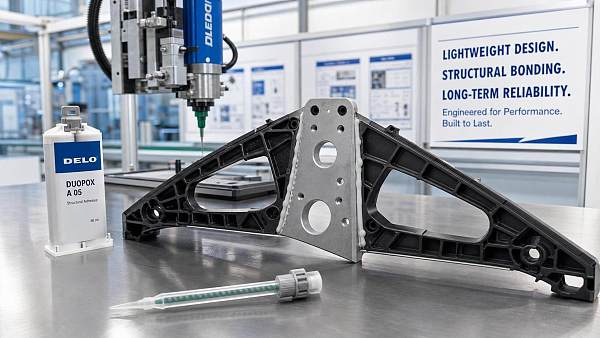
A properly selected 2K epoxy structural adhesive can spread load over a broad bond area rather than concentrating it at a point. Yet “properly selected” includes more than strength values on a technical data sheet. It means the resin chemistry, hardener ratio, rheology, bead geometry, cure profile, substrate condition, and dispensing method have been assessed as one production system.
The situations where 2K epoxy earns its complexity
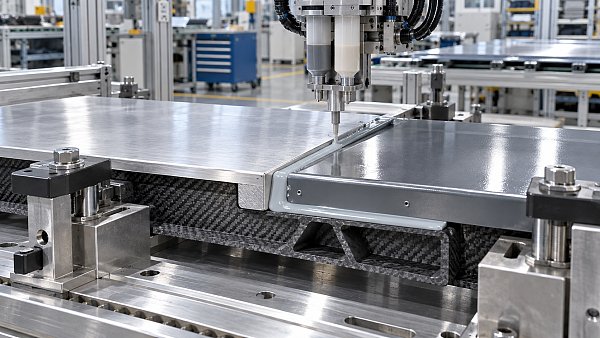
Two-component epoxy is most defensible where bonding is expected to carry a meaningful structural load for the vehicle life, not simply retain a trim part or seal an interface. Typical candidates include bonded reinforcements, closures, roof structures, battery enclosure features, body-in-white joints, floor and cross-member assemblies, and mixed-material subframes. The adhesive is especially relevant when the design team wants to replace some mechanical joining points while retaining selected rivets, clinches, or welds for fixturing, peel resistance, or crash-load management.
The strongest argument is often not headline shear strength. It is the ability to improve joint stiffness and distribute energy through a designed overlap. In a crash event, a joint may experience peel, cleavage, impact, and rapidly changing load paths rather than clean lap-shear loading. A formulation that looks excellent in a simple tensile-shear comparison may still be unsuitable if it is too brittle, has poor impact performance at the required temperature, or cannot accommodate strain mismatch between aluminum and steel.
2K systems also make sense when an assembly cannot depend on a high-temperature paint-bake cure. Heat-curing one-component epoxies remain widely used in automotive body shops because they align well with existing oven processes. But off-line modules, serviceable assemblies, low-volume production, large cast parts, mixed-material structures, and certain battery-related operations may need curing at ambient or moderately elevated temperatures. A 2K epoxy provides an independent cure mechanism after accurate resin-hardener mixing, giving engineers more flexibility where a full bake is unavailable or undesirable.
This does not mean that room-temperature cure eliminates process discipline. Cure rate and final properties remain sensitive to temperature, mix accuracy, substrate temperature, bead dimensions, and joint heat transfer. A plant that experiences cold starts, hot summers, or long part staging times should treat those conditions as validation variables, not minor operational details.
Dissimilar materials: the real lightweighting case
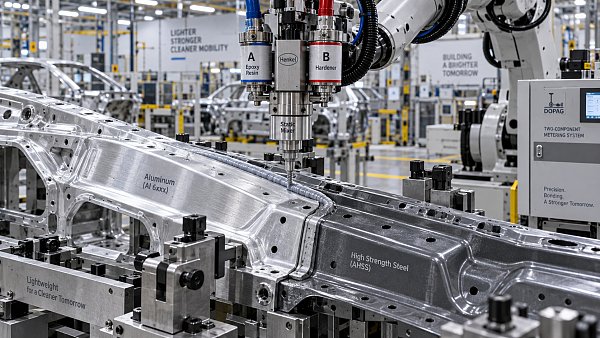
Lightweighting is often presented as a material substitution exercise: replace steel with aluminum or composite and mass falls. In practice, the joining challenge begins immediately afterward. Aluminum and steel create galvanic corrosion risk when electrically connected in the presence of an electrolyte. Composites may require careful surface preparation and can be vulnerable to local bearing loads from conventional fasteners. Thin-gauge metals can distort under welding heat or need reinforcements that reduce the anticipated weight savings.
A structural epoxy can act as a load-transfer layer and, when joint design is sound, help separate dissimilar metals. But it should not be treated as an automatic corrosion solution. Edge sealing, coating compatibility, pretreatment quality, water exposure, drainage paths, and damage scenarios all influence durability. If a bonded aluminum-to-steel joint has exposed edges or coating damage from piercing operations, the project team must evaluate the full corrosion-control design rather than relying on adhesive presence alone.
Thermal expansion deserves equal attention. Aluminum generally moves more with temperature than steel; polymers and composites can behave differently again depending on their construction and fiber orientation. A rigid adhesive in a long joint can accumulate stress through thermal cycling. Toughened 2K epoxies are commonly considered where the joint needs high stiffness but also improved resistance to impact and cyclic strain. The relevant question is not whether the adhesive is “flexible” in a marketing sense. It is whether the bonded assembly maintains required performance after the project’s actual thermal, humidity, vibration, and mechanical exposure sequence.
When a high-strength data sheet is not enough
Technical evaluation should begin with load cases and failure modes, then move to material screening. Many adhesive selection errors happen because teams compare only lap-shear strength on ideal, freshly prepared panels. That test can be useful, but it does not predict every structural outcome. Automotive joints may require assessment for impact peel, wedge or cleavage behavior, fatigue, salt and humidity exposure, thermal cycling, fluid contact, and aging after cure.
The substrate is part of the adhesive specification. Galvanized steel, electrocoated surfaces, aluminum grades, conversion coatings, mill-finish metal, molded composite surfaces, and oily stampings may each require different preparation or validation. A formulation that bonds well to a laboratory-clean aluminum coupon may behave differently on production material with lubricant residue, variable oxide condition, or handling contamination.
For this reason, evaluators should ask suppliers for test conditions, not only results. What substrate and surface preparation were used? Was the adhesive cured under the proposed process? Which conditioning sequence preceded testing? Was the joint geometry representative? These questions do not make selection slower; they reduce the chance of approving an attractive but non-transferable number.
A practical decision screen
The process cost is often the deciding factor
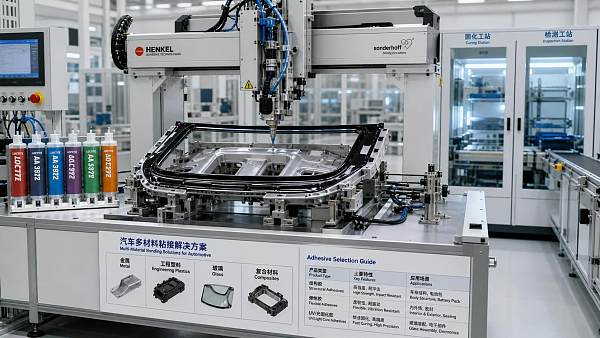
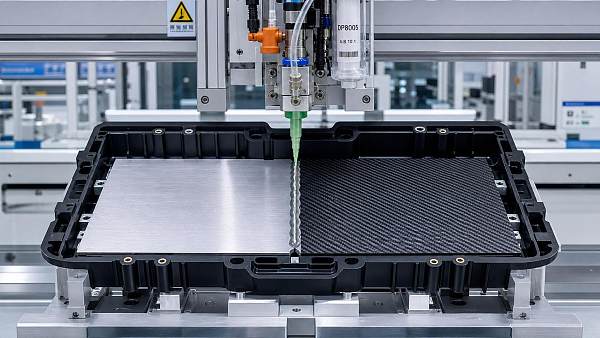
A 2K epoxy system introduces equipment and quality-control obligations that should be visible in the business case. Bulk packaging, pumps, heated or unheated feed systems, ratio monitoring, static mixers, hoses, dispensing valves, and automated path control may all be needed. The adhesive itself can be only one element of the total cost. Mix deviations, pot-life losses, incomplete purge routines, mixer blockage, nozzle fouling, or poorly controlled bead placement can turn a technically good material into a production risk.
This is why automotive adhesive lightweighting applications should be reviewed jointly by design engineering, manufacturing engineering, quality, procurement, and maintenance. The body engineer may focus on stiffness and mass. Manufacturing may need a longer open time or a faster fixture time. Quality may require a practical way to verify bead continuity and material traceability. Procurement needs confidence that both adhesive supply and consumables such as mixers can support the planned manufacturing footprint.
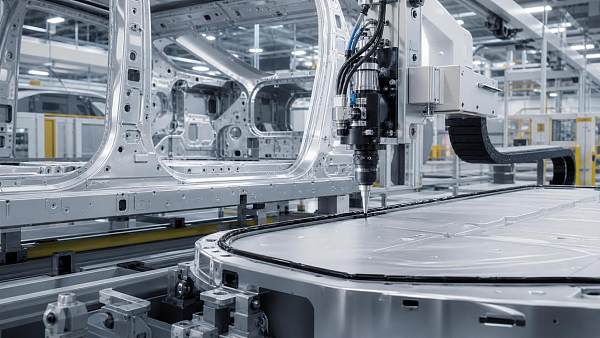
Dispensing precision also affects design freedom. A wide, continuous structural bead has different requirements from a short reinforcement bond or a narrow flange seal. Automated dispensing platforms can improve repeatability, but the process still needs to accommodate part tolerances, robot access, start-stop behavior, and bead collapse after compression. Vision guidance or in-process monitoring may be useful in complex applications, but their value depends on whether the plant has defined acceptance criteria and a response plan for detected defects.
Where another solution may be more practical
2K epoxy is not automatically the right answer whenever a vehicle uses lightweight materials. For joints needing substantial flexibility, vibration isolation, or broad thermal movement, polyurethane or silicone-based systems may be more appropriate, depending on the service environment. Where immediate handling strength and clean lamination are the primary requirements, hot melt films or pressure-sensitive tapes can be worth considering. UV-curing adhesives may fit small, optically accessible components but are usually not substitutes for opaque, load-bearing body structures.
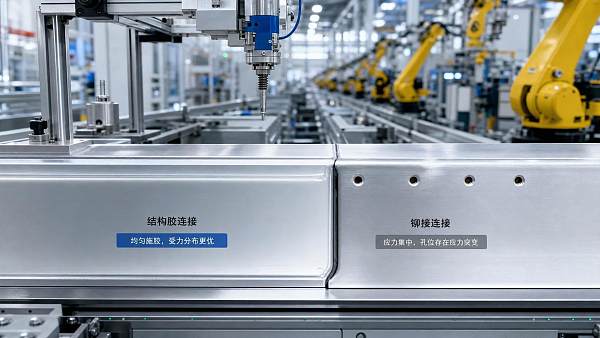
Mechanical fastening also retains a role. It can provide instant positioning, predictable disassembly in some designs, and a secondary load path. Hybrid joining is frequently more realistic than an adhesive-only ambition. Rivets, self-piercing fasteners, clinches, or localized welds may be retained where clamp force, peel resistance, crash behavior, or assembly sequence demands them. The objective is not to remove every fastener; it is to eliminate unnecessary mass and process burden without weakening the system.
A short production run can also change the calculation. If automation investment and validation effort outweigh the benefit of structural bonding, a simpler mechanical approach may be commercially sensible. Conversely, recurring high-volume production can justify more sophisticated metering and inspection because process consistency becomes a central part of quality assurance.
How to evaluate the decision without reducing it to a material comparison
A useful evaluation sequence starts with the intended joint function: structural load path, sealing, corrosion separation, reinforcement, or a combination. Then define the substrates, coatings, expected environmental exposures, cure constraints, production volume, and allowable repair method. Only after those boundaries are clear should teams compare candidate 2K epoxy formulations against alternatives.
Pilot trials should use representative parts where possible, including realistic gaps, forming tolerances, production-like surface conditions, and the intended dispensing equipment. A small material sample can establish feasibility; it cannot by itself prove line readiness. Evaluators should also clarify how material lot traceability, mix-ratio verification, adhesive shelf-life control, and operator or maintenance intervention will be managed.
Global Industrial Adhesives & Dispensing Systems (IADS) examines these decisions through the connected lenses of polymer behavior, joint design, dispensing accuracy, curing, compliance, and production economics. That broader view is useful because structural bonding failures are rarely caused by chemistry alone. They often emerge at the interfaces between material selection, surface condition, equipment capability, and validation discipline.
The case for 2K epoxy becomes convincing when it enables a lighter structure while preserving durable load transfer and fitting a controllable manufacturing process. If the project cannot define the joint’s real load cases, cure window, corrosion strategy, and dispensing controls, the adhesive choice is still premature. Those four answers will usually reveal whether 2K epoxy is a justified engineering investment or simply an expensive substitute for a more suitable joining method.
Recommended News
 Oct 08, 2026When do automotive adhesive lightweighting applications justify 2K epoxy?Adhesive lightweighting applications automotive: discover when 2K epoxy delivers durable, lightweight structural bonding for mixed-material vehicle designs.
 Sep 28, 2026How material characterization predicts structural adhesive bond durabilityStructural adhesive material characterization reveals how mechanical, thermal, cure, and environmental data predict bond durability—helping engineers select reliable solutions with confidence.
 Sep 25, 2026How to select epoxy structural bonding materials for high-load jointsEpoxy structural bonding materials: learn how to select durable solutions for high-load joints, balancing strength, toughness, surface prep, cure, and environmental resistance.
 Sep 20, 2026When 2K epoxy structural industrial bonding solutions make senseStructural industrial bonding solutions with 2K epoxy help engineers achieve durable, sealed joints for mixed materials. Explore selection, curing, and design insights.
 Sep 18, 2026How bonding applications in wind energy prevent fatigue-related failuresBonding applications in wind energy help prevent fatigue-related failures through durable joint design, crack resistance, cure control, and reliable production processes.
 Sep 23, 2026PCB Underfill Selection Guide for Fine-Pitch Components and Thermal CyclingPCB underfill selection guide for fine-pitch BGAs, CSPs, and flip-chip devices. Compare flow, CTE, modulus, adhesion, curing, and dispensing for reliable thermal cycling performance.
 Sep 23, 2026Circuit Board Level Underfill Market: Growth Drivers and Supply Chain OutlookExplore the electronic circuit board level underfill material market with actionable insights on reliability, dispensing precision, material selection, and supply chain resilience.
 Sep 20, 2026Rail Bonding Solutions for Vibration, Fire Safety, and Long-Term DurabilityBonding solutions for rail: explore proven strategies for vibration resistance, fire safety, durable joints, surface preparation, and production-ready validation.
 Sep 19, 2026Lightweight Adhesives for EVs: Reducing Mass Without Compromising Joint StrengthLight weighting adhesives for EVs help reduce vehicle mass while maintaining joint strength, durability, and production efficiency. Explore smarter bonding solutions for EV designs.
 Sep 15, 2026How fluid control engineering prevents voids in 2K epoxy sealantsFluid control engineering for sealants helps prevent voids in 2K epoxy systems. Explore practical methods for stable metering, mixing, pressure control, and air-free cavity filling.
 Sep 10, 2026When do adhesive lightweighting applications make sense in aerospace?Adhesive lightweighting applications aerospace: learn when bonded joints reduce mass, improve load transfer, and support durable, certifiable aircraft designs.
 Aug 28, 2026How to select an epoxy rail vehicle structural adhesive for fatigue loadsEpoxy rail vehicle structural adhesive selection for fatigue loads: evaluate toughness, joint design, surface prep, curing, and rail compliance for durable bonds.
 Aug 25, 2026When does BGA underfill technology for PCB assembly reduce field failures?BGA underfill technology for pcb assembly reduces field failures when thermal cycling, shock, or board flex drive solder fatigue. Learn when it boosts reliability—and when it adds cost without real gains.
 Aug 11, 2026How to Choose Epoxy Adhesive Systems for Metal Bonding Under Heat and VibrationEpoxy adhesive systems for metal bonding: learn how to compare heat resistance, vibration durability, cure profile, and dispensing fit to choose a more reliable solution.
 Aug 10, 2026Industrial Adhesive Technology Analysis: What Drives Bond Strength and Process Stability?Industrial adhesive technology analysis reveals what drives bond strength and process stability—from chemistry and surface prep to curing and dispensing. Learn how to reduce failure risk.
 Aug 05, 2026How to Evaluate Lightweight Structural Bonding for Composites Under Dynamic LoadsLightweight structural bonding for composites under dynamic loads demands more than static strength. Explore fatigue, impact, surface prep, and process factors to choose durable, weight-saving bonds.
 Jul 14, 2026How to Choose Lightweight Structural Bonding for PlasticsLightweight structural bonding for plastics explained: compare adhesive types, joint design, process control, and durability factors to choose lighter, stronger, production-ready assemblies.
 Jul 13, 2026Choosing an Adhesive for Automotive Supplier ProgramsAdhesive for automotive supplier programs affects strength, process stability, compliance, and launch risk. Learn how to choose the right solution for reliable, scalable production.
 Jul 11, 2026Automotive Adhesive Bonding Process: Key Steps That Prevent Bond FailureAutomotive adhesive bonding process essentials: learn the key steps that prevent bond failure, improve durability, and optimize surface prep, dispensing, and cure control in automotive assembly.
 Jul 09, 2026When Structural Adhesives Can Replace Riveting in Metal AssembliesStructural adhesive replacement riveting: learn when bonded metal assemblies can outperform rivets in fatigue, corrosion control, weight reduction, and automation.
 Jul 08, 2026Best Ways to Bond Dissimilar Material Composites Without CrackingDissimilar material bonding composites: learn how to prevent cracks in metal, plastic, battery, and laminate assemblies with smarter adhesive, process, and stress-control strategies.
![]() Jul 07, 2026How Lap Shear Testing Reveals Structural Adhesive Joint Failure RisksLap shear structural adhesive joint testing reveals hidden failure risks before launch. Learn how process conditions, substrates, and aging affect joint reliability.
Jul 07, 2026How Lap Shear Testing Reveals Structural Adhesive Joint Failure RisksLap shear structural adhesive joint testing reveals hidden failure risks before launch. Learn how process conditions, substrates, and aging affect joint reliability. Jul 06, 2026Can Automotive Adhesive Replace Welding in Body Assembly?Automotive adhesive replacement for welding can improve multi-material body assembly with better sealing, lower corrosion risk, and more design flexibility. See where bonding beats welding.
 Jul 04, 2026Structural Bonding for Aluminum: When 2K Epoxy Outperforms Welding and FastenersStructural bonding for aluminum with 2K epoxy can outperform welding and fasteners by reducing distortion, corrosion risk, and weight—see where it delivers stronger ROI.


Editor's Selection
The Archive Newsletter
Critical industrial intelligence delivered every Tuesday. Peer-reviewed summaries of the week's most impactful logistics and market shifts.