How to Choose Lightweight Structural Bonding for Plastics
by
Published
Views:
Choosing lightweight structural bonding for plastics is rarely a simple material swap. It is a design and process decision that affects weight, strength, assembly speed, appearance, and long-term reliability. In sectors pushing lighter products and cleaner production, the right adhesive approach can replace screws, clips, or rivets while supporting better load distribution and fewer secondary operations.
That matters across a broad industrial landscape. Electronics housings, transportation interiors, EV battery modules, appliances, composite panels, and packaging equipment all rely on plastic parts that must stay light without becoming fragile. For evaluation work, lightweight structural bonding for plastics sits at the intersection of polymer behavior, curing chemistry, dispensing control, compliance, and production economics.
What lightweight structural bonding for plastics really involves
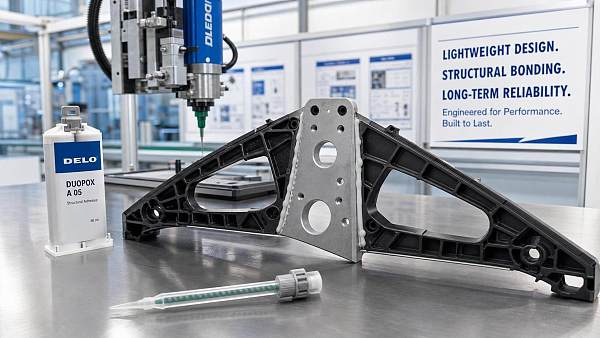
At its core, lightweight structural bonding for plastics means creating a durable joint without adding unnecessary mass or hardware. The goal is not only adhesion. It is maintaining structural performance under real loads, temperatures, vibration, and environmental exposure.
This usually applies to thermoplastics, thermosets, or plastic-to-metal assemblies where fasteners add weight, create stress points, or complicate automated assembly. A structural bond should transfer load across the bonded area rather than concentrate force at one drilled hole or clip location.
That distinction is important. Many glues can stick plastics together in a lab test. Far fewer can maintain strength after thermal cycling, humidity, impact, fluid exposure, and production variation.
Why the topic has become more important
Weight reduction is no longer limited to automotive or aerospace programs. It now shapes decisions in consumer electronics, rail interiors, electrical enclosures, battery systems, and industrial equipment covers. Plastics help reduce mass, but they also create bonding challenges because surface energy, thermal expansion, and chemical resistance vary widely.
At the same time, manufacturers want fewer assembly steps and more automated fluid control. That is why lightweight structural bonding for plastics is increasingly linked with dispensing accuracy, jetting capability, static mixing quality, and cure verification.
Platforms such as IADS reflect this broader shift. Material selection is no longer judged by bond strength alone. It is evaluated with curing speed, line compatibility, compliance readiness, process stability, and the ability to support lightweight assembly at scale.
Start with the plastic, not the adhesive brochure
Plastic families behave very differently in bonding. ABS, PC, PVC, and PMMA are usually more approachable than PP, PE, POM, or fluoropolymers. Surface energy is one reason, but stiffness, coefficient of thermal expansion, molded-in release agents, and moisture uptake also shape joint reliability.
A practical evaluation begins with a few questions. Is the plastic filled or unfilled? Is it painted, textured, or plasma treated? Will the joint face impact, peel, torsion, or only static shear? Will the part move through a heated cure process?
Lightweight structural bonding for plastics often fails when the substrate was treated as a generic plastic grade. Resin type, additives, and molding history can change the outcome more than the advertised adhesive strength.
Surface condition changes the result
Surface contamination is common and often underestimated. Mold release, oils, dust, and even handling residue can reduce bond consistency. Low-surface-energy plastics may need flame treatment, corona, plasma, or primers before structural bonding becomes reliable.
In actual production, the best adhesive may still fail if surface preparation cannot be controlled. That is why process capability belongs in material selection from the beginning.
Matching adhesive chemistry to the job
No single chemistry covers every plastic assembly. The right option depends on load profile, cure window, gap size, environmental exposure, and line design. For lightweight structural bonding for plastics, several adhesive families appear repeatedly.
The chemistry choice should reflect service conditions, not only fixture speed. A fast cure that traps stress, shrinks excessively, or cracks under peel can create more downstream cost than it saves on the line.
Joint design often decides success before testing begins
Lightweight structural bonding for plastics works best when the joint is designed for adhesive behavior. Lap shear, flanges, tongues, stepped joints, and energy-distributing geometries usually perform better than simple butt joints.
Adhesives prefer shear and compression more than peel and cleavage. Thin brittle plastics amplify this issue. A small design adjustment can allow a tougher, lighter joint without adding metal brackets or thicker walls.
- Allow enough bonded area for the actual load path.
- Control bond line thickness to avoid starved or overly thick joints.
- Account for thermal expansion mismatch in plastic-to-metal assemblies.
- Avoid sharp edges that can trigger peel failure.
- Check whether the adhesive also needs sealing or damping functions.
In many applications, weight savings come less from the adhesive itself and more from redesign freedom. A bonded joint may allow thinner walls, fewer inserts, and cleaner surfaces.
Process integration is part of material selection
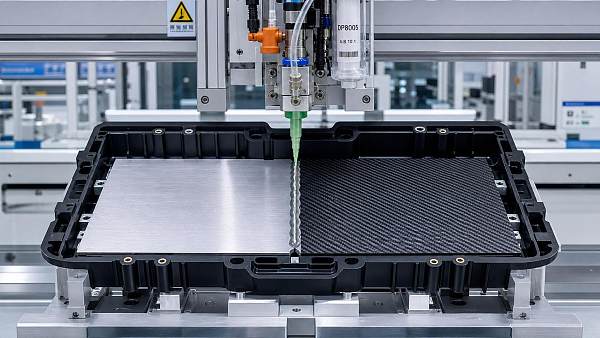
A promising adhesive on a datasheet can become difficult in production if dispensing is unstable. Viscosity, thixotropy, open time, cure schedule, and mix ratio all influence whether lightweight structural bonding for plastics can be repeated at scale.
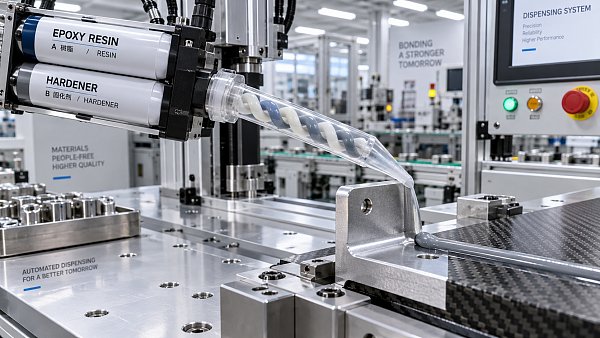
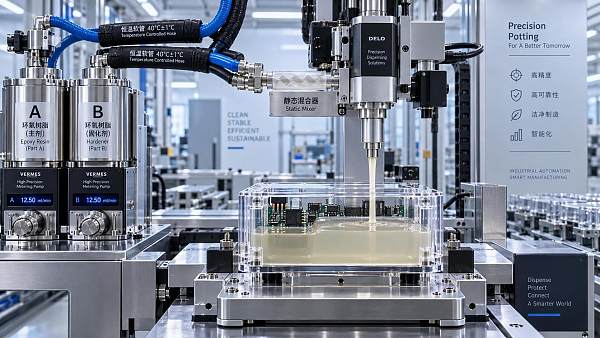
That is why the bonding decision increasingly sits beside dispensing technology. Static mixers, meter-mix equipment, jet valves, vision-guided positioning, and cure monitoring may matter as much as resin formulation.
This is especially clear in electronics miniaturization and automated assembly. When bond lines become smaller and tolerances tighter, fluid control becomes a quality variable rather than a support tool.
Questions that reveal process fit
- Can the adhesive be dispensed consistently at the required bead size?
- Does the cure method fit existing line speed and fixture strategy?
- Will the material string, drip, trap bubbles, or slump on vertical surfaces?
- Can the process be verified through vision, weight, or inline inspection?
- Will maintenance, pot life, or purge waste affect operating cost?
Durability, compliance, and real service conditions
A structural bond for plastics must survive more than an initial pull test. Thermal cycling, humidity, UV exposure, battery electrolytes, cleaning agents, road salts, and vibration can all change performance over time.
In EV, rail, electronics, and appliance applications, flame retardancy, low VOC expectations, halogen-free requirements, RoHS, and REACH screening may influence material selection early. A technically strong bond that complicates compliance review can slow qualification.
This is one reason evaluation teams increasingly use broader intelligence sources. Bonding decisions now involve chemistry, regulations, supply continuity, and evidence from adjacent applications, not isolated test numbers.
Where lightweight structural bonding for plastics delivers the most value
The value case becomes clearer when viewed by application rather than by adhesive family alone.
A practical way to narrow the options
For most programs, the fastest path is not testing dozens of products. It is defining the decision frame clearly. Start with substrate pair, joint geometry, expected load, environmental exposure, cycle time target, and compliance boundaries.
Then screen adhesive families by fit, not marketing position. After that, compare a short list through bonded-part trials that reflect actual surface condition and dispensing equipment. Small lab coupons help, but production-like samples reveal more useful risk.
When reviewing lightweight structural bonding for plastics, it also helps to map adjacent process needs. Some assemblies require bonding plus sealing. Others need thermal management, electrical insulation, or flame-retardant behavior in the same build. Those functions can affect adhesive choice earlier than expected.
A sound next step is to build a comparison matrix covering substrate compatibility, bond durability, cure method, dispensing demand, certification status, and total process cost. That creates a clearer basis for supplier discussion, sample validation, and final selection.
Recommended News
 Oct 11, 2026When does a 2K epoxy adhesive system need a static mixer?Learn when 2K epoxy adhesive systems need a static mixer to ensure reliable curing, bond strength, sealing performance, and consistent dispensing.
 Oct 08, 2026When do automotive adhesive lightweighting applications justify 2K epoxy?Adhesive lightweighting applications automotive: discover when 2K epoxy delivers durable, lightweight structural bonding for mixed-material vehicle designs.
 Sep 28, 2026How material characterization predicts structural adhesive bond durabilityStructural adhesive material characterization reveals how mechanical, thermal, cure, and environmental data predict bond durability—helping engineers select reliable solutions with confidence.
 Sep 25, 2026How to select epoxy structural bonding materials for high-load jointsEpoxy structural bonding materials: learn how to select durable solutions for high-load joints, balancing strength, toughness, surface prep, cure, and environmental resistance.
 Sep 20, 2026When 2K epoxy structural industrial bonding solutions make senseStructural industrial bonding solutions with 2K epoxy help engineers achieve durable, sealed joints for mixed materials. Explore selection, curing, and design insights.
 Sep 18, 2026How bonding applications in wind energy prevent fatigue-related failuresBonding applications in wind energy help prevent fatigue-related failures through durable joint design, crack resistance, cure control, and reliable production processes.
 Sep 23, 2026PCB Underfill Selection Guide for Fine-Pitch Components and Thermal CyclingPCB underfill selection guide for fine-pitch BGAs, CSPs, and flip-chip devices. Compare flow, CTE, modulus, adhesion, curing, and dispensing for reliable thermal cycling performance.
 Sep 23, 2026Circuit Board Level Underfill Market: Growth Drivers and Supply Chain OutlookExplore the electronic circuit board level underfill material market with actionable insights on reliability, dispensing precision, material selection, and supply chain resilience.
 Sep 20, 2026Rail Bonding Solutions for Vibration, Fire Safety, and Long-Term DurabilityBonding solutions for rail: explore proven strategies for vibration resistance, fire safety, durable joints, surface preparation, and production-ready validation.
 Sep 19, 2026Lightweight Adhesives for EVs: Reducing Mass Without Compromising Joint StrengthLight weighting adhesives for EVs help reduce vehicle mass while maintaining joint strength, durability, and production efficiency. Explore smarter bonding solutions for EV designs.
 Sep 15, 2026How fluid control engineering prevents voids in 2K epoxy sealantsFluid control engineering for sealants helps prevent voids in 2K epoxy systems. Explore practical methods for stable metering, mixing, pressure control, and air-free cavity filling.
 Sep 10, 2026When do adhesive lightweighting applications make sense in aerospace?Adhesive lightweighting applications aerospace: learn when bonded joints reduce mass, improve load transfer, and support durable, certifiable aircraft designs.
 Aug 28, 2026How to select an epoxy rail vehicle structural adhesive for fatigue loadsEpoxy rail vehicle structural adhesive selection for fatigue loads: evaluate toughness, joint design, surface prep, curing, and rail compliance for durable bonds.
 Aug 25, 2026When does BGA underfill technology for PCB assembly reduce field failures?BGA underfill technology for pcb assembly reduces field failures when thermal cycling, shock, or board flex drive solder fatigue. Learn when it boosts reliability—and when it adds cost without real gains.
 Aug 11, 2026How to Choose Epoxy Adhesive Systems for Metal Bonding Under Heat and VibrationEpoxy adhesive systems for metal bonding: learn how to compare heat resistance, vibration durability, cure profile, and dispensing fit to choose a more reliable solution.
 Aug 10, 2026Industrial Adhesive Technology Analysis: What Drives Bond Strength and Process Stability?Industrial adhesive technology analysis reveals what drives bond strength and process stability—from chemistry and surface prep to curing and dispensing. Learn how to reduce failure risk.
 Aug 05, 2026How to Evaluate Lightweight Structural Bonding for Composites Under Dynamic LoadsLightweight structural bonding for composites under dynamic loads demands more than static strength. Explore fatigue, impact, surface prep, and process factors to choose durable, weight-saving bonds.
 Jul 14, 2026How to Choose Lightweight Structural Bonding for PlasticsLightweight structural bonding for plastics explained: compare adhesive types, joint design, process control, and durability factors to choose lighter, stronger, production-ready assemblies.
 Jul 13, 2026Choosing an Adhesive for Automotive Supplier ProgramsAdhesive for automotive supplier programs affects strength, process stability, compliance, and launch risk. Learn how to choose the right solution for reliable, scalable production.
 Jul 11, 2026Automotive Adhesive Bonding Process: Key Steps That Prevent Bond FailureAutomotive adhesive bonding process essentials: learn the key steps that prevent bond failure, improve durability, and optimize surface prep, dispensing, and cure control in automotive assembly.
 Jul 09, 2026When Structural Adhesives Can Replace Riveting in Metal AssembliesStructural adhesive replacement riveting: learn when bonded metal assemblies can outperform rivets in fatigue, corrosion control, weight reduction, and automation.
 Jul 08, 2026Best Ways to Bond Dissimilar Material Composites Without CrackingDissimilar material bonding composites: learn how to prevent cracks in metal, plastic, battery, and laminate assemblies with smarter adhesive, process, and stress-control strategies.
![]() Jul 07, 2026How Lap Shear Testing Reveals Structural Adhesive Joint Failure RisksLap shear structural adhesive joint testing reveals hidden failure risks before launch. Learn how process conditions, substrates, and aging affect joint reliability.
Jul 07, 2026How Lap Shear Testing Reveals Structural Adhesive Joint Failure RisksLap shear structural adhesive joint testing reveals hidden failure risks before launch. Learn how process conditions, substrates, and aging affect joint reliability. Jul 06, 2026Can Automotive Adhesive Replace Welding in Body Assembly?Automotive adhesive replacement for welding can improve multi-material body assembly with better sealing, lower corrosion risk, and more design flexibility. See where bonding beats welding.



Editor's Selection
The Archive Newsletter
Critical industrial intelligence delivered every Tuesday. Peer-reviewed summaries of the week's most impactful logistics and market shifts.