UL 1977-2026 Takes Effect for Structural Sealants
by
Published
Views:
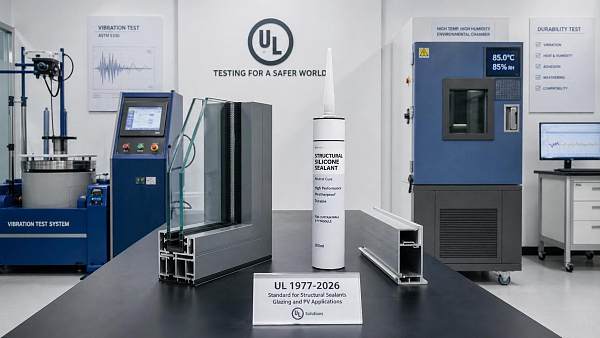
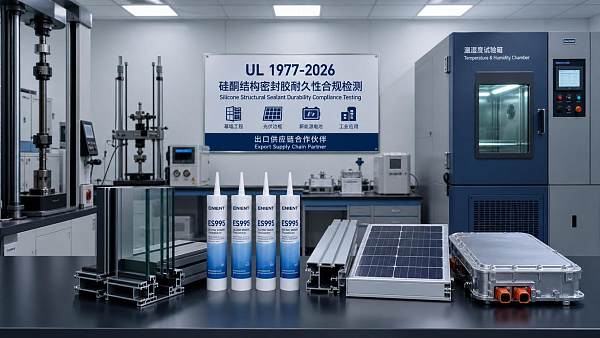
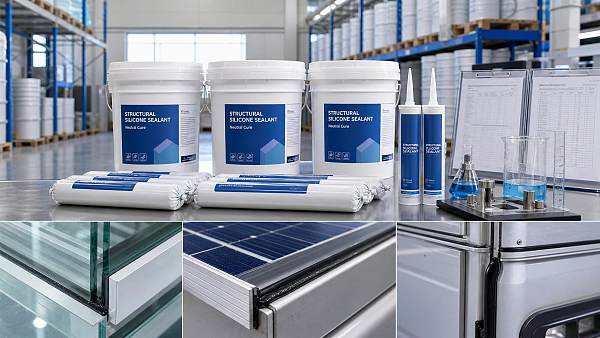
On July 11, 2026, the implementation of UL 1977-2026 turned a technical requirement for Silicone Structural Sealants into an immediate market-access condition for North American projects. The change is worth close attention because it does not stop at laboratory testing: it now reaches procurement specifications, certification readiness, bid participation, and delivery planning for companies involved in curtain wall systems, photovoltaic support structures, export supply, and technical compliance documentation.

What the new requirement now covers
According to the confirmed information provided, UL formally implemented the new UL 1977-2026 standard on July 11, 2026. Under this version, Silicone Structural Sealants are required to complete 1,000 hours of durability verification under combined conditions of cyclic humidity and heat from -40°C to 85°C together with 5g vibration stress.
The same information states that this new requirement has already been incorporated into technical procurement specifications for North American building curtain wall and photovoltaic support structure projects. It also states that products without the relevant certification will not be able to enter the mainstream project bidding system in the United States, Canada, and Mexico.
Where the commercial impact is likely to appear first
Export-facing suppliers may face a direct bid-entry barrier
From an industry perspective, exporters and suppliers serving North American projects are likely to feel the impact first because the rule change is tied not only to product performance but also to access to mainstream tenders. The practical pressure point is likely to be whether certification status, test records, and technical files can support bid eligibility and customer qualification reviews.
Project buyers and specification teams will need tighter document alignment
For procurement teams, the change matters because the new test requirement has already entered technical bid documents. That means purchasing decisions may increasingly depend on whether a product can be matched to the updated specification language, certification position, and supporting compliance materials. What deserves closer attention is the alignment between internal procurement standards and the wording used in project tender documents.
Manufacturers may see pressure on testing and delivery schedules
Manufacturing companies that produce or supply Silicone Structural Sealants may be affected through compliance preparation, product qualification sequencing, and shipment planning. Analysis shows that when a standard introduces a mandatory durability verification threshold under combined environmental and vibration stress, the business effect may extend beyond testing itself to order acceptance timing, customer approval cycles, and delivery commitments tied to certified status.
Testing and certification service providers may become part of earlier project planning
Certification-related firms and testing service providers may also be drawn further upstream in the transaction process. Observably, when certification status becomes a prerequisite for market participation rather than a later documentation step, companies in the service chain may need to support earlier review of test scope, report availability, and technical dossier completeness.
What companies should review now
Check whether current products map to the new certification threshold
Companies supplying Silicone Structural Sealants into North American applications should review whether their current product lines have completed, are completing, or still need the durability verification referenced in UL 1977-2026. Where the available information does not provide deeper execution detail, this should be treated as a compliance review priority rather than an assumed pass-through requirement.
Compare tender documents with existing technical files
Because the new requirement has been incorporated into procurement specifications, businesses should pay attention to whether their existing technical data sheets, certification statements, test reports, and bid attachments are consistent with the updated requirement. The immediate issue is less about broad regulatory interpretation and more about whether commercial documentation can withstand customer and tender-side scrutiny.
Reassess delivery commitments for North American projects
Exporters, traders, and supply-chain coordinators should closely monitor whether ongoing or upcoming deliveries into the United States, Canada, and Mexico depend on proof of compliant certification status. Analysis shows that when bidding access is linked to certification, delivery risk can begin earlier in the sales cycle, including at quotation, supplier nomination, or technical approval stages.
Continue watching execution language and market feedback
The confirmed information establishes that the rule is in force and that it has entered procurement specifications, but it does not provide fuller detail on implementation language across all project contexts. For that reason, companies should continue monitoring how certification wording, qualification checks, and tender-side review practices are being applied in actual transactions.
Why this should be read as an execution signal
Observably, this development is more than a distant standards update. The key signal is that the requirement has already moved into procurement and bidding conditions, which gives it practical force across trade and project workflows. At the same time, it is still necessary to distinguish confirmed facts from broader market conclusions: the current information supports the view that this is an implemented compliance threshold, while the pace and consistency of market-level enforcement still require continued observation through tender practice and industry feedback.
How to interpret the change at this stage
It is more appropriate to understand this event as a rule change that has already crossed into execution, especially for firms tied to North American curtain wall and photovoltaic support structure projects. The immediate significance is not simply that a new test exists, but that certification status now has clearer implications for bidding access, procurement screening, and project participation. Broader commercial effects should be assessed carefully as more execution detail and market response become visible.
Basis of this article and what still needs verification
This article is based on the user-provided news title, event date, and event summary. For developments of this kind, commonly relevant source types may include official announcements, regulator publications, trade or customs authority information, industry association notices, standards organization documents, and reporting by authoritative industry media.
A specific official source link was not provided in the input, so the exact primary-source documentation still needs to be verified on an ongoing basis. What remains worth tracking includes detailed implementation language, certification interpretation, changes in tender documentation, market feedback, and how companies are handling compliance and delivery in practice.
Recommended News
 Sep 26, 2026What to verify before selecting a structural adhesive systems manufacturerChoose a structural adhesive systems manufacturer with confidence. Verify joint performance, cure control, dispensing, compliance, quality traceability, and expert engineering support.
 Jul 12, 2026UL 1977-2026 Takes Effect for Structural SiliconeUL 1977-2026 takes effect for structural silicone, introducing a tougher durability test that can impact certification, bidding access, exports, and procurement planning.
 Jul 11, 2026Industrial Sealants for Metal: What Affects Service Life and Rework CostIndustrial sealants for metal affect more than purchase price. Learn what drives service life, downtime risk, and rework cost so buyers can choose longer-lasting, lower-cost sealing solutions.
 Jul 11, 2026UL 1977-2026 Takes Effect for Structural SealantsUL 1977-2026 takes effect for structural sealants, reshaping North American bidding, procurement, and compliance. See what exporters, manufacturers, and buyers must review now.
 Jul 10, 2026Structural Bonding for Enclosures: When Silicone Beats EpoxyStructural bonding for enclosures explained: discover when silicone outperforms epoxy in thermal cycling, vibration, sealing, and mixed-material designs for longer-lasting enclosure performance.
 Jul 10, 2026UL 1977-2026 Takes Effect for Silicone SealantsUL 1977-2026 takes effect for silicone sealants, reshaping compliance for curtain walls, PV frames, and EV battery packs. See who is affected, what to verify, and how to protect market access.
 Jul 09, 2026Rail Vehicle Adhesive Bonding: Key Failure Risks and Control PointsRail vehicle adhesive bonding: learn the key failure risks, control points, inspection methods, and process tips to improve safety, durability, and production consistency.
 Jul 09, 2026UL 1977-2026 Takes Effect for Silicone Structural SealantsUL 1977-2026 takes effect for silicone structural sealants, adding new durability testing and a strict October 2026 sales cutoff. Learn who is affected, what to check now, and how to stay eligible for the North American market.
 Jul 08, 2026Rail Vehicle Bonding Sealants: Key Failure Risks in Long-Service JointsRail vehicle bonding sealants face hidden long-service risks from movement, moisture, UV, and process variation. Learn the key failure triggers and smarter selection logic.
 Jul 08, 2026China Tightens Export Checks on Structural Silicone SealantsChina Tightens Export Checks on Structural Silicone Sealants: learn how new VOC and lead/cadmium limits may disrupt exports, compliance, and delivery planning.
![]() Jul 07, 2026China Tightens Export Checks on Structural SealantsChina tightens export checks on structural sealants from Aug 1, 2026. Learn how batch inspections, VOC and phthalate limits may delay customs and raise compliance costs.
Jul 07, 2026China Tightens Export Checks on Structural SealantsChina tightens export checks on structural sealants from Aug 1, 2026. Learn how batch inspections, VOC and phthalate limits may delay customs and raise compliance costs. Jul 06, 2026China Tightens Export Checks on Structural Silicone SealantsChina Tightens Export Checks on Structural Silicone Sealants, triggering 100% batch inspections, stricter VOC and phthalate limits, and possible shipping delays. Learn what exporters and buyers must do now.
 Jun 26, 2026East China Silicone Output Curbs Extend Export Lead TimesEast China silicone output curbs are extending export lead times as 107 rubber supply tightens. Learn how silicone structural sealants and high-temperature silicone gel supply chains may be affected.
![]() Jun 25, 2026East China Output Curbs Extend Silicone Export Lead TimesEast China output curbs are extending silicone export lead times from 4 weeks to 6–8 weeks. Learn how DMC cuts, rush fees, and tighter supply may impact buyers, exporters, and delivery planning.
Jun 25, 2026East China Output Curbs Extend Silicone Export Lead TimesEast China output curbs are extending silicone export lead times from 4 weeks to 6–8 weeks. Learn how DMC cuts, rush fees, and tighter supply may impact buyers, exporters, and delivery planning. Jun 24, 2026Structural Adhesives Market Outlook: Where Growth and Margin Are ShiftingStructural adhesives market trends are shifting toward higher-value applications in EVs, electronics, and automation. Discover where growth, margins, and competitive advantage are moving now.
 Jun 13, 2026Zhuhai Flags Rising TRO Risks in Cross-Border E-CommerceZhuhai flags rising TRO risks in cross-border e-commerce to the U.S. Learn how trademark filing, labeling, and certification gaps may trigger Amazon or Walmart complaints.
 Jun 11, 2026Acrylic Structural Adhesives Explained: Best Uses, Strengths, and LimitsAcrylic structural adhesives explained: discover their best uses, key strengths, and limits for fast, durable bonding in mixed-material assemblies.
 Jun 04, 2026Structural Adhesives: When Bond Strength Fails in ServiceStructural adhesives can lose bond strength in service due to heat, moisture, fatigue, and process errors. Learn key failure causes, inspection clues, and repair insights.







Editor's Selection
The Archive Newsletter
Critical industrial intelligence delivered every Tuesday. Peer-reviewed summaries of the week's most impactful logistics and market shifts.