ECHA Adds 3 SVHCs, Prompting REACH Updates
by
Published
Views:
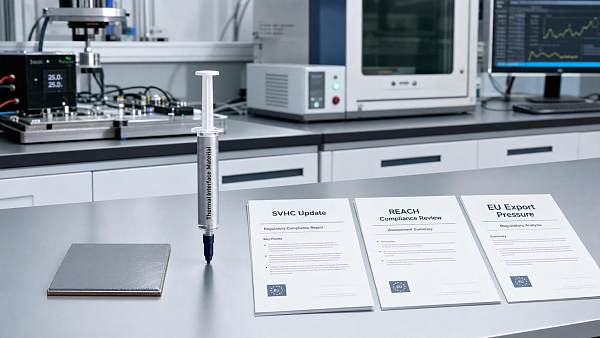
On July 22, 2026, the European Chemicals Agency (ECHA) added three new substances of very high concern (SVHCs), a change that immediately puts EU-bound thermal interface and potting material shipments under closer compliance review. Manufacturers exporting Thermal Conductive Pastes, Flame-retardant PU Potting, and other heat-conductive or encapsulation materials containing organic plasticizers or fluorinated additives now need to pay attention not only to product composition, but also to supply chain notification timing, SDS revisions, and updated REACH compliance statements within the six-month window referenced in the announcement.
What the July 22 update confirms
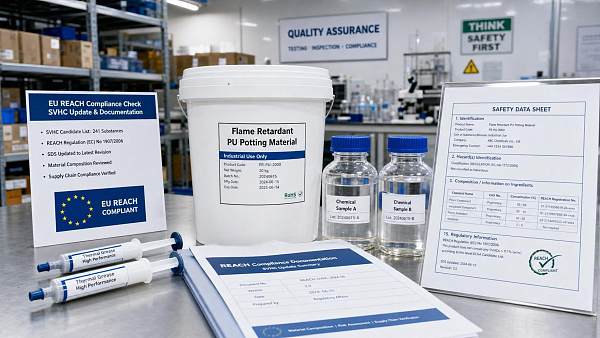
According to the provided event information, ECHA added three SVHC substances on July 22, 2026. The substances include diisobutyl phthalate (DIBP) and two degradation products associated with fluorinated polymers. The update directly affects Thermal Conductive Pastes, Flame-retardant PU Potting, and other thermally conductive or potting materials that contain organic plasticizers or fluorinated additives. Manufacturers exporting to the European Union are required to complete supply chain notification within six months and update both SDS documentation and REACH compliance declarations.
Where the impact is likely to surface first
Export-facing manufacturers will face immediate document pressure
From an industry perspective, manufacturers shipping affected materials to the EU are the first group likely to feel the operational impact. The main pressure point is not only substance review at formulation level, but also the need to align customer-facing documentation with the new SVHC status. What deserves closer attention is whether existing declarations, SDS files, and internal substance records remain consistent across current shipments and pending orders.
Procurement teams may need faster substance visibility from suppliers
For companies purchasing raw materials or additive packages used in thermal pastes and potting compounds, the issue may surface upstream. Analysis shows that where organic plasticizers or fluorinated additives are involved, procurement functions will likely need more timely composition disclosures and compliance confirmations from suppliers. The business impact is likely to appear in material qualification, vendor communication, and documentation collection rather than in a single isolated transaction.
Distributors and supply chain service providers may see higher review intensity
For distributors, traders, and supply chain service providers handling EU-bound material flows, the update may increase the importance of compliance document completeness during handover and delivery. Observably, the practical concern is whether SDS versions, product statements, and customer communications are synchronized across the chain. That matters especially when materials are sold into technical applications where downstream users expect current REACH-related declarations.
Downstream buyers may strengthen declaration checks
For downstream buyers and end-use industrial customers, the most relevant issue may be purchasing assurance. Analysis shows that customers using these materials in production or assembly may place greater weight on updated REACH statements and substance-related transparency before accepting supply continuity. In practice, this can affect qualification reviews, order confirmation discussions, and routine compliance checks tied to imported materials.
What companies should watch in the next six months
Check whether affected product lines are within scope
A near-term priority is to review whether exported Thermal Conductive Pastes, Flame-retardant PU Potting materials, or similar formulations include the categories highlighted in the event summary, namely organic plasticizers or fluorinated additives. This is the starting point for deciding which products require deeper compliance review and customer notification.
Keep SDS and REACH statements aligned with the update
The confirmed requirement to update SDS and REACH compliance declarations makes document control a practical priority. What deserves closer attention is the consistency between internal formulation records, supplier inputs, and outward-facing compliance files. Any mismatch between those layers could create avoidable friction in customer communication or shipment support.
Prepare for supply chain notification work, not just internal review
The six-month notification requirement means the issue extends beyond technical assessment. Companies should focus on how information moves across suppliers, manufacturers, trading entities, and customers. The distinction here is important: a policy signal becomes a business issue only when notifications, declarations, and delivery-related paperwork must be updated in real transactions.
Track wording changes and customer expectations carefully
Analysis shows that one practical challenge may be interpretation and communication rather than chemistry alone. Companies should therefore pay attention to subsequent official wording, customer questionnaires, and any changes in how compliance evidence is requested. That is especially relevant for exporters that rely on standardized declarations across multiple EU customers.
Why this reads as more than a routine list update
Observably, this development is best understood as an immediate compliance trigger with a broader regulatory signal behind it. The immediate fact pattern is clear: three SVHCs were added, certain heat-conductive and potting materials are directly implicated, and exporters to the EU have a six-month window to notify the supply chain and refresh core compliance documents. Analysis shows, however, that the wider importance lies in how closely composition transparency and documentation responsiveness are now tied to market access for affected materials.
It is more appropriate to understand this as both a short-term operational change and a longer-term signal that substance scrutiny around additive systems can carry direct commercial consequences. At the same time, the full business effect still depends on how supply chains, customers, and official follow-up communications respond, so continued observation remains necessary.
How the market should frame this update
At this stage, the announcement should be read neither as a narrow administrative update nor as a finalized industry outcome. A more neutral reading is that it creates a defined compliance task for EU-bound exporters of certain thermal and potting materials, while also signaling that supply chain transparency is becoming more central to routine market participation. For industry participants, the most practical takeaway is to treat this as an actionable regulatory development with immediate documentation implications and ongoing follow-up value.
Basis of this report and what still needs verification
This article is based on the user-provided news title, event date, and event summary. For this type of industry update, commonly relevant source categories may include official notices, company disclosures, trade association information, authoritative media coverage, and standard-setting or regulatory documents. A specific official source link was not provided in the input, so the precise official publication path still requires continued verification. Follow-up attention should remain on any subsequent official wording, implementation-related clarification, and market-side responses in documentation and supply chain communication.
Recommended News
 Sep 11, 2026What to verify before choosing an EV battery thermal management supplierEV battery thermal management supplier selection guide: verify thermal performance, electrical safety, process compatibility, validation data, and supply support.
 Aug 23, 2026How to qualify a thermal interface adhesives supplier for EV battery assemblyThermal interface adhesives supplier selection for EV battery assembly: learn how to assess thermal performance, dispensing stability, compliance, and scale-up support.
 Jul 25, 2026ECHA Adds Three Phthalates to SVHC ListECHA Adds Three Phthalates to SVHC List: learn how DEHP, BBP, and DBP impact REACH documents, SCIP filing, and EU customs compliance for thermal materials suppliers.
 Jul 24, 2026ECHA Adds 3 SVHCs, REACH Declarations for Thermal Pastes Must Be UpdatedECHA adds 3 SVHCs: learn why REACH declarations for thermal pastes must be updated, how SCIP and SDS rules affect EU exports, and what suppliers should check now.
 Jul 23, 2026ECHA Adds 3 SVHCs, Prompting REACH UpdatesECHA Adds 3 SVHCs, Prompting REACH Updates: learn how Thermal Conductive Pastes, Flame-retardant PU Potting, and EU exporters should respond within six months.
 Jul 22, 2026ECHA SVHC Update Triggers REACH Review for Thermal PastesThermal conductive pastes face urgent REACH review after the ECHA SVHC update. Learn how new Candidate List entries affect SDS updates, EU exports, and compliance readiness.
 Jul 21, 2026ECHA Adds 3 SVHCs, Raising REACH DemandsECHA adds 3 SVHCs to the Candidate List, raising REACH demands for EU-bound thermal interface materials and thermal conductive pastes. See key risks, SCIP duties, and compliance actions.
 Jul 20, 2026ECHA Updates SVHC List, Pressuring Thermal Paste ComplianceECHA updates the SVHC list, raising urgent REACH compliance pressure for Thermal Conductive Pastes in the EU. See key deadlines, supply chain risks, and actions for buyers and manufacturers.
 Jul 19, 2026How to Choose Thermal Interface Materials for EV BatteriesThermal interface materials for EV batteries: learn how to compare conductivity, insulation, gap control, safety, and process fit to choose reliable, high-performance solutions.
 Jul 15, 2026Battery Thermal Management Materials: Comparing Gap Fillers, Pads, and PastesBattery thermal management materials compared: gap fillers, pads, and pastes for EV packs. Learn how to balance heat transfer, manufacturability, cost, and reliability.
 Jul 12, 2026UL94 Thermal Interface Materials: What Ratings Mean for Device SafetyUL94 thermal interface materials explained: learn what V-0, V-1, V-2, and HB ratings mean for device safety, compliance, and smarter material selection.
 Jul 06, 2026Thermal Interface Adhesives Price: Cost Drivers and Spec Trade-OffsThermal interface adhesives price explained: compare cost drivers, spec trade-offs, hidden procurement costs, and sourcing tips to choose the right material with better total value.
 Jul 06, 2026Thermal Interface Materials for Consumer Electronics: What Affects Cooling Performance?Thermal interface materials for consumer electronics directly shape cooling, reliability, and device comfort. Discover what really affects TIM performance beyond conductivity.
 Jul 04, 2026Battery Heat Dissipation Materials: What Improves Cooling Without Adding WeightBattery heat dissipation materials that boost cooling without extra weight. Learn how TIMs, gap fillers, films, and graphite solutions improve battery safety, lifespan, and pack efficiency.
 Jun 30, 2026How to Compare Flame Retardant Thermal Management MaterialsFlame retardant thermal management materials comparison made practical: learn how to assess thermal paths, flame ratings, process fit, and long-term reliability for smarter material selection.
 Jun 23, 2026Battery Thermal Management for Automotive: Paste or Potting Compound?Battery thermal management for automotive: should you choose thermal paste or potting compound? Compare heat transfer, protection, rework, and production fit to make a smarter EV battery design decision.
 Jun 23, 2026Industrial Adhesive Market Trends for EV Battery Thermal MaterialsIndustrial adhesive market trends EV battery leaders watch now are reshaping thermal materials, dispensing, and compliance. Discover what drives safer, faster EV battery production.
 Jun 18, 2026UL94 Thermal Management Adhesives: How to Balance Heat and Flame RatingsUL94 thermal management adhesives explained: learn how to balance flame ratings, heat dissipation, dispensing stability, and long-term reliability for safer, smarter material selection.
 Jun 14, 2026Battery Adhesive Technology: Key Trade-Offs in Thermal Control, Safety, and ReworkBattery adhesive technology shapes thermal control, safety, and rework in EV battery packs. Explore key trade-offs, process risks, and smarter material choices for reliable production.
 Jun 13, 2026Thermally Conductive Adhesives: Key Selection Factors for Heat-Sensitive DesignsThermally conductive adhesives selection guide for heat-sensitive designs. Learn how conductivity, viscosity, cure, and substrate fit improve reliability and cooling.
 Jun 12, 2026Guangzhou Adhesives Show Signals Compliance-Focused BuyingGuangzhou Adhesives Show signals compliance-focused buying as overseas buyers prioritize thermal conductive pastes, UV curing adhesives, and silicone encapsulants with sample validation and technical documentation.
 Jun 04, 2026Thermal Management Materials: Paste or Gap Filler?Thermal management materials: learn when thermal paste or gap filler is the smarter choice for electronics, EV batteries, and industrial systems to improve reliability and reduce production risk.

















Editor's Selection
The Archive Newsletter
Critical industrial intelligence delivered every Tuesday. Peer-reviewed summaries of the week's most impactful logistics and market shifts.