
China Customs Splits Out Silicone Encapsulants HS Code
by
Published
Views:
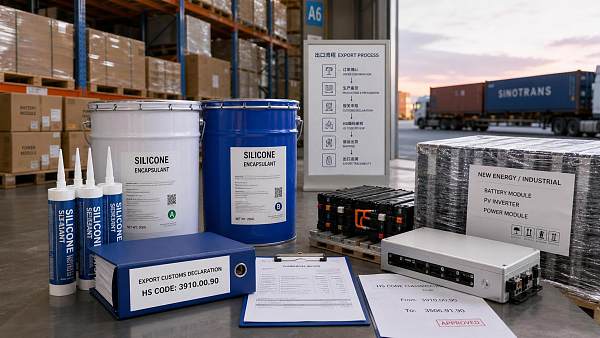
On July 11, 2026, a customs classification change in China moved Silicone Encapsulants into a separate HS code, 3910.0099, instead of the broader 3910.0090 category previously used for general adhesive products. The change is accompanied by stricter documentation review, including a full formulation ingredient list and UL/IEC certification documents, and an expected extension of the average export tax rebate cycle from 12 days to 17 days. For exporters, buyers, certification-related teams, and supply chain service providers, this is worth close attention because the rule change affects declaration practice, document readiness, delivery planning, and customer confidence in response speed.
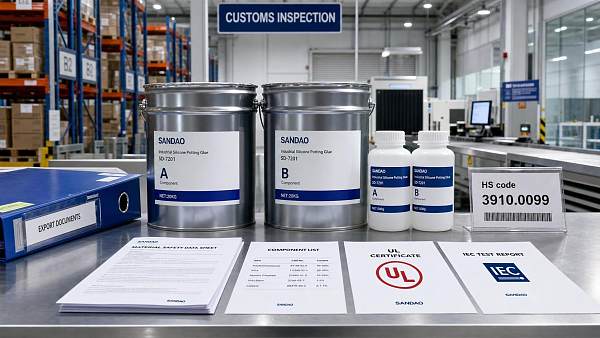
What the new filing requirement formally changes
According to Announcement No. 58 of 2026 issued by the General Administration of Customs of China, Silicone Encapsulants began using an independent HS code, 3910.0099, from July 11, 2026. Before that, the product had been declared under the more general 3910.0090 classification. The new requirement also calls for a complete formulation ingredient list and UL/IEC certification documents. Document review is described as becoming stricter, and the average export tax rebate receipt period is expected to extend from 12 days to 17 days. At the same time, customers in Southeast Asia and Mexico have already started assessing supply chain response capability.
Where the pressure is likely to show first
Export declaration and customs documentation
From an industry perspective, exporters are the first group likely to feel the operational effect because the rule change shifts Silicone Encapsulants from a broad category into a separately declared product line. That means greater attention on classification accuracy, document consistency, and the completeness of submission materials. What deserves closer attention is whether internal product data, customs declarations, and supporting certification files are aligned before shipment.
Procurement and manufacturing coordination
For procurement and manufacturing teams, the impact is less about the code change in isolation and more about the documentation chain behind it. Analysis shows that when a full formulation ingredient list and UL/IEC files become part of stricter review, coordination between technical, compliance, and shipping functions becomes more important. The practical issue is whether material records and certification documents can be prepared in a form that supports shipment without creating avoidable delays.
Customer-side delivery and supplier assessment
Buyers and channel-side partners may focus on response speed and delivery reliability rather than the customs rule itself. Observably, the fact that customers in Southeast Asia and Mexico have begun reviewing supply chain response capability suggests that supplier assessment may increasingly include document readiness and shipment predictability. For companies serving these markets, the immediate concern is not only compliance, but also whether order communication and delivery commitments remain credible under tighter review.
Service providers around compliance and trade handling
Supply chain service providers and certification-related support teams may also see changes in workload, because the new filing path requires closer document checking and clearer supporting records. It is more appropriate to understand this as a process-sensitive adjustment: the pressure point is the quality and completeness of trade paperwork, not simply the code number itself.
What companies should watch in day-to-day execution
Document packages should be checked as a single set
Analysis shows that companies handling Silicone Encapsulants should pay particular attention to whether classification documents, formulation disclosures, and UL/IEC files are internally consistent. Where the rule is already explicit is the need for a complete formulation ingredient list and certification materials; what still requires attention is how strictly those materials will be examined in practice across actual declarations.
Tax rebate timing now matters to shipment planning
The expected extension of the average export tax rebate cycle from 12 days to 17 days deserves practical attention in cash-flow and shipping coordination. This should not be read as a final outcome for every case, but it is a relevant execution signal for exporters that rely on rebate timing in scheduling, quotation, or delivery planning.
Market-facing teams should track customer review behavior
Because customers in Southeast Asia and Mexico have already begun assessing supply chain response capability, sales, account management, and export operations teams should watch for changes in customer requests related to lead time, supporting documents, and supplier qualification materials. The available information does not define a new market rule in those destinations, but it does indicate that customer-side evaluation is becoming part of the commercial response.
Further clarification still needs monitoring
What deserves closer attention is any later clarification on enforcement wording, documentation expectations, or market-specific implementation practice. The current information confirms the rule change and the immediate compliance requirements, but it does not provide full detail on all execution scenarios. Companies should therefore treat this as an active compliance topic rather than a settled administrative routine.
Why this looks like an execution signal, not just a coding update
Observably, this development is larger than a technical HS code adjustment because it combines three elements at once: a separate customs classification, stricter supporting document review, and a longer expected rebate cycle. Analysis shows that the combined effect falls across customs handling, compliance preparation, and customer communication. It is more appropriate to understand this as a rule already in effect with downstream execution implications, while still recognizing that some practical interpretation points may continue to evolve through implementation and market feedback.
How this update is best understood now
At this stage, the most balanced reading is that the change marks a clear compliance and trade-handling shift for Silicone Encapsulants exports from China. The confirmed facts point to a narrower declaration path and tighter supporting documentation requirements, while the expected rebate delay and customer response suggest broader operational implications. The event is best understood as an implemented rule change with practical consequences that companies should manage carefully, while continuing to watch how review standards and customer expectations develop in actual execution.
Basis of this article and what still needs verification
This article is based on the user-provided news title, event date, and event summary. For developments of this type, commonly relevant source categories include official announcements, releases from regulatory authorities, customs or trade administration information, industry association updates, standards organization documents, and reporting by authoritative media. A specific official source link was not provided in the input, so the exact official link still needs to be verified on an ongoing basis. Further observation is also needed on detailed implementation wording, certification review practice, bidding or procurement document changes, market feedback, and how companies execute against the new requirements in day-to-day trade operations.
Recommended News
 Sep 23, 2026How silicone encapsulation prevents moisture failures in sensorsElectronic encapsulation for sensors: discover how silicone reduces moisture failures, protects critical interfaces, and improves reliability under vibration and thermal cycling.
 Sep 22, 2026How to verify UL94 V-0 performance in silicone encapsulantsSilicone encapsulants UL94 V0: learn how to verify flame performance through test evidence, minimum thickness, cure controls, and traceable production practices.
 Sep 22, 2026Automotive Silicone Encapsulation: Preventing Cracks in High-Temperature ElectronicsAutomotive silicone encapsulation prevents cracks in high-temperature electronics with proven control of dispensing, voids, curing, and inspection.
 Sep 21, 2026How to Select Sensor Encapsulation Materials for Heat, Moisture, and ShockEncapsulation materials for sensors: learn how to balance heat resistance, moisture sealing, and shock protection for reliable, high-performance sensor assemblies.
 Sep 21, 2026Sealing Hybrid Packages: Material Choices for Moisture Protection and ReliabilitySealing of hybrid packages: compare epoxy, silicone, polyurethane, and dual-cure materials for dependable moisture protection and long-term reliability.
 Sep 17, 2026When silicone chip packaging adhesives prevent solder joint crackingSilicone chip packaging adhesives help prevent solder joint cracking by absorbing stress, reducing board flex, and improving BGA reliability. Explore smarter protection strategies.
 Sep 15, 2026Silicone vs. polyurethane: which offers better vibration damping for EV battery module assembly?Should I use silicone or polyurethane for vibration protection? Discover which material delivers superior long-term damping, thermal stability & safety in EV battery modules.
 Sep 03, 2026How to prevent leaks when selecting a battery pack sealing adhesiveBattery pack sealing adhesive selection made practical: prevent leaks with proven guidance on joint design, curing, dispensing, durability testing, and serviceability.
 Aug 16, 2026EU REACH Adds 5 SVHCs, Triggering Mandatory SCIP Reporting from Aug. 15, 2026EU REACH adds 5 SVHCs, making SCIP reporting mandatory from Aug. 15, 2026. Learn how the new REACH candidate list impacts exporters, epoxy adhesives, silicone encapsulants, and EU compliance.
 Aug 12, 2026How Electronics Potting for Power Modules Affects Heat Dissipation and ReliabilityElectronics potting for power modules directly impacts heat dissipation, insulation, and long-term reliability. Learn how to choose materials that reduce risk and improve performance.
 Aug 11, 2026EU PFOA Rule Takes Full Effect on Aug. 10EU PFOA Rule takes full effect on Aug. 10, tightening REACH limits for electronics and new energy materials. See who is affected, key compliance risks, and what exporters should check now.
 Aug 10, 2026ECHA Tightens PFOA Limit for Fluorinated Silicone ExportsECHA tightens PFOA limit to 25 ppb for fluorinated silicone exports. Learn how Silicone Encapsulants and Thermal Conductive Pastes can meet EU REACH compliance fast.
 Aug 07, 2026How to Choose Electronics Potting for LED Drivers by Heat and IP RatingElectronics potting for LED drivers: learn how to choose the right compound by heat path, IP rating, stress, and cure behavior to improve reliability and simplify selection.
 Jul 26, 2026ECHA Adds Two Flame Retardants to SVHC ListECHA Adds Two Flame Retardants to SVHC List: learn how DPTEBP and TBBPS may affect EU exports, SDS updates, declarations, and October 2026 compliance deadlines.
 Jul 19, 2026ECHA SVHC Update Raises Export Risks for Silicone MaterialsECHA SVHC update raises export risks for silicone materials, including silicone encapsulants and thermal conductive pastes. Learn the REACH, SCIP, and traceability impacts before October 2026.
 Jul 14, 2026Japan’s New JIS Rule Pulls Silicone Encapsulant Orders to ChinaSilicone encapsulant demand is shifting to China as Japan’s new JIS rule nears. See how compliance, certification, and EMS procurement are reshaping orders before October 2026.
 Jul 13, 2026Japan Enforces JIS T 2801-2026 on Silicone EncapsulantsJapan Enforces JIS T 2801-2026 on Silicone Encapsulants: learn how new thermal shock and ion migration tests affect PSE access, supplier approval, and Japan-bound compliance plans.
 Jul 09, 2026How to Evaluate an Electronics Packaging Adhesive Supplier for Yield StabilityElectronics packaging adhesive supplier evaluation starts with yield stability. Learn how to compare consistency, compliance, process fit, and total cost for smarter sourcing.
 Jul 04, 2026How to Evaluate Electronic Potting Materials in Japan for Heat, Moisture, and ComplianceElectronic potting materials Japan: learn how to compare heat resistance, moisture protection, and compliance data to choose reliable compounds for automotive, EV, and electronics projects.
 Jul 03, 2026China Customs Splits Out Silicone Encapsulants HS CodeChina Customs splits out Silicone Encapsulants HS code to 3910.0099, tightening filing, UL/IEC documentation, and rebate timing. See what exporters and buyers must do now.
 Jul 02, 2026China Splits Out Silicone Encapsulants Under New HS CodeChina splits out silicone encapsulants under new HS code 3506.9900.11. See how the rule affects export compliance, tax rebate timing, and global delivery planning.
 Jul 01, 2026China Creates HS 2026.7.11 for Silicone EncapsulantsChina creates HS 2026.7.11 for silicone encapsulants, reshaping customs declarations, rebate timing, and export compliance. Learn what exporters and buyers must review now.
 Jun 29, 2026How to Choose Electronic Potting Sealants for Heat and MoistureElectronic potting sealants for heat and moisture: learn how to match materials to real operating conditions, improve reliability, and avoid costly process mistakes.
 Jun 24, 2026Electronic Packaging Adhesive Price Benchmarks by Cure Type and VolumeElectronic packaging adhesive price benchmarks by cure type and volume. Compare UV, epoxy, silicone, package formats, and hidden process costs to source smarter and cut total line expense.













Editor's Selection
The Archive Newsletter
Critical industrial intelligence delivered every Tuesday. Peer-reviewed summaries of the week's most impactful logistics and market shifts.