China Silicone Output Cuts Tighten DMC Supply
by
Published
Views:
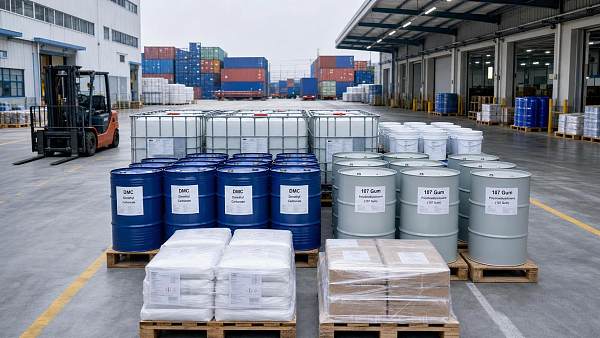
On June 5, 2026, a meeting of China’s monomer producers confirmed a mandatory 40% silicone production cut across June to August, using fluidized-bed shutdowns as the sole recognition standard. The development is drawing close attention from raw material buyers, adhesive manufacturers, export-oriented processors, and overseas customers because it is already coinciding with firmer DMC spot pricing in East China, tighter availability of 107 rubber, and longer delivery cycles for export orders tied to structural silicone sealants, potting compounds, and thermal grease.
A clearly defined reduction rule is now in place
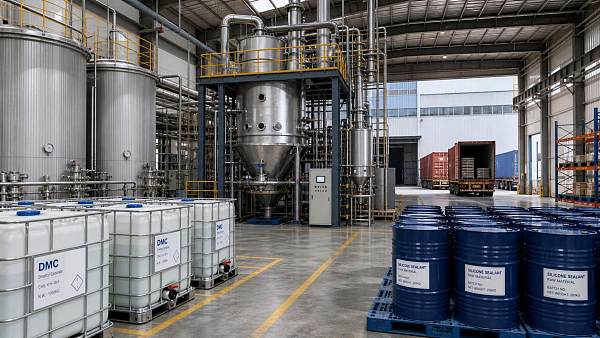
Confirmed information shows that on June 5, 2026, China’s monomer producers agreed that from June through August, the entire industry would implement a hard 40% production reduction. The only recognized standard for this reduction is fluidized-bed shutdowns.
At the same time, East China DMC spot quotations have stabilized at RMB 14,350 per ton. Market feedback included in the event summary also indicates that supply of DMC and 107 rubber has become tighter.
The pressure is already being felt in downstream adhesive-related raw materials, especially those used in structural silicone sealants, potting compounds, and thermal silicone grease. Export-oriented companies in Dongguan and Shenzhen reported that delivery cycles for overseas orders have extended from the usual four weeks to six to eight weeks, while some European customers have begun preparing inventory plans.
Where the pressure is likely to appear first
Raw material purchasing is facing a narrower supply window
From an industry perspective, buyers of DMC and 107 rubber may feel the impact first because the confirmed production cut directly affects the upstream supply side. The main pressure point is not only price visibility, but also whether purchase timing and allocation can still support normal production scheduling.
Adhesive manufacturers are exposed through production planning
Manufacturers of structural silicone sealants, potting compounds, and thermal silicone grease may be affected through raw material availability rather than through a confirmed collapse in demand. What deserves closer attention is whether incoming materials can match existing production plans, especially when export orders require stable lead times and documentation consistency.
Export businesses are seeing delivery risk move forward
For export-oriented enterprises in Dongguan and Shenzhen, the impact is showing up in lead time management. The reported extension from four weeks to six to eight weeks means overseas delivery commitments may need to be reassessed earlier in the order cycle, particularly for customers already starting stock-up preparations.
Overseas buyers may shift from routine ordering to precautionary booking
Observably, some European customers have already started contingency inventory planning. This does not by itself confirm a broader market shift, but it does suggest that buyers are responding not only to pricing, but also to supply assurance and shipping predictability.
What companies should watch in the next phase
Whether the reduction rule remains unchanged
Companies should closely watch whether the June-to-August reduction framework and the sole recognition standard of fluidized-bed shutdowns remain consistent in subsequent official or industry-level communication. For many businesses, the operational effect depends not only on the headline reduction rate, but also on how strictly that recognition rule continues to be applied.
Priority should be on DMC and 107 rubber availability
In practical terms, the most immediate focus is on the availability of DMC and 107 rubber, because these materials sit directly in the path of downstream production. Procurement teams, production planners, and sales teams should align on which product lines carry the highest exposure to material tightness.
Delivery promises need earlier customer communication
For exporters, the extension to six to eight weeks makes lead time communication a front-end task rather than a back-end explanation. It is more appropriate to prepare updated delivery expectations, order confirmation language, and customer communication plans before additional schedule pressure emerges.
Preparedness matters as much as pricing
Analysis shows that this development should not be read only through spot quotations. Supplier reliability, documentation readiness, order sequencing, and internal contingency planning may become equally important where contracts depend on stable fulfillment windows.
Why this reads as more than a routine supply fluctuation
Analysis shows that the key signal is not merely that supply is tight, but that the production cut has been framed with a specific and uniform recognition standard. That gives the market a clearer operating reference point for June to August.
At the same time, it is more appropriate to understand the current situation as a live industry development rather than a fully settled outcome. The confirmed facts already point to tighter raw material conditions and longer export lead times, but the full extent of pass-through across procurement, production, and overseas order execution still needs continued observation.
How this news is best understood now
At this stage, the development should be read as a concrete short-term supply-side change with wider implications for execution across the silicone and adhesive chain. The confirmed reduction rule, firmer DMC pricing, tighter 107 rubber supply, and longer export delivery cycles together signal a period of operational strain rather than a conclusion about the longer-term market direction.
A neutral reading is that this is an important near-term industry signal, especially for businesses managing procurement, production scheduling, and export delivery. Whether it evolves into a broader structural trend will depend on how conditions develop through the June-to-August window.
Basis of this article and what still needs verification
This article is based on the user-provided news title, event date, and event summary. No additional data, company names, policy numbers, market size figures, or source links have been added beyond the provided information.
For developments of this type, relevant source categories often include official announcements, company statements, industry association updates, authoritative media reporting, and standard-setting documents. However, a specific official source link was not provided in the input, so further verification remains necessary.
Follow-up attention should focus on whether later statements change the implementation wording, whether DMC and 107 rubber availability remains tight through August, and whether export lead times continue to stay at six to eight weeks or change again.
Recommended News
 Sep 21, 2026How to Select Sensor Encapsulation Materials for Heat, Moisture, and ShockEncapsulation materials for sensors: learn how to balance heat resistance, moisture sealing, and shock protection for reliable, high-performance sensor assemblies.
 Sep 21, 2026Sealing Hybrid Packages: Material Choices for Moisture Protection and ReliabilitySealing of hybrid packages: compare epoxy, silicone, polyurethane, and dual-cure materials for dependable moisture protection and long-term reliability.
 Sep 17, 2026When silicone chip packaging adhesives prevent solder joint crackingSilicone chip packaging adhesives help prevent solder joint cracking by absorbing stress, reducing board flex, and improving BGA reliability. Explore smarter protection strategies.
 Sep 15, 2026Silicone vs. polyurethane: which offers better vibration damping for EV battery module assembly?Should I use silicone or polyurethane for vibration protection? Discover which material delivers superior long-term damping, thermal stability & safety in EV battery modules.
 Sep 03, 2026How to prevent leaks when selecting a battery pack sealing adhesiveBattery pack sealing adhesive selection made practical: prevent leaks with proven guidance on joint design, curing, dispensing, durability testing, and serviceability.
 Aug 16, 2026EU REACH Adds 5 SVHCs, Triggering Mandatory SCIP Reporting from Aug. 15, 2026EU REACH adds 5 SVHCs, making SCIP reporting mandatory from Aug. 15, 2026. Learn how the new REACH candidate list impacts exporters, epoxy adhesives, silicone encapsulants, and EU compliance.
 Aug 12, 2026How Electronics Potting for Power Modules Affects Heat Dissipation and ReliabilityElectronics potting for power modules directly impacts heat dissipation, insulation, and long-term reliability. Learn how to choose materials that reduce risk and improve performance.
 Aug 11, 2026EU PFOA Rule Takes Full Effect on Aug. 10EU PFOA Rule takes full effect on Aug. 10, tightening REACH limits for electronics and new energy materials. See who is affected, key compliance risks, and what exporters should check now.
 Aug 10, 2026ECHA Tightens PFOA Limit for Fluorinated Silicone ExportsECHA tightens PFOA limit to 25 ppb for fluorinated silicone exports. Learn how Silicone Encapsulants and Thermal Conductive Pastes can meet EU REACH compliance fast.
 Aug 07, 2026How to Choose Electronics Potting for LED Drivers by Heat and IP RatingElectronics potting for LED drivers: learn how to choose the right compound by heat path, IP rating, stress, and cure behavior to improve reliability and simplify selection.
 Jul 26, 2026ECHA Adds Two Flame Retardants to SVHC ListECHA Adds Two Flame Retardants to SVHC List: learn how DPTEBP and TBBPS may affect EU exports, SDS updates, declarations, and October 2026 compliance deadlines.
 Jul 19, 2026ECHA SVHC Update Raises Export Risks for Silicone MaterialsECHA SVHC update raises export risks for silicone materials, including silicone encapsulants and thermal conductive pastes. Learn the REACH, SCIP, and traceability impacts before October 2026.
 Jul 14, 2026Japan’s New JIS Rule Pulls Silicone Encapsulant Orders to ChinaSilicone encapsulant demand is shifting to China as Japan’s new JIS rule nears. See how compliance, certification, and EMS procurement are reshaping orders before October 2026.
 Jul 13, 2026Japan Enforces JIS T 2801-2026 on Silicone EncapsulantsJapan Enforces JIS T 2801-2026 on Silicone Encapsulants: learn how new thermal shock and ion migration tests affect PSE access, supplier approval, and Japan-bound compliance plans.
 Jul 09, 2026How to Evaluate an Electronics Packaging Adhesive Supplier for Yield StabilityElectronics packaging adhesive supplier evaluation starts with yield stability. Learn how to compare consistency, compliance, process fit, and total cost for smarter sourcing.
 Jul 04, 2026How to Evaluate Electronic Potting Materials in Japan for Heat, Moisture, and ComplianceElectronic potting materials Japan: learn how to compare heat resistance, moisture protection, and compliance data to choose reliable compounds for automotive, EV, and electronics projects.
 Jul 03, 2026China Customs Splits Out Silicone Encapsulants HS CodeChina Customs splits out Silicone Encapsulants HS code to 3910.0099, tightening filing, UL/IEC documentation, and rebate timing. See what exporters and buyers must do now.
 Jul 02, 2026China Splits Out Silicone Encapsulants Under New HS CodeChina splits out silicone encapsulants under new HS code 3506.9900.11. See how the rule affects export compliance, tax rebate timing, and global delivery planning.
 Jul 01, 2026China Creates HS 2026.7.11 for Silicone EncapsulantsChina creates HS 2026.7.11 for silicone encapsulants, reshaping customs declarations, rebate timing, and export compliance. Learn what exporters and buyers must review now.
 Jun 29, 2026How to Choose Electronic Potting Sealants for Heat and MoistureElectronic potting sealants for heat and moisture: learn how to match materials to real operating conditions, improve reliability, and avoid costly process mistakes.
 Jun 24, 2026Electronic Packaging Adhesive Price Benchmarks by Cure Type and VolumeElectronic packaging adhesive price benchmarks by cure type and volume. Compare UV, epoxy, silicone, package formats, and hidden process costs to source smarter and cut total line expense.
 Jun 24, 2026East China Silicone Cuts Extend DMC, 107 Gum Lead TimesEast China silicone cuts are extending DMC and 107 gum lead times to 6–8 weeks. Learn how supply pressure, force majeure risk, and procurement delays may affect exports and sealant makers.
 Jun 23, 2026China Silicone Output Cuts Tighten DMC SupplyChina silicone output cuts are tightening DMC supply and extending export lead times. See how firmer prices, 107 rubber shortages, and procurement risks may impact buyers and adhesive manufacturers.
 Jun 21, 2026EV Battery Encapsulation Materials: How to Balance Thermal Safety and ReworkabilityEV battery encapsulation materials guide for balancing thermal safety and reworkability. Compare epoxy, silicone, and polyurethane options to improve EV pack safety, serviceability, and cost.








Editor's Selection
The Archive Newsletter
Critical industrial intelligence delivered every Tuesday. Peer-reviewed summaries of the week's most impactful logistics and market shifts.