Japan Enforces JIS T 2801-2026 on Silicone Encapsulants
by
Published
Views:
From 13 July 2026, Japan has moved JIS T 2801-2026 from a technical reference into an immediate compliance requirement for silicone encapsulants used in medical electronics and automotive sensors. The change matters because it adds two specific test gates and ties them to market access through the PSE technical basis, which means material suppliers, component makers, exporters, certification teams, procurement functions, and delivery planning for Japan-facing business may all need to reassess qualification status rather than treat this as a routine standards update.
What the new requirement now includes
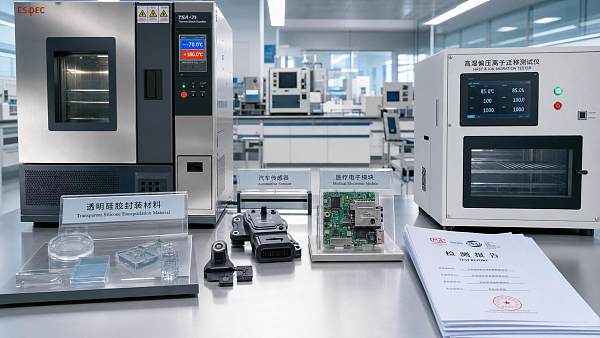
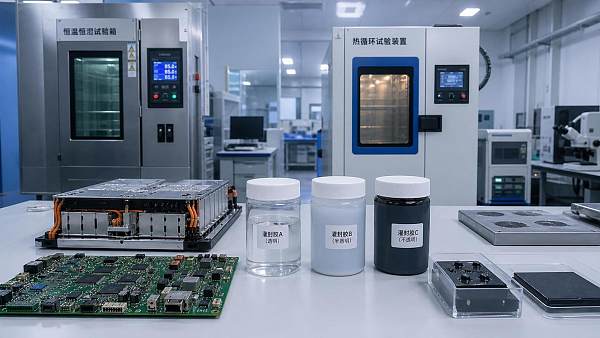
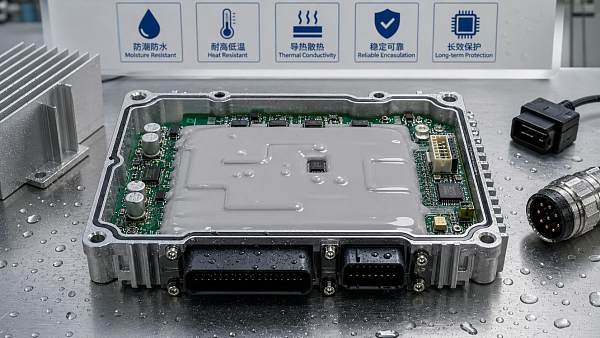
According to the provided event information, the Japan Industrial Standards Committee (JISC) began mandatory enforcement of the revised JIS T 2801-2026 standard at 00:00 on 13 July 2026. For silicone encapsulants used in medical electronics and automotive sensors, the revised standard adds a -40 degrees C to 125 degrees C cyclic thermal shock test with 500 cycles, as well as an ion migration (ICM) test under high-humidity bias conditions.
The same information states that this standard has been incorporated into the technical basis for Japan's PSE certification. Products that do not meet the requirement will not be able to enter Japan's medical device supply chain or the approved supplier lists for second-tier suppliers serving Tier-1 automotive electronics companies.
Where the pressure will show up first
Material qualification moves closer to market access
From an industry perspective, silicone encapsulant suppliers are likely to feel the change first because the new tests directly affect whether a product can remain technically acceptable for the named end uses. The practical impact is likely to appear in qualification files, product approval discussions, and customer requests for evidence that the revised test conditions have been met.
Component and module producers may face procurement screening changes
Manufacturers serving medical electronics and automotive sensor programs may need to pay closer attention to whether purchased encapsulation materials align with the revised JIS requirement. The main pressure point is not only material selection, but also whether internal sourcing, incoming material approval, and release-to-production decisions remain consistent with customer and certification expectations tied to Japan.
Export and supply-chain teams may need tighter document control
For exporters and supply-chain service providers handling Japan-bound business, the rule change may affect shipment readiness, document review, and handover timing. Analysis shows that where a product is positioned for PSE-linked applications or named supplier lists, the issue is less about general product marketing and more about whether technical records, test reports, and compliance statements can support continued delivery without challenge.
Testing and certification support functions may see demand shift
Certification-related companies and testing service providers may also be affected because the updated standard introduces two defined test items that can become checkpoints in customer qualification or certification preparation. What deserves closer attention is whether buyers begin to request these results earlier in the sourcing cycle, especially where approval to enter a supply chain depends on demonstrable conformity rather than later-stage remediation.
What companies should review now
Check whether current technical files address both added tests
Analysis shows that companies supplying silicone encapsulants into the relevant applications should first verify whether existing technical documentation already covers the newly added thermal shock and ion migration requirements in a form customers and compliance reviewers can use. Where the input does not provide a detailed execution format, it is more appropriate to treat this as a documentation and qualification review priority rather than assume one uniform acceptance practice.
Watch for changes in tender language and approved supplier criteria
Because the standard is described as affecting access to Japan's medical device supply chain and supplier lists linked to Tier-1 automotive electronics, procurement-facing teams should monitor whether tender documents, supplier onboarding materials, and technical bid alignment language are updated to reference JIS T 2801-2026 more explicitly. The immediate issue may be less the publication of new text and more the conversion of that text into sourcing prerequisites.
Reassess delivery schedules where compliance evidence is incomplete
Companies with active or planned Japan deliveries should review whether any product lines depend on silicone encapsulants whose conformity status under the revised standard is not yet clearly evidenced. Observably, where qualification proof lags behind commercial commitments, delivery timing, customer acceptance, and change-control discussions may become the first areas of friction.
Keep post-shipment traceability and after-sales responses aligned
For businesses already shipping into the affected segments, it is worth checking whether batch traceability, product identification, and after-sales response procedures are sufficient to support customer questions about compliance status under the revised test regime. The event summary does not provide enforcement case details, so this should be understood as a prudent control point rather than evidence of a confirmed market-wide response pattern.
Why this looks like an execution signal, not only a standards revision
Observably, this development is better understood as an implemented compliance shift rather than a draft rule still awaiting practical effect, because the supplied information states that mandatory enforcement has already started and that the standard has been incorporated into the PSE technical basis. At the same time, analysis shows there is still reason to watch how the requirement is reflected in certification practice, customer qualification language, and supplier-list administration, since those downstream expressions of a rule often determine how quickly market behavior changes.
How to read the change at this stage
The most grounded reading of this event is that Japan has raised the entry requirement for specific silicone encapsulants used in medical electronics and automotive sensor applications, and has connected that requirement to recognized compliance and supply-chain access points. It is more appropriate to understand this as a rule that has already landed, while still reserving judgment on the exact pace and breadth of market enforcement until more execution detail appears through certification practice, procurement documents, and industry feedback.
Basis of this article and what still needs verification
This article is based on the user-provided news title, event date, and event summary. For developments of this type, relevant source categories typically include official notices, regulator releases, trade or customs authority information, industry association updates, standards organization documents, and reporting from established professional media.
No specific official source link was provided in the input, so the exact official reference still needs to be verified on an ongoing basis. Further observation should focus on any detailed implementation wording, certification interpretation, changes in tender or supplier-list documents, industry feedback, and how companies actually execute against the revised requirement.
Recommended News
 Sep 23, 2026How silicone encapsulation prevents moisture failures in sensorsElectronic encapsulation for sensors: discover how silicone reduces moisture failures, protects critical interfaces, and improves reliability under vibration and thermal cycling.
 Sep 22, 2026How to verify UL94 V-0 performance in silicone encapsulantsSilicone encapsulants UL94 V0: learn how to verify flame performance through test evidence, minimum thickness, cure controls, and traceable production practices.
 Sep 22, 2026Automotive Silicone Encapsulation: Preventing Cracks in High-Temperature ElectronicsAutomotive silicone encapsulation prevents cracks in high-temperature electronics with proven control of dispensing, voids, curing, and inspection.
 Sep 21, 2026How to Select Sensor Encapsulation Materials for Heat, Moisture, and ShockEncapsulation materials for sensors: learn how to balance heat resistance, moisture sealing, and shock protection for reliable, high-performance sensor assemblies.
 Sep 21, 2026Sealing Hybrid Packages: Material Choices for Moisture Protection and ReliabilitySealing of hybrid packages: compare epoxy, silicone, polyurethane, and dual-cure materials for dependable moisture protection and long-term reliability.
 Sep 17, 2026When silicone chip packaging adhesives prevent solder joint crackingSilicone chip packaging adhesives help prevent solder joint cracking by absorbing stress, reducing board flex, and improving BGA reliability. Explore smarter protection strategies.
 Sep 15, 2026Silicone vs. polyurethane: which offers better vibration damping for EV battery module assembly?Should I use silicone or polyurethane for vibration protection? Discover which material delivers superior long-term damping, thermal stability & safety in EV battery modules.
 Sep 03, 2026How to prevent leaks when selecting a battery pack sealing adhesiveBattery pack sealing adhesive selection made practical: prevent leaks with proven guidance on joint design, curing, dispensing, durability testing, and serviceability.
 Aug 16, 2026EU REACH Adds 5 SVHCs, Triggering Mandatory SCIP Reporting from Aug. 15, 2026EU REACH adds 5 SVHCs, making SCIP reporting mandatory from Aug. 15, 2026. Learn how the new REACH candidate list impacts exporters, epoxy adhesives, silicone encapsulants, and EU compliance.
 Aug 12, 2026How Electronics Potting for Power Modules Affects Heat Dissipation and ReliabilityElectronics potting for power modules directly impacts heat dissipation, insulation, and long-term reliability. Learn how to choose materials that reduce risk and improve performance.
 Aug 11, 2026EU PFOA Rule Takes Full Effect on Aug. 10EU PFOA Rule takes full effect on Aug. 10, tightening REACH limits for electronics and new energy materials. See who is affected, key compliance risks, and what exporters should check now.
 Aug 10, 2026ECHA Tightens PFOA Limit for Fluorinated Silicone ExportsECHA tightens PFOA limit to 25 ppb for fluorinated silicone exports. Learn how Silicone Encapsulants and Thermal Conductive Pastes can meet EU REACH compliance fast.
 Aug 07, 2026How to Choose Electronics Potting for LED Drivers by Heat and IP RatingElectronics potting for LED drivers: learn how to choose the right compound by heat path, IP rating, stress, and cure behavior to improve reliability and simplify selection.
 Jul 26, 2026ECHA Adds Two Flame Retardants to SVHC ListECHA Adds Two Flame Retardants to SVHC List: learn how DPTEBP and TBBPS may affect EU exports, SDS updates, declarations, and October 2026 compliance deadlines.
 Jul 19, 2026ECHA SVHC Update Raises Export Risks for Silicone MaterialsECHA SVHC update raises export risks for silicone materials, including silicone encapsulants and thermal conductive pastes. Learn the REACH, SCIP, and traceability impacts before October 2026.
 Jul 14, 2026Japan’s New JIS Rule Pulls Silicone Encapsulant Orders to ChinaSilicone encapsulant demand is shifting to China as Japan’s new JIS rule nears. See how compliance, certification, and EMS procurement are reshaping orders before October 2026.
 Jul 13, 2026Japan Enforces JIS T 2801-2026 on Silicone EncapsulantsJapan Enforces JIS T 2801-2026 on Silicone Encapsulants: learn how new thermal shock and ion migration tests affect PSE access, supplier approval, and Japan-bound compliance plans.
 Jul 09, 2026How to Evaluate an Electronics Packaging Adhesive Supplier for Yield StabilityElectronics packaging adhesive supplier evaluation starts with yield stability. Learn how to compare consistency, compliance, process fit, and total cost for smarter sourcing.
 Jul 04, 2026How to Evaluate Electronic Potting Materials in Japan for Heat, Moisture, and ComplianceElectronic potting materials Japan: learn how to compare heat resistance, moisture protection, and compliance data to choose reliable compounds for automotive, EV, and electronics projects.
 Jul 03, 2026China Customs Splits Out Silicone Encapsulants HS CodeChina Customs splits out Silicone Encapsulants HS code to 3910.0099, tightening filing, UL/IEC documentation, and rebate timing. See what exporters and buyers must do now.
 Jul 02, 2026China Splits Out Silicone Encapsulants Under New HS CodeChina splits out silicone encapsulants under new HS code 3506.9900.11. See how the rule affects export compliance, tax rebate timing, and global delivery planning.
 Jul 01, 2026China Creates HS 2026.7.11 for Silicone EncapsulantsChina creates HS 2026.7.11 for silicone encapsulants, reshaping customs declarations, rebate timing, and export compliance. Learn what exporters and buyers must review now.
 Jun 29, 2026How to Choose Electronic Potting Sealants for Heat and MoistureElectronic potting sealants for heat and moisture: learn how to match materials to real operating conditions, improve reliability, and avoid costly process mistakes.
 Jun 24, 2026Electronic Packaging Adhesive Price Benchmarks by Cure Type and VolumeElectronic packaging adhesive price benchmarks by cure type and volume. Compare UV, epoxy, silicone, package formats, and hidden process costs to source smarter and cut total line expense.



Editor's Selection
The Archive Newsletter
Critical industrial intelligence delivered every Tuesday. Peer-reviewed summaries of the week's most impactful logistics and market shifts.