Adhesive Bonding Process for Composites: Steps That Improve Strength
by
Published
Views:
The adhesive bonding process for composites sits at the center of modern lightweight manufacturing. In composite assembly, bond strength is not created by adhesive chemistry alone. It depends on how surfaces are prepared, how materials are matched, how adhesive is dispensed, and how curing is controlled across the full production route.
That is why this topic matters well beyond aerospace. Automotive structures, wind blades, rail interiors, battery enclosures, electronics housings, and industrial panels all rely on reliable composite joints. When the bonding process is poorly managed, projects face rework, weak lap shear results, unpredictable peel performance, and higher lifecycle risk.
In practice, the adhesive bonding process for composites is both an engineering and execution issue. It links polymer behavior, joint design, dispensing precision, cure profile, inspection standards, and production cost. For teams comparing structural adhesives, process capability often matters as much as the data sheet.
Why composite bonding has become a priority
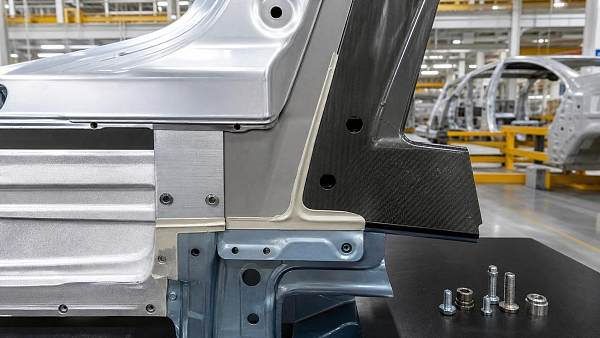
Composite parts are chosen to reduce weight, resist corrosion, and enable new shapes. Traditional joining methods do not always support those goals. Mechanical fasteners can create stress concentrations, while welding is often unsuitable for fiber-reinforced substrates.
Adhesive bonding spreads load over a larger area. It also helps join dissimilar materials, seal against moisture, and simplify assembly layouts. That makes the adhesive bonding process for composites attractive in industries where performance and assembly efficiency must improve together.
A process view is especially useful because composite bonding rarely fails for one reason only. Weakness usually comes from a chain of small decisions, including contamination, poor mix ratio, trapped air, wrong bond line thickness, or incomplete cure.
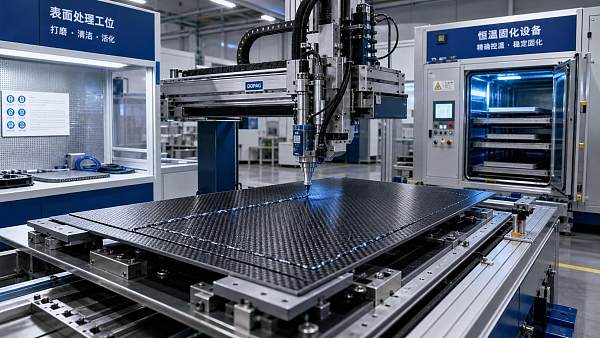
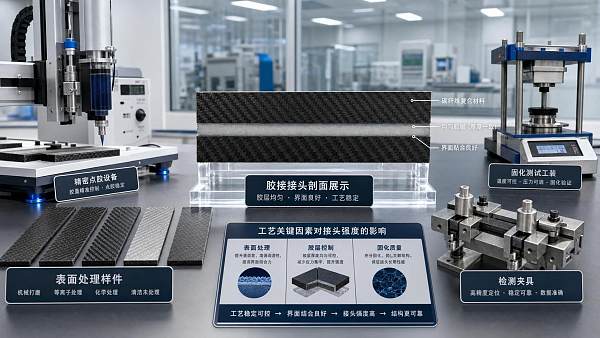
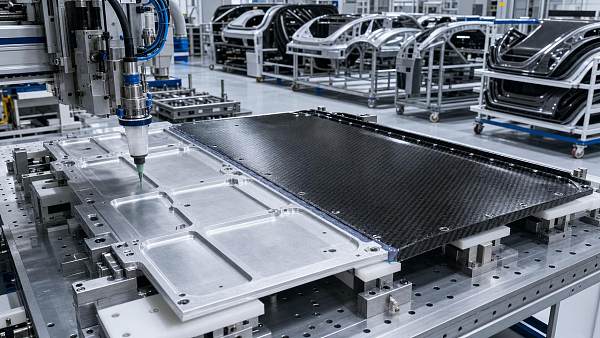
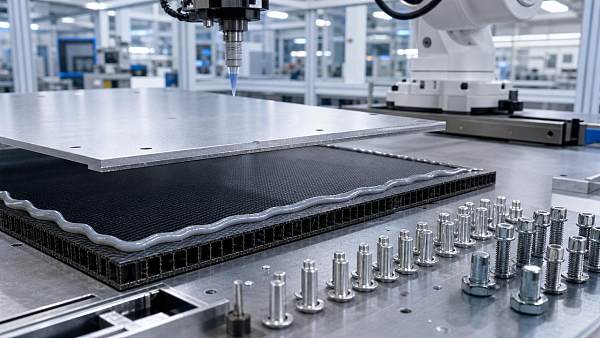
A visual process map often helps align design, production, and quality expectations before launch.
What the adhesive bonding process for composites really includes
At a basic level, the process covers substrate evaluation, surface treatment, adhesive selection, application control, fixturing, curing, and verification. However, strong results come from treating these as connected variables rather than isolated tasks.
Composite substrates vary widely. Carbon fiber, glass fiber, SMC, CFRP, thermoset laminates, and thermoplastic composites do not behave the same way. Resin chemistry, fiber exposure, mold release residues, and surface energy all influence bond formation.
The adhesive side is equally important. Epoxy structural adhesives are often used when high strength and environmental resistance are needed. Polyurethane systems can add toughness and flexibility. Acrylics may support faster processing in some assemblies.
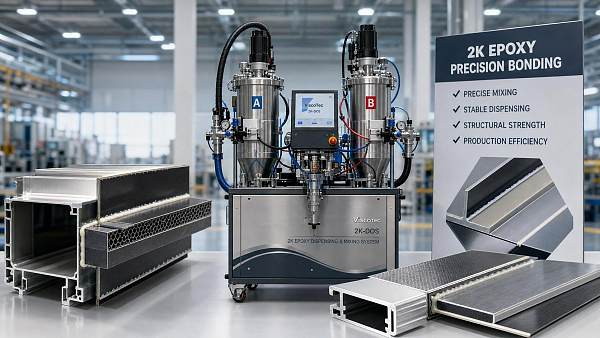
For complex production environments, the adhesive bonding process for composites also includes the equipment layer. Meter-mix systems, static mixers, jet valves, and automated dispensing platforms can reduce variation that manual application often introduces.
Surface preparation is where strength is often won or lost
Many bond failures start before adhesive is opened. Composite surfaces can carry release agents, dust, machining residues, oils, or absorbed moisture. Even a high-performance adhesive may underperform if the surface is not ready.
Cleaning should remove contamination without leaving residues behind. Abrasion can increase mechanical interlocking, but the method has to be controlled. Excessive abrasion may damage fibers or create inconsistent roughness across the joint area.
In some assemblies, plasma, corona, or chemical primers improve surface activation. These options are not automatic upgrades. They only add value when matched to the composite substrate, adhesive chemistry, and production speed.
Timing matters too. A well-prepared surface can lose effectiveness if there is too much delay before bonding. That is why the adhesive bonding process for composites should define a clear open window between preparation and assembly.
Common surface preparation checks
- Confirm the substrate type, resin system, and manufacturing route.
- Verify that mold release and handling contamination are removed.
- Standardize abrasion media, pressure, and cleaning sequence.
- Control humidity and storage before bonding starts.
- Set a maximum delay time after treatment.
Adhesive selection must follow joint demands, not just headline strength
A common mistake is choosing adhesive only by peak lap shear value. Composite joints often face mixed loads, thermal cycling, vibration, peel stress, and environmental exposure. The best material is usually the one that balances strength with toughness and process fit.
Bond line thickness, cure speed, working life, exotherm, gap filling, and outgassing all matter. In large structures such as wind components or transport panels, open time and sag resistance can be as important as final mechanical performance.
Where automation is planned, rheology becomes a strategic variable. The adhesive must move predictably through pumps, mixers, and valves. IADS often highlights this link between material behavior and dispensing control because poor flow stability can undermine an otherwise strong bonding design.
Application control shapes repeatability on the line
Even the right adhesive can underperform if the application method is unstable. The adhesive bonding process for composites should define mix ratio control, bead geometry, placement accuracy, and air management before production ramps up.
For two-component systems, mixing quality is critical. Incomplete mixing can create soft zones or local weakness. Static mixers are common, but the selected element design, flow rate, and purge method still need verification.
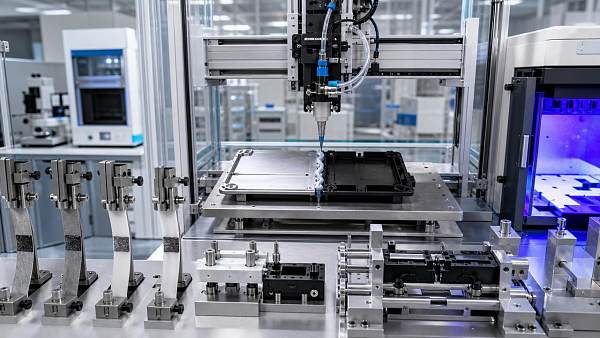
Automated dispensing becomes more valuable when joint paths are long, complex, or high volume. Jetting, metered extrusion, and multi-axis platforms help stabilize output. They also create better traceability, especially where quality documentation is part of the approval route.
This is where a broader industrial intelligence perspective matters. Across sectors covered by IADS, from electronics assembly to EV battery manufacturing, the same lesson repeats: fluid control precision is often the hidden driver of bond consistency.
Process controls worth documenting early
- Adhesive temperature before dispensing.
- Meter ratio tolerance and mixing verification.
- Target bond line thickness and spacer strategy.
- Fixture pressure and part alignment limits.
- Maximum time between dispense and clamping.
Curing strategy affects both strength and schedule
Cure is more than waiting for hardening. It defines cross-linking development, residual stress, and final performance. A bond that looks solid after assembly may still be below required strength if temperature or dwell time is insufficient.
Room-temperature systems can simplify production, but they may require long handling times. Heat-accelerated curing can improve throughput, though it must fit substrate temperature limits and part geometry. Thick joints may also generate internal heat that changes cure behavior.
For the adhesive bonding process for composites, cure validation should include realistic part mass, not just small laboratory samples. Production parts cool and heat differently, and those differences can shift actual bond performance.
Where stronger bonding delivers business value
The value of a better bonding process is not limited to higher test numbers. It can reduce fastener count, lower part weight, improve sealing, simplify surface appearance, and support quieter structures. In transport and energy systems, those benefits often justify process refinement.
Composite bonding also supports design freedom. Curved panels, sandwich structures, hybrid joints, and thin-wall assemblies become easier to implement when load transfer is distributed. That can unlock simpler assemblies than a purely mechanical joining route.
For global supply chains, the adhesive bonding process for composites also intersects with compliance and sourcing decisions. Material consistency, REACH or RoHS considerations, storage requirements, and equipment compatibility can all influence qualification timing and total cost.
Practical evaluation points before scaling up
A strong launch usually starts with a disciplined review of the full bond system. That means evaluating substrate variation, joint geometry, adhesive chemistry, dispensing method, cure window, inspection criteria, and repair strategy together.
Small pilot runs are useful because they reveal issues that data sheets cannot show. Edge voids, squeeze-out behavior, fixture shift, or operator timing differences often appear only when real parts move through a real line.
The most useful process questions are usually specific:
- Does the chosen adhesive wet the composite surface consistently?
- Can the dispensing setup hold repeatable volume and placement?
- Is the cure schedule realistic for actual throughput targets?
- Which failure mode appears after aging, vibration, or heat exposure?
- How easy is it to audit and reproduce the process at another site?
Answering those questions early creates a better basis for material comparison, equipment planning, and supplier discussions.
A more useful next step
Improving the adhesive bonding process for composites rarely starts with changing one material. It usually starts with a clearer map of the full process, from surface condition and adhesive rheology to cure verification and inspection standards.
A practical next move is to compare current bonding steps against actual failure risks and production constraints. That review often shows whether the priority is better surface preparation, a different structural adhesive, tighter dispensing control, or stronger cure validation.
For teams tracking industrial bonding trends through IADS, the most valuable insight is often the connection between chemistry, equipment, and execution. Composite strength improves fastest when those three areas are evaluated together, not in separate decisions.
Recommended News
 Jun 22, 2026China Sets GB/T 21526—2025 for July 2026China Sets GB/T 21526—2025 for July 2026, signaling stricter export compliance for structural adhesives. Learn how new surface treatment and documentation rules may impact suppliers and buyers.
 Jun 21, 2026Fatigue Structural Adhesive Joint Testing: Key Failure Modes and Test BenchmarksFatigue structural adhesive joint testing explained: discover key failure modes, ASTM/ISO test benchmarks, and practical validation tips to improve bond durability and support safer design decisions.
 Jun 20, 2026Automotive Bonding Solutions: When 2K Epoxy Beats Mechanical FastenersAutomotive bonding solutions explained: discover when 2K epoxy outperforms mechanical fasteners in strength, weight reduction, corrosion control, and assembly efficiency.
 Jun 20, 2026Adhesive Bonding Process for Composites: What Causes Weak Joints?Adhesive bonding process for composites explained: discover why weak joints happen, from surface prep and cure issues to joint design, and learn how to improve bond reliability fast.
 Jun 19, 2026Dissimilar Material Bonding Solutions for Heat and VibrationDissimilar material bonding solutions for heat and vibration: learn how to choose adhesives and dispensing methods that improve durability, thermal performance, and production reliability.
 Jun 19, 2026How to Evaluate Adhesive Bond Strength Without OvertestingAdhesive bond evaluation starts with real joint risk, not excessive testing. Learn how to measure bond strength smarter, cut false negatives, and make faster, more reliable engineering decisions.
 Jun 18, 2026How to Choose Camera Module Epoxy Adhesives for Fast Cure and Low StressCamera module epoxy adhesives: learn how to balance fast cure and low stress for stable alignment, clean optics, and reliable production with practical selection tips.
 Jun 17, 20262K Epoxy Adhesive System Selection for Strength and Throughput2K epoxy adhesive system selection impacts more than bond strength. Learn how to balance cure, dispensing, and throughput for stable production and lower scrap.
 Jun 16, 2026Adhesive Bonding Process for Composites: Steps That Improve StrengthAdhesive bonding process for composites explained: learn the key steps in surface prep, adhesive selection, dispensing, and curing that improve bond strength and production reliability.
 Jun 14, 2026Industrial Bonding Adhesives: How to Compare Strength, Cure Speed, and Process FitIndustrial bonding adhesives compared: learn how to balance strength, cure speed, and process fit for more reliable production, lower scrap, and smarter material selection.
 Jun 13, 2026How to Interpret Peel Strength in Structural Adhesive Joint TestingPeel strength structural adhesive joint testing explained: learn how to read force curves, failure modes, and process risks to improve bond reliability and make smarter quality decisions.
 Jun 12, 2026Automotive Lightweight Composite Bonding: Key Design Trade-OffsAutomotive lightweight composite bonding: explore key design trade-offs in strength, durability, crash performance, and manufacturing speed to build lighter, smarter vehicles.
 Jun 14, 2026Structural Bonding Adhesives: What to Check Before Replacing Mechanical FastenersStructural bonding adhesives can reduce weight and replace rivets or welds, but only with the right joint design, curing process, and validation. Learn what to check before switching.
 Jun 04, 2026Electronic Adhesives Selection for Heat and Vibration LoadsElectronic adhesives selection for heat and vibration loads: compare epoxy, silicone, and other options to improve reliability, process fit, and long-term electronics performance.
Editor's Selection
The Archive Newsletter
Critical industrial intelligence delivered every Tuesday. Peer-reviewed summaries of the week's most impactful logistics and market shifts.