
Automotive Lightweight Composite Bonding: Key Design Trade-Offs
by
Published
Views:
Automotive lightweight composite bonding has moved from a niche joining method to a core design choice in modern vehicles. As body structures mix aluminum, steel, CFRP, GFRP, and thermoplastic composites, adhesives are no longer judged only by strength. They are evaluated by how they influence weight, crash energy management, thermal cycling, repairability, line speed, and long-term production stability.
That shift matters because the joining method now shapes the full engineering equation. A lighter structure may improve range or emissions performance, yet the wrong bond design can introduce peel stress, cure bottlenecks, or difficult quality control. In practice, automotive lightweight composite bonding is about balancing structural ambition with manufacturing realism.
Why bonding matters in lightweight vehicle architecture
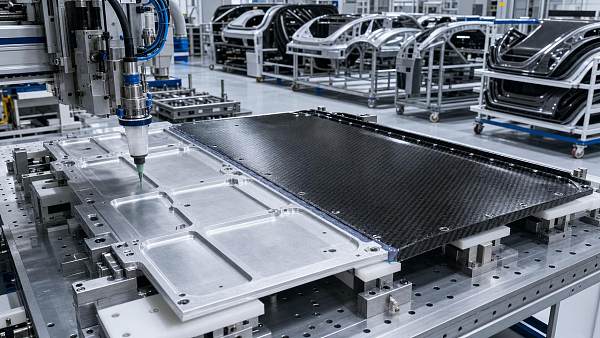
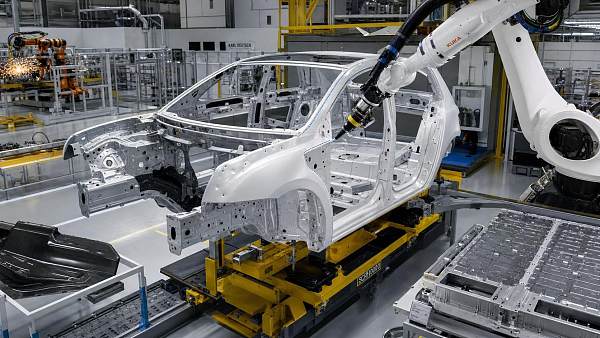
Lightweighting is no longer limited to replacing thick steel with thinner metal. Vehicle platforms now combine dissimilar materials, each selected for stiffness, impact behavior, corrosion resistance, cost, or design freedom.
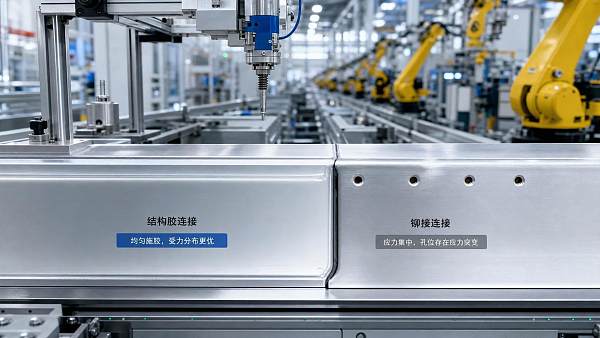
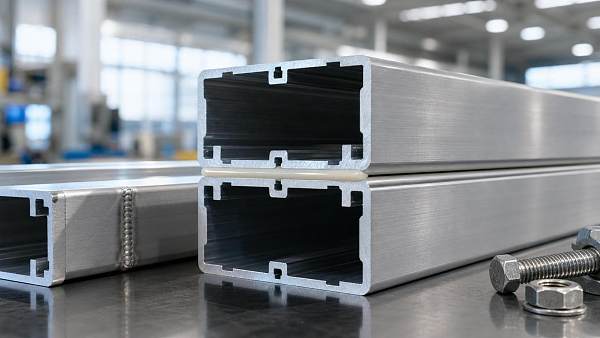
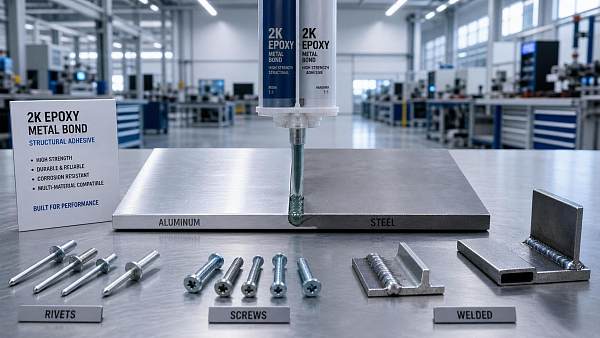
Mechanical fastening still has a role, but it can concentrate stress, add weight, and complicate joining between composites and metals. Welding is effective for some metal structures, yet it becomes restrictive when substrates are heat-sensitive or electrically dissimilar.
This is where automotive lightweight composite bonding stands out. Adhesives distribute loads across a wider area, help separate dissimilar materials, reduce local damage, and support cleaner exterior surfaces. In many body, battery, and interior structures, the bond line becomes part of the design itself.
The trade-off is not strength alone
A common mistake is to compare candidate adhesives by lap shear strength only. That number is useful, but lightweight composite assemblies rarely fail in a single, simple mode.
Bonded joints must tolerate mixed loading, including shear, peel, cleavage, vibration, and impact. They also face humidity, road salt, paint shop temperatures, and repeated thermal expansion mismatch.
For that reason, the key design question is broader: what performance profile is needed across the full service life and process route? A structural epoxy may offer excellent stiffness and heat resistance, while a tougher polyurethane may better absorb movement and impact. The better option depends on the load path, substrate pair, and assembly sequence.
Typical decision tensions
- Higher modulus improves rigidity, but may increase sensitivity to peel and differential expansion.
- Fast curing improves takt time, but can narrow process windows and raise exotherm concerns.
- Thicker bond lines absorb tolerance variation, but may reduce dimensional precision.
- Very high strength can look attractive, yet durability under moisture and heat often decides field performance.
Materials define the bonding challenge
Not all composite bonding problems are equal. Carbon fiber reinforced polymers behave differently from glass fiber laminates, and thermoset composites differ from thermoplastic ones in surface energy, contamination sensitivity, and repair strategy.
The metal side also changes the equation. Aluminum introduces oxide and galvanic concerns. High-strength steel may require strict pretreatment control. Coated substrates can improve corrosion resistance, yet they add another interface that must remain stable through curing and aging.
In automotive lightweight composite bonding, the adhesive selection cannot be isolated from surface preparation. Abrasion, plasma, primer, solvent cleaning, and controlled storage conditions often influence bond consistency as much as the chemistry itself.
Joint geometry often determines real performance
Adhesive choice is important, but geometry frequently decides whether the bond works in production. A good adhesive in a poor joint design still fails early.
Overlap length, bond line thickness, edge shape, flange stiffness, and load direction all affect stress distribution. Even small design changes can shift a joint from peel-dominated failure toward more stable shear loading.
This is especially relevant in automotive lightweight composite bonding because composite parts can be anisotropic. Fiber orientation may support one load path well but remain vulnerable in another. The adhesive joint has to work with that internal structure, not against it.
More advanced programs increasingly use simulation to compare joint options before tooling. Still, simulation depends on reliable material data, environmental aging inputs, and realistic manufacturing tolerances.
Design points worth checking early
- Whether the joint sees dominant shear or recurring peel loads.
- How bond thickness is controlled across curved or large-area parts.
- Whether gaps, beads, or spacers affect assembly precision.
- How the bonded area behaves after impact or repair operations.
Manufacturing speed changes the adhesive decision
In development reviews, one adhesive may win on lab performance and lose on factory economics. Cure time, mix ratio stability, dispensing repeatability, open time, and rework behavior all shape the true cost of bonding.
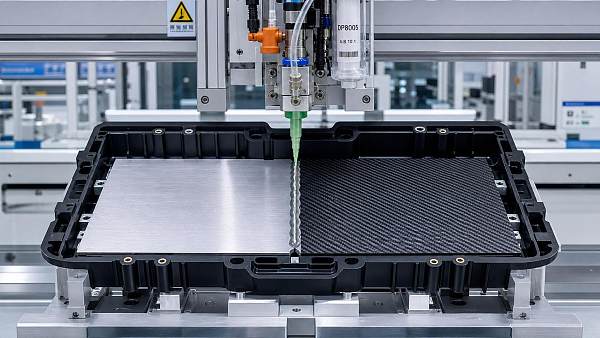
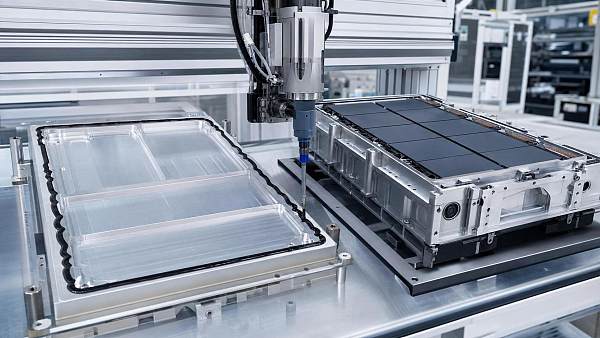
Two-component structural systems can deliver strong and durable bonds, yet they require controlled mixing and accurate metering. For automated lines, dispensing equipment quality becomes part of material qualification.
This is one reason platforms such as IADS are increasingly relevant. The decision is not only about polymer chemistry. It also involves jet valves, static mixers, automated dispensing systems, fluid control accuracy, and the ability to hold consistent bead geometry over long production runs.
In short, automotive lightweight composite bonding should be evaluated as a process system. Material data sheets do not show the full risk if line integration, cure verification, or maintenance planning are weak.
Crash, durability, and thermal management remain central
Lightweight structures still have to survive severe events. In crash-relevant areas, the bonded joint may need to absorb energy progressively rather than behave as a brittle interface.
Long-term durability is equally important. Road vibration, water ingress, freeze-thaw cycling, and underbody contamination can degrade weak interfaces over time. For composite-to-metal joints, thermal expansion mismatch adds another fatigue mechanism.
Battery electric vehicles add further complexity. Nearby assemblies may face elevated thermal loads, flame-retardant requirements, or stricter gap sealing needs. In those cases, automotive lightweight composite bonding intersects with adjacent material topics such as thermal potting compounds, encapsulants, and sealing systems.
The result is a wider evaluation frame. Bonding is not just a joining step; it can affect NVH, corrosion isolation, thermal pathways, and service integrity across the vehicle platform.
How to assess options in a practical way
A useful review starts with the application, not the adhesive brand. The first task is to map the joint environment, load case, substrate pair, assembly route, cure window, and inspection method.
From there, it becomes easier to screen candidate systems and reject poor fits quickly. This avoids the common problem of overvaluing one attractive property while missing a process limitation.
- Define whether weight reduction, crash response, cycle time, or durability is the primary constraint.
- Check compatibility with primers, coatings, and composite surface conditions actually used in production.
- Review cure behavior alongside dispensing precision, bead control, and automation readiness.
- Use environmental aging data, not only room-temperature test results.
- Compare inspection and repair options before finalizing the joint concept.
This broader method reflects how industrial bonding decisions are increasingly made across sectors. The same logic seen in electronics, wind components, rail structures, and battery assemblies now influences automotive lightweight composite bonding as well: performance, process control, and compliance have to be reviewed together.
Where the next evaluation should focus
The most reliable next step is to build a comparison matrix around real joint conditions. Include substrate combinations, target bond thickness, cycle limits, thermal exposure, crash expectations, and acceptable process variation.
That framework makes supplier data more meaningful and highlights where additional testing is needed. It also helps connect adhesive chemistry with dispensing hardware, quality assurance, and compliance requirements.
Automotive lightweight composite bonding delivers clear value when design freedom, lighter structures, and durable joining need to work together. The strongest decisions usually come from treating the bond as part of the full manufacturing system, then validating trade-offs before scale-up rather than after launch.
Recommended News
 Sep 10, 2026When do adhesive lightweighting applications make sense in aerospace?Adhesive lightweighting applications aerospace: learn when bonded joints reduce mass, improve load transfer, and support durable, certifiable aircraft designs.
 Aug 28, 2026How to select an epoxy rail vehicle structural adhesive for fatigue loadsEpoxy rail vehicle structural adhesive selection for fatigue loads: evaluate toughness, joint design, surface prep, curing, and rail compliance for durable bonds.
 Aug 25, 2026When does BGA underfill technology for PCB assembly reduce field failures?BGA underfill technology for pcb assembly reduces field failures when thermal cycling, shock, or board flex drive solder fatigue. Learn when it boosts reliability—and when it adds cost without real gains.
 Aug 11, 2026How to Choose Epoxy Adhesive Systems for Metal Bonding Under Heat and VibrationEpoxy adhesive systems for metal bonding: learn how to compare heat resistance, vibration durability, cure profile, and dispensing fit to choose a more reliable solution.
 Aug 10, 2026Industrial Adhesive Technology Analysis: What Drives Bond Strength and Process Stability?Industrial adhesive technology analysis reveals what drives bond strength and process stability—from chemistry and surface prep to curing and dispensing. Learn how to reduce failure risk.
 Aug 05, 2026How to Evaluate Lightweight Structural Bonding for Composites Under Dynamic LoadsLightweight structural bonding for composites under dynamic loads demands more than static strength. Explore fatigue, impact, surface prep, and process factors to choose durable, weight-saving bonds.
 Jul 14, 2026How to Choose Lightweight Structural Bonding for PlasticsLightweight structural bonding for plastics explained: compare adhesive types, joint design, process control, and durability factors to choose lighter, stronger, production-ready assemblies.
 Jul 13, 2026Choosing an Adhesive for Automotive Supplier ProgramsAdhesive for automotive supplier programs affects strength, process stability, compliance, and launch risk. Learn how to choose the right solution for reliable, scalable production.
 Jul 11, 2026Automotive Adhesive Bonding Process: Key Steps That Prevent Bond FailureAutomotive adhesive bonding process essentials: learn the key steps that prevent bond failure, improve durability, and optimize surface prep, dispensing, and cure control in automotive assembly.
 Jul 09, 2026When Structural Adhesives Can Replace Riveting in Metal AssembliesStructural adhesive replacement riveting: learn when bonded metal assemblies can outperform rivets in fatigue, corrosion control, weight reduction, and automation.
 Jul 08, 2026Best Ways to Bond Dissimilar Material Composites Without CrackingDissimilar material bonding composites: learn how to prevent cracks in metal, plastic, battery, and laminate assemblies with smarter adhesive, process, and stress-control strategies.
![]() Jul 07, 2026How Lap Shear Testing Reveals Structural Adhesive Joint Failure RisksLap shear structural adhesive joint testing reveals hidden failure risks before launch. Learn how process conditions, substrates, and aging affect joint reliability.
Jul 07, 2026How Lap Shear Testing Reveals Structural Adhesive Joint Failure RisksLap shear structural adhesive joint testing reveals hidden failure risks before launch. Learn how process conditions, substrates, and aging affect joint reliability. Jul 06, 2026Can Automotive Adhesive Replace Welding in Body Assembly?Automotive adhesive replacement for welding can improve multi-material body assembly with better sealing, lower corrosion risk, and more design flexibility. See where bonding beats welding.
 Jul 04, 2026Structural Bonding for Aluminum: When 2K Epoxy Outperforms Welding and FastenersStructural bonding for aluminum with 2K epoxy can outperform welding and fasteners by reducing distortion, corrosion risk, and weight—see where it delivers stronger ROI.
 Jul 03, 2026How to Choose Adhesive for Automotive Trim That Survives Heat and VibrationAdhesive for automotive trim selection made practical: learn how to choose solutions that resist heat, vibration, aging, and substrate mismatch for durable, cleaner-looking bonds.
 Jul 01, 2026Wind Blade Web Bonding: Common Gaps That Weaken StrengthWind blade web bonding failures often start with small gaps. Learn the most common causes, structural risks, and practical fixes to improve bond strength and reduce rework.
 Jul 01, 2026Wind Blade Bonding: How to Reduce Joint Failure RiskWind blade bonding best practices to reduce joint failure risk. Learn how adhesive choice, surface prep, bondline control, and curing improve blade reliability and long-term performance.
 Jun 30, 2026When Fatigue Resistant Structural Bonding Pays OffFatigue resistant structural bonding pays off when vibration, thermal cycling, and repeated loads make joint failure costly. Learn how it cuts lifecycle cost and improves reliability.
 Jun 30, 2026Lightweight Bonding Solutions for Aluminum: What Matters MostLightweight bonding solutions for aluminum: discover how to match adhesives, films, and tapes to load, heat, corrosion, and production speed for stronger, smarter assemblies.
 Jun 29, 2026ECHA Adds 3 SVHCs, Including a 2K Epoxy AdditiveECHA adds 3 SVHCs, including a 2K epoxy additive under REACH. Learn how the June 28 update affects EU adhesive exporters, importers, and Q3 2026 compliance planning.
 Jun 28, 2026Adhesive Joint Evaluation: Key Tests for Strength and ReliabilityAdhesive joint evaluation explains the key tests for bond strength and long-term reliability, from shear and peel to fatigue and environmental aging—essential reading for better quality and safer products.
 Jun 28, 2026ECHA Adds 3 SVHCs, Including a Key 2K Epoxy AdditiveECHA adds 3 SVHCs, including CAS 124-40-3, a key 2K epoxy additive. See how the 2026 update impacts EU exports, SCIP obligations, and adhesive supply chain compliance.
 Jun 27, 20262K Epoxy Adhesive Systems for Metal Bonding Compared2K epoxy adhesive systems for metal bonding compared: explore strength, cure speed, corrosion resistance, dispensing fit, and total cost to choose the right solution for metal assembly.
 Jun 27, 2026Fatigue Resistant Wind Blade Bonding: Key Failure RisksFatigue resistant wind blade bonding: uncover key failure risks across blade zones, process control, curing, and fatigue life—learn how to improve durability and reduce costly rework.



Editor's Selection
The Archive Newsletter
Critical industrial intelligence delivered every Tuesday. Peer-reviewed summaries of the week's most impactful logistics and market shifts.