Electronic Adhesives Selection for Heat and Vibration Loads
by
Published
Views:
Selecting electronic adhesives for assemblies exposed to heat and vibration is a critical step for technical evaluators balancing reliability, process compatibility, and long-term performance.
From chip packaging to power modules and sensor housings, the right adhesive must resist thermal cycling, absorb mechanical stress, and protect sensitive components without compromising precision manufacturing or thermal management.
What Technical Evaluators Really Need to Decide First
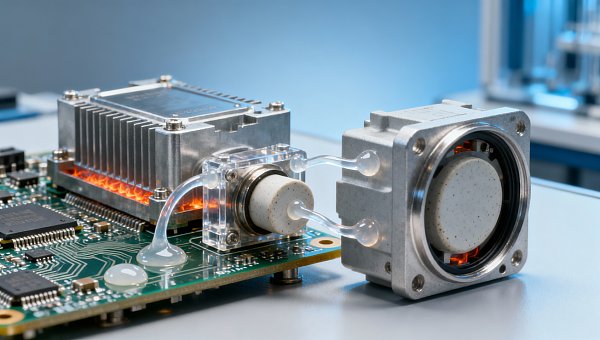
The core search intent behind “electronic adhesives” in this context is not simply learning adhesive types. It is making a defensible material selection for products facing combined thermal and mechanical loads.
Technical evaluators usually want to know which adhesive chemistry is most suitable, what failure risks matter most, and how to compare options without relying on supplier claims alone.
The most important early judgment is this: there is no universally best electronic adhesive for heat and vibration. Selection depends on matching stress profile, substrate combination, process window, and reliability target.
If an assembly sees repeated temperature swings, differential expansion between materials often drives failure faster than static temperature resistance alone. If it sees continuous vibration, modulus and fatigue behavior become equally important.
That means the right choice is usually the adhesive that balances adhesion, flexibility, thermal conductivity, cure behavior, and manufacturability rather than maximizing one headline property such as strength.
Why Heat and Vibration Create a Different Adhesive Selection Problem
Electronic assemblies fail differently from large structural bonds. Components are smaller, tolerances are tighter, and the adhesive often performs several roles at once, including bonding, sealing, damping, insulation, and heat transfer.
Heat creates expansion mismatch. Silicon, aluminum, copper, ceramics, FR-4, stainless steel, and engineering plastics all expand at different rates. The adhesive sits between them and must absorb that mismatch over time.
Vibration adds cyclic stress. In automotive electronics, industrial controls, rail systems, telecom modules, and portable devices, repeated movement can cause crack initiation, edge lift, delamination, or solder joint stress transfer.
When heat and vibration act together, the challenge becomes more severe. Elevated temperature can soften some materials, reduce cohesive strength, and accelerate aging, while vibration amplifies damage at interfaces and corners.
For evaluators, this means data sheets are only a starting point. A high lap shear number at room temperature says very little about long-term reliability under thermal cycling and random vibration.
Which Electronic Adhesive Families Are Commonly Considered
Most technical evaluations begin with a shortlist of adhesive chemistries. In electronics, the most common options for heat and vibration environments are epoxy, silicone, polyurethane, acrylic, and UV-curable systems.
Epoxy adhesives are often chosen when high strength, good chemical resistance, dimensional stability, and strong adhesion to metals and ceramics are needed. They are common in potting, bonding, underfill, and structural electronic assembly.
However, many epoxies are relatively rigid after cure. That rigidity can be beneficial for precise positioning, but it may also increase stress transfer when bonded materials have very different coefficients of thermal expansion.
Silicone adhesives are often preferred when flexibility, thermal stability, and long-term resistance to thermal cycling are critical. They perform well in harsh temperature environments and are widely used in sensors, power electronics, and sealing.
Their main tradeoff is lower structural strength compared with many epoxies. Some silicones also need careful review for outgassing, contamination sensitivity, and adhesion to specific low-surface-energy substrates.
Polyurethane systems can offer a useful middle ground. They usually provide better flexibility than epoxy and stronger mechanical bonding than very soft elastomers, making them attractive in potting and shock protection applications.
Acrylic and modified acrylic adhesives are selected in some electronic assemblies for faster cure and good bonding to challenging substrates. Still, they are less commonly the first choice for high-temperature electronic reliability compared with epoxy or silicone.
UV-curable adhesives are ideal where rapid inline assembly, optical access, and precision dispensing are priorities. Yet for heat and vibration loads, evaluators must examine shadow cure limitations, depth of cure, and long-term thermal durability.
How to Match Adhesive Properties to Real Failure Risks
Technical evaluators get better results when they start from likely failure modes rather than from chemistry names. The best selection process asks what must not fail, where stress concentrates, and how the assembly ages in service.
If the main risk is cracking from thermal cycling, lower modulus and higher elongation may be more valuable than maximum strength. A slightly more compliant adhesive can reduce stress at the bonded interface.
If the main risk is component movement under continuous vibration, you may need stronger cohesive integrity, higher fatigue resistance, and stable adhesion after humidity and temperature exposure.
When the adhesive also carries thermal management responsibility, thermal conductivity becomes important, but only in context. A highly filled thermal adhesive may improve heat flow while changing viscosity, dispensability, and stress behavior.
Electrical properties also matter. Some applications need insulation, others require controlled conductivity, and many sensitive assemblies demand low ionic contamination to avoid corrosion or leakage over time.
Another overlooked factor is cure shrinkage. In tightly toleranced electronics, shrinkage can pull on components, distort alignment, or create residual stress before the product even enters field service.
For this reason, the most useful comparison table is not one that lists all supplier claims. It is one that maps each candidate adhesive against the application’s top five failure risks.
What Properties Matter Most in Heat-and-Vibration Environments
Several material properties consistently matter more than headline bond strength when selecting electronic adhesives for demanding thermal and mechanical conditions.
Glass transition temperature, or Tg, is critical for many epoxy systems. If operating temperature approaches or exceeds Tg, stiffness and mechanical performance can change significantly, affecting long-term durability.
Elastic modulus indicates how stiff the cured adhesive is. Higher modulus can support precise component retention, but lower modulus can better absorb differential movement and vibration-induced strain.
Elongation at break helps indicate whether the adhesive can tolerate deformation without cracking. It is especially useful when bonding dissimilar materials or potting fragile electronics subject to shock.
Thermal conductivity matters in power electronics, LED modules, battery electronics, and compact enclosures. But evaluators must confirm whether the improvement is meaningful at the actual bond-line thickness used in production.
Coefficient of thermal expansion, or CTE, is another key factor. Adhesives with extreme CTE mismatch versus the bonded parts can create high interface stress during thermal cycling.
Adhesion durability after moisture, salt spray, thermal shock, or fluid exposure should also be reviewed. A bond that performs well in dry lab conditions may degrade quickly in outdoor or automotive environments.
Finally, viscosity and thixotropy are not just process concerns. They affect bead shape, void formation, wetting behavior, and coverage consistency, which directly influence reliability in the finished product.
How Process Compatibility Can Eliminate Good Materials from the Shortlist
Many promising electronic adhesives fail evaluation not because the material is weak, but because the process cannot control it consistently at production scale.
Dispensing method matters. Needle dispense, jetting, screen printing, and automated volumetric systems each impose different requirements on viscosity stability, filler size, pot life, and air entrapment behavior.
Cure mechanism is equally important. One-part heat cures may simplify metering but require thermal budget availability. Two-part systems increase flexibility in formulation choice but add mixing and ratio-control risk.
UV systems can dramatically improve takt time, yet shadowed areas may remain undercured unless secondary moisture, heat, or dual-cure mechanisms are built into the process design.
For highly filled thermal materials, sedimentation, pumpability, and abrasion inside dispensing equipment should be considered early. These issues affect not only throughput, but also bond consistency and maintenance cost.
Reworkability may also matter. In some electronics sectors, an irreversible high-strength adhesive creates downstream service challenges that outweigh its performance advantages.
Technical evaluators should therefore screen every candidate using two questions: can the material survive the environment, and can the factory apply it repeatedly within tolerance?
A Practical Evaluation Framework for Comparing Electronic Adhesives
A structured evaluation framework helps technical teams avoid subjective decisions. In most cases, a staged approach is more reliable than choosing from data sheets or isolated sample builds.
First, define the real operating envelope: peak temperature, dwell time, thermal cycling range, vibration spectrum, humidity exposure, and expected service life. Without this, comparison criteria remain vague.
Second, document substrates, bond-line geometry, component mass, allowable movement, and thermal path requirements. These details determine whether flexibility, conductivity, or positional stiffness should dominate.
Third, identify non-negotiable process constraints. These may include cure time, dispensing speed, maximum oven temperature, allowable VOC level, cleanroom compatibility, and line automation requirements.
Fourth, create a weighted scorecard. Typical categories include adhesion to each substrate, thermal cycling reliability, vibration durability, thermal management performance, dispensing stability, and total processing risk.
Fifth, validate with application-relevant testing instead of generic tests alone. Thermal shock, temperature-humidity bias, powered aging, vibration under load, and cross-section inspection usually reveal more than room-temperature coupons.
Sixth, involve both reliability and manufacturing teams in the review. An adhesive that passes laboratory screening but creates high void rates or unstable cure in production is not a successful choice.
This framework gives evaluators a traceable basis for recommendation, which is especially valuable when decisions must be justified to quality, sourcing, customers, or regulatory stakeholders.
Common Selection Mistakes That Lead to Field Failures
One common mistake is choosing the strongest adhesive on paper. In electronics, the highest strength material can be the wrong choice if it transfers too much stress to brittle components.
Another mistake is treating thermal conductivity as a standalone target. A thermally conductive adhesive with poor wetting, high void content, or unsuitable modulus may worsen total system performance.
Some teams also underestimate substrate preparation. Surface energy, contamination, oxide layers, and mold-release residues can sharply reduce adhesion, even when the chemistry seems appropriate.
Ignoring cure profile sensitivity is another risk. Under-cure, over-cure, or uneven cure can change modulus, adhesion, and outgassing behavior, creating reliability scatter that is difficult to diagnose later.
Many evaluations also rely too heavily on supplier standard test data. Useful selection requires testing with actual geometries, realistic thicknesses, and true operating stresses.
Finally, teams sometimes separate adhesive choice from dispensing strategy. In practice, material and application method form one system, and reliability depends on both working together.
Where the Best Choice Usually Lands in Real Applications
For rigid component bonding with moderate temperature exposure and strong substrate adhesion needs, epoxies often remain the leading choice, especially where dimensional stability and chemical resistance matter.
For power electronics, sensor modules, and assemblies exposed to wide thermal cycling with continuous vibration, silicones frequently perform better because of their flexibility and thermal aging resistance.
For potting and encapsulation where shock absorption is important and process economics matter, polyurethane or flexible epoxy systems may provide the most balanced result.
For fast, high-volume precision assembly, UV-curable adhesives can be highly effective, but only when exposure geometry and reliability demands fit the cure mechanism.
In many advanced applications, the best answer is not a single chemistry category but a tuned formulation within that category, supported by controlled dispensing and application-specific reliability testing.
Conclusion: A Better Way to Select Electronic Adhesives
For technical evaluators, selecting electronic adhesives for heat and vibration loads is fundamentally a reliability engineering decision, not a simple materials comparison exercise.
The right adhesive is the one that manages thermal expansion mismatch, survives cyclic mechanical stress, fits the manufacturing process, and continues to protect performance over the intended life of the product.
In practical terms, that usually means starting with failure modes, narrowing candidates by chemistry and process fit, and validating with realistic testing rather than relying on brochure-level specifications.
When electronic adhesives are evaluated this way, teams make better tradeoffs, reduce field risk, and choose materials that support both precision assembly and long-term operational stability.
Recommended News
 Sep 10, 2026When do adhesive lightweighting applications make sense in aerospace?Adhesive lightweighting applications aerospace: learn when bonded joints reduce mass, improve load transfer, and support durable, certifiable aircraft designs.
 Aug 28, 2026How to select an epoxy rail vehicle structural adhesive for fatigue loadsEpoxy rail vehicle structural adhesive selection for fatigue loads: evaluate toughness, joint design, surface prep, curing, and rail compliance for durable bonds.
 Aug 25, 2026When does BGA underfill technology for PCB assembly reduce field failures?BGA underfill technology for pcb assembly reduces field failures when thermal cycling, shock, or board flex drive solder fatigue. Learn when it boosts reliability—and when it adds cost without real gains.
 Aug 11, 2026How to Choose Epoxy Adhesive Systems for Metal Bonding Under Heat and VibrationEpoxy adhesive systems for metal bonding: learn how to compare heat resistance, vibration durability, cure profile, and dispensing fit to choose a more reliable solution.
 Aug 10, 2026Industrial Adhesive Technology Analysis: What Drives Bond Strength and Process Stability?Industrial adhesive technology analysis reveals what drives bond strength and process stability—from chemistry and surface prep to curing and dispensing. Learn how to reduce failure risk.
 Aug 05, 2026How to Evaluate Lightweight Structural Bonding for Composites Under Dynamic LoadsLightweight structural bonding for composites under dynamic loads demands more than static strength. Explore fatigue, impact, surface prep, and process factors to choose durable, weight-saving bonds.
 Jul 14, 2026How to Choose Lightweight Structural Bonding for PlasticsLightweight structural bonding for plastics explained: compare adhesive types, joint design, process control, and durability factors to choose lighter, stronger, production-ready assemblies.
 Jul 13, 2026Choosing an Adhesive for Automotive Supplier ProgramsAdhesive for automotive supplier programs affects strength, process stability, compliance, and launch risk. Learn how to choose the right solution for reliable, scalable production.
 Jul 11, 2026Automotive Adhesive Bonding Process: Key Steps That Prevent Bond FailureAutomotive adhesive bonding process essentials: learn the key steps that prevent bond failure, improve durability, and optimize surface prep, dispensing, and cure control in automotive assembly.
 Jul 09, 2026When Structural Adhesives Can Replace Riveting in Metal AssembliesStructural adhesive replacement riveting: learn when bonded metal assemblies can outperform rivets in fatigue, corrosion control, weight reduction, and automation.
 Jul 08, 2026Best Ways to Bond Dissimilar Material Composites Without CrackingDissimilar material bonding composites: learn how to prevent cracks in metal, plastic, battery, and laminate assemblies with smarter adhesive, process, and stress-control strategies.
![]() Jul 07, 2026How Lap Shear Testing Reveals Structural Adhesive Joint Failure RisksLap shear structural adhesive joint testing reveals hidden failure risks before launch. Learn how process conditions, substrates, and aging affect joint reliability.
Jul 07, 2026How Lap Shear Testing Reveals Structural Adhesive Joint Failure RisksLap shear structural adhesive joint testing reveals hidden failure risks before launch. Learn how process conditions, substrates, and aging affect joint reliability. Jul 06, 2026Can Automotive Adhesive Replace Welding in Body Assembly?Automotive adhesive replacement for welding can improve multi-material body assembly with better sealing, lower corrosion risk, and more design flexibility. See where bonding beats welding.
 Jul 04, 2026Structural Bonding for Aluminum: When 2K Epoxy Outperforms Welding and FastenersStructural bonding for aluminum with 2K epoxy can outperform welding and fasteners by reducing distortion, corrosion risk, and weight—see where it delivers stronger ROI.
 Jul 03, 2026How to Choose Adhesive for Automotive Trim That Survives Heat and VibrationAdhesive for automotive trim selection made practical: learn how to choose solutions that resist heat, vibration, aging, and substrate mismatch for durable, cleaner-looking bonds.
 Jul 01, 2026Wind Blade Web Bonding: Common Gaps That Weaken StrengthWind blade web bonding failures often start with small gaps. Learn the most common causes, structural risks, and practical fixes to improve bond strength and reduce rework.
 Jul 01, 2026Wind Blade Bonding: How to Reduce Joint Failure RiskWind blade bonding best practices to reduce joint failure risk. Learn how adhesive choice, surface prep, bondline control, and curing improve blade reliability and long-term performance.
 Jun 30, 2026When Fatigue Resistant Structural Bonding Pays OffFatigue resistant structural bonding pays off when vibration, thermal cycling, and repeated loads make joint failure costly. Learn how it cuts lifecycle cost and improves reliability.
 Jun 30, 2026Lightweight Bonding Solutions for Aluminum: What Matters MostLightweight bonding solutions for aluminum: discover how to match adhesives, films, and tapes to load, heat, corrosion, and production speed for stronger, smarter assemblies.
 Jun 29, 2026ECHA Adds 3 SVHCs, Including a 2K Epoxy AdditiveECHA adds 3 SVHCs, including a 2K epoxy additive under REACH. Learn how the June 28 update affects EU adhesive exporters, importers, and Q3 2026 compliance planning.
 Jun 28, 2026Adhesive Joint Evaluation: Key Tests for Strength and ReliabilityAdhesive joint evaluation explains the key tests for bond strength and long-term reliability, from shear and peel to fatigue and environmental aging—essential reading for better quality and safer products.
 Jun 28, 2026ECHA Adds 3 SVHCs, Including a Key 2K Epoxy AdditiveECHA adds 3 SVHCs, including CAS 124-40-3, a key 2K epoxy additive. See how the 2026 update impacts EU exports, SCIP obligations, and adhesive supply chain compliance.
 Jun 27, 20262K Epoxy Adhesive Systems for Metal Bonding Compared2K epoxy adhesive systems for metal bonding compared: explore strength, cure speed, corrosion resistance, dispensing fit, and total cost to choose the right solution for metal assembly.
 Jun 27, 2026Fatigue Resistant Wind Blade Bonding: Key Failure RisksFatigue resistant wind blade bonding: uncover key failure risks across blade zones, process control, curing, and fatigue life—learn how to improve durability and reduce costly rework.


Editor's Selection
The Archive Newsletter
Critical industrial intelligence delivered every Tuesday. Peer-reviewed summaries of the week's most impactful logistics and market shifts.