
How to Evaluate Adhesive Bond Strength Without Overtesting
by
Published
Views:
Adhesive bond strength matters only when the test reflects service reality. In many projects, overtesting creates noise instead of confidence, especially when substrates, cure profiles, and joint geometry already narrow the real risk window.
A useful adhesive bond evaluation strategy compares materials and processes without turning every screening task into a full qualification program. That distinction is now more important across electronics, automotive, EV battery assembly, rail, packaging, and lightweight structures.
In practice, the strongest data set is not the largest one. It is the one that connects bond strength, failure mode, dispensing consistency, curing behavior, and application demands in a way that supports a clear engineering decision.
What adhesive bond evaluation should really measure
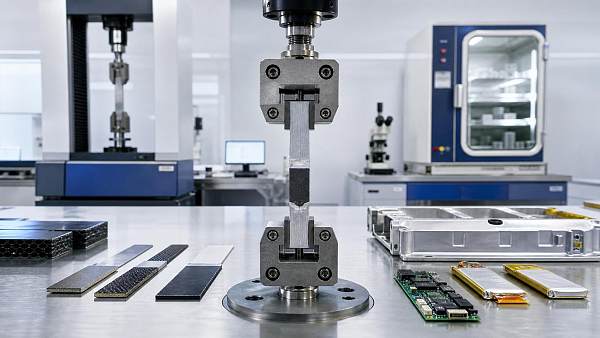
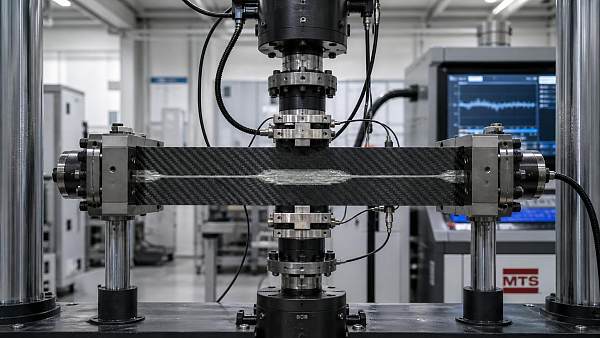
At its core, adhesive bond evaluation is not just a number from a lap shear machine. It is a structured check of whether a bonded joint can survive its actual mechanical, thermal, chemical, and production environment.
That means bond strength should be read together with surface preparation, adhesive thickness, cure completion, and the way force enters the joint. A high result from the wrong test can still mislead a program.
This is especially relevant in sectors covered by IADS, where structural adhesives, UV glues, underfills, potting compounds, tapes, and hot melt films work under very different stress patterns.
For example, a camera module adhesive may care more about precision, cure speed, and low-stress fixation. A wind blade bond line may care more about fatigue, peel resistance, and environmental aging.
Why overtesting often weakens decision quality
Too many test combinations can slow supplier comparison, consume samples, and blur priorities. When every condition is treated as critical, technical teams often lose sight of the few variables that truly drive field performance.
Overtesting also increases the chance of false negatives. A material may fail an unrealistic setup, then get rejected despite being fully suitable for the intended bond line, cure schedule, and load case.
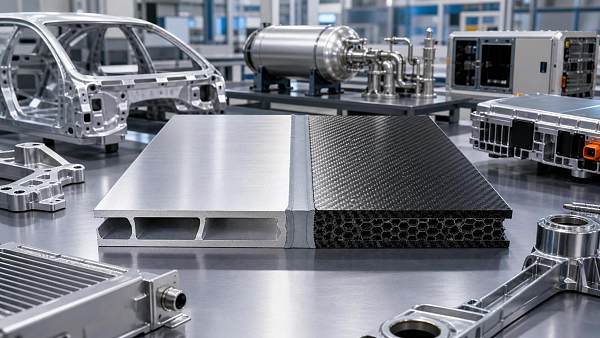
This issue appears often when dissimilar materials are involved. Bonding aluminum to composite, glass to plastic, or cell components to thermal interface structures requires context, not just broad test volume.
A better path is to define the joint function first. Is the adhesive carrying structure, sealing against moisture, fixing components during assembly, damping vibration, or managing heat around sensitive electronics?
Start with joint function, not test catalogues
Efficient adhesive bond evaluation begins by classifying the bond into a few decision layers. That step usually removes unnecessary tests before the first sample is even prepared.
This kind of filtering is practical across the IADS landscape, from 2K epoxy structural adhesives to UV-curing materials, hot melt films, silicone encapsulants, and automated dispensing systems.
Match the method to the real failure risk
Not every bonded joint fails in pure shear. Many fail at edges, corners, thin sections, or interfaces with contamination, cure shadow, or uneven adhesive volume.
That is why adhesive bond evaluation should prioritize likely failure modes instead of defaulting to familiar standards. The most efficient method is often the one that best exposes the known weakness.
Typical decision points
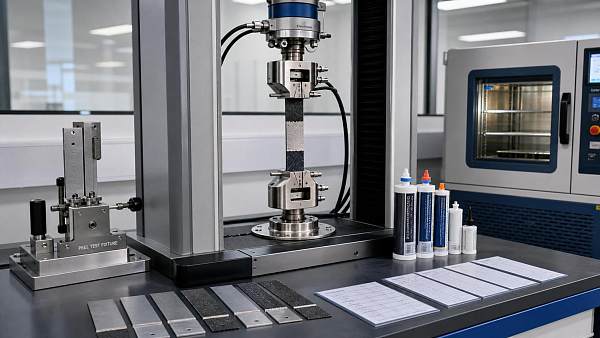
- Use lap shear when the joint mainly carries overlapping force through a stable bond area.
- Use peel-oriented methods when flexible substrates, films, tapes, or edge-lift risks dominate.
- Add cleavage or wedge-style checks when brittle interfaces or crack growth matter.
- Include thermal cycling or humidity exposure when the application sees weathering, coolant, or temperature swing.
- Check failure mode carefully, because adhesive, cohesive, and substrate failure tell very different stories.
A lower strength result with cohesive failure may be more acceptable than a higher result with interfacial failure after humidity aging. Context changes the meaning of the number.
Process variables can distort bond strength data
Many bond failures originate in process variation, not polymer chemistry alone. Dispensing accuracy, static mixing quality, open time, UV dose, and bond line thickness all shape measured performance.
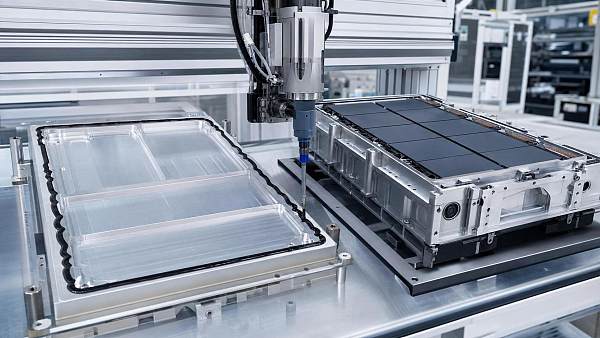
This matters in automated production where piezoelectric jet valves, multi-axis platforms, and fluid control systems must deliver repeatable volume. A material may look inconsistent only because the process window is unstable.
For that reason, adhesive bond evaluation should include a simple process capability view. If cure energy varies or mixing ratio drifts, additional mechanical tests may not solve the real problem.
High-impact checks before expanding test scope
- Confirm substrate cleanliness and surface energy.
- Verify adhesive age, storage history, and batch condition.
- Measure bond line thickness and volume consistency.
- Check cure completion by time, temperature, or UV intensity.
- Compare operator-built and automated samples if scale-up is planned.
Different applications need different evidence
A smart adhesive bond evaluation framework recognizes that evidence thresholds vary by application. The goal is not to reduce rigor. It is to place rigor where consequence is highest.
In consumer electronics, evaluation often balances miniaturization, fast cure, capillary behavior, and low-stress bonding. In EV battery systems, thermal conductivity, vibration tolerance, flame behavior, and safety aging become part of the decision.
For packaging or lamination, dwell time, surface variability, line speed, and clean processing may matter more than peak structural strength. In transport applications, long-term durability becomes harder to ignore.
This broader view is why platforms like IADS are useful. Bond strength data gains value when it is connected with curing systems, dispensing precision, compliance needs, and production cost.
A practical sequence for efficient evaluation
A lean sequence usually works better than a giant matrix. It gives quick elimination, then deeper verification only where risk justifies it.
A useful progression
- Screen candidate materials on the real substrate pair.
- Run one or two mechanical methods tied to the joint function.
- Review failure mode before adding more conditions.
- Introduce only the most relevant aging exposure.
- Check process repeatability with controlled dispensing and cure settings.
- Expand to broader qualification only after the first evidence is coherent.
This sequence keeps adhesive bond evaluation grounded in decision quality. It also helps compare suppliers fairly, especially when different chemistries use different cure mechanisms or bond line recommendations.
What to document before the next decision
Good evaluation ends with a clearer question, not just a thicker report. The most useful record captures substrate condition, test method, cure state, environmental exposure, failure mode, and process settings together.
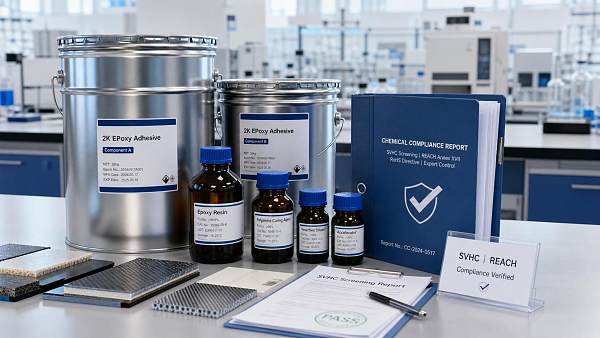
That record becomes more valuable over time. It supports requalification, supplier review, compliance checks, and future application matching across adhesives, tapes, encapsulants, and dispensing platforms.
When adhesive bond evaluation is treated as a decision tool rather than a data collection exercise, teams can move faster with less uncertainty. The next step is usually simple: define the real joint risk, remove nonessential tests, and build the test plan around service conditions that truly matter.
Recommended News
 Sep 18, 2026How bonding applications in wind energy prevent fatigue-related failuresBonding applications in wind energy help prevent fatigue-related failures through durable joint design, crack resistance, cure control, and reliable production processes.
 Sep 19, 2026Lightweight Adhesives for EVs: Reducing Mass Without Compromising Joint StrengthLight weighting adhesives for EVs help reduce vehicle mass while maintaining joint strength, durability, and production efficiency. Explore smarter bonding solutions for EV designs.
 Sep 15, 2026How fluid control engineering prevents voids in 2K epoxy sealantsFluid control engineering for sealants helps prevent voids in 2K epoxy systems. Explore practical methods for stable metering, mixing, pressure control, and air-free cavity filling.
 Sep 10, 2026When do adhesive lightweighting applications make sense in aerospace?Adhesive lightweighting applications aerospace: learn when bonded joints reduce mass, improve load transfer, and support durable, certifiable aircraft designs.
 Aug 28, 2026How to select an epoxy rail vehicle structural adhesive for fatigue loadsEpoxy rail vehicle structural adhesive selection for fatigue loads: evaluate toughness, joint design, surface prep, curing, and rail compliance for durable bonds.
 Aug 25, 2026When does BGA underfill technology for PCB assembly reduce field failures?BGA underfill technology for pcb assembly reduces field failures when thermal cycling, shock, or board flex drive solder fatigue. Learn when it boosts reliability—and when it adds cost without real gains.
 Aug 11, 2026How to Choose Epoxy Adhesive Systems for Metal Bonding Under Heat and VibrationEpoxy adhesive systems for metal bonding: learn how to compare heat resistance, vibration durability, cure profile, and dispensing fit to choose a more reliable solution.
 Aug 10, 2026Industrial Adhesive Technology Analysis: What Drives Bond Strength and Process Stability?Industrial adhesive technology analysis reveals what drives bond strength and process stability—from chemistry and surface prep to curing and dispensing. Learn how to reduce failure risk.
 Aug 05, 2026How to Evaluate Lightweight Structural Bonding for Composites Under Dynamic LoadsLightweight structural bonding for composites under dynamic loads demands more than static strength. Explore fatigue, impact, surface prep, and process factors to choose durable, weight-saving bonds.
 Jul 14, 2026How to Choose Lightweight Structural Bonding for PlasticsLightweight structural bonding for plastics explained: compare adhesive types, joint design, process control, and durability factors to choose lighter, stronger, production-ready assemblies.
 Jul 13, 2026Choosing an Adhesive for Automotive Supplier ProgramsAdhesive for automotive supplier programs affects strength, process stability, compliance, and launch risk. Learn how to choose the right solution for reliable, scalable production.
 Jul 11, 2026Automotive Adhesive Bonding Process: Key Steps That Prevent Bond FailureAutomotive adhesive bonding process essentials: learn the key steps that prevent bond failure, improve durability, and optimize surface prep, dispensing, and cure control in automotive assembly.
 Jul 09, 2026When Structural Adhesives Can Replace Riveting in Metal AssembliesStructural adhesive replacement riveting: learn when bonded metal assemblies can outperform rivets in fatigue, corrosion control, weight reduction, and automation.
 Jul 08, 2026Best Ways to Bond Dissimilar Material Composites Without CrackingDissimilar material bonding composites: learn how to prevent cracks in metal, plastic, battery, and laminate assemblies with smarter adhesive, process, and stress-control strategies.
![]() Jul 07, 2026How Lap Shear Testing Reveals Structural Adhesive Joint Failure RisksLap shear structural adhesive joint testing reveals hidden failure risks before launch. Learn how process conditions, substrates, and aging affect joint reliability.
Jul 07, 2026How Lap Shear Testing Reveals Structural Adhesive Joint Failure RisksLap shear structural adhesive joint testing reveals hidden failure risks before launch. Learn how process conditions, substrates, and aging affect joint reliability. Jul 06, 2026Can Automotive Adhesive Replace Welding in Body Assembly?Automotive adhesive replacement for welding can improve multi-material body assembly with better sealing, lower corrosion risk, and more design flexibility. See where bonding beats welding.
 Jul 04, 2026Structural Bonding for Aluminum: When 2K Epoxy Outperforms Welding and FastenersStructural bonding for aluminum with 2K epoxy can outperform welding and fasteners by reducing distortion, corrosion risk, and weight—see where it delivers stronger ROI.
 Jul 03, 2026How to Choose Adhesive for Automotive Trim That Survives Heat and VibrationAdhesive for automotive trim selection made practical: learn how to choose solutions that resist heat, vibration, aging, and substrate mismatch for durable, cleaner-looking bonds.
 Jul 01, 2026Wind Blade Web Bonding: Common Gaps That Weaken StrengthWind blade web bonding failures often start with small gaps. Learn the most common causes, structural risks, and practical fixes to improve bond strength and reduce rework.
 Jul 01, 2026Wind Blade Bonding: How to Reduce Joint Failure RiskWind blade bonding best practices to reduce joint failure risk. Learn how adhesive choice, surface prep, bondline control, and curing improve blade reliability and long-term performance.
 Jun 30, 2026When Fatigue Resistant Structural Bonding Pays OffFatigue resistant structural bonding pays off when vibration, thermal cycling, and repeated loads make joint failure costly. Learn how it cuts lifecycle cost and improves reliability.
 Jun 30, 2026Lightweight Bonding Solutions for Aluminum: What Matters MostLightweight bonding solutions for aluminum: discover how to match adhesives, films, and tapes to load, heat, corrosion, and production speed for stronger, smarter assemblies.
 Jun 29, 2026ECHA Adds 3 SVHCs, Including a 2K Epoxy AdditiveECHA adds 3 SVHCs, including a 2K epoxy additive under REACH. Learn how the June 28 update affects EU adhesive exporters, importers, and Q3 2026 compliance planning.
 Jun 28, 2026Adhesive Joint Evaluation: Key Tests for Strength and ReliabilityAdhesive joint evaluation explains the key tests for bond strength and long-term reliability, from shear and peel to fatigue and environmental aging—essential reading for better quality and safer products.





Editor's Selection
The Archive Newsletter
Critical industrial intelligence delivered every Tuesday. Peer-reviewed summaries of the week's most impactful logistics and market shifts.