Is Adhesive Bonding Replacing Welding in Automotive Assembly?
by
Published
Views:
As vehicle programs shift toward lighter bodies, mixed materials, and faster line balancing, adhesive bonding replacing welding in automotive assembly is no longer a niche discussion. It now sits at the center of cost, durability, corrosion, and EV manufacturing decisions. The real question is not whether adhesives will eliminate welding everywhere, but where bonded joining delivers better structural and commercial results than heat-based methods.
Why the Shift Is Gaining Momentum
Automotive assembly used to depend heavily on spot welding because steel dominated body structures and joining speed mattered most. That logic changes when aluminum, high-strength steel, composites, coated metals, and battery enclosures enter the same platform.
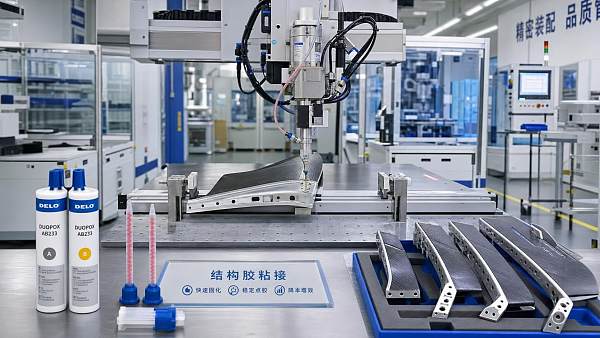
Welding remains effective for many load-bearing joints, yet it also introduces heat distortion, coating damage, and local stress concentration. Adhesive bonding spreads loads across a wider area and supports dissimilar material bonding without melting the substrate.
This is one reason adhesive bonding replacing welding in automotive programs is receiving serious board-level attention, especially in EV architecture and lightweight body design.
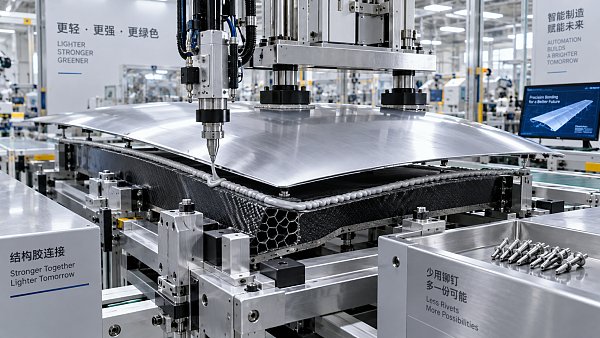
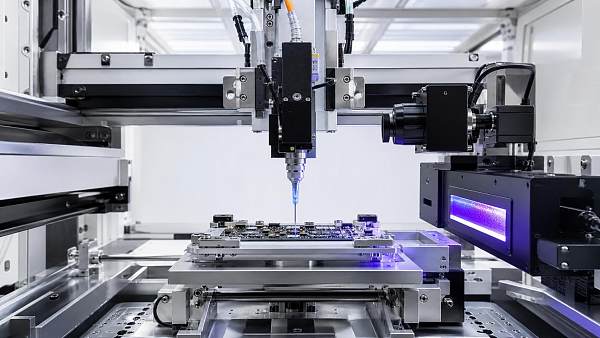
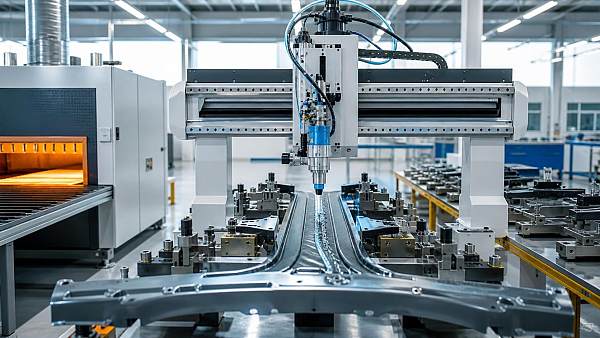
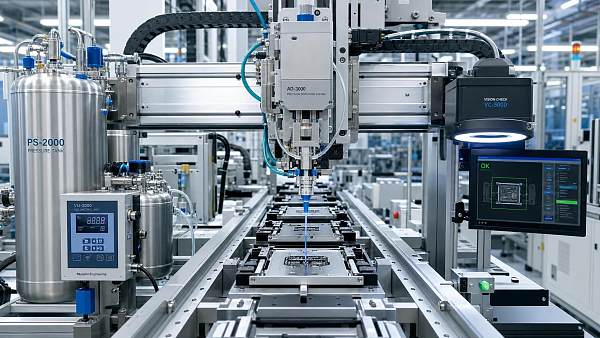
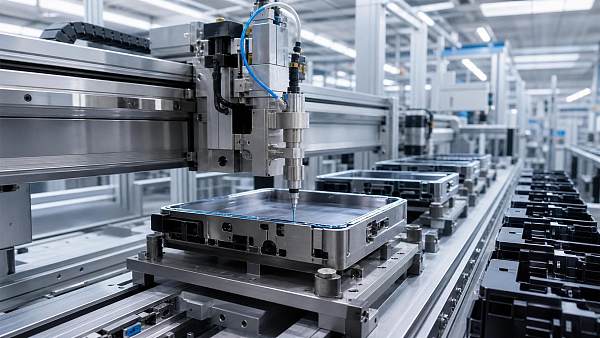
A useful visual reference fits here.
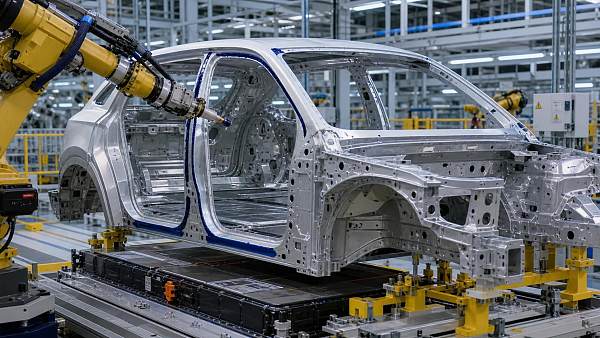
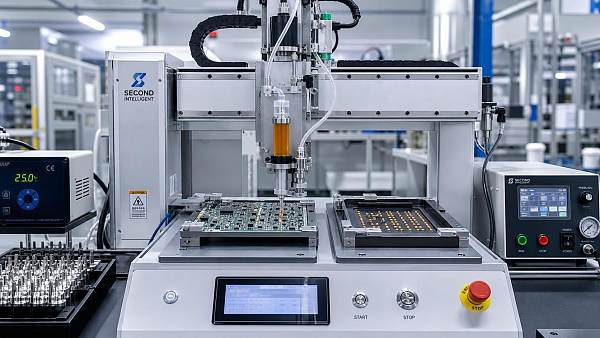
The move is also tied to automation. Modern dispensing systems, jet valves, static mixers, and process controls make structural adhesive application more repeatable than many older assumptions suggest.
What Replacing Welding Really Means
In practice, adhesive bonding replacing welding in automotive assembly rarely means a full one-to-one swap across the vehicle. More often, it means selective replacement, hybrid joining, or redesign of the joint itself.
A structural adhesive can work alone in some panels, flanges, lids, and closures. In other cases, it works with rivets, clinching, screws, or limited weld points to improve stiffness and fatigue resistance.
That distinction matters because many disappointing results come from trying to insert adhesive into a weld-designed joint without redesigning gap control, surface preparation, cure profile, or inspection logic.
The performance logic behind bonded joints
Structural adhesives do not behave like metal fusion joints. Their value comes from stress distribution, damping, sealing, corrosion isolation, and compatibility with thin or coated substrates.
For body-in-white and battery systems, that can translate into quieter cabins, better crash energy management, less galvanic corrosion, and fewer secondary sealing steps.
Where Adhesives Already Have a Strong Case
The strongest adoption cases are usually the ones where welding creates process or material penalties. Several automotive zones stand out.
This is where adhesive bonding replacing welding in automotive manufacturing becomes commercially persuasive. The value is not only joint strength. It is also reduced rework, fewer corrosion claims, and more flexible platform engineering.
Why EV Platforms Accelerate the Change
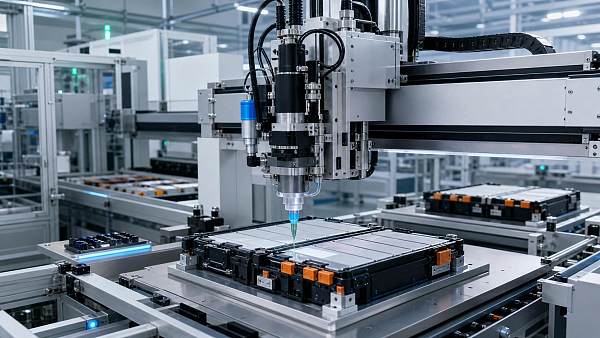
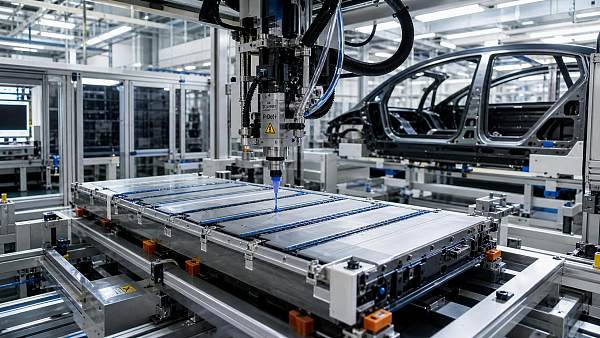
EV design puts unusual pressure on joining strategies. Battery packs add mass, thermal sensitivity, sealing demands, and vibration exposure. At the same time, range targets reward every kilogram saved elsewhere.
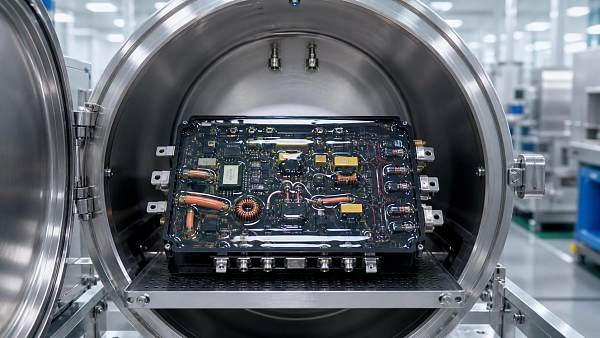
That combination makes bonded assembly especially relevant. Adhesives can join thin metals, support enclosure sealing, isolate dissimilar materials, and integrate with thermal potting or flame-retardant encapsulation strategies.
From an intelligence perspective, this is why platforms such as IADS matter. The decision is no longer just about chemistry. It connects polymer behavior, dispensing precision, cure control, thermal conductivity, compliance, and production economics.
In battery assembly, a poorly chosen adhesive can create serviceability, heat transfer, or curing bottlenecks. A well-chosen one can consolidate fastening, sealing, and damping into a cleaner process window.
What Welding Still Does Better
Any serious assessment of adhesive bonding replacing welding in automotive production needs balance. Welding still holds clear advantages in high-speed metal joining where materials are compatible and line architecture is already optimized.
It also offers familiar inspection methods and long-established shop-floor skills. For some high-temperature zones or immediate handling requirements, adhesives may need extra process steps or hybrid reinforcement.
The strategic point is not that welding becomes obsolete. It is that welding loses its default position in more applications than before.
Common limits of bonded assembly
- Surface contamination can undermine strength more than many teams expect.
- Gap variation affects cure quality and final joint behavior.
- Cycle time depends on open time, fixture time, and full cure strategy.
- Repair and disassembly planning may be harder without early design rules.
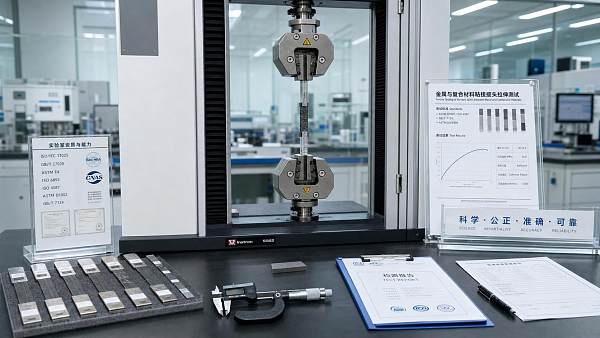
- Validation must include peel, fatigue, temperature, chemical, and crash conditions.
How to Judge a Replacement Opportunity
The best evaluations start with the joint, not the adhesive brochure. Bonded substitution works when the total assembly system improves, including material flow, automation, quality, and lifecycle durability.
Several questions usually clarify whether adhesive bonding replacing welding in automotive assembly is realistic or premature.
- Are the joined materials similar metals, coated metals, or mixed substrates?
- Is corrosion between dissimilar materials a current field issue?
- Does the joint need sealing, damping, or thermal isolation?
- Can dispensing equipment maintain bead geometry and volume consistency?
- Is the cure window compatible with takt time and plant layout?
- Which standards, VOC rules, RoHS, or REACH expectations apply?
Those questions move the conversation away from generic claims. They also explain why material suppliers and dispensing technology suppliers increasingly need to be evaluated together, not separately.
Process Control Is Part of the Business Case
One reason some executives hesitate is variability. Adhesive performance is often judged by chemistry alone, while actual line success depends just as much on metering, mixing, bead placement, and curing consistency.
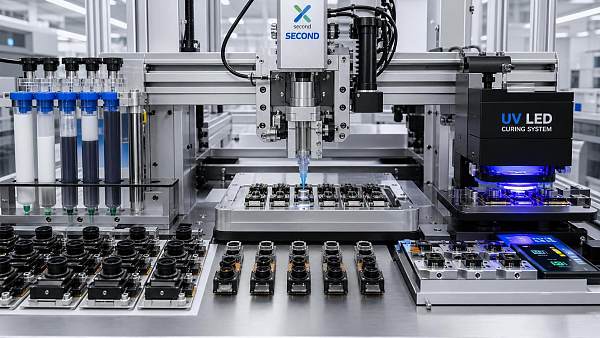
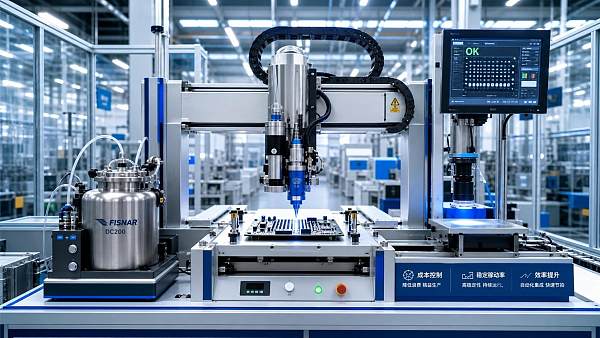
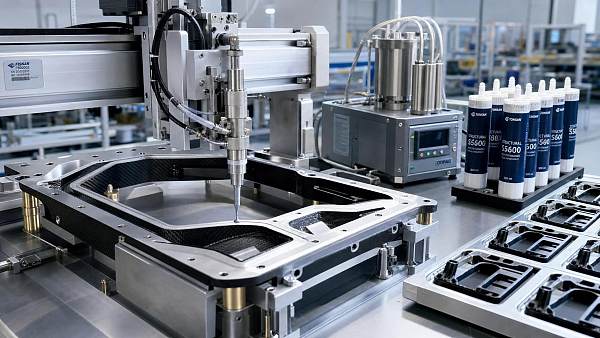
This is where dispensing technology changes the equation. Automated dispensing systems, piezoelectric jet valves, static mixers, and AI vision-guided positioning can reduce waste and tighten process repeatability.
For high-volume assembly, that matters as much as lap shear data. A structurally capable adhesive that cannot be dispensed accurately at production speed is not a practical replacement.
IADS is relevant here because it frames joining decisions across chemistry, fluid control, compliance, and automation rather than treating them as separate procurement categories.
A Practical Direction for Next Decisions
So, is adhesive bonding replacing welding in automotive assembly? In selected areas, yes, and the replacement is already operational. Across the full vehicle, the more accurate answer is selective displacement supported by better materials and smarter process control.
The next step is to map joints by material mix, corrosion risk, sealing need, cycle-time tolerance, and inspection method. That reveals where bonded or hybrid joining offers measurable gains over weld-centric design.
From there, compare structural adhesive options with dispensing capability, validation data, compliance readiness, and lifecycle cost. That approach creates a stronger decision basis than focusing on joining strength alone.
For organizations tracking adhesive bonding replacing welding in automotive programs, the most useful progress often comes from a focused pilot: one joint family, one material combination, one process window, and one set of quality metrics.
That is usually enough to determine whether the change is an engineering experiment, a sourcing opportunity, or the beginning of a broader assembly strategy.
- structural adhesives
- dispensing systems
- automated dispensing systems
- static mixers
- dissimilar material bonding
- piezoelectric jet valves
- dispensing precision
- automated dispensing
- potting compounds
- dispensing technology
- adhesive bonding replacing welding
- adhesive bonding replacing welding in automotive
Recommended News
 Oct 07, 2026What drives adhesive bonding for electronics cost per assembly?Adhesive bonding for electronics cost explained: compare material, curing, yield, labor, and risk to reduce total cost per accepted assembly.
 Sep 30, 2026When does dispensing process automation equipment lower assembly costs?Dispensing process automation equipment lowers assembly costs by reducing adhesive waste, rework, cycle time, and quality risks. Discover when automation delivers measurable ROI.
 Sep 19, 2026Can structural adhesive replace screws in electronics without losing serviceability?Can structural adhesive replace screws in electronics assembly? Explore serviceability, grounding, thermal performance, and hybrid fastening strategies for reliable designs.
 Sep 20, 2026Adhesive Instead of Rivets: When Bonded Joints Lower Assembly Cost and WeightAdhesive instead of rivets: discover when bonded joints reduce assembly cost and weight, improve sealing, and support smarter high-volume manufacturing.
 Sep 11, 2026What key criteria should EMS engineers compare when evaluating adhesive suppliers?What should I compare when choosing an industrial adhesive supplier? Discover 6 critical criteria EMS engineers must evaluate—beyond price—to ensure reliability, compliance & process yield.
 Sep 05, 2026How to size camera module assembly equipment for pilot productionCamera module assembly equipment sizing guide for pilot production—balance cycle time, precision, curing, traceability, and scalable automation.
 Aug 29, 2026What drives micro-dispensing engineering cost in automated assembly?Micro-dispensing engineering cost is driven by fluid behavior, precision, motion, vision, curing, validation, and uptime. Discover how to control total assembly cost.
 Aug 24, 2026When vacuum potting encapsulation is worth the extra process costVacuum potting encapsulation is worth the extra cost when hidden voids threaten insulation, thermal performance, or long-term reliability. Learn when it reduces risk and protects ROI.
 Aug 22, 2026What drives yield loss in the camera module assembly processCamera module assembly process yield loss often starts with adhesive variation, contamination, curing drift, and alignment shift. Learn the hidden causes and practical fixes.
 Aug 21, 2026What drives camera module adhesives price in high-volume assemblyCamera module adhesives price depends on cure speed, dispensing stability, optical reliability, and supplier consistency. Learn how to compare quotes wisely and reduce total assembly cost.
 Aug 13, 2026Automotive Adhesive Bonding Cost: What Drives Total Assembly Spend?Automotive adhesive bonding cost goes far beyond material price—discover the hidden drivers behind total assembly spend, from curing and dispensing to scrap, uptime, and warranty risk.
 Aug 20, 2026Inspection Points That Matter When Evaluating Used Rubber MachineryUsed rubber machinery inspection starts with process fit, then checks wear, controls, safety, and relocation risk—learn the key points to cut hidden costs and buy with confidence.
 Aug 09, 2026How the Camera Module Assembly Process Affects Yield and Alignment AccuracyCamera module assembly process directly impacts yield and alignment accuracy. Learn how dispensing, curing, and active alignment choices reduce defects and improve optical performance.
 Aug 06, 2026How to Evaluate Lightweight Bonding Solutions for Rail InteriorsLightweight bonding solutions for rail: learn how to compare fire safety, substrate compatibility, vibration durability, and process efficiency to choose smarter rail interior bonding systems.
 Aug 01, 2026What Drives Automated Dispensing Cost in High-Volume Assembly Lines?Automated dispensing cost depends on more than machine price. Learn the key drivers—materials, accuracy, cycle time, maintenance, and scrap—to compare suppliers and cut total assembly line cost.
 Jul 29, 2026What Fluid Dispensing Precision Really Costs in Yield, Rework, and Cycle TimeFluid dispensing precision directly impacts yield, rework, and cycle time. Learn how hidden dispensing costs erode margins and what to verify before investing.
 Jul 28, 2026Automated Dispensing Integration: Cost, Uptime, and ROI FactorsAutomated dispensing integration: learn how to reduce cost, improve uptime, and strengthen ROI with smarter material selection, maintenance planning, software integration, and validation strategies.
 Jul 24, 2026How to Evaluate Lightweight Assembly Adhesives for Faster Bonding and Lower Total CostLightweight assembly adhesives: learn how to compare cure speed, dispensing stability, substrate fit, and total cost to choose faster, more reliable bonding solutions.
 Jul 23, 2026Desktop Automated Dispensing Systems: Cost, Accuracy, and ROI Factors to CompareDesktop automated dispensing systems compared by cost, accuracy, and ROI. Learn how to evaluate repeatability, integration, throughput, and long-term savings before you buy.
 Jul 18, 2026Display Bonding Cost Breakdown: Materials, Yield, and EquipmentDisplay bonding cost explained: compare materials, yield, and equipment to uncover hidden expenses, reduce scrap, and make smarter sourcing decisions with confidence.
 Jul 15, 2026Adhesive Joint Evaluation Supplier Checklist for Reliable Test ResultsAdhesive joint evaluation supplier checklist for reliable test results. Compare labs, reduce risk, verify quality systems, and choose a partner with confidence.
 Jul 14, 2026Automotive Adhesive Market Trends to Watch in 2026Adhesive market trends automotive leaders should watch in 2026: EV battery materials, lightweight bonding, automation fit, and compliance shifts shaping smarter sourcing decisions.
 Jul 14, 2026Industrial Adhesives for Assembly: Cost vs ThroughputIndustrial adhesives for assembly: compare cost vs throughput, uncover hidden process costs, and choose faster, more reliable bonding solutions for higher line efficiency.
 Jul 13, 2026Structural Sealing Cost: What Drives Total Assembly SpendStructural sealing cost goes beyond material price. Learn what drives total assembly spend and how smarter sealants, dispensing, and cure control can cut waste and improve ROI.
Editor's Selection
The Archive Newsletter
Critical industrial intelligence delivered every Tuesday. Peer-reviewed summaries of the week's most impactful logistics and market shifts.