How to Evaluate an Adhesive Bonding Technology Supplier
by
Published
Views:
What should you really look for in an adhesive bonding technology supplier?
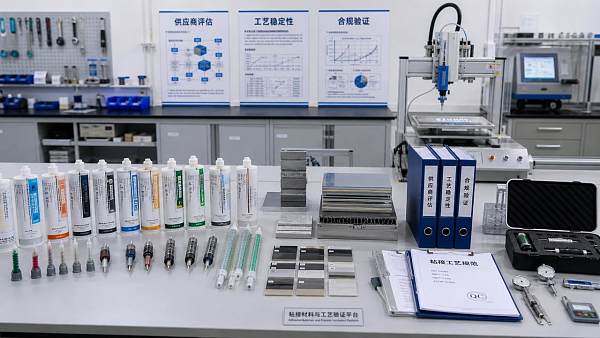
Choosing an adhesive bonding technology supplier rarely starts with chemistry alone. The better question is whether that supplier can support a stable manufacturing result over time.
In practical sourcing work, price matters, but it does not explain bond failure, dispensing inconsistency, delayed qualification, or compliance risk.
A capable adhesive bonding technology supplier usually combines material knowledge, process understanding, documentation discipline, and supply continuity. That mix is what protects total cost.
This becomes even more important in sectors using structural adhesives, UV glues, potting compounds, tapes, hot melt films, or automated dispensing systems.
In real projects, the supplier is not only selling a product. The supplier is also shaping cure behavior, assembly speed, maintenance effort, and field reliability.
That is why many teams now study technical intelligence platforms such as IADS. They use them to compare bonding materials, dispensing options, compliance signals, and application fit before shortlisting vendors.
How do you tell whether a supplier understands your actual application?
A strong adhesive bonding technology supplier asks detailed questions early. If those questions never come, the fit may be superficial.
Useful discussions usually cover substrate type, bond line thickness, thermal exposure, vibration, cure method, dispensing volume, line speed, and rework constraints.
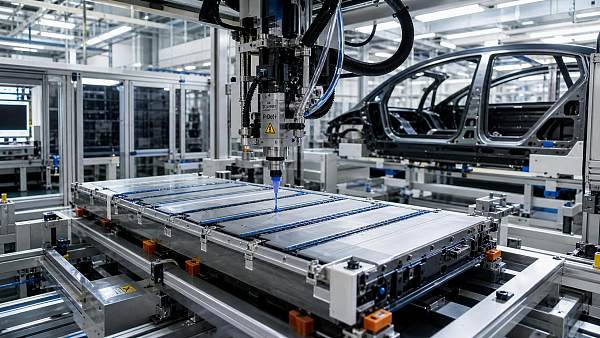
For example, bonding aluminum to composite panels is different from sealing an electronics enclosure or potting an EV battery module.
The chemistry may look similar on paper, but the process window can be completely different. That is where supplier quality starts to show.
More reliable suppliers can explain why a 2K epoxy, polyurethane sealant, silicone encapsulant, or UV-curing adhesive fits a specific operating environment.
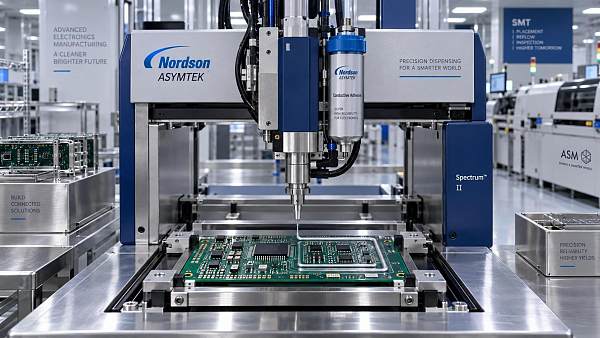
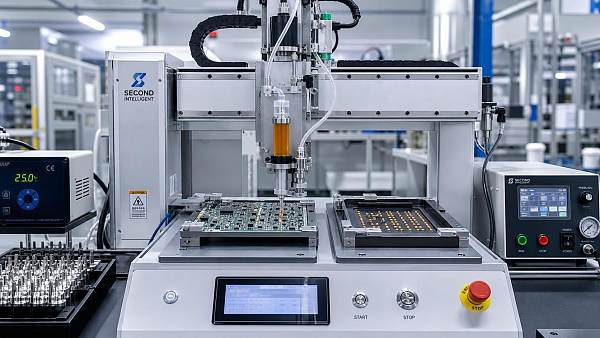
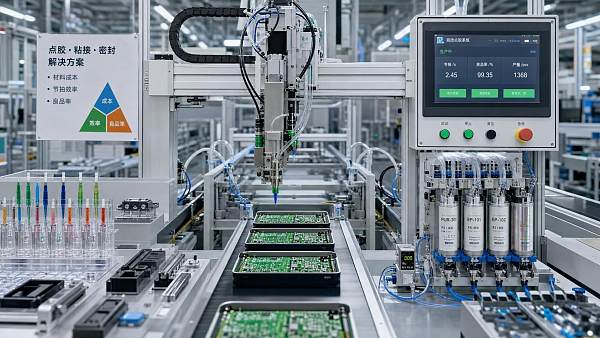
They should also discuss whether the material works with manual application, static mixing, piezoelectric jetting, or automated dispensing platforms.
A quick way to judge this is to ask for similar case experience. The answer should include substrates, failure mode, cure conditions, and production challenges, not only a product code.
Early questions that often reveal supplier depth
- Can they explain shear strength, peel strength, and environmental durability in the same context?
- Do they ask about dissimilar material bonding and surface preparation?
- Can they discuss curing energy, open time, viscosity drift, and thermal conductivity with confidence?
- Do they understand whether the bond line is structural, sealing, encapsulating, or thermally functional?
Which technical and quality documents matter most before approval?
Not every document has equal value. Some are basic, while others help you predict implementation risk much more accurately.
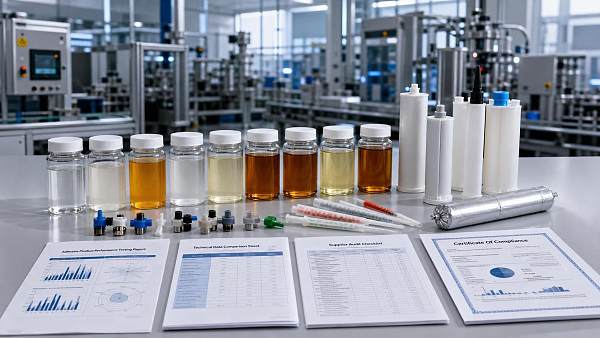
At minimum, an adhesive bonding technology supplier should provide a technical data sheet, safety data sheet, storage guidance, and batch traceability information.
For industrial use, that is only the starting point. The more useful layer includes validation data tied to actual conditions.
This may include aging performance, thermal cycling results, flame-retardant status, halogen-free statements, REACH SVHC review, RoHS confirmation, and process capability notes.
In electronics and battery projects, details such as ionic contamination, outgassing behavior, dielectric performance, capillary flow, or thermal conductivity can be decisive.
If the supplier also provides dispensing guidance, cure profiles, recommended valve types, and line integration notes, the evaluation becomes far stronger.
That is one reason IADS-style industry references are useful. They place material data, process parameters, and compliance language into a clearer comparison framework.
Is lower unit price ever enough to choose one adhesive bonding technology supplier over another?
Usually not. A lower price per kilogram or cartridge often hides larger downstream costs.
The real comparison should include yield, cure speed, maintenance frequency, dispensing accuracy, scrap rate, operator burden, and qualification time.
A cheaper adhesive that requires slower curing, tighter storage control, or frequent nozzle replacement may cost more across the line.
The same applies to dispensing equipment. A lower-cost valve with unstable shot volume can waste expensive material and create hidden inspection cost.
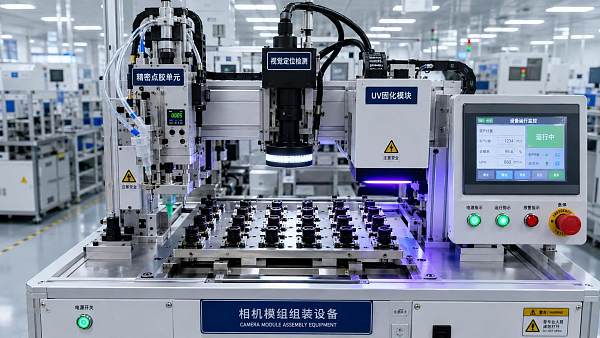
In electronics assembly, microliter inconsistency can affect underfill coverage, camera module alignment, or screen bonding quality. The material price alone does not capture that risk.
In structural bonding, a small drop in reliability can translate into warranty exposure, rework, or qualification resets. That is a very expensive saving.
A more useful cost review compares total applied cost, not catalog price. That means material use, equipment match, line efficiency, and field performance are considered together.
A practical cost checklist
- Consumption per assembled unit
- Cycle time impact and curing delay
- Dispensing waste and purge frequency
- Rework difficulty and scrap probability
- Shelf life losses and cold-chain needs
- Cost of additional compliance testing
What risks are often missed during supplier evaluation?
One common mistake is approving a material based only on a successful sample bond. That result can be misleading if the full process window is not tested.
Another missed risk is assuming the adhesive and dispensing method can be chosen separately. In reality, fluid behavior and equipment capability are tightly linked.
For instance, high-fill thermal potting compounds may need specific pumps, mixers, and pressure control. Without that match, voids or inconsistent fill can appear.
UV-curing materials also create hidden issues. Shadow areas, substrate opacity, and wavelength mismatch can reduce cure completeness even when lab samples look acceptable.
Lead time risk is also underestimated. Some suppliers can ship samples quickly but struggle with regional inventory, export paperwork, or stable batch availability.
More experienced evaluators also check change control. If formulation changes, raw material substitutions, or packaging updates occur, how early are they communicated?
That question matters in automotive, battery, rail, and electronics programs where requalification can be expensive and slow.
Warning signs worth noticing
- Technical answers remain generic across very different applications.
- Compliance statements arrive late or lack version control.
- No clear failure analysis support is available.
- Trial success depends on manual adjustment rather than repeatable settings.
- The supplier cannot explain scale-up from pilot to mass production.
How can you compare suppliers when materials, equipment, and support are bundled differently?
This is where evaluation often gets messy. One adhesive bonding technology supplier may focus on chemistry, while another offers material plus dispensing integration.
Neither model is automatically better. The right choice depends on how complex the application is and how much process support is needed.
For relatively simple tape, film, or sealant programs, documentation quality and supply reliability may dominate the decision.
For underfill, jet dispensing, structural bonding, or EV battery potting, supplier integration capability usually carries more weight.
A useful method is to score suppliers in separate layers instead of one blended impression.
- Material performance under target conditions
- Dispensing and automation compatibility
- Compliance and certification readiness
- Regional delivery and continuity planning
- Technical response speed during trials and change events
That layered view makes comparison fairer. It also helps explain why an apparently higher quote may still represent the stronger sourcing choice.
Industry platforms like IADS are particularly useful here because they connect materials, dispensing precision, compliance trends, and application cases in one reference path.
What is the smartest next step before making a final sourcing decision?
Start by narrowing the decision to a few measurable criteria. That keeps the review anchored in operating reality instead of presentation quality.
A final decision should normally follow a structured trial plan, a document review, and a commercial comparison based on total use cost.
It also helps to define non-negotiable thresholds. These may include cure speed, bond durability, thermal performance, REACH or RoHS readiness, and acceptable lead time.
If the application involves automated fluid control, include valve selection, shot repeatability, mixer life, and maintenance intervals in the same review.
The most dependable adhesive bonding technology supplier is rarely the one with the loudest claim. It is the one that makes performance, process control, and supply assurance easier to verify.
A practical next move is to build a short evaluation sheet from your actual application conditions, then compare suppliers against that sheet line by line.
That approach turns supplier selection into a clearer decision on risk, implementation effort, and long-term cost rather than a simple price discussion.
- structural adhesives
- dispensing systems
- adhesive bonding technology
- structural bonding
- automated dispensing systems
- dispensing accuracy
- dissimilar material bonding
- dispensing precision
- capillary flow
- automated dispensing
- potting compounds
- automated fluid control
- piezoelectric jetting
- adhesive bonding technology supplier
Recommended News
 Sep 11, 2026What key criteria should EMS engineers compare when evaluating adhesive suppliers?What should I compare when choosing an industrial adhesive supplier? Discover 6 critical criteria EMS engineers must evaluate—beyond price—to ensure reliability, compliance & process yield.
 Sep 05, 2026How to size camera module assembly equipment for pilot productionCamera module assembly equipment sizing guide for pilot production—balance cycle time, precision, curing, traceability, and scalable automation.
 Aug 29, 2026What drives micro-dispensing engineering cost in automated assembly?Micro-dispensing engineering cost is driven by fluid behavior, precision, motion, vision, curing, validation, and uptime. Discover how to control total assembly cost.
 Aug 24, 2026When vacuum potting encapsulation is worth the extra process costVacuum potting encapsulation is worth the extra cost when hidden voids threaten insulation, thermal performance, or long-term reliability. Learn when it reduces risk and protects ROI.
 Aug 22, 2026What drives yield loss in the camera module assembly processCamera module assembly process yield loss often starts with adhesive variation, contamination, curing drift, and alignment shift. Learn the hidden causes and practical fixes.
 Aug 21, 2026What drives camera module adhesives price in high-volume assemblyCamera module adhesives price depends on cure speed, dispensing stability, optical reliability, and supplier consistency. Learn how to compare quotes wisely and reduce total assembly cost.
 Aug 13, 2026Automotive Adhesive Bonding Cost: What Drives Total Assembly Spend?Automotive adhesive bonding cost goes far beyond material price—discover the hidden drivers behind total assembly spend, from curing and dispensing to scrap, uptime, and warranty risk.
 Aug 20, 2026Inspection Points That Matter When Evaluating Used Rubber MachineryUsed rubber machinery inspection starts with process fit, then checks wear, controls, safety, and relocation risk—learn the key points to cut hidden costs and buy with confidence.
 Aug 09, 2026How the Camera Module Assembly Process Affects Yield and Alignment AccuracyCamera module assembly process directly impacts yield and alignment accuracy. Learn how dispensing, curing, and active alignment choices reduce defects and improve optical performance.
 Aug 06, 2026How to Evaluate Lightweight Bonding Solutions for Rail InteriorsLightweight bonding solutions for rail: learn how to compare fire safety, substrate compatibility, vibration durability, and process efficiency to choose smarter rail interior bonding systems.
 Aug 01, 2026What Drives Automated Dispensing Cost in High-Volume Assembly Lines?Automated dispensing cost depends on more than machine price. Learn the key drivers—materials, accuracy, cycle time, maintenance, and scrap—to compare suppliers and cut total assembly line cost.
 Jul 29, 2026What Fluid Dispensing Precision Really Costs in Yield, Rework, and Cycle TimeFluid dispensing precision directly impacts yield, rework, and cycle time. Learn how hidden dispensing costs erode margins and what to verify before investing.
 Jul 28, 2026Automated Dispensing Integration: Cost, Uptime, and ROI FactorsAutomated dispensing integration: learn how to reduce cost, improve uptime, and strengthen ROI with smarter material selection, maintenance planning, software integration, and validation strategies.
 Jul 24, 2026How to Evaluate Lightweight Assembly Adhesives for Faster Bonding and Lower Total CostLightweight assembly adhesives: learn how to compare cure speed, dispensing stability, substrate fit, and total cost to choose faster, more reliable bonding solutions.
 Jul 23, 2026Desktop Automated Dispensing Systems: Cost, Accuracy, and ROI Factors to CompareDesktop automated dispensing systems compared by cost, accuracy, and ROI. Learn how to evaluate repeatability, integration, throughput, and long-term savings before you buy.
 Jul 18, 2026Display Bonding Cost Breakdown: Materials, Yield, and EquipmentDisplay bonding cost explained: compare materials, yield, and equipment to uncover hidden expenses, reduce scrap, and make smarter sourcing decisions with confidence.
 Jul 15, 2026Adhesive Joint Evaluation Supplier Checklist for Reliable Test ResultsAdhesive joint evaluation supplier checklist for reliable test results. Compare labs, reduce risk, verify quality systems, and choose a partner with confidence.
 Jul 14, 2026Automotive Adhesive Market Trends to Watch in 2026Adhesive market trends automotive leaders should watch in 2026: EV battery materials, lightweight bonding, automation fit, and compliance shifts shaping smarter sourcing decisions.
 Jul 14, 2026Industrial Adhesives for Assembly: Cost vs ThroughputIndustrial adhesives for assembly: compare cost vs throughput, uncover hidden process costs, and choose faster, more reliable bonding solutions for higher line efficiency.
 Jul 13, 2026Structural Sealing Cost: What Drives Total Assembly SpendStructural sealing cost goes beyond material price. Learn what drives total assembly spend and how smarter sealants, dispensing, and cure control can cut waste and improve ROI.
 Jul 12, 2026When Automated Dispensing Systems Manufacturers Deliver Better Assembly ROIAutomated dispensing systems manufacturer selection drives assembly ROI when it cuts material waste, boosts precision, and supports scalable integration. Learn what separates true process partners from machine sellers.
 Jul 10, 2026Adhesive Supplier Evaluation Audit: What to Check Before ApprovalAdhesive supplier evaluation audit guide: learn what to check before approval, from quality systems and batch consistency to compliance, safety, and process capability.
 Jul 08, 2026Adhesive Total Cost Model: What Actually Drives Assembly Cost?Adhesive total cost model explained: discover what really drives assembly cost beyond unit price, from labor and cycle time to scrap, maintenance, compliance, and throughput.
 Jul 04, 2026Adhesive Supplier Intelligence Platform: What to Compare Before Shortlisting VendorsAdhesive supplier intelligence platform guide: compare application fit, compliance, dispensing compatibility, and supply reliability before shortlisting vendors for faster, lower-risk sourcing.
Editor's Selection
The Archive Newsletter
Critical industrial intelligence delivered every Tuesday. Peer-reviewed summaries of the week's most impactful logistics and market shifts.