Automotive Silicone Encapsulation: Preventing Cracks in High-Temperature Electronics
by
Published
Views:
Automotive Silicone Encapsulation: Preventing Cracks in High-Temperature Electronics
Automotive silicone encapsulation helps operators prevent cracking when electronic assemblies experience repeated heat, vibration, moisture, and mechanical stress during vehicle operation and production testing.
The core search intent is practical: users need to understand why encapsulated parts crack, how silicone reduces failure risk, and which process controls protect reliability.
For operators, the most important concerns are material handling, dispensing consistency, bubble prevention, curing accuracy, coverage inspection, and identifying defects before assemblies reach vehicles.
This guide focuses on production decisions rather than generic chemistry. It explains where automotive silicone encapsulation adds value and how teams can control the process reliably.
Why High-Temperature Automotive Electronics Crack
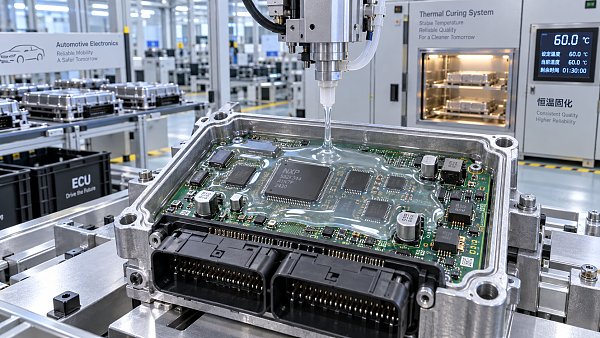
Electronic assemblies in vehicles rarely fail because of one extreme event. More often, cracks develop gradually as different materials expand, contract, vibrate, and absorb moisture.
Engine-adjacent ECUs, power modules, sensors, LED drivers, battery controllers, and charging systems may experience wide temperature swings over thousands of operating cycles.
Rigid encapsulants can transfer thermal stress directly into solder joints, ceramic capacitors, connectors, wire bonds, or sensitive semiconductor packages when expansion rates differ significantly.
Printed circuit boards, copper traces, plastic housings, metal heat sinks, and components do not expand at the same rate under heat exposure.
That mismatch creates internal strain. If the potting compound is too rigid, the material may crack itself or force stress into weaker areas.
Vibration adds another challenge. Road shock, engine movement, switching loads, and repeated connector handling can cause small movements that become larger reliability problems.
Moisture can enter through damaged seals, voids, incomplete coverage, or interfaces between materials. Corrosion and electrical leakage may follow even when visible cracking seems minor.
Operators should therefore treat crack prevention as a complete process issue involving material selection, preparation, dispensing, curing, inspection, and handling after cure.
How Silicone Encapsulation Reduces Stress
Silicone encapsulants are widely used because they remain flexible across broad temperature ranges while protecting electronics from moisture, vibration, dust, and chemical exposure.
Unlike a highly rigid epoxy system, many silicone materials can absorb movement created by thermal expansion without concentrating stress around sensitive electronic components.
This flexibility is especially useful when assemblies contain large components, uneven board geometry, mixed substrates, or materials with substantially different coefficients of thermal expansion.
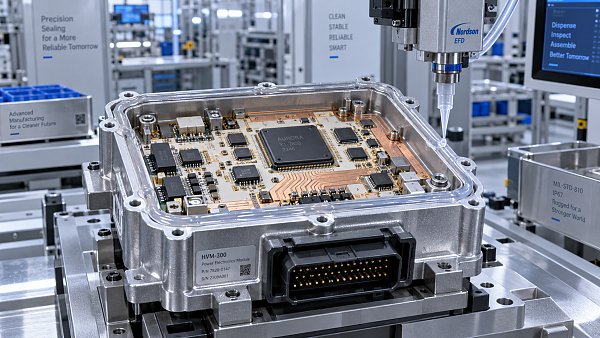
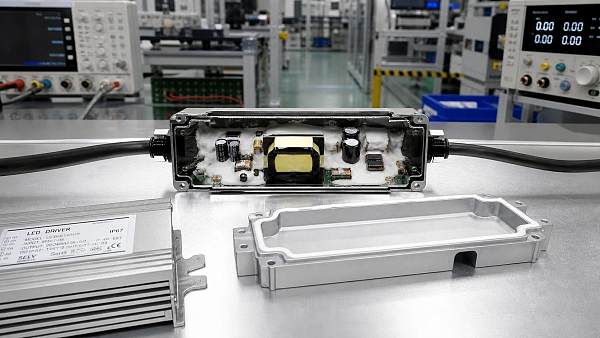
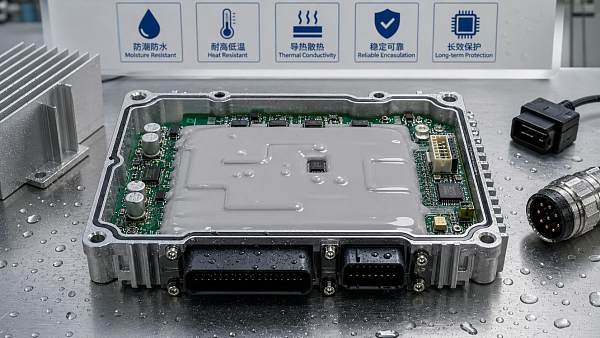
Automotive silicone encapsulation can protect devices while allowing controlled movement between the board, housing, components, and heat-management structures during normal service.
Silicone also maintains useful elasticity at temperatures where some other polymers become brittle, shrink excessively, or lose their ability to cushion vibration.
However, silicone is not automatically the correct choice for every application. Mechanical strength, adhesion requirements, thermal conductivity, flame resistance, and rework needs still matter.
For example, a power electronics assembly may require a thermally conductive silicone that transfers heat while maintaining low stress on power semiconductors.
A sensor module may prioritize low modulus, optical stability, chemical resistance, and reliable adhesion to a plastic housing instead of maximum thermal conductivity.
Choose Silicone Properties Based on the Actual Failure Risk
Operators should not select a silicone encapsulant only because it is labeled automotive grade. The material must match the assembly, operating environment, and production method.
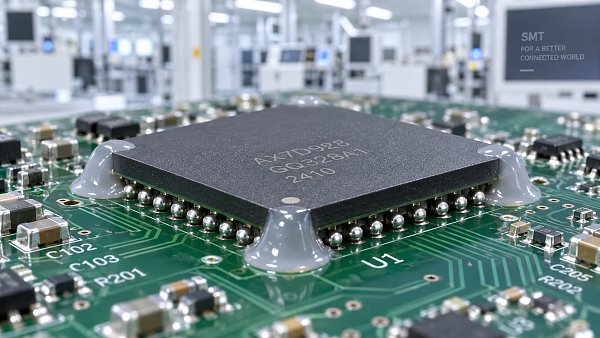
Low-modulus silicone is often preferred when protecting delicate solder joints, ceramic components, wire bonds, and packages exposed to aggressive thermal cycling.
Higher-strength silicone may be necessary when the encapsulant must support heavy components, reinforce connectors, or resist mechanical damage during assembly and service.
Thermally conductive grades can help control temperature in inverters, onboard chargers, power control units, battery electronics, and high-current junction assemblies.
Check whether fillers increase viscosity significantly. A thermally conductive material may require different dispensing pressure, nozzle size, mixing equipment, and degassing procedures.
Adhesion must also be evaluated on real substrates, including PCB coatings, aluminum housings, plastics, copper, ceramic surfaces, and connector materials.
Some silicone systems provide excellent flexibility but limited adhesion without primers. Others bond strongly, yet require strict surface cleanliness and controlled cure conditions.
Review cure chemistry carefully. Addition-cure systems may offer low byproducts, while condensation-cure materials can require moisture access and longer cure management.
Control Dispensing Before Encapsulation Defects Start
Many cracking and reliability problems begin before curing. Inconsistent dispensing can create thin coverage, trapped air, poor edge sealing, or uneven mechanical support.
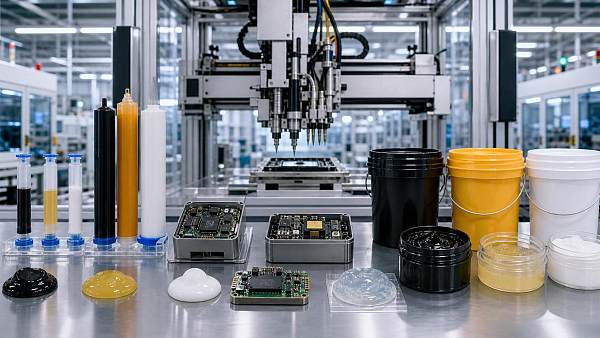
Confirm that the dispensing system matches material viscosity, mix ratio, filler content, pot life, and required shot volume before production begins.
For two-component silicone, ratio errors can produce soft areas, incomplete curing, oil-like surfaces, unstable properties, or poor adhesion after environmental exposure.
Use calibrated metering equipment and verify actual output regularly. Do not assume that a correct programmed ratio guarantees a correct delivered ratio.
Material temperature affects viscosity. Cold silicone can flow slowly and trap air, while overheated material may shorten working time or change dispensing behavior.
Maintain defined storage, conditioning, and production temperatures. Record deviations when a batch behaves differently from normal process expectations.
Select nozzle geometry based on clearance, flow path, bead width, and component density. A nozzle that is too small can raise shear and create unstable flow.
A nozzle that is too large may reduce placement accuracy, flood connectors, contaminate keep-out zones, or make it difficult to control fill boundaries.
Prevent Voids, Air Bubbles, and Incomplete Coverage
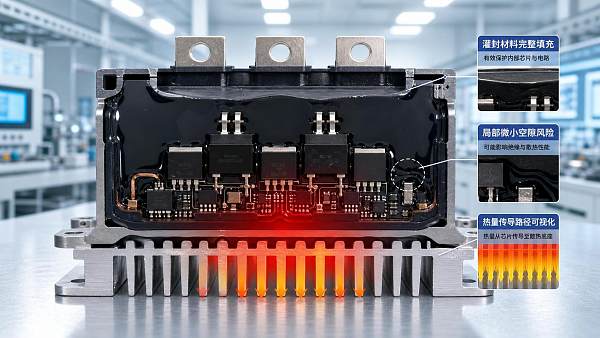
Voids are more than cosmetic defects. They can become moisture pathways, local stress concentrators, insulation weak points, and locations where cracks initiate during thermal cycling.
Air commonly enters through poor material mixing, rapid pumping, leaks in feed lines, irregular board surfaces, narrow cavities, or overly aggressive dispensing speeds.
Use slow, controlled flow when filling deep housings or narrow channels. Let material advance consistently rather than trapping air beneath a fast-moving surface.
For difficult geometries, start at the lowest point and fill upward. This method gives air a clear path to escape instead of sealing it inside.
Vacuum degassing may be necessary for highly filled silicone, large potting volumes, or assemblies where even small voids can affect insulation performance.
Operators should inspect corners, connector bases, component shadows, and vertical surfaces because these areas often receive insufficient material during automated dispensing.
Program path overlap carefully. Gaps between adjacent beads can remain hidden until thermal cycling, moisture testing, or electrical inspection exposes the defect.
Do not overfill blindly. Excess encapsulant can flow onto vents, contacts, mating surfaces, heat sinks, test points, and parts requiring later service access.
Manage Curing Conditions to Avoid Stress and Weak Bonding
Curing converts liquid silicone into a protective elastomer, but poor cure control can create internal stress, incomplete cross-linking, surface defects, or adhesion loss.
Follow the supplier's specified cure profile, including temperature, time, humidity requirements, maximum component temperature, and any recommended post-cure process.
Fast curing is not always better. Excessive temperature ramp rates can heat thick encapsulation sections unevenly and cause expansion differences within the assembly.
Large potting volumes deserve special attention because exotherm, slow heat transfer, and restricted airflow can produce different cure conditions across one housing.
Verify oven temperature at the product location, not only at the controller sensor. Loaded fixtures can behave differently from an empty oven.
Where room-temperature curing is used, define the minimum handling time clearly. Moving units too soon can disturb coverage and create weak interfaces.
Some silicone systems may be inhibited by contaminants such as sulfur compounds, certain amines, uncured adhesives, residues, or incompatible release agents.
When cure inhibition is suspected, isolate the material lot, inspect upstream processes, and run controlled compatibility tests before restarting high-volume production.
Inspect Encapsulated Assemblies Before They Become Field Failures
Visual inspection should confirm complete coverage, correct fill height, clean keep-out zones, no visible bubbles, and no contamination on connectors or functional interfaces.
Define acceptable limits for surface bubbles, sink marks, overflow, edge coverage, and void locations. Operators need objective criteria, not subjective appearance judgments.
Weight checks can provide a fast indication of underfill or overfill when the enclosure design and silicone density are stable enough for comparison.
Automated vision can verify bead position, fill boundaries, and overflow. It is particularly useful where manual inspection cannot consistently detect small deviations.
For critical automotive assemblies, destructive sectioning, X-ray, ultrasound, or computed tomography may be used during validation to understand internal coverage quality.
Electrical testing after cure is also important. Insulation resistance, dielectric performance, continuity, sensor response, and functional output can reveal hidden process problems.
Thermal cycling should represent the intended service environment. Testing only at room temperature will not show whether the silicone actually protects against movement and stress.
Record defects by material batch, dispense program, equipment, operator shift, cure profile, and product variant. Traceable data makes recurring problems easier to isolate.
Handle Rework, Maintenance, and Process Changes Carefully
Silicone is often chosen partly because some formulations allow rework more easily than rigid potting materials. However, rework must be planned before production release.
Document whether the cured silicone can be cut, peeled, softened, or removed without damaging components, coatings, wire bonds, connectors, or housings.
Operators should use approved tools and removal methods. Uncontrolled scraping can damage solder mask, lift components, cut traces, or create latent reliability failures.
When changing suppliers, curing equipment, nozzle types, dispensing pressure, or material batches, do not assume the existing validation remains fully applicable.
Even similar silicone products can differ in viscosity, density, adhesion, cure speed, thermal conductivity, filler settling behavior, and compatibility with nearby materials.
Use a controlled change process that includes sample builds, dispensing trials, cure confirmation, adhesion checks, and relevant environmental testing before full release.
Preventive maintenance also matters. Worn seals, clogged mixers, inaccurate pumps, contaminated valves, and poor line cleaning can alter encapsulation quality gradually.
Daily operator checks and scheduled calibration are usually cheaper than investigating vehicle returns, warranty claims, or intermittent electronic faults after field deployment.
Build a Practical Automotive Silicone Encapsulation Checklist
Before each production run, confirm the correct silicone material, batch status, storage condition, mix ratio, equipment setup, nozzle selection, and approved dispense program.
Check that boards and housings are clean, dry, correctly fixtured, and free from residues that could interfere with adhesion or cure chemistry.
During dispensing, monitor pressure, flow stability, material appearance, fill level, bubble formation, edge coverage, and any abnormal change in shot weight.
During cure, verify actual oven conditions, cycle timing, fixture loading, and product handling restrictions. Do not release units based only on elapsed time.
After cure, inspect critical areas and confirm functional performance. Escalate abnormalities early, especially when defects could expose high-voltage or safety-related electronics.
Automotive silicone encapsulation works best when material behavior and production discipline are treated as one system rather than separate engineering and operator responsibilities.
The right silicone can reduce stress-related cracking, but process control determines whether that potential becomes reliable protection in real automotive electronics.
For production teams, the clearest decision is simple: select silicone for the actual failure mechanism, then control dispensing, coverage, curing, and inspection with measurable standards.
Recommended News
 Sep 22, 2026How to verify UL94 V-0 performance in silicone encapsulantsSilicone encapsulants UL94 V0: learn how to verify flame performance through test evidence, minimum thickness, cure controls, and traceable production practices.
 Sep 22, 2026Automotive Silicone Encapsulation: Preventing Cracks in High-Temperature ElectronicsAutomotive silicone encapsulation prevents cracks in high-temperature electronics with proven control of dispensing, voids, curing, and inspection.
 Sep 21, 2026How to Select Sensor Encapsulation Materials for Heat, Moisture, and ShockEncapsulation materials for sensors: learn how to balance heat resistance, moisture sealing, and shock protection for reliable, high-performance sensor assemblies.
 Sep 21, 2026Sealing Hybrid Packages: Material Choices for Moisture Protection and ReliabilitySealing of hybrid packages: compare epoxy, silicone, polyurethane, and dual-cure materials for dependable moisture protection and long-term reliability.
 Sep 17, 2026When silicone chip packaging adhesives prevent solder joint crackingSilicone chip packaging adhesives help prevent solder joint cracking by absorbing stress, reducing board flex, and improving BGA reliability. Explore smarter protection strategies.
 Sep 15, 2026Silicone vs. polyurethane: which offers better vibration damping for EV battery module assembly?Should I use silicone or polyurethane for vibration protection? Discover which material delivers superior long-term damping, thermal stability & safety in EV battery modules.
 Sep 03, 2026How to prevent leaks when selecting a battery pack sealing adhesiveBattery pack sealing adhesive selection made practical: prevent leaks with proven guidance on joint design, curing, dispensing, durability testing, and serviceability.
 Aug 16, 2026EU REACH Adds 5 SVHCs, Triggering Mandatory SCIP Reporting from Aug. 15, 2026EU REACH adds 5 SVHCs, making SCIP reporting mandatory from Aug. 15, 2026. Learn how the new REACH candidate list impacts exporters, epoxy adhesives, silicone encapsulants, and EU compliance.
 Aug 12, 2026How Electronics Potting for Power Modules Affects Heat Dissipation and ReliabilityElectronics potting for power modules directly impacts heat dissipation, insulation, and long-term reliability. Learn how to choose materials that reduce risk and improve performance.
 Aug 11, 2026EU PFOA Rule Takes Full Effect on Aug. 10EU PFOA Rule takes full effect on Aug. 10, tightening REACH limits for electronics and new energy materials. See who is affected, key compliance risks, and what exporters should check now.
 Aug 10, 2026ECHA Tightens PFOA Limit for Fluorinated Silicone ExportsECHA tightens PFOA limit to 25 ppb for fluorinated silicone exports. Learn how Silicone Encapsulants and Thermal Conductive Pastes can meet EU REACH compliance fast.
 Aug 07, 2026How to Choose Electronics Potting for LED Drivers by Heat and IP RatingElectronics potting for LED drivers: learn how to choose the right compound by heat path, IP rating, stress, and cure behavior to improve reliability and simplify selection.
 Jul 26, 2026ECHA Adds Two Flame Retardants to SVHC ListECHA Adds Two Flame Retardants to SVHC List: learn how DPTEBP and TBBPS may affect EU exports, SDS updates, declarations, and October 2026 compliance deadlines.
 Jul 19, 2026ECHA SVHC Update Raises Export Risks for Silicone MaterialsECHA SVHC update raises export risks for silicone materials, including silicone encapsulants and thermal conductive pastes. Learn the REACH, SCIP, and traceability impacts before October 2026.
 Jul 14, 2026Japan’s New JIS Rule Pulls Silicone Encapsulant Orders to ChinaSilicone encapsulant demand is shifting to China as Japan’s new JIS rule nears. See how compliance, certification, and EMS procurement are reshaping orders before October 2026.
 Jul 13, 2026Japan Enforces JIS T 2801-2026 on Silicone EncapsulantsJapan Enforces JIS T 2801-2026 on Silicone Encapsulants: learn how new thermal shock and ion migration tests affect PSE access, supplier approval, and Japan-bound compliance plans.
 Jul 09, 2026How to Evaluate an Electronics Packaging Adhesive Supplier for Yield StabilityElectronics packaging adhesive supplier evaluation starts with yield stability. Learn how to compare consistency, compliance, process fit, and total cost for smarter sourcing.
 Jul 04, 2026How to Evaluate Electronic Potting Materials in Japan for Heat, Moisture, and ComplianceElectronic potting materials Japan: learn how to compare heat resistance, moisture protection, and compliance data to choose reliable compounds for automotive, EV, and electronics projects.
 Jul 03, 2026China Customs Splits Out Silicone Encapsulants HS CodeChina Customs splits out Silicone Encapsulants HS code to 3910.0099, tightening filing, UL/IEC documentation, and rebate timing. See what exporters and buyers must do now.
 Jul 02, 2026China Splits Out Silicone Encapsulants Under New HS CodeChina splits out silicone encapsulants under new HS code 3506.9900.11. See how the rule affects export compliance, tax rebate timing, and global delivery planning.
 Jul 01, 2026China Creates HS 2026.7.11 for Silicone EncapsulantsChina creates HS 2026.7.11 for silicone encapsulants, reshaping customs declarations, rebate timing, and export compliance. Learn what exporters and buyers must review now.
 Jun 29, 2026How to Choose Electronic Potting Sealants for Heat and MoistureElectronic potting sealants for heat and moisture: learn how to match materials to real operating conditions, improve reliability, and avoid costly process mistakes.
 Jun 24, 2026Electronic Packaging Adhesive Price Benchmarks by Cure Type and VolumeElectronic packaging adhesive price benchmarks by cure type and volume. Compare UV, epoxy, silicone, package formats, and hidden process costs to source smarter and cut total line expense.
 Jun 24, 2026East China Silicone Cuts Extend DMC, 107 Gum Lead TimesEast China silicone cuts are extending DMC and 107 gum lead times to 6–8 weeks. Learn how supply pressure, force majeure risk, and procurement delays may affect exports and sealant makers.
Editor's Selection
The Archive Newsletter
Critical industrial intelligence delivered every Tuesday. Peer-reviewed summaries of the week's most impactful logistics and market shifts.