
How does order volume affect silicone encapsulant prices?
by
Published
Views:
Order volume can significantly influence silicone encapsulants price, but a lower quoted unit cost does not always mean a better deal.
For procurement teams, minimum order quantities, packaging formats, freight, shelf life, and supplier commitments all affect the total cost of ownership.
Understanding how these factors change between sample, batch, and bulk purchases helps buyers negotiate effectively and plan orders without creating unnecessary inventory risk.
In general, larger orders can reduce the price per kilogram, but the best purchase quantity is the one that minimizes the cost of usable material.
Why does order volume affect silicone encapsulant prices?
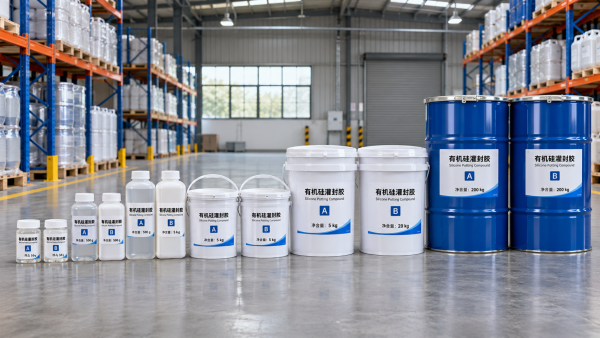
Suppliers typically spend less per kilogram processing a large order because production scheduling, quality checks, documentation, packaging, and administration are spread across more material.
A small purchase may carry a higher price because these fixed activities still have to be completed, even when only a few containers are shipped.
Volume can also influence raw material purchasing and plant utilization. A supplier with reliable demand may be able to plan batches and inventory more efficiently.
However, discounts are not automatic. Capacity constraints, specialized ingredients, customized specifications, and urgent delivery requirements can limit the savings available at higher volumes.
Ask each supplier for quantity breaks and the conditions attached to them. A published discount may apply only to a single shipment or standard packaging.
For a useful comparison, request prices for the same formulation, mixing ratio, packaging basis, delivery terms, and currency across every proposed volume tier.
What changes between sample, production-batch, and bulk orders?
Samples and evaluation quantities
Samples often have the highest effective price per kilogram. Small packs require additional handling, and suppliers may charge for technical support or special shipping.
Some suppliers provide free material, while others credit sample costs against a later order. Confirm whether freight, hazardous goods handling, or import charges remain payable.
Procurement should also check whether the sample is representative of normal production material. An evaluation is less useful if a later formulation or package differs.
Before requesting samples, agree with engineering on the properties and tests that matter. This reduces purchases of products unlikely to meet the application requirements.
Routine production batches
Production-batch orders usually offer a better balance between unit price and inventory exposure. They may also provide more predictable delivery than repeated small purchases.
At this stage, suppliers may offer price breaks at case, pail, or drum quantities. The actual thresholds depend on the product and supplier.
Compare each threshold against expected consumption, available storage, and remaining shelf life. Crossing a price break is useful only if the additional material remains usable.
Bulk and contract volumes
Large orders can qualify for stronger pricing, but they may require drums, returnable containers, or other packaging that changes storage and dispensing requirements.
Annual volume agreements can sometimes secure pricing without requiring the buyer to receive everything at once. Ask whether scheduled releases have their own minimum quantities.
Check whether a commitment is binding, whether forecasts can change, and who owns unused stock. These terms can outweigh a modest reduction in unit price.
How should buyers compare the true cost of each order size?
Start with the delivered material cost, then add the costs of receiving, storing, preparing, dispensing, and disposing of the quantity purchased for the relevant period.
Express the result per kilogram of usable mixed material where possible. This makes differences in waste, package residuals, and two-component mix ratios easier to see.
Include the quoted price for both components of a two-part system. Confirm whether the supplier quotes per kit, per component, or per mixed kilogram.
For example, a quote for Part A alone cannot be compared directly with a complete kit price. Convert both offers to the same mixed-material basis.
Use this calculation: total relevant cost divided by usable mixed kilograms consumed. Relevant cost includes material, freight, handling, inventory carrying costs, and expected losses.
Do not add recoverable taxes as a permanent cost unless they actually affect the business. Include nonrecoverable duties, fees, and taxes where applicable.
Apply the same time period and expected production output to each option. Otherwise, an order covering six months may appear misleadingly cheaper than one covering three.
A simple landed-cost example
Assume a buyer expects to consume 900 kilograms over a planning period. The following figures are illustrative and are not market price benchmarks.
Option A supplies 900 kilograms in smaller releases at $15 per kilogram. Freight and handling total $600, and expected material loss is 2%.
Its material and delivery cost is $14,100. After the expected loss, 882 kilograms remain usable, giving an effective cost of approximately $15.99 per usable kilogram.
Option B supplies 1,000 kilograms at $13.50 per kilogram. Freight, handling, and inventory carrying costs total $1,500, with expected material loss of 10%.
Option B costs $15,000 in total and yields 900 usable kilograms. Its effective cost is approximately $16.67 per usable kilogram despite the lower quoted price.
The example assumes all purchased material is consumed or lost within the comparison period. Actual results depend on demand, storage conditions, and handling performance.
If the larger order has a lower loss rate or carrying cost, it may become the better choice. Test those assumptions before accepting either offer.
When does a bulk discount stop making financial sense?
A bulk discount stops helping when the savings on purchased material are smaller than the additional freight, storage, financing, handling, and waste it creates.
Calculate the discount value against the quantity you expect to use, then compare it with the incremental costs of buying and holding the larger order.
Pay particular attention to expiry risk. Silicone encapsulants can have defined shelf lives and storage requirements, which vary by formulation, package, and supplier.
Request the shelf life remaining at delivery, not just the total shelf life from manufacture. Include shipping time and any customs delays in the assessment.
Also check whether opening a container changes the usable period or requires special resealing. A large drum may expose more material to contamination or moisture.
For two-component products, assess both components separately. Different package sizes, expiry dates, or consumption rates can leave unusable material even when total inventory looks sufficient.
Demand volatility matters too. If a customer changes its production schedule or a product design is revised, a bulk purchase can become excess stock.
Model a lower-demand scenario as well as the forecast. A slightly higher purchase price may be worthwhile when it preserves flexibility and reduces write-offs.
How do packaging and dispensing requirements affect the final price?
Cartridges, kits, pails, and drums serve different production needs. Larger containers often reduce packaging cost per kilogram, but their process costs can be higher.
Cartridges may suit low-volume assembly or maintenance because they are easy to handle. Their convenience must be weighed against packaging waste and frequent changeovers.
Pails and drums may support continuous production, but pumps, followers, transfer systems, and suitable storage space may be needed before a plant can use them.
Ask engineering to confirm material viscosity, filler content, moisture sensitivity, and compatibility with the proposed equipment. Filled encapsulants may require particular handling or agitation procedures.
For two-component materials, verify the mixing ratio by weight or volume as specified. Incorrect metering can cause cure failures and turn a purchasing saving into scrap.
Include package changeover time, container residuals, cleaning, and disposal in the comparison. Measure these losses on the production line when reliable data is available.
If equipment must be purchased, assess the investment over its expected useful life and throughput. Avoid assigning the entire capital cost to one shipment.
How can procurement negotiate volume pricing without overcommitting?
Present a credible annual forecast and request prices for several release schedules. Suppliers may value predictable demand even when deliveries are spread across the year.
Ask for a tiered quotation showing unit price, minimum order quantity, package size, lead time, payment terms, and freight basis for each quantity.
Clarify whether the volume tier is calculated per shipment, purchase order, site, or annual contract. These definitions determine whether the quoted discount is achievable.
Where feasible, consolidate demand across plants using the same approved material. Confirm that shipment destinations, local taxes, and technical specifications support a meaningful comparison.
Consider a blanket purchase order with scheduled releases, subject to negotiated flexibility. Agree on cancellation rights, forecast updates, price review triggers, and any take-or-pay commitment.
Vendor-managed or consignment inventory may reduce the stock held on your books, but the agreement should specify ownership, replenishment rules, expiry responsibility, and service levels.
Negotiate a minimum remaining shelf life and a clear process for damaged or nonconforming material. These terms protect the value of the quoted price.
Ask whether the supplier can reserve capacity or safety stock during demand fluctuations. Confirm any reservation fee and the conditions under which it applies.
Finally, compare payment terms alongside price. A longer payment period can improve cash flow, but its value should be calculated using your actual financing assumptions.
What should be included in a supplier request for quotation?
A consistent request for quotation helps suppliers price the same requirement and makes differences in silicone encapsulants price easier to interpret.
- Product and application: approved grade or required electrical, thermal, mechanical, and cure properties.
- Demand: forecast annual consumption, expected monthly releases, and realistic variation in demand.
- Pricing: quantity breaks, currency, validity period, payment terms, and any surcharge or price adjustment mechanism.
- Packaging: container sizes, mix ratio, complete kit contents, and labeling requirements.
- Delivery: destination, Incoterms rule and named place, lead time, freight responsibility, and shipment frequency.
- Quality: certificate requirements, batch traceability, change notification, storage conditions, and minimum remaining shelf life.
- Commercial commitments: minimum order quantities, release flexibility, cancellation terms, and responsibility for obsolete stock.
Request the technical data sheet and safety data sheet for each proposed grade. Confirm relevant regulatory declarations and customer-specific requirements before placing production orders.
If an alternative grade is cheaper, involve engineering before comparing prices. Qualification time, process adjustments, and reliability testing can materially affect the switching decision.
Which order volume is right for your operation?
Low or uncertain demand often favors smaller releases, even at a higher unit price, because they limit expiry exposure and preserve room for design changes.
Stable consumption and validated dispensing capacity make larger orders more attractive, especially when the buyer can use the material within its remaining shelf life.
For growing programs, a volume agreement with staged deliveries can balance price and flexibility, provided release minimums and unused-stock liabilities are clearly defined.
The strongest purchasing decision compares qualified materials on the same usable-cost basis. Review demand, supplier terms, and actual production losses regularly as volumes change.
Have questions about the global trade trends discussed here, or planning your expansion and supply chain strategy? Leave a message below and let the trade experts at IADS guide you.
We respect your privacy. Your information is strictly confidential.
Recommended News
 Nov 19, 2026How to select low outgassing encapsulation materials for optical assembliesChoose low outgassing encapsulation materials with confidence. Compare test data, cure conditions, and optical compatibility to protect sensitive assemblies.
 Nov 18, 2026When should you use a silicone encapsulant for PCB packaging?Choosing an electronics packaging adhesive for PCB applications? Discover when silicone encapsulants protect against moisture, vibration, and thermal stress.
 Nov 10, 2026How does order volume affect silicone encapsulant prices?Discover how order volume affects silicone encapsulants price, and compare bulk discounts, freight, shelf life, and waste to make smarter buying decisions.
 Nov 08, 2026When should you use a silicone electronics potting compound?Discover when a silicone electronics potting compound is the right choice for moisture protection, thermal cycling, and sensitive components—and how to select the best formulation.
 Nov 04, 2026Silicone DMC Market Soft but Stable; Contract Reference Price Set at 13,800 Yuan per TonneSilicone DMC market remains soft but stable, with China's contract reference price at 13,800 yuan per tonne. Explore supply, demand and procurement trends.
 Sep 23, 2026How silicone encapsulation prevents moisture failures in sensorsElectronic encapsulation for sensors: discover how silicone reduces moisture failures, protects critical interfaces, and improves reliability under vibration and thermal cycling.
 Sep 22, 2026How to verify UL94 V-0 performance in silicone encapsulantsSilicone encapsulants UL94 V0: learn how to verify flame performance through test evidence, minimum thickness, cure controls, and traceable production practices.
 Sep 22, 2026Automotive Silicone Encapsulation: Preventing Cracks in High-Temperature ElectronicsAutomotive silicone encapsulation prevents cracks in high-temperature electronics with proven control of dispensing, voids, curing, and inspection.
 Sep 21, 2026How to Select Sensor Encapsulation Materials for Heat, Moisture, and ShockEncapsulation materials for sensors: learn how to balance heat resistance, moisture sealing, and shock protection for reliable, high-performance sensor assemblies.
 Sep 21, 2026Sealing Hybrid Packages: Material Choices for Moisture Protection and ReliabilitySealing of hybrid packages: compare epoxy, silicone, polyurethane, and dual-cure materials for dependable moisture protection and long-term reliability.
 Sep 17, 2026When silicone chip packaging adhesives prevent solder joint crackingSilicone chip packaging adhesives help prevent solder joint cracking by absorbing stress, reducing board flex, and improving BGA reliability. Explore smarter protection strategies.
 Sep 15, 2026Silicone vs. polyurethane: which offers better vibration damping for EV battery module assembly?Should I use silicone or polyurethane for vibration protection? Discover which material delivers superior long-term damping, thermal stability & safety in EV battery modules.
 Sep 03, 2026How to prevent leaks when selecting a battery pack sealing adhesiveBattery pack sealing adhesive selection made practical: prevent leaks with proven guidance on joint design, curing, dispensing, durability testing, and serviceability.
 Aug 16, 2026EU REACH Adds 5 SVHCs, Triggering Mandatory SCIP Reporting from Aug. 15, 2026EU REACH adds 5 SVHCs, making SCIP reporting mandatory from Aug. 15, 2026. Learn how the new REACH candidate list impacts exporters, epoxy adhesives, silicone encapsulants, and EU compliance.
 Aug 12, 2026How Electronics Potting for Power Modules Affects Heat Dissipation and ReliabilityElectronics potting for power modules directly impacts heat dissipation, insulation, and long-term reliability. Learn how to choose materials that reduce risk and improve performance.
 Aug 11, 2026EU PFOA Rule Takes Full Effect on Aug. 10EU PFOA Rule takes full effect on Aug. 10, tightening REACH limits for electronics and new energy materials. See who is affected, key compliance risks, and what exporters should check now.
 Aug 10, 2026ECHA Tightens PFOA Limit for Fluorinated Silicone ExportsECHA tightens PFOA limit to 25 ppb for fluorinated silicone exports. Learn how Silicone Encapsulants and Thermal Conductive Pastes can meet EU REACH compliance fast.
 Aug 07, 2026How to Choose Electronics Potting for LED Drivers by Heat and IP RatingElectronics potting for LED drivers: learn how to choose the right compound by heat path, IP rating, stress, and cure behavior to improve reliability and simplify selection.
 Jul 26, 2026ECHA Adds Two Flame Retardants to SVHC ListECHA Adds Two Flame Retardants to SVHC List: learn how DPTEBP and TBBPS may affect EU exports, SDS updates, declarations, and October 2026 compliance deadlines.
 Jul 19, 2026ECHA SVHC Update Raises Export Risks for Silicone MaterialsECHA SVHC update raises export risks for silicone materials, including silicone encapsulants and thermal conductive pastes. Learn the REACH, SCIP, and traceability impacts before October 2026.
 Jul 14, 2026Japan’s New JIS Rule Pulls Silicone Encapsulant Orders to ChinaSilicone encapsulant demand is shifting to China as Japan’s new JIS rule nears. See how compliance, certification, and EMS procurement are reshaping orders before October 2026.
 Jul 13, 2026Japan Enforces JIS T 2801-2026 on Silicone EncapsulantsJapan Enforces JIS T 2801-2026 on Silicone Encapsulants: learn how new thermal shock and ion migration tests affect PSE access, supplier approval, and Japan-bound compliance plans.
 Jul 09, 2026How to Evaluate an Electronics Packaging Adhesive Supplier for Yield StabilityElectronics packaging adhesive supplier evaluation starts with yield stability. Learn how to compare consistency, compliance, process fit, and total cost for smarter sourcing.
 Jul 04, 2026How to Evaluate Electronic Potting Materials in Japan for Heat, Moisture, and ComplianceElectronic potting materials Japan: learn how to compare heat resistance, moisture protection, and compliance data to choose reliable compounds for automotive, EV, and electronics projects.

















Editor's Selection
The Archive Newsletter
Critical industrial intelligence delivered every Tuesday. Peer-reviewed summaries of the week's most impactful logistics and market shifts.