
When should you use a silicone electronics potting compound?
by
Published
Views:
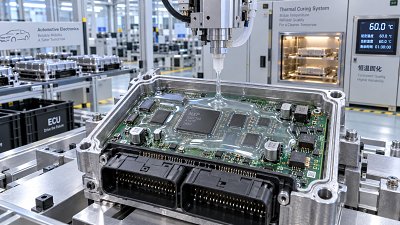
Silicone is often the right choice for an electronics potting compound when assemblies need flexible protection against moisture, vibration, thermal cycling, or stress on delicate components. Its low modulus and broad operating temperature range can make it suitable for power electronics, automotive modules, sensors, and outdoor devices. However, silicone is not ideal for every design: adhesion, thermal conductivity, cure compatibility, and rework requirements vary by formulation. The decision depends less on whether silicone is generally a good encapsulant than on how a particular formulation behaves inside the finished assembly.
Start with the failure mechanism, not the material family
A useful first question is what the potting compound must prevent. If the main concern is a connector moving under cable pull, a soft silicone gel may not provide enough mechanical restraint. If the concern is stress on a fragile sensor during repeated temperature changes, a rigid encapsulant may solve the wrong problem.
Silicone becomes especially attractive when a circuit board, housing, and components expand at different rates. A compliant cured material can accommodate some of that movement rather than transferring as much stress to solder joints, leads, or sensitive packages. This is relevant in automotive control modules, outdoor power supplies, and devices that alternate between operating heat and cold ambient conditions.
That does not make every silicone low-stress in the same way. A soft gel, a flexible elastomer, and a heavily filled thermally conductive formulation can behave quite differently. Compare modulus or hardness alongside adhesion and thermal expansion data, then check the result in the actual housing. A laboratory property measured on a free-standing specimen cannot fully predict the stresses in a confined assembly.
Where silicone often earns its place
Delicate components and thermal cycling
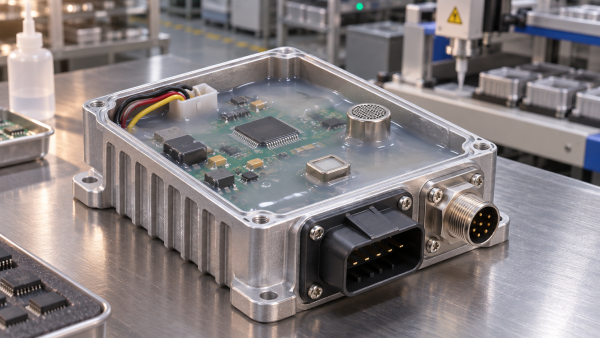
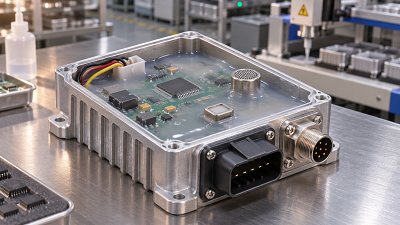
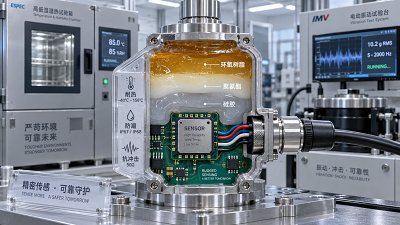
Consider a sensor board mounted inside a metal enclosure with a plastic connector passing through one wall. Temperature changes make those materials move differently. A compliant silicone can reduce the mechanical load transmitted through the encapsulant, particularly around small components and soldered connections.
The trade-off is positional control. A very soft material may cushion a component without holding it firmly enough during shock, vibration, or handling. If a coil, transformer, or heavy connector needs restraint, the design may need a mechanical support, a firmer potting formulation, or local reinforcement rather than a softer gel throughout.
Moisture exposure and outdoor electronics
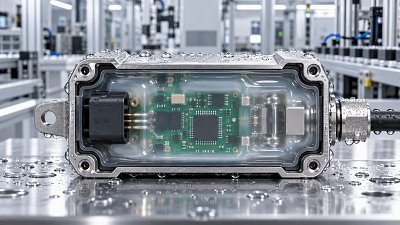
Silicone potting can protect circuitry from splashes, condensation, and contaminants, but it should not be treated as an automatic hermetic seal. Water vapor can permeate polymers, and moisture can travel along an inadequately bonded interface or through cable assemblies. The relevant question is whether the complete construction keeps moisture away from sensitive areas for the required service life.
For an outdoor sensor, inspect the cable entry, housing joint, and potting-to-substrate bond as carefully as the bulk material. A compound with good water resistance may still fail to protect a board if it pulls away from a housing wall during temperature cycling. Where immersion, pressure washing, salt exposure, or long-term humidity is expected, test the assembled unit under those conditions.
Power electronics with a manageable heat path
Thermally conductive silicones are worth evaluating when power components need environmental protection and a path for heat to reach a housing or heat sink. Typical candidates include power supplies, inverters, and control modules. They are also relevant to battery electronics, although potting around a battery system should not be assumed to solve cell-level thermal management or safety on its own.
A conductivity value on a data sheet is not the whole thermal design. Heat must cross the compound, make contact with the intended surface, and leave through a housing or cooling system. A thick potting layer, an air void under a hot component, or poor contact with the enclosure can undermine the benefit of a higher-conductivity formulation. Compare candidate materials at the actual bond-line or potting thickness and validate temperatures at the real operating load.
The properties that decide whether it will work
Adhesion is an interface problem
Some silicone encapsulants bond well to selected substrates; others are designed to remain removable or require a primer. Adhesion to aluminum tells you little about adhesion to a particular engineering plastic, solder mask, coating, or connector overmold. Mold-release residue, fingerprints, oxidation, and cleaning chemistry can change the result.
Ask the supplier about the exact substrate grade and proposed surface preparation, then test representative production parts. Check adhesion after thermal and moisture exposure, not just after cure. If the design relies on the compound staying attached to a wall to block a leakage path, loss of adhesion is a functional failure even when the silicone itself looks intact.
Cure compatibility can stop a good candidate early
Many two-part silicones use addition cure; their cure can be inhibited by certain contaminants or nearby materials. Depending on the formulation, problematic contacts may include sulfur-containing materials, amines, some tin compounds, and residues from other processes. The result can be a tacky interface or an uncured region next to an otherwise sound encapsulant.
Run a compatibility test against the actual board, conformal coating, gasket, adhesive, wire insulation, and housing. Test the proposed cleaning process as well. A small cup sample curing normally on a bench does not prove that the material will cure against every surface inside a module. Condensation-cure silicones have different constraints, including by-products and, for some systems, dependence on access to moisture; confirm whether the cure mechanism suits the depth and enclosure.
Electrical performance must be checked after exposure
Dielectric strength and volume resistivity are useful screening properties, but their relevance depends on test method, specimen condition, temperature, and moisture exposure. High-voltage designs also need attention to voids, geometry, spacing, and discharge behavior. A material with an attractive dielectric value cannot compensate for an air pocket at a critical location or a poorly designed high-field region.
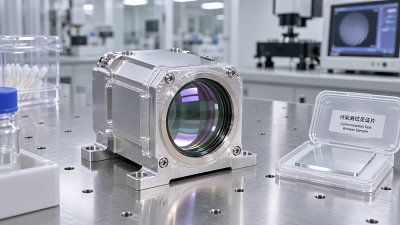
For sensitive circuits, also check whether ionic contamination, outgassing, or volatile silicone species matter to the application. Optical assemblies, certain contact surfaces, and downstream coating or bonding operations may have contamination limits that are not obvious from a general-purpose potting data sheet. Request application-specific information and verify it on the assembled product.
When another chemistry may be the better choice
Silicone is often less compelling when the main requirement is a hard, strongly bonded protective mass. Epoxy encapsulants can offer higher rigidity and strong adhesion, making them candidates where component restraint or abrasion resistance matters. The cost of that rigidity can be higher stress during thermal cycling, so the comparison must include the actual components and temperature profile.
Polyurethane can occupy a middle ground, with formulations ranging in flexibility and hardness. It may be worth screening when a design needs a different balance of adhesion, toughness, and compliance. Moisture sensitivity during processing, chemical resistance, and long-term behavior depend on the specific product; none should be assumed from the chemistry name alone.
Also question whether full potting is necessary. A conformal coating may protect a board from some environmental exposure while adding less weight and leaving components more accessible. It will not generally provide the same mechanical support or bulk coverage. The choice comes down to exposure, serviceability, electrical clearances, and the consequences of a localized defect.
Do not separate material selection from dispensing
A compound that passes the design review can still become a production problem. Highly filled thermal silicones may be viscous, abrasive to dispensing components, or prone to filler settling during storage. That affects pumping, mixing, shot consistency, and maintenance. Ask for viscosity at the intended processing temperature and shear conditions, not just a single number without context.
For two-component materials, confirm mix ratio, allowable ratio tolerance, working time, and cure schedule with the supplier. A static mixer must deliver adequate mixing at the planned flow rate and shot size; a mixer that works for a continuous bead may not give consistent results after repeated pauses. The dispensing system also needs a practical plan for purging and for managing material left in the mixer.
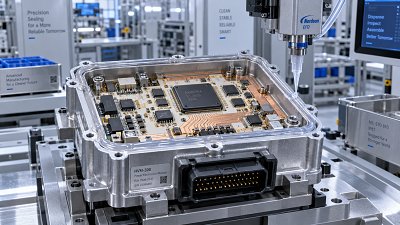
Void control deserves a trial with the real part geometry. Narrow gaps beneath components, tall housings, and rapid filling can trap air. Vacuum degassing or vacuum potting may help where justified, but the material, equipment, and assembly must be compatible with the process. Cut sections or inspect representative units using an appropriate method, and look specifically at the areas where voids would affect insulation or heat transfer.
Pot life also sets a practical limit on production rhythm. Evaluate startup, breaks, rejected shots, and line stoppages—not only ideal continuous operation. A lower-priced compound can become expensive if its processing window causes frequent purges, inconsistent fills, or excessive inspection.
Build a qualification plan around the assembly
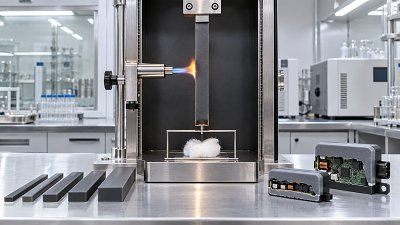
Shortlist materials against the intended operating temperature, required insulation, exposure, mechanical support, and thermal path. Then ask suppliers for current technical and safety documentation, recommended storage conditions, shelf life, cure instructions, and evidence relevant to the application. For flame performance or environmental compliance, identify the exact requirement and check whether the material, its thickness, or the finished assembly must be evaluated. A supplier declaration should be reviewed against the applicable market and customer requirements.
A useful qualification sequence is to cure candidates on representative substrates, build assemblies using the intended dispensing process, and expose them to the stresses expected in service. Measure what matters to the design: electrical leakage or insulation, component temperatures, adhesion, cracking, connector movement, and function after thermal cycling or humidity exposure. Include aged material and realistic production interruptions where these could affect the result.
Finally, define what “reworkable” means before selecting a soft silicone. A gel may be easier to remove than a rigid epoxy, but accessing a component without damaging it, cleaning residue, and restoring a reliable encapsulation are separate operations. If repair is a requirement, demonstrate the complete removal-and-repotting process on representative units. If it cannot be repeated reliably, treat the module as non-reworkable and make the design decision accordingly.
Have questions about the global trade trends discussed here, or planning your expansion and supply chain strategy? Leave a message below and let the trade experts at IADS guide you.
We respect your privacy. Your information is strictly confidential.
Recommended News
 Nov 19, 2026How to select low outgassing encapsulation materials for optical assembliesChoose low outgassing encapsulation materials with confidence. Compare test data, cure conditions, and optical compatibility to protect sensitive assemblies.
 Nov 18, 2026When should you use a silicone encapsulant for PCB packaging?Choosing an electronics packaging adhesive for PCB applications? Discover when silicone encapsulants protect against moisture, vibration, and thermal stress.
 Nov 10, 2026How does order volume affect silicone encapsulant prices?Discover how order volume affects silicone encapsulants price, and compare bulk discounts, freight, shelf life, and waste to make smarter buying decisions.
 Nov 08, 2026When should you use a silicone electronics potting compound?Discover when a silicone electronics potting compound is the right choice for moisture protection, thermal cycling, and sensitive components—and how to select the best formulation.
 Nov 04, 2026Silicone DMC Market Soft but Stable; Contract Reference Price Set at 13,800 Yuan per TonneSilicone DMC market remains soft but stable, with China's contract reference price at 13,800 yuan per tonne. Explore supply, demand and procurement trends.
 Sep 23, 2026How silicone encapsulation prevents moisture failures in sensorsElectronic encapsulation for sensors: discover how silicone reduces moisture failures, protects critical interfaces, and improves reliability under vibration and thermal cycling.
 Sep 22, 2026How to verify UL94 V-0 performance in silicone encapsulantsSilicone encapsulants UL94 V0: learn how to verify flame performance through test evidence, minimum thickness, cure controls, and traceable production practices.
 Sep 22, 2026Automotive Silicone Encapsulation: Preventing Cracks in High-Temperature ElectronicsAutomotive silicone encapsulation prevents cracks in high-temperature electronics with proven control of dispensing, voids, curing, and inspection.
 Sep 21, 2026How to Select Sensor Encapsulation Materials for Heat, Moisture, and ShockEncapsulation materials for sensors: learn how to balance heat resistance, moisture sealing, and shock protection for reliable, high-performance sensor assemblies.
 Sep 21, 2026Sealing Hybrid Packages: Material Choices for Moisture Protection and ReliabilitySealing of hybrid packages: compare epoxy, silicone, polyurethane, and dual-cure materials for dependable moisture protection and long-term reliability.
 Sep 17, 2026When silicone chip packaging adhesives prevent solder joint crackingSilicone chip packaging adhesives help prevent solder joint cracking by absorbing stress, reducing board flex, and improving BGA reliability. Explore smarter protection strategies.
 Sep 15, 2026Silicone vs. polyurethane: which offers better vibration damping for EV battery module assembly?Should I use silicone or polyurethane for vibration protection? Discover which material delivers superior long-term damping, thermal stability & safety in EV battery modules.
 Sep 03, 2026How to prevent leaks when selecting a battery pack sealing adhesiveBattery pack sealing adhesive selection made practical: prevent leaks with proven guidance on joint design, curing, dispensing, durability testing, and serviceability.
 Aug 16, 2026EU REACH Adds 5 SVHCs, Triggering Mandatory SCIP Reporting from Aug. 15, 2026EU REACH adds 5 SVHCs, making SCIP reporting mandatory from Aug. 15, 2026. Learn how the new REACH candidate list impacts exporters, epoxy adhesives, silicone encapsulants, and EU compliance.
 Aug 12, 2026How Electronics Potting for Power Modules Affects Heat Dissipation and ReliabilityElectronics potting for power modules directly impacts heat dissipation, insulation, and long-term reliability. Learn how to choose materials that reduce risk and improve performance.
 Aug 11, 2026EU PFOA Rule Takes Full Effect on Aug. 10EU PFOA Rule takes full effect on Aug. 10, tightening REACH limits for electronics and new energy materials. See who is affected, key compliance risks, and what exporters should check now.
 Aug 10, 2026ECHA Tightens PFOA Limit for Fluorinated Silicone ExportsECHA tightens PFOA limit to 25 ppb for fluorinated silicone exports. Learn how Silicone Encapsulants and Thermal Conductive Pastes can meet EU REACH compliance fast.
 Aug 07, 2026How to Choose Electronics Potting for LED Drivers by Heat and IP RatingElectronics potting for LED drivers: learn how to choose the right compound by heat path, IP rating, stress, and cure behavior to improve reliability and simplify selection.
 Jul 26, 2026ECHA Adds Two Flame Retardants to SVHC ListECHA Adds Two Flame Retardants to SVHC List: learn how DPTEBP and TBBPS may affect EU exports, SDS updates, declarations, and October 2026 compliance deadlines.
 Jul 19, 2026ECHA SVHC Update Raises Export Risks for Silicone MaterialsECHA SVHC update raises export risks for silicone materials, including silicone encapsulants and thermal conductive pastes. Learn the REACH, SCIP, and traceability impacts before October 2026.
 Jul 14, 2026Japan’s New JIS Rule Pulls Silicone Encapsulant Orders to ChinaSilicone encapsulant demand is shifting to China as Japan’s new JIS rule nears. See how compliance, certification, and EMS procurement are reshaping orders before October 2026.
 Jul 13, 2026Japan Enforces JIS T 2801-2026 on Silicone EncapsulantsJapan Enforces JIS T 2801-2026 on Silicone Encapsulants: learn how new thermal shock and ion migration tests affect PSE access, supplier approval, and Japan-bound compliance plans.
 Jul 09, 2026How to Evaluate an Electronics Packaging Adhesive Supplier for Yield StabilityElectronics packaging adhesive supplier evaluation starts with yield stability. Learn how to compare consistency, compliance, process fit, and total cost for smarter sourcing.
 Jul 04, 2026How to Evaluate Electronic Potting Materials in Japan for Heat, Moisture, and ComplianceElectronic potting materials Japan: learn how to compare heat resistance, moisture protection, and compliance data to choose reliable compounds for automotive, EV, and electronics projects.






Editor's Selection
The Archive Newsletter
Critical industrial intelligence delivered every Tuesday. Peer-reviewed summaries of the week's most impactful logistics and market shifts.