
Best Ways to Bond Dissimilar Material Composites Without Cracking
by
Published
Views:
Where dissimilar material bonding composites usually fail first
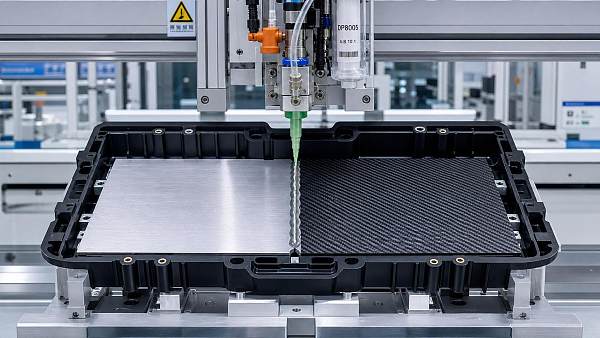
Cracks rarely begin because one material is weak by itself. They usually begin because the joint forces two materials to move differently under heat, load, moisture, or vibration.
That is why dissimilar material bonding composites cannot be judged by lap shear data alone. A metal-to-CFRP bond behaves very differently from a plastic-to-aluminum housing or a glass-filled nylon-to-steel bracket.
In practical programs, the real question is not only which adhesive sticks. The better question is which bonding system absorbs mismatch without creating stress peaks at the bond line.
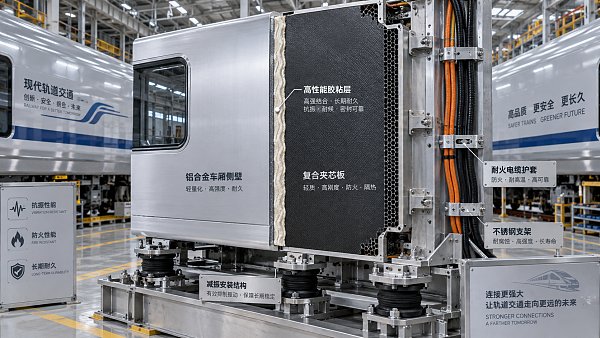
This matters across lightweight transport, electronics assembly, battery systems, rail interiors, wind components, and laminated industrial products. Different sectors use different chemistries, but the crack drivers are often related.
A useful evaluation framework combines polymer behavior, surface energy, cure shrinkage, dispensing precision, service temperature, and long-term fatigue. That broader view is where many dissimilar material bonding composites projects become more reliable.
Actual applications change the decision logic
The same adhesive family can perform well in one assembly and crack early in another. The difference usually comes from geometry, thermal cycling range, substrate stiffness, and production method.
A thin electronics bond line often values low stress and fast cure. A structural transport joint may accept slower cure, but it needs higher toughness and better peel resistance.
In laminated panels, large bonded areas introduce another challenge. Differential expansion across a wide surface can build internal stress even when the adhesive bond looks strong in small coupons.
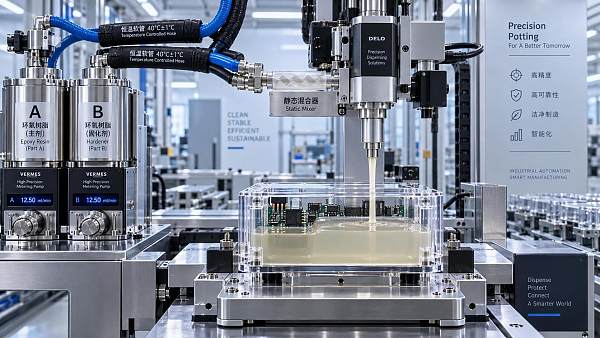
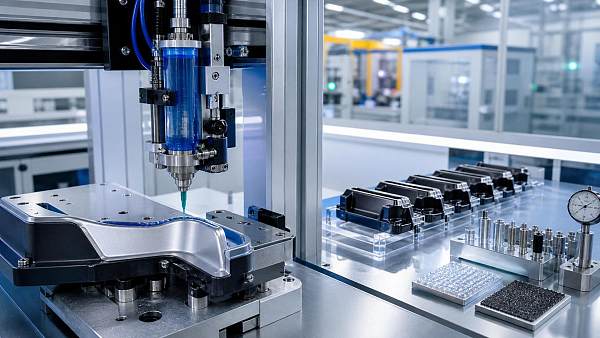
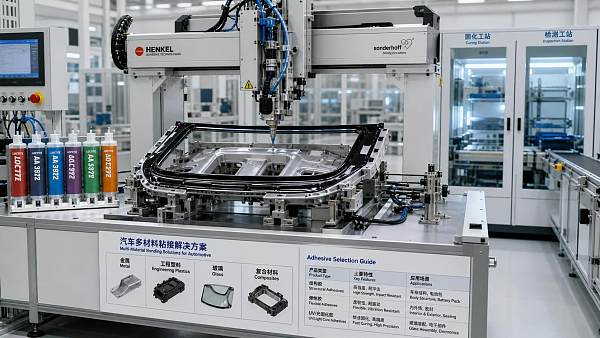
More advanced reviews also look at how adhesive dispensing affects quality. Jet valves, static mixers, and automated fluid control systems can reduce voids, ratio drift, and bead inconsistency that later become crack initiation points.
This is one reason technical intelligence platforms such as IADS matter in day-to-day decision work. Bonding success depends on chemistry, equipment, curing behavior, compliance, and process repeatability together.
Metal-to-composite structures need toughness more than headline strength
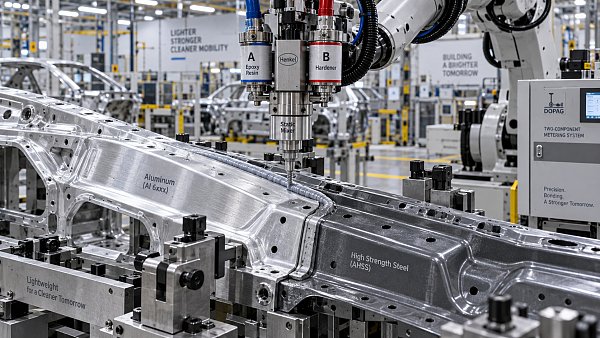
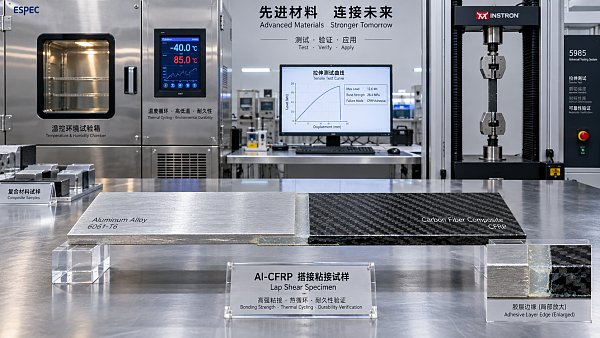
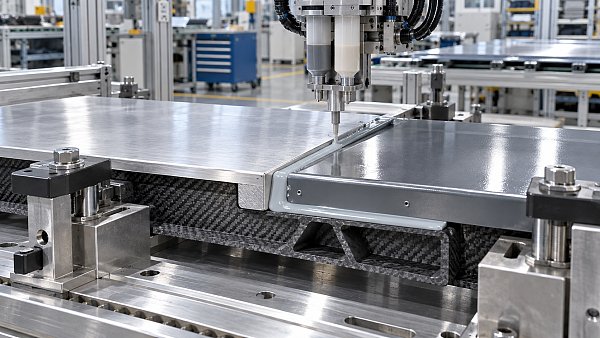
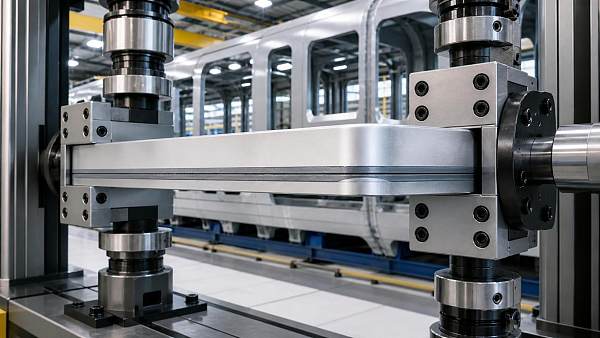
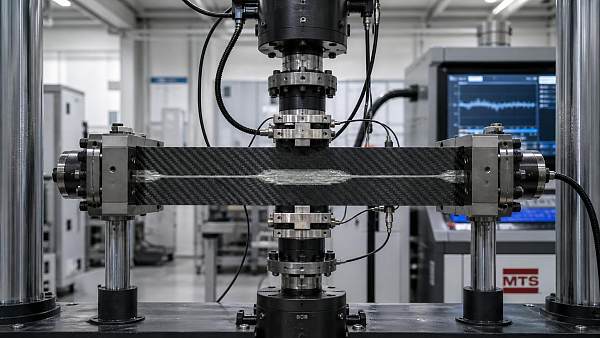
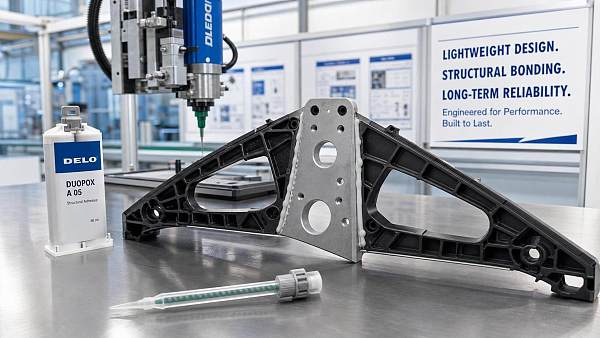
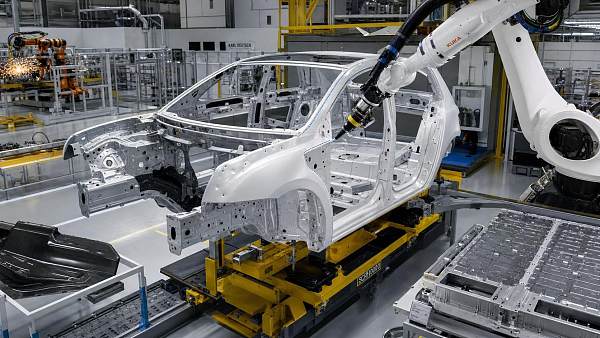
Metal bonded to CFRP or GFRP appears straightforward until thermal cycling begins. Aluminum expands more than carbon fiber composites, so the joint sees repeated shear and peel stress during service.
In this setting, brittle systems often disappoint even if initial strength looks attractive. Toughened 2K epoxy structural adhesives are frequently chosen because they balance stiffness with crack resistance.
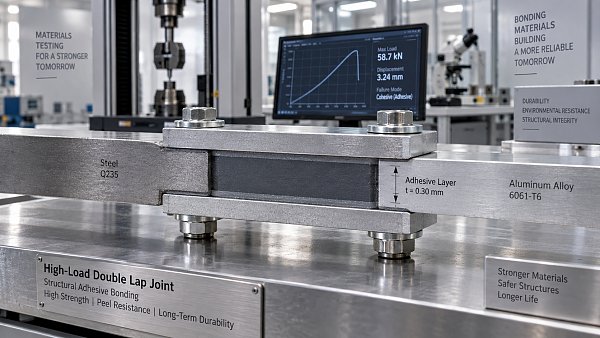
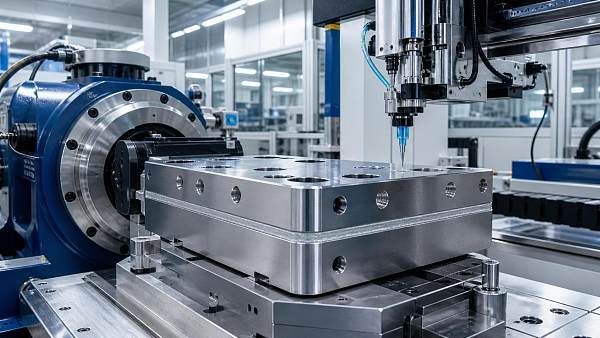
Joint design matters as much as chemistry. Wider overlap, controlled bond line thickness, and radiused edges help reduce local stress concentration. The adhesive should not be expected to correct poor geometry.
Surface preparation also varies by substrate pair. A blasted and primed aluminum surface may bond well, while the composite side may need peel ply control, solvent cleaning, or plasma treatment.
For dissimilar material bonding composites in transport assemblies, fatigue and corrosion exposure deserve early testing. The wrong interface design can combine galvanic risk with mechanical cracking.
Plastic-to-metal housings usually fail because of movement, not adhesion
A common mistake is treating engineered plastics like rigid metals. Many housings made from PC, ABS, PA, or PBT move significantly with heat and humidity, especially near clips, screws, and thin ribs.
Here, dissimilar material bonding composites decisions often shift toward flexible polyurethane, modified epoxy, or silicone-based systems. The best choice depends on whether structural load or sealing performance dominates.
If the assembly also needs impact resistance, a slightly softer adhesive can outperform a stronger but brittle option. Crack prevention is often about strain accommodation rather than peak tensile values.
Another practical issue is mold release residue. Bond failures on plastic parts are frequently process contamination problems. Material compatibility checks should be paired with realistic cleaning and aging tests.
A quick comparison of common scenario differences
Battery and electronics assemblies add thermal and dispensing constraints
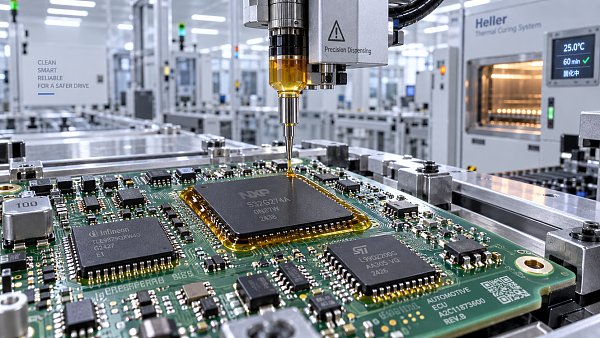
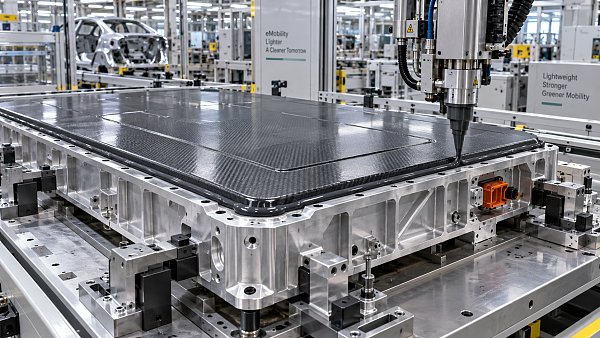
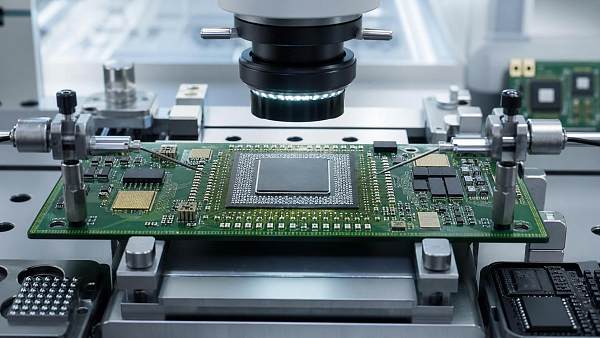
In EV battery packs and compact electronics, dissimilar material bonding composites often involve metals, plastics, ceramics, films, and filled compounds in very tight spaces.
These assemblies are less forgiving because stress can build during cure before the product even enters service. High filler content, fast curing, or poor mix quality can create internal cracking or substrate warpage.
For battery potting and encapsulation, thermal conductivity is important, but low modulus and flame-retardant behavior may matter just as much. A thermally conductive material that transfers too much stress can damage delicate interfaces.
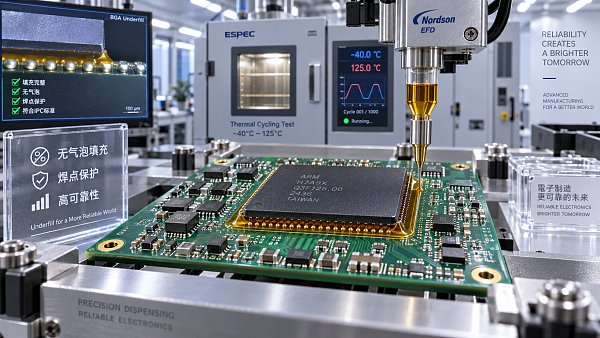
In camera modules, screen bonding, or underfill work, adhesive volume control becomes critical. Piezoelectric jetting, precise valves, and vision-guided dispensing can improve bead placement and reduce hidden weak points.
That is why process capability should be reviewed with the material. Good dissimilar material bonding composites performance on paper can collapse if the dispensing window is too narrow for production reality.
Large laminates and panels call for stress distribution, not just bond strength
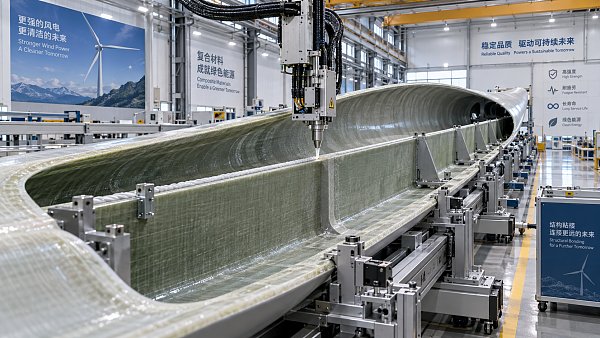
Wind blade details, rail interiors, vehicle panels, and industrial laminates often combine skins, cores, films, metals, and reinforced layers across wide surfaces. Cracking here tends to spread gradually, then show up as delamination.
Hot melt adhesive films, EVA films, TPU films, tapes, and reactive systems can all be relevant, but they do different jobs. Some prioritize clean lamination. Others prioritize structural integrity or environmental resistance.
The better judgment method is to map the service condition first. Indoor decorative paneling, exterior transport exposure, and high-humidity equipment covers should not be grouped into one requirement set.
For dissimilar material bonding composites in large panels, uniform pressure, trapped air control, and thermal post-treatment can matter more than extra adhesive thickness. Excess material often increases stress instead of solving it.
Misjudgments that often create cracks later
One frequent error is selecting by datasheet peak strength only. High strength does not guarantee durability when the bonded materials expand, shrink, and flex at different rates.
Another is copying a similar project without checking substrate finish changes. Different primers, recycled resin content, fiber orientation, or coating batches can alter dissimilar material bonding composites performance significantly.
Short-term validation also causes problems. Some joints pass room-temperature testing and then fail after humidity aging, salt spray, thermal shock, or repeated vibration.
Cost comparisons are often incomplete as well. A cheaper adhesive may require slower curing, tighter storage control, more rework, or stricter dispensing maintenance, raising total process cost.
- Check cure shrinkage and modulus together, not separately.
- Review real bond line thickness tolerance in production.
- Confirm REACH, RoHS, halogen-free, or flame requirements early.
- Test with actual dispensing equipment, not hand-applied samples only.
A practical path for better dissimilar material bonding composites decisions
Start by defining the true interface pair, not the product category. Metal-to-composite, plastic-to-metal, and film-to-rigid substrate joints each need different stress management logic.
Then match the adhesive family to the movement profile. Toughened epoxy, polyurethane, silicone, UV-curing materials, tapes, or hot melt films each fit different ranges of stiffness, speed, and environment.
After that, review the process chain. Surface preparation, meter-mix ratio stability, static mixer choice, dispense path, curing method, and inspection criteria should support the same crack prevention target.
A useful next step is building a simple matrix for every program: substrates, loads, thermal range, chemical exposure, compliance needs, cycle time, and acceptable failure mode. That matrix makes dissimilar material bonding composites choices easier to compare.
Where uncertainty remains, run small pilot trials with production-like dispensing and realistic aging. That approach usually reveals more than isolated lab strength data and leads to more durable, scalable bond decisions.
Recommended News
 Oct 08, 2026When do automotive adhesive lightweighting applications justify 2K epoxy?Adhesive lightweighting applications automotive: discover when 2K epoxy delivers durable, lightweight structural bonding for mixed-material vehicle designs.
 Sep 28, 2026How material characterization predicts structural adhesive bond durabilityStructural adhesive material characterization reveals how mechanical, thermal, cure, and environmental data predict bond durability—helping engineers select reliable solutions with confidence.
 Sep 25, 2026How to select epoxy structural bonding materials for high-load jointsEpoxy structural bonding materials: learn how to select durable solutions for high-load joints, balancing strength, toughness, surface prep, cure, and environmental resistance.
 Sep 20, 2026When 2K epoxy structural industrial bonding solutions make senseStructural industrial bonding solutions with 2K epoxy help engineers achieve durable, sealed joints for mixed materials. Explore selection, curing, and design insights.
 Sep 18, 2026How bonding applications in wind energy prevent fatigue-related failuresBonding applications in wind energy help prevent fatigue-related failures through durable joint design, crack resistance, cure control, and reliable production processes.
 Sep 23, 2026PCB Underfill Selection Guide for Fine-Pitch Components and Thermal CyclingPCB underfill selection guide for fine-pitch BGAs, CSPs, and flip-chip devices. Compare flow, CTE, modulus, adhesion, curing, and dispensing for reliable thermal cycling performance.
 Sep 23, 2026Circuit Board Level Underfill Market: Growth Drivers and Supply Chain OutlookExplore the electronic circuit board level underfill material market with actionable insights on reliability, dispensing precision, material selection, and supply chain resilience.
 Sep 20, 2026Rail Bonding Solutions for Vibration, Fire Safety, and Long-Term DurabilityBonding solutions for rail: explore proven strategies for vibration resistance, fire safety, durable joints, surface preparation, and production-ready validation.
 Sep 19, 2026Lightweight Adhesives for EVs: Reducing Mass Without Compromising Joint StrengthLight weighting adhesives for EVs help reduce vehicle mass while maintaining joint strength, durability, and production efficiency. Explore smarter bonding solutions for EV designs.
 Sep 15, 2026How fluid control engineering prevents voids in 2K epoxy sealantsFluid control engineering for sealants helps prevent voids in 2K epoxy systems. Explore practical methods for stable metering, mixing, pressure control, and air-free cavity filling.
 Sep 10, 2026When do adhesive lightweighting applications make sense in aerospace?Adhesive lightweighting applications aerospace: learn when bonded joints reduce mass, improve load transfer, and support durable, certifiable aircraft designs.
 Aug 28, 2026How to select an epoxy rail vehicle structural adhesive for fatigue loadsEpoxy rail vehicle structural adhesive selection for fatigue loads: evaluate toughness, joint design, surface prep, curing, and rail compliance for durable bonds.
 Aug 25, 2026When does BGA underfill technology for PCB assembly reduce field failures?BGA underfill technology for pcb assembly reduces field failures when thermal cycling, shock, or board flex drive solder fatigue. Learn when it boosts reliability—and when it adds cost without real gains.
 Aug 11, 2026How to Choose Epoxy Adhesive Systems for Metal Bonding Under Heat and VibrationEpoxy adhesive systems for metal bonding: learn how to compare heat resistance, vibration durability, cure profile, and dispensing fit to choose a more reliable solution.
 Aug 10, 2026Industrial Adhesive Technology Analysis: What Drives Bond Strength and Process Stability?Industrial adhesive technology analysis reveals what drives bond strength and process stability—from chemistry and surface prep to curing and dispensing. Learn how to reduce failure risk.
 Aug 05, 2026How to Evaluate Lightweight Structural Bonding for Composites Under Dynamic LoadsLightweight structural bonding for composites under dynamic loads demands more than static strength. Explore fatigue, impact, surface prep, and process factors to choose durable, weight-saving bonds.
 Jul 14, 2026How to Choose Lightweight Structural Bonding for PlasticsLightweight structural bonding for plastics explained: compare adhesive types, joint design, process control, and durability factors to choose lighter, stronger, production-ready assemblies.
 Jul 13, 2026Choosing an Adhesive for Automotive Supplier ProgramsAdhesive for automotive supplier programs affects strength, process stability, compliance, and launch risk. Learn how to choose the right solution for reliable, scalable production.
 Jul 11, 2026Automotive Adhesive Bonding Process: Key Steps That Prevent Bond FailureAutomotive adhesive bonding process essentials: learn the key steps that prevent bond failure, improve durability, and optimize surface prep, dispensing, and cure control in automotive assembly.
 Jul 09, 2026When Structural Adhesives Can Replace Riveting in Metal AssembliesStructural adhesive replacement riveting: learn when bonded metal assemblies can outperform rivets in fatigue, corrosion control, weight reduction, and automation.
 Jul 08, 2026Best Ways to Bond Dissimilar Material Composites Without CrackingDissimilar material bonding composites: learn how to prevent cracks in metal, plastic, battery, and laminate assemblies with smarter adhesive, process, and stress-control strategies.
![]() Jul 07, 2026How Lap Shear Testing Reveals Structural Adhesive Joint Failure RisksLap shear structural adhesive joint testing reveals hidden failure risks before launch. Learn how process conditions, substrates, and aging affect joint reliability.
Jul 07, 2026How Lap Shear Testing Reveals Structural Adhesive Joint Failure RisksLap shear structural adhesive joint testing reveals hidden failure risks before launch. Learn how process conditions, substrates, and aging affect joint reliability. Jul 06, 2026Can Automotive Adhesive Replace Welding in Body Assembly?Automotive adhesive replacement for welding can improve multi-material body assembly with better sealing, lower corrosion risk, and more design flexibility. See where bonding beats welding.
 Jul 04, 2026Structural Bonding for Aluminum: When 2K Epoxy Outperforms Welding and FastenersStructural bonding for aluminum with 2K epoxy can outperform welding and fasteners by reducing distortion, corrosion risk, and weight—see where it delivers stronger ROI.


Editor's Selection
The Archive Newsletter
Critical industrial intelligence delivered every Tuesday. Peer-reviewed summaries of the week's most impactful logistics and market shifts.