Can Automotive Adhesive Replace Welding in Body Assembly?
by
Published
Views:
Can automotive adhesive replace welding in body assembly? In many cases, yes, but not as a universal swap. The real question is where automotive adhesive replacement for welding creates better structural performance, cleaner joining, and lower lifetime cost.
That matters because body structures now mix steel, aluminum, composites, and coated substrates. Traditional welding still dominates many joints, yet it struggles when lightweighting, corrosion control, and multi-material design move to the center of production strategy.
For companies evaluating capital spending, platform redesign, or process automation, automotive adhesive replacement for welding is no longer a niche topic. It sits at the intersection of materials engineering, assembly speed, compliance, and long-term manufacturing flexibility.
Why the conversation has shifted
Body assembly used to be driven mainly by weldability. Today it is shaped by crash performance, mixed-material architecture, battery integration, and pressure to reduce mass without sacrificing durability.
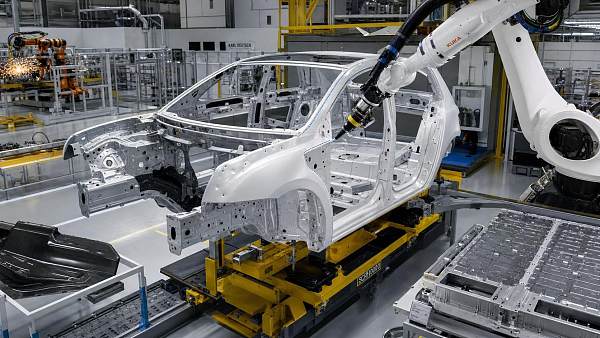
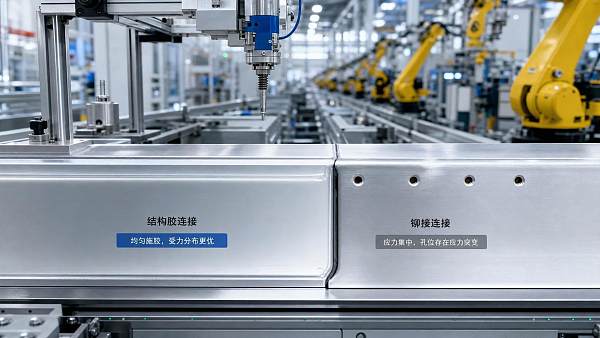
This shift explains the growing interest in automotive adhesive replacement for welding. Structural adhesives distribute stress across a bond line instead of concentrating load at a weld point.
That difference affects stiffness, fatigue behavior, noise reduction, and corrosion exposure. It also opens joining options for dissimilar materials that would be difficult, expensive, or unreliable with heat-based methods.
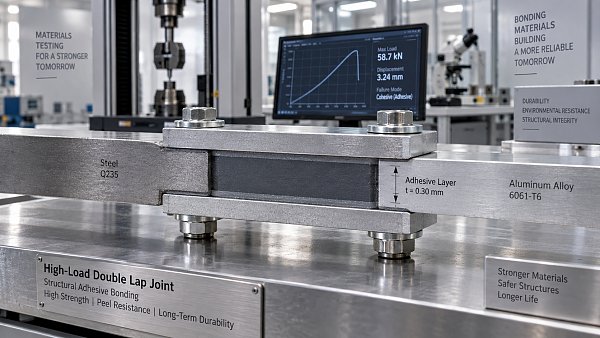
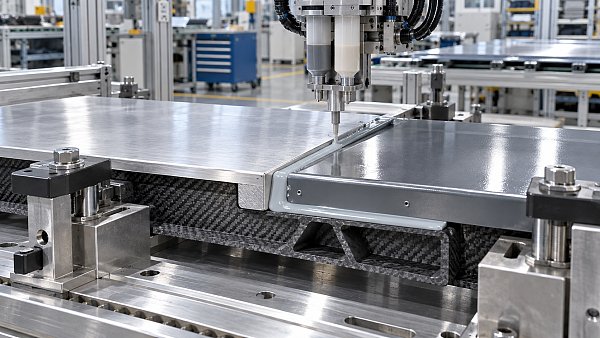
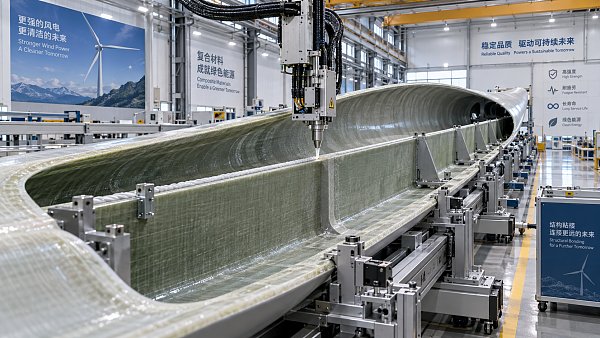
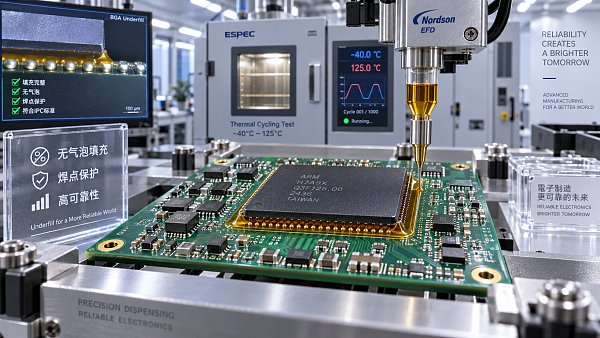
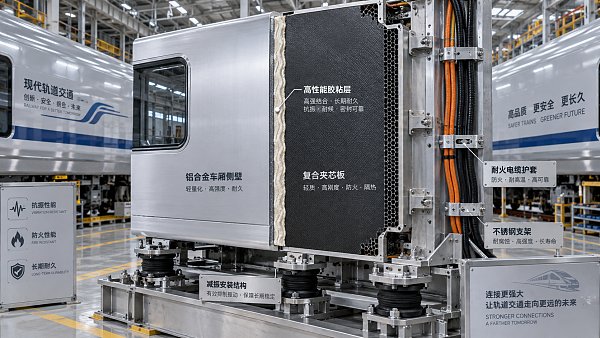
From a broader industrial perspective, the same logic appears in rail equipment, wind blades, electronics housings, and EV battery systems. Bonding is no longer only a materials choice. It is a process architecture decision.
What automotive adhesive replacement for welding really means
The phrase does not mean every weld disappears. In practice, replacement happens along a spectrum that includes full bonding, hybrid bonding, and selective substitution in specific body zones.
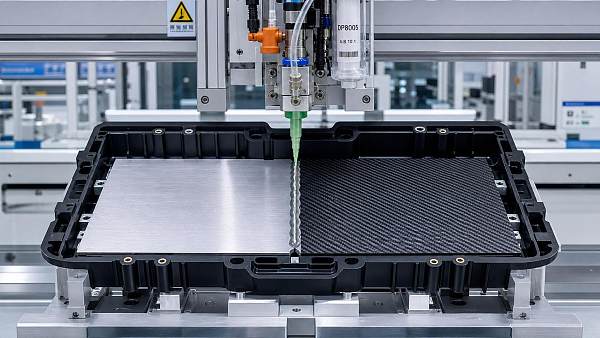
A structural adhesive can join metal-to-metal, metal-to-composite, or coated surfaces while contributing to stiffness and sealing. Depending on formulation, it may be epoxy, polyurethane, acrylic, or another engineered chemistry.
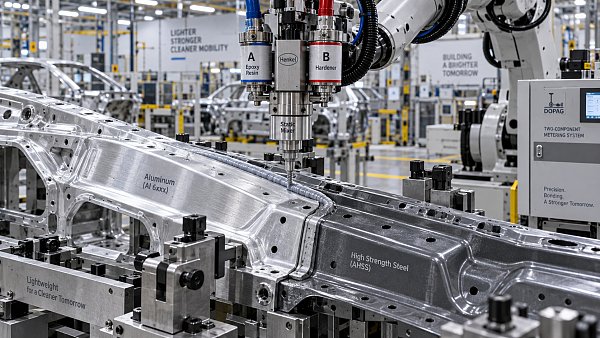
In body assembly, the most relevant candidates are usually 2K epoxy structural adhesives and related seal-bond systems. These are designed for load transfer, impact resistance, thermal cycling, and compatibility with automated dispensing.
This is where platforms such as IADS add value. The decision is not just about bond strength data. It also depends on curing behavior, dispensing accuracy, surface preparation, fluid control, and line integration.
Where adhesives can outperform welding
The strongest case for automotive adhesive replacement for welding appears when heat becomes a liability. Welding introduces thermal distortion, coating damage, and limits on joining thin or dissimilar substrates.
Adhesives offer several practical advantages:
- Uniform stress distribution across a wider area
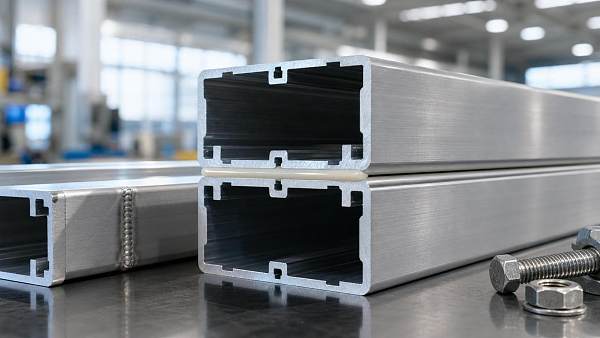
- Better joining of aluminum to steel or composites
- Reduced galvanic corrosion risk through material separation
- Improved sealing against water, dust, and chemicals
- Less visible distortion on thin panels
- Potential weight reduction through design simplification
- Lower vibration and noise transmission
These benefits matter most in closures, roof assemblies, floor structures, battery enclosures, bonded reinforcements, and joints where sealing and stiffness need to happen together.
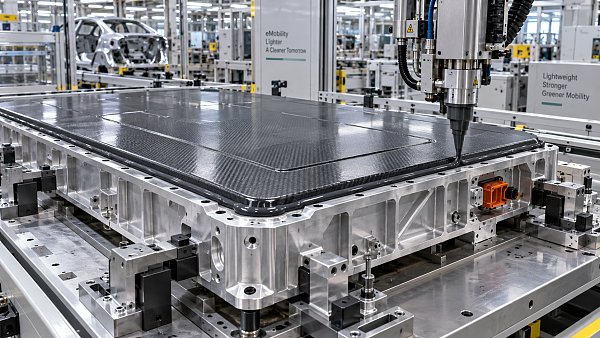
In electric vehicle programs, the argument becomes even stronger. Battery pack structures often require thermal management, sealing, electrical isolation, and crash durability in one coordinated assembly strategy.
Where welding still keeps its place
It would be misleading to present bonding as a complete replacement everywhere. Welding remains highly effective for certain load cases, line speeds, repair ecosystems, and mature high-volume production cells.
Instant fixture strength is one reason. Many adhesives need time, heat, or both to reach full properties. That affects takt planning, in-process handling, and quality control logic.
Some joints also face peel, impact, or service conditions that still favor a hybrid strategy. In those cases, adhesives support the weld rather than replacing it entirely.
The better framing is not adhesives versus welding. It is the correct combination of joining methods for each body area, material set, and production objective.
A practical comparison for body assembly decisions
A side-by-side view helps clarify where automotive adhesive replacement for welding is commercially realistic.
The table also shows why procurement and engineering decisions must stay connected. Material cost alone does not answer the question. Process cost, rework rate, energy use, and line flexibility all matter.
The process side is as important as the chemistry
Many adhesive programs underperform because the material was evaluated in isolation. Successful automotive adhesive replacement for welding depends on precise application and stable cure conditions.
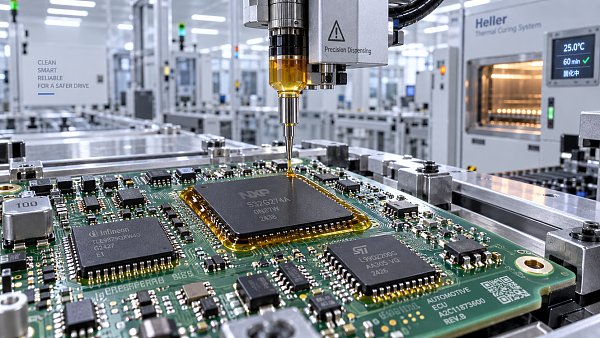
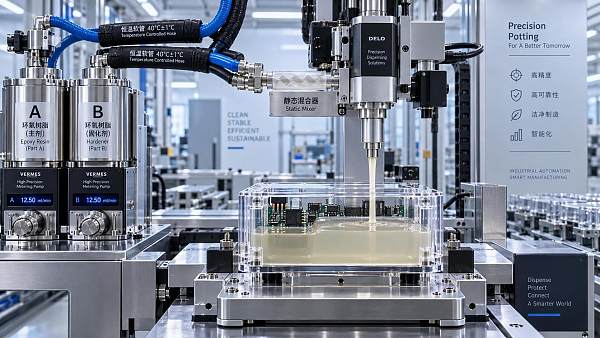
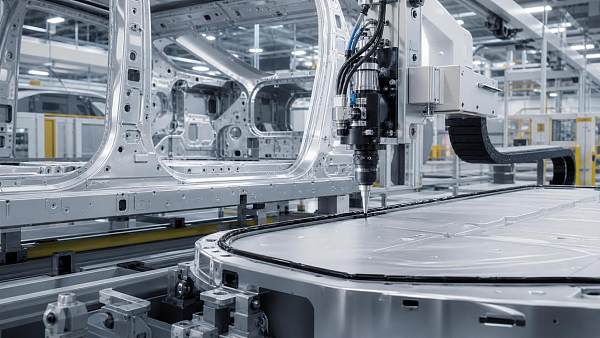
Dispensing consistency affects bond line thickness, void formation, bead continuity, and final joint strength. That is why automated fluid control systems, static mixers, jet valves, and vision-guided dispensing are increasingly relevant.
IADS covers this wider picture well. It connects polymer chemistry with dispensing precision, thermal behavior, compliance, and automation, which is exactly how joining decisions should be evaluated in production reality.
A structural adhesive with excellent datasheet numbers can still fail commercially if mixing ratio drifts, surface energy varies, or cure windows do not match line throughput.
Key checkpoints before replacing welds
Before scaling automotive adhesive replacement for welding, several checkpoints deserve careful review.
- Joint design: overlap geometry, bond area, and tolerance stack-up
- Substrate condition: oils, coatings, oxide layers, and pretreatment stability
- Mechanical targets: shear, peel, fatigue, and crash load behavior
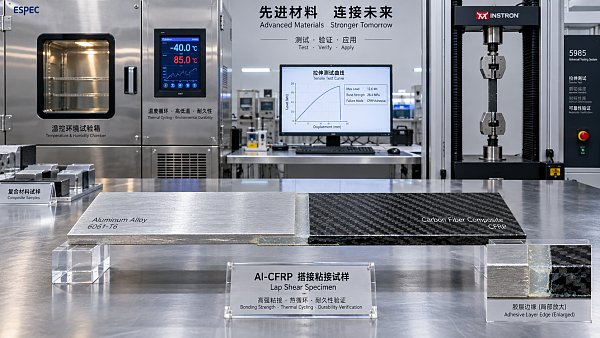
- Environmental durability: humidity, salt spray, thermal cycling, and chemicals
- Curing strategy: room temperature, heat assist, induction, or oven integration
- Inspection method: destructive testing, inline monitoring, and traceability
- Compliance review: VOC, REACH SVHC, RoHS, and OEM specifications
These checkpoints often reveal that replacement is strongest in selected zones first. A phased approach usually produces better data than a plant-wide joining change.
How to evaluate the business case
The business case should include more than material price per kilogram. That is too narrow for a joining technology comparison.
A stronger evaluation model includes cycle time impact, energy consumption, corrosion warranty exposure, tool maintenance, scrap rate, design freedom, and downstream sealing reduction.
It is also useful to compare capital paths. Upgrading weld cells, fume extraction, and power systems can be expensive. In some scenarios, automated dispensing platforms offer a more flexible expansion route.
When the body structure is moving toward mixed materials, the value of automotive adhesive replacement for welding often becomes strategic rather than incremental. It supports future platform options, not only current cost savings.
What a sensible next step looks like
The most useful next step is to map body joints by function, substrate pair, and failure risk. That quickly shows where welding is essential, where hybrid joining fits, and where bonding may replace it.
Then compare adhesive candidates with dispensing methods, cure windows, and validation standards as one package. Looking at chemistry without process data usually leads to incomplete conclusions.
For teams tracking this transition, IADS is a useful reference point because it links structural bonding materials with dispensing systems, compliance questions, and real manufacturing context.
Automotive adhesive replacement for welding is not a simple yes-or-no decision. It is a selective, engineering-led shift. The companies that assess it well tend to gain better flexibility before that advantage becomes mandatory.
- structural adhesives
- dispensing systems
- structural bonding
- static mixers
- dispensing accuracy
- fluid control systems
- dispensing precision
- automated dispensing
- automated fluid control
- adhesive replacement for welding
- structural bonding materials
- automated fluid control systems
- automotive adhesive replacement for welding
Recommended News
 Oct 08, 2026When do automotive adhesive lightweighting applications justify 2K epoxy?Adhesive lightweighting applications automotive: discover when 2K epoxy delivers durable, lightweight structural bonding for mixed-material vehicle designs.
 Sep 28, 2026How material characterization predicts structural adhesive bond durabilityStructural adhesive material characterization reveals how mechanical, thermal, cure, and environmental data predict bond durability—helping engineers select reliable solutions with confidence.
 Sep 25, 2026How to select epoxy structural bonding materials for high-load jointsEpoxy structural bonding materials: learn how to select durable solutions for high-load joints, balancing strength, toughness, surface prep, cure, and environmental resistance.
 Sep 20, 2026When 2K epoxy structural industrial bonding solutions make senseStructural industrial bonding solutions with 2K epoxy help engineers achieve durable, sealed joints for mixed materials. Explore selection, curing, and design insights.
 Sep 18, 2026How bonding applications in wind energy prevent fatigue-related failuresBonding applications in wind energy help prevent fatigue-related failures through durable joint design, crack resistance, cure control, and reliable production processes.
 Sep 23, 2026PCB Underfill Selection Guide for Fine-Pitch Components and Thermal CyclingPCB underfill selection guide for fine-pitch BGAs, CSPs, and flip-chip devices. Compare flow, CTE, modulus, adhesion, curing, and dispensing for reliable thermal cycling performance.
 Sep 23, 2026Circuit Board Level Underfill Market: Growth Drivers and Supply Chain OutlookExplore the electronic circuit board level underfill material market with actionable insights on reliability, dispensing precision, material selection, and supply chain resilience.
 Sep 20, 2026Rail Bonding Solutions for Vibration, Fire Safety, and Long-Term DurabilityBonding solutions for rail: explore proven strategies for vibration resistance, fire safety, durable joints, surface preparation, and production-ready validation.
 Sep 19, 2026Lightweight Adhesives for EVs: Reducing Mass Without Compromising Joint StrengthLight weighting adhesives for EVs help reduce vehicle mass while maintaining joint strength, durability, and production efficiency. Explore smarter bonding solutions for EV designs.
 Sep 15, 2026How fluid control engineering prevents voids in 2K epoxy sealantsFluid control engineering for sealants helps prevent voids in 2K epoxy systems. Explore practical methods for stable metering, mixing, pressure control, and air-free cavity filling.
 Sep 10, 2026When do adhesive lightweighting applications make sense in aerospace?Adhesive lightweighting applications aerospace: learn when bonded joints reduce mass, improve load transfer, and support durable, certifiable aircraft designs.
 Aug 28, 2026How to select an epoxy rail vehicle structural adhesive for fatigue loadsEpoxy rail vehicle structural adhesive selection for fatigue loads: evaluate toughness, joint design, surface prep, curing, and rail compliance for durable bonds.
 Aug 25, 2026When does BGA underfill technology for PCB assembly reduce field failures?BGA underfill technology for pcb assembly reduces field failures when thermal cycling, shock, or board flex drive solder fatigue. Learn when it boosts reliability—and when it adds cost without real gains.
 Aug 11, 2026How to Choose Epoxy Adhesive Systems for Metal Bonding Under Heat and VibrationEpoxy adhesive systems for metal bonding: learn how to compare heat resistance, vibration durability, cure profile, and dispensing fit to choose a more reliable solution.
 Aug 10, 2026Industrial Adhesive Technology Analysis: What Drives Bond Strength and Process Stability?Industrial adhesive technology analysis reveals what drives bond strength and process stability—from chemistry and surface prep to curing and dispensing. Learn how to reduce failure risk.
 Aug 05, 2026How to Evaluate Lightweight Structural Bonding for Composites Under Dynamic LoadsLightweight structural bonding for composites under dynamic loads demands more than static strength. Explore fatigue, impact, surface prep, and process factors to choose durable, weight-saving bonds.
 Jul 14, 2026How to Choose Lightweight Structural Bonding for PlasticsLightweight structural bonding for plastics explained: compare adhesive types, joint design, process control, and durability factors to choose lighter, stronger, production-ready assemblies.
 Jul 13, 2026Choosing an Adhesive for Automotive Supplier ProgramsAdhesive for automotive supplier programs affects strength, process stability, compliance, and launch risk. Learn how to choose the right solution for reliable, scalable production.
 Jul 11, 2026Automotive Adhesive Bonding Process: Key Steps That Prevent Bond FailureAutomotive adhesive bonding process essentials: learn the key steps that prevent bond failure, improve durability, and optimize surface prep, dispensing, and cure control in automotive assembly.
 Jul 09, 2026When Structural Adhesives Can Replace Riveting in Metal AssembliesStructural adhesive replacement riveting: learn when bonded metal assemblies can outperform rivets in fatigue, corrosion control, weight reduction, and automation.
 Jul 08, 2026Best Ways to Bond Dissimilar Material Composites Without CrackingDissimilar material bonding composites: learn how to prevent cracks in metal, plastic, battery, and laminate assemblies with smarter adhesive, process, and stress-control strategies.
![]() Jul 07, 2026How Lap Shear Testing Reveals Structural Adhesive Joint Failure RisksLap shear structural adhesive joint testing reveals hidden failure risks before launch. Learn how process conditions, substrates, and aging affect joint reliability.
Jul 07, 2026How Lap Shear Testing Reveals Structural Adhesive Joint Failure RisksLap shear structural adhesive joint testing reveals hidden failure risks before launch. Learn how process conditions, substrates, and aging affect joint reliability. Jul 06, 2026Can Automotive Adhesive Replace Welding in Body Assembly?Automotive adhesive replacement for welding can improve multi-material body assembly with better sealing, lower corrosion risk, and more design flexibility. See where bonding beats welding.
 Jul 04, 2026Structural Bonding for Aluminum: When 2K Epoxy Outperforms Welding and FastenersStructural bonding for aluminum with 2K epoxy can outperform welding and fasteners by reducing distortion, corrosion risk, and weight—see where it delivers stronger ROI.


Editor's Selection
The Archive Newsletter
Critical industrial intelligence delivered every Tuesday. Peer-reviewed summaries of the week's most impactful logistics and market shifts.