
Industrial Adhesives for Assembly: Cost vs Throughput
by
Published
Views:
Why does the cost-versus-throughput question matter so much in assembly?
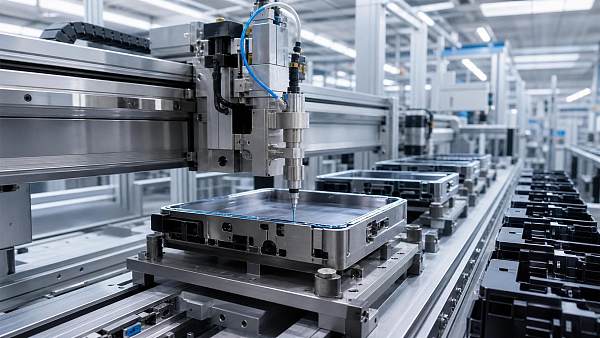
Industrial adhesives for assembly now influence much more than bond strength. They shape takt time, fixture loading, rework rates, labor intensity, and line stability.
That is why the cheapest adhesive rarely delivers the lowest total cost. A low unit price can hide slow curing, difficult dispensing, or inconsistent wetting.
In practical terms, every extra second at the bonding station affects throughput. Every variation in bead size or cure profile can affect scrap, warranty risk, and downstream scheduling.
The better question is not simply, “What does this adhesive cost per kilogram?” It is, “What does this bonding process cost per finished unit?”
This is where industrial adhesives for assembly need to be evaluated alongside dispensing systems, fixturing, cure method, and material compatibility.
Across electronics, automotive parts, rail interiors, packaging lines, and laminated components, the same pattern appears. Throughput losses usually come from process mismatch, not chemistry alone.
A useful way to frame the decision is simple: does the adhesive support the required output without creating hidden process cost?
When are industrial adhesives for assembly actually more economical than mechanical joining?
This depends on substrate mix, cosmetic requirements, stress distribution, and automation level. Adhesives often become more economical when joining dissimilar materials or thin substrates.
Welding, riveting, and screws add visible marks, local stress concentration, and extra handling steps. Adhesive bonding can reduce those issues while also lowering part count.
The savings are strongest when assembly needs sealing and bonding in one step. That is common in electronics housings, lightweight panels, and transport components.
Industrial adhesives for assembly also become attractive when vibration resistance matters. A bonded joint spreads loads more evenly than a point-fastened connection.
Still, adhesives are not automatically faster. If cure time is long and fixturing is manual, the process can become a bottleneck.
More often, the decision turns on a combined view of material cost, equipment investment, floor space, and quality escape risk.
This comparison is more useful than price alone because it ties the choice to production reality.
Which adhesive variables have the biggest impact on throughput?
Cure speed is the obvious factor, but it is not the only one. Viscosity, open time, mixing behavior, and dispensing accuracy can be just as important.
For example, a fast-curing adhesive with unstable flow can still slow the line. Operators may spend extra time correcting bead placement or cleaning stringing.
In electronics assembly, UV-curing materials often improve throughput because cure happens on demand. That removes long waiting windows between dispense and handling.
In structural applications, 2K epoxy or polyurethane systems can support high output when paired with precise static mixing and automated metering.
Industrial adhesives for assembly also perform differently depending on substrate preparation. A chemistry that looks efficient in the lab may slow production if surface cleaning is demanding.
A practical review should cover the full process window:
- Dispense speed and bead repeatability
- Working life after mixing or exposure
- Fixture time before movement
- Final cure method and energy demand
- Rework difficulty if alignment fails
- Compatibility with jet valves, volumetric pumps, or film lamination equipment
IADS often frames these choices through both chemistry and fluid control. That matters because a capable adhesive can underperform when the dispensing architecture is poorly matched.
How should total cost be calculated beyond adhesive price?
This is where many comparisons fail. Material price is only one line in the cost model.
Industrial adhesives for assembly should be measured against total applied cost. That includes adhesive consumption, dispensing waste, labor, cure energy, floor space, maintenance, and defects.
Sometimes a higher-priced adhesive lowers cost because it needs a smaller bead, cures faster, or reduces post-assembly inspection. In other cases, the reverse is true.
A concise decision table helps keep the calculation grounded.
A stronger sourcing decision usually comes from pilot data. Compare cost per accepted unit, not cost per container.
What mistakes slow down assembly even when the adhesive itself is good?
The most common mistake is separating material selection from process design. Industrial adhesives for assembly are process-dependent by nature.
Another frequent issue is underestimating dispensing precision. A material qualified in static tests may fail in production because bead consistency is poor.
For high-speed lines, even minor variation matters. Microliter-level changes can affect cure depth, overflow, or electrical insulation margins.
There is also a tendency to focus on initial shear strength while overlooking thermal cycling, humidity, vibration, and chemical exposure.
In EV battery modules, electronics packaging, and transport assemblies, long-term stability often decides whether a fast process is truly economical.
The following checkpoints prevent expensive surprises:
- Confirm substrate energy and cleaning requirements before validation
- Test real dispense paths, not only lab coupons
- Measure fixture release time under plant conditions
- Review certification and restricted substance status early
- Check whether automation can scale without changing chemistry
This is also why technical intelligence platforms matter. A source like IADS helps connect material behavior with dispensing, compliance, and production planning instead of treating them separately.
How can a sourcing team decide which industrial adhesives for assembly deserve a pilot run?
Start by narrowing the shortlist to options that fit both the joint requirement and the planned line speed. Strength alone is not enough.
A useful shortlist usually compares cure mechanism, viscosity range, automation fit, compliance status, and total applied cost assumptions.
In real projects, three pilot questions tend to separate strong candidates from risky ones.
Can the adhesive hold output without excessive process controls?
If stable production requires constant manual adjustment, the throughput advantage is fragile. Robust processes tolerate normal variation.
Does the bond stay reliable after realistic environmental testing?
Fast cure is valuable, but only if the joint survives heat, shock, vibration, and moisture expected in service.
Will the process still work at scale?
Pilot success should translate to line-scale dispensing, mixer life, UV exposure consistency, or lamination repeatability.
For many assembly programs, the best next step is a controlled comparison between two or three materials using the intended dispensing hardware and production rhythm.
That produces better evidence than a specification sheet alone.
What is the clearest next step if cost and throughput both matter?
Treat industrial adhesives for assembly as a combined material-and-process decision. That shift usually improves both cost visibility and implementation speed.
Begin with the target output, joint function, substrate mix, and compliance boundary. Then compare adhesive options against real dispense and cure conditions.
Where uncertainty is high, build a decision sheet covering cycle time, applied cost, defect sensitivity, and scale-up risk. Keep the criteria measurable.
In many sectors, the strongest results come from reviewing chemistry, dispensing precision, and qualification data together. That integrated view is exactly where industry resources such as IADS are useful.
The goal is not to find the lowest quoted price. It is to select industrial adhesives for assembly that protect output, reduce avoidable variation, and stay economical over the full production cycle.
Recommended News
 Oct 07, 2026What drives adhesive bonding for electronics cost per assembly?Adhesive bonding for electronics cost explained: compare material, curing, yield, labor, and risk to reduce total cost per accepted assembly.
 Sep 30, 2026When does dispensing process automation equipment lower assembly costs?Dispensing process automation equipment lowers assembly costs by reducing adhesive waste, rework, cycle time, and quality risks. Discover when automation delivers measurable ROI.
 Sep 19, 2026Can structural adhesive replace screws in electronics without losing serviceability?Can structural adhesive replace screws in electronics assembly? Explore serviceability, grounding, thermal performance, and hybrid fastening strategies for reliable designs.
 Sep 20, 2026Adhesive Instead of Rivets: When Bonded Joints Lower Assembly Cost and WeightAdhesive instead of rivets: discover when bonded joints reduce assembly cost and weight, improve sealing, and support smarter high-volume manufacturing.
 Sep 11, 2026What key criteria should EMS engineers compare when evaluating adhesive suppliers?What should I compare when choosing an industrial adhesive supplier? Discover 6 critical criteria EMS engineers must evaluate—beyond price—to ensure reliability, compliance & process yield.
 Sep 05, 2026How to size camera module assembly equipment for pilot productionCamera module assembly equipment sizing guide for pilot production—balance cycle time, precision, curing, traceability, and scalable automation.
 Aug 29, 2026What drives micro-dispensing engineering cost in automated assembly?Micro-dispensing engineering cost is driven by fluid behavior, precision, motion, vision, curing, validation, and uptime. Discover how to control total assembly cost.
 Aug 24, 2026When vacuum potting encapsulation is worth the extra process costVacuum potting encapsulation is worth the extra cost when hidden voids threaten insulation, thermal performance, or long-term reliability. Learn when it reduces risk and protects ROI.
 Aug 22, 2026What drives yield loss in the camera module assembly processCamera module assembly process yield loss often starts with adhesive variation, contamination, curing drift, and alignment shift. Learn the hidden causes and practical fixes.
 Aug 21, 2026What drives camera module adhesives price in high-volume assemblyCamera module adhesives price depends on cure speed, dispensing stability, optical reliability, and supplier consistency. Learn how to compare quotes wisely and reduce total assembly cost.
 Aug 13, 2026Automotive Adhesive Bonding Cost: What Drives Total Assembly Spend?Automotive adhesive bonding cost goes far beyond material price—discover the hidden drivers behind total assembly spend, from curing and dispensing to scrap, uptime, and warranty risk.
 Aug 20, 2026Inspection Points That Matter When Evaluating Used Rubber MachineryUsed rubber machinery inspection starts with process fit, then checks wear, controls, safety, and relocation risk—learn the key points to cut hidden costs and buy with confidence.
 Aug 09, 2026How the Camera Module Assembly Process Affects Yield and Alignment AccuracyCamera module assembly process directly impacts yield and alignment accuracy. Learn how dispensing, curing, and active alignment choices reduce defects and improve optical performance.
 Aug 06, 2026How to Evaluate Lightweight Bonding Solutions for Rail InteriorsLightweight bonding solutions for rail: learn how to compare fire safety, substrate compatibility, vibration durability, and process efficiency to choose smarter rail interior bonding systems.
 Aug 01, 2026What Drives Automated Dispensing Cost in High-Volume Assembly Lines?Automated dispensing cost depends on more than machine price. Learn the key drivers—materials, accuracy, cycle time, maintenance, and scrap—to compare suppliers and cut total assembly line cost.
 Jul 29, 2026What Fluid Dispensing Precision Really Costs in Yield, Rework, and Cycle TimeFluid dispensing precision directly impacts yield, rework, and cycle time. Learn how hidden dispensing costs erode margins and what to verify before investing.
 Jul 28, 2026Automated Dispensing Integration: Cost, Uptime, and ROI FactorsAutomated dispensing integration: learn how to reduce cost, improve uptime, and strengthen ROI with smarter material selection, maintenance planning, software integration, and validation strategies.
 Jul 24, 2026How to Evaluate Lightweight Assembly Adhesives for Faster Bonding and Lower Total CostLightweight assembly adhesives: learn how to compare cure speed, dispensing stability, substrate fit, and total cost to choose faster, more reliable bonding solutions.
 Jul 23, 2026Desktop Automated Dispensing Systems: Cost, Accuracy, and ROI Factors to CompareDesktop automated dispensing systems compared by cost, accuracy, and ROI. Learn how to evaluate repeatability, integration, throughput, and long-term savings before you buy.
 Jul 18, 2026Display Bonding Cost Breakdown: Materials, Yield, and EquipmentDisplay bonding cost explained: compare materials, yield, and equipment to uncover hidden expenses, reduce scrap, and make smarter sourcing decisions with confidence.
 Jul 15, 2026Adhesive Joint Evaluation Supplier Checklist for Reliable Test ResultsAdhesive joint evaluation supplier checklist for reliable test results. Compare labs, reduce risk, verify quality systems, and choose a partner with confidence.
 Jul 14, 2026Automotive Adhesive Market Trends to Watch in 2026Adhesive market trends automotive leaders should watch in 2026: EV battery materials, lightweight bonding, automation fit, and compliance shifts shaping smarter sourcing decisions.
 Jul 14, 2026Industrial Adhesives for Assembly: Cost vs ThroughputIndustrial adhesives for assembly: compare cost vs throughput, uncover hidden process costs, and choose faster, more reliable bonding solutions for higher line efficiency.
 Jul 13, 2026Structural Sealing Cost: What Drives Total Assembly SpendStructural sealing cost goes beyond material price. Learn what drives total assembly spend and how smarter sealants, dispensing, and cure control can cut waste and improve ROI.

Editor's Selection
The Archive Newsletter
Critical industrial intelligence delivered every Tuesday. Peer-reviewed summaries of the week's most impactful logistics and market shifts.