
Fatigue Resistant Wind Blade Bonding: Key Failure Risks
by
Published
Views:
Why fatigue resistant wind blade bonding becomes a business-critical judgment
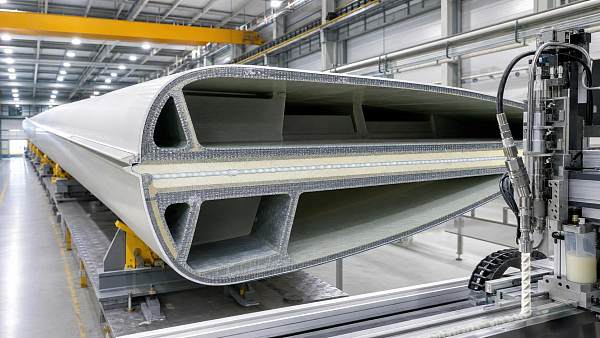
Fatigue resistant wind blade bonding sits at the intersection of structural reliability, production control, and lifecycle economics.
A bonded joint in a wind blade does not fail because of one dramatic overload alone.
More often, damage grows slowly under cyclic bending, peel stress, temperature swing, and moisture exposure.
That is why the same adhesive data sheet can look acceptable in the lab but underperform in service.
In practical evaluation, the question is not simply whether a bond is strong.
The real question is whether the bonding system can keep load transfer stable over millions of fatigue cycles.
Within the broader industrial adhesives field, this topic also reflects a wider shift.
Performance can no longer be separated from dispensing accuracy, curing consistency, and process traceability.
That systems view matters on IADS-style technical platforms, where polymer chemistry and automated fluid control are examined together.
For fatigue resistant wind blade bonding, failure risk usually begins long before visible cracking appears.
Different blade zones create different bonding demands
Not every bonded area inside a blade sees the same stress pattern.
This is where many early screening decisions become too simplified.
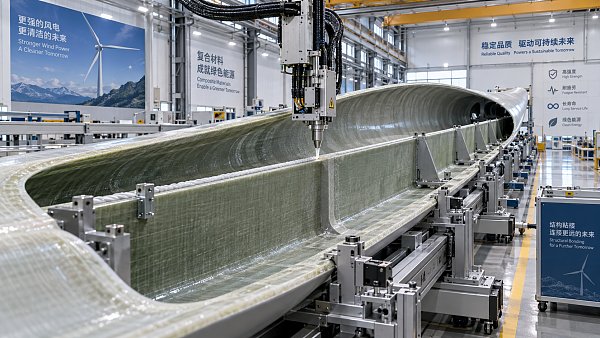
Shell bonding, spar cap joining, shear web attachment, and trailing edge closure behave differently in fatigue.
A joint loaded mainly in shear may tolerate one formulation that fails quickly in peel-driven sections.
Large offshore blades add another layer of difficulty because transport, assembly time, and environmental variation increase process sensitivity.
Smaller onshore blades may face tighter production takt time, where cure speed and gap-filling behavior become more important.
The demand difference is therefore not academic.
It changes material selection, dispensing setup, inspection method, and acceptance criteria.
Where stress mode changes the risk picture
In root and primary structural areas, stiffness and crack growth resistance usually dominate the discussion.
In trailing edge zones, flexibility and peel accommodation often deserve more attention.
At bond lines with dimensional variation, a material may need controlled thixotropy and low shrinkage.
Where long application paths are involved, pot life and viscosity stability become process-critical.
The most common failure risks do not start with adhesive chemistry alone
Material choice matters, but fatigue resistant wind blade bonding often breaks down because several smaller weaknesses align.
A strong resin system can still fail when surface energy is inconsistent, mix ratio drifts, or bead placement leaves hidden voids.
In actual blade plants, the highest-risk pattern is cumulative process deviation.
The bond survives initial inspection, then loses durability under thermal and mechanical cycling.
Failure modes worth watching early
- Adhesive starvation in local areas caused by poor bead geometry or squeeze-out.
- Voids from unstable mixing, trapped air, or interrupted dispensing.
- Weak interfacial bonding caused by dust, release agent residue, or moisture.
- Brittle cure response after incorrect ratio control or off-spec temperature exposure.
- Stress concentration near thickness transitions, inserts, or bond-line discontinuities.
- Property decline after UV, humidity, salt fog, or freeze-thaw exposure.
These risks show why fatigue resistant wind blade bonding should be reviewed as a full manufacturing system.
The adhesive, static mixer, metering unit, and cure window all influence final fatigue behavior.
When process speed rises, fatigue resistant wind blade bonding becomes harder to control
High-throughput production creates a different decision environment from prototype assembly or low-volume blade programs.
The pressure to shorten cycle time often shifts attention toward faster cure and easier dispensing.
That can be valid, but only when long-term fatigue data remains aligned with the production target.
A faster system with narrower process latitude can become more expensive after rework, scrap, and field exposure are included.
In this context, automated dispensing systems deserve more attention than they usually receive.
Stable ratio control, repeatable flow rate, and monitored bead geometry reduce fatigue uncertainty at the source.
This is consistent with the IADS view that fluid dynamics and dispensing precision are not secondary topics.
They are part of structural performance.
A practical way to compare production scenarios
The easy misread is to treat similar blades as the same bonding case
One recurring mistake is to transfer a qualified bonding system from one blade family to another with limited revalidation.
The geometry may look comparable, but laminate schedule, bond width, and local stiffness can shift fatigue behavior sharply.
Another misread is to focus on initial lap shear strength and overlook fatigue crack propagation.
Static strength is still relevant, but it does not capture the full risk profile of fatigue resistant wind blade bonding.
There is also a commercial blind spot.
A lower adhesive price can appear attractive until dispensing waste, maintenance interruptions, and warranty exposure are added.
More mature evaluations compare installed process cost with durability confidence, not material price alone.
What a more reliable selection path looks like before scale-up
A better approach starts with mapping the real joint conditions instead of beginning from generic product claims.
For fatigue resistant wind blade bonding, four checks usually sharpen decisions quickly.
- Define the dominant stress mode in each critical bond line, including peel contribution.
- Verify surface preparation limits, open time, and bond-gap variation under plant conditions.
- Review dispensing capability, including ratio stability, static mixing quality, and bead repeatability.
- Test durability with combined fatigue, temperature, and moisture exposure rather than single-factor screening.
Where possible, link these checks to traceable process data.
That includes batch records, cure conditions, environmental readings, and equipment calibration status.
The objective is not more paperwork.
It is earlier detection of variables that shorten bond life.
A grounded next step is to align material, process, and fatigue evidence
Fatigue resistant wind blade bonding cannot be judged from chemistry, mechanics, or production convenience in isolation.
The dependable choice is usually the one that keeps performance stable across real joint geometry and real plant variation.
Before the next qualification round, it helps to separate blade zones by stress mode, compare process windows, and review hidden lifecycle costs.
Then confirm which risks come from the material itself and which come from dispensing or cure control.
That kind of structured review is where industrial bonding intelligence becomes useful.
It turns fatigue resistant wind blade bonding from a broad performance claim into a testable, scalable manufacturing decision.
Recommended News
 Oct 08, 2026When do automotive adhesive lightweighting applications justify 2K epoxy?Adhesive lightweighting applications automotive: discover when 2K epoxy delivers durable, lightweight structural bonding for mixed-material vehicle designs.
 Sep 28, 2026How material characterization predicts structural adhesive bond durabilityStructural adhesive material characterization reveals how mechanical, thermal, cure, and environmental data predict bond durability—helping engineers select reliable solutions with confidence.
 Sep 25, 2026How to select epoxy structural bonding materials for high-load jointsEpoxy structural bonding materials: learn how to select durable solutions for high-load joints, balancing strength, toughness, surface prep, cure, and environmental resistance.
 Sep 20, 2026When 2K epoxy structural industrial bonding solutions make senseStructural industrial bonding solutions with 2K epoxy help engineers achieve durable, sealed joints for mixed materials. Explore selection, curing, and design insights.
 Sep 18, 2026How bonding applications in wind energy prevent fatigue-related failuresBonding applications in wind energy help prevent fatigue-related failures through durable joint design, crack resistance, cure control, and reliable production processes.
 Sep 23, 2026PCB Underfill Selection Guide for Fine-Pitch Components and Thermal CyclingPCB underfill selection guide for fine-pitch BGAs, CSPs, and flip-chip devices. Compare flow, CTE, modulus, adhesion, curing, and dispensing for reliable thermal cycling performance.
 Sep 23, 2026Circuit Board Level Underfill Market: Growth Drivers and Supply Chain OutlookExplore the electronic circuit board level underfill material market with actionable insights on reliability, dispensing precision, material selection, and supply chain resilience.
 Sep 20, 2026Rail Bonding Solutions for Vibration, Fire Safety, and Long-Term DurabilityBonding solutions for rail: explore proven strategies for vibration resistance, fire safety, durable joints, surface preparation, and production-ready validation.
 Sep 19, 2026Lightweight Adhesives for EVs: Reducing Mass Without Compromising Joint StrengthLight weighting adhesives for EVs help reduce vehicle mass while maintaining joint strength, durability, and production efficiency. Explore smarter bonding solutions for EV designs.
 Sep 15, 2026How fluid control engineering prevents voids in 2K epoxy sealantsFluid control engineering for sealants helps prevent voids in 2K epoxy systems. Explore practical methods for stable metering, mixing, pressure control, and air-free cavity filling.
 Sep 10, 2026When do adhesive lightweighting applications make sense in aerospace?Adhesive lightweighting applications aerospace: learn when bonded joints reduce mass, improve load transfer, and support durable, certifiable aircraft designs.
 Aug 28, 2026How to select an epoxy rail vehicle structural adhesive for fatigue loadsEpoxy rail vehicle structural adhesive selection for fatigue loads: evaluate toughness, joint design, surface prep, curing, and rail compliance for durable bonds.
 Aug 25, 2026When does BGA underfill technology for PCB assembly reduce field failures?BGA underfill technology for pcb assembly reduces field failures when thermal cycling, shock, or board flex drive solder fatigue. Learn when it boosts reliability—and when it adds cost without real gains.
 Aug 11, 2026How to Choose Epoxy Adhesive Systems for Metal Bonding Under Heat and VibrationEpoxy adhesive systems for metal bonding: learn how to compare heat resistance, vibration durability, cure profile, and dispensing fit to choose a more reliable solution.
 Aug 10, 2026Industrial Adhesive Technology Analysis: What Drives Bond Strength and Process Stability?Industrial adhesive technology analysis reveals what drives bond strength and process stability—from chemistry and surface prep to curing and dispensing. Learn how to reduce failure risk.
 Aug 05, 2026How to Evaluate Lightweight Structural Bonding for Composites Under Dynamic LoadsLightweight structural bonding for composites under dynamic loads demands more than static strength. Explore fatigue, impact, surface prep, and process factors to choose durable, weight-saving bonds.
 Jul 14, 2026How to Choose Lightweight Structural Bonding for PlasticsLightweight structural bonding for plastics explained: compare adhesive types, joint design, process control, and durability factors to choose lighter, stronger, production-ready assemblies.
 Jul 13, 2026Choosing an Adhesive for Automotive Supplier ProgramsAdhesive for automotive supplier programs affects strength, process stability, compliance, and launch risk. Learn how to choose the right solution for reliable, scalable production.
 Jul 11, 2026Automotive Adhesive Bonding Process: Key Steps That Prevent Bond FailureAutomotive adhesive bonding process essentials: learn the key steps that prevent bond failure, improve durability, and optimize surface prep, dispensing, and cure control in automotive assembly.
 Jul 09, 2026When Structural Adhesives Can Replace Riveting in Metal AssembliesStructural adhesive replacement riveting: learn when bonded metal assemblies can outperform rivets in fatigue, corrosion control, weight reduction, and automation.
 Jul 08, 2026Best Ways to Bond Dissimilar Material Composites Without CrackingDissimilar material bonding composites: learn how to prevent cracks in metal, plastic, battery, and laminate assemblies with smarter adhesive, process, and stress-control strategies.
![]() Jul 07, 2026How Lap Shear Testing Reveals Structural Adhesive Joint Failure RisksLap shear structural adhesive joint testing reveals hidden failure risks before launch. Learn how process conditions, substrates, and aging affect joint reliability.
Jul 07, 2026How Lap Shear Testing Reveals Structural Adhesive Joint Failure RisksLap shear structural adhesive joint testing reveals hidden failure risks before launch. Learn how process conditions, substrates, and aging affect joint reliability. Jul 06, 2026Can Automotive Adhesive Replace Welding in Body Assembly?Automotive adhesive replacement for welding can improve multi-material body assembly with better sealing, lower corrosion risk, and more design flexibility. See where bonding beats welding.
 Jul 04, 2026Structural Bonding for Aluminum: When 2K Epoxy Outperforms Welding and FastenersStructural bonding for aluminum with 2K epoxy can outperform welding and fasteners by reducing distortion, corrosion risk, and weight—see where it delivers stronger ROI.





Editor's Selection
The Archive Newsletter
Critical industrial intelligence delivered every Tuesday. Peer-reviewed summaries of the week's most impactful logistics and market shifts.