ECHA Adds 3 SVHCs, Including a 2K Epoxy Additive
by
Published
Views:
On June 28, 2026, the European Chemicals Agency (ECHA) updated the SVHC Candidate List by adding three substances of very high concern. For companies tied to 2K epoxy systems, the most immediate point is that one of the newly listed substances is a tertiary amine accelerator used in common curing systems, identified as CAS 123-45-6. Because this substance has triggered the REACH authorization mechanism, the update deserves close attention from exporters of 2K epoxy structural adhesives, composite bonding adhesives, and wind blade adhesives, as well as EU importers that now face a Q3 2026 deadline for supply chain notification and substitution assessment.
What the June 28 update confirms
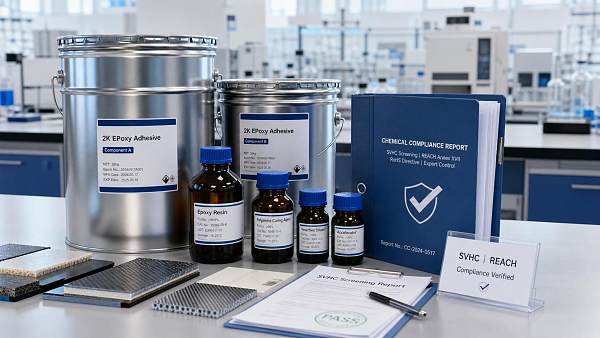
The confirmed facts are limited but commercially significant. ECHA updated the SVHC Candidate List on June 28, 2026, adding three new SVHC substances. Among them is a tertiary amine accelerator used in 2K epoxy systems under CAS 123-45-6. The available information also states that this listing has triggered the REACH authorization provisions. In practical terms, the update creates direct compliance pressure for manufacturers exporting 2K epoxy structural adhesives, composite bonding adhesives, and adhesives used for wind turbine blades into the EU market. EU importers are required to complete supply chain notification and substitution assessment before Q3 2026.
Where the compliance pressure is likely to appear first
Export-facing adhesive manufacturers
From an industry perspective, manufacturers shipping 2K epoxy structural adhesives and related bonding products to the EU are the first group likely to feel the impact. The reason is straightforward: the listed substance is described as a commonly used accelerator in 2K epoxy curing systems, so any formulation using it may immediately move from a material selection issue to a market access and compliance issue. The pressure is likely to show up in formulation review, customer disclosure, and shipment readiness.
Composite and wind energy adhesive suppliers
Suppliers serving composite bonding and wind blade applications also deserve attention. The event summary directly identifies these product categories, which means the effect is not limited to general-purpose adhesives. What deserves closer attention is whether suppliers in these segments can maintain delivery continuity while reassessing formulations, technical documents, and customer commitments for EU-bound products.
EU importers and supply chain coordinators
EU importers are specifically named in the available information and face a Q3 2026 deadline for supply chain notification and substitution assessment. This means the impact is not only upstream at the formulation stage. It also reaches the commercial and documentation side of the chain, where importers, compliance teams, and supply chain service providers may need to verify substance status, collect supplier confirmations, and align internal timelines with the stated deadline.
Procurement and sourcing functions
For procurement teams, the issue is likely to appear in raw material selection and supplier qualification. Analysis shows that when a commonly used curing accelerator becomes subject to tighter regulatory treatment, sourcing decisions can no longer be separated from downstream market requirements. Even where no immediate product change is confirmed, purchasing teams may need to identify which EU-bound products are exposed and which suppliers can support alternative assessments.
What companies should watch now
Check which EU-bound products use the listed accelerator
The first practical step is product mapping. Companies involved in 2K epoxy structural adhesives, composite bonding adhesives, and wind blade adhesives should identify whether CAS 123-45-6 appears in formulations intended for the EU market. This is a basic but necessary distinction, because the regulatory signal applies most directly where EU export or import activity is involved.
Separate confirmed obligations from broader business assumptions
Analysis shows that the confirmed requirement in the provided information is clear for importers: supply chain notification and substitution assessment must be completed before Q3 2026. What should not be assumed without further verification is the full scope of later commercial or technical consequences beyond that statement. Companies should therefore distinguish between what is already triggered and what still requires ongoing review of official wording and implementation details.
Prepare documentation and supplier communication early
What deserves closer attention is documentation readiness. Businesses may need to organize supplier declarations, formulation records, and customer-facing compliance communication for affected EU business. Even without adding assumptions beyond the provided facts, it is reasonable to observe that missing or delayed paperwork can become a practical bottleneck once importers begin supply chain notifications and substitution reviews.
Assess substitution as a commercial as well as compliance issue
The event summary explicitly points to substitution assessment, so this should not be treated as a purely regulatory formality. Observably, any review of alternatives can influence purchasing plans, lead times, customer discussions, and delivery commitments. For that reason, companies should connect regulatory review with commercial planning rather than handling it only within a compliance function.
Why this looks like more than a routine list update
Analysis shows that this development is best understood as an immediate compliance signal with possible longer-term formulation implications. The reason is not simply that three SVHCs were added, but that one of them is identified as a commonly used accelerator in 2K epoxy systems and has already triggered REACH authorization provisions. That combination makes the update more operational than symbolic for affected adhesive exporters and EU importers.
At the same time, it is more appropriate to understand this as a regulatory signal that still requires continued observation, rather than as a fully settled market outcome. The confirmed facts establish pressure and deadlines, but they do not by themselves define how quickly companies will substitute, how broadly product portfolios will be reformulated, or how customers will adjust sourcing decisions. Those points remain matters to monitor rather than facts already established.
How the market should read this development
For the industry, the June 28 ECHA update should be read as a concrete compliance event centered on specific 2K epoxy-related applications, not merely as background regulatory noise. The immediate significance lies in the direct pressure on EU-facing adhesive manufacturers and importers, especially where a commonly used curing accelerator is involved. Current evidence supports a measured interpretation: this is already a short-term operational issue for affected supply chains, while its broader commercial and formulation consequences still need continued verification.
Basis of this article and follow-up points
This article is based on the user-provided news title, event date, and event summary. The summary states that ECHA updated the SVHC Candidate List on June 28, 2026, added three SVHC substances, included a tertiary amine accelerator used in 2K epoxy systems under CAS 123-45-6, triggered REACH authorization provisions, created direct compliance pressure for certain EU-bound adhesive manufacturers, and set a Q3 2026 timing requirement for importer notification and substitution assessment.
For this type of industry update, commonly relevant source categories may include official agency notices, company disclosures, industry association releases, authoritative media coverage, and documents linked to standards or regulatory interpretation. The specific official source link was not provided in the input, so it still needs to be continuously verified. The main follow-up points are any further official wording related to the listing, implementation details affecting EU trade, and practical developments in supply chain notification and substitution assessment.
Recommended News
 Oct 08, 2026When do automotive adhesive lightweighting applications justify 2K epoxy?Adhesive lightweighting applications automotive: discover when 2K epoxy delivers durable, lightweight structural bonding for mixed-material vehicle designs.
 Sep 28, 2026How material characterization predicts structural adhesive bond durabilityStructural adhesive material characterization reveals how mechanical, thermal, cure, and environmental data predict bond durability—helping engineers select reliable solutions with confidence.
 Sep 25, 2026How to select epoxy structural bonding materials for high-load jointsEpoxy structural bonding materials: learn how to select durable solutions for high-load joints, balancing strength, toughness, surface prep, cure, and environmental resistance.
 Sep 20, 2026When 2K epoxy structural industrial bonding solutions make senseStructural industrial bonding solutions with 2K epoxy help engineers achieve durable, sealed joints for mixed materials. Explore selection, curing, and design insights.
 Sep 18, 2026How bonding applications in wind energy prevent fatigue-related failuresBonding applications in wind energy help prevent fatigue-related failures through durable joint design, crack resistance, cure control, and reliable production processes.
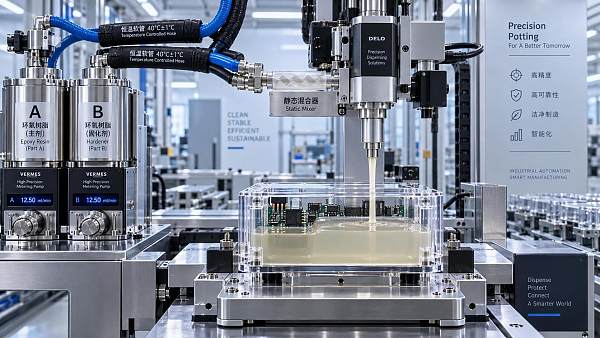
 Sep 23, 2026PCB Underfill Selection Guide for Fine-Pitch Components and Thermal CyclingPCB underfill selection guide for fine-pitch BGAs, CSPs, and flip-chip devices. Compare flow, CTE, modulus, adhesion, curing, and dispensing for reliable thermal cycling performance.
 Sep 23, 2026Circuit Board Level Underfill Market: Growth Drivers and Supply Chain OutlookExplore the electronic circuit board level underfill material market with actionable insights on reliability, dispensing precision, material selection, and supply chain resilience.
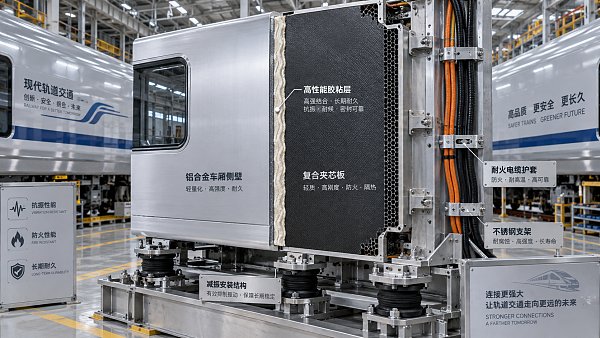
 Sep 20, 2026Rail Bonding Solutions for Vibration, Fire Safety, and Long-Term DurabilityBonding solutions for rail: explore proven strategies for vibration resistance, fire safety, durable joints, surface preparation, and production-ready validation.
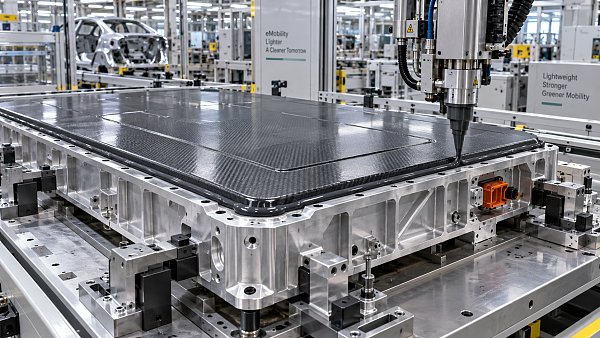
 Sep 19, 2026Lightweight Adhesives for EVs: Reducing Mass Without Compromising Joint StrengthLight weighting adhesives for EVs help reduce vehicle mass while maintaining joint strength, durability, and production efficiency. Explore smarter bonding solutions for EV designs.
 Sep 15, 2026How fluid control engineering prevents voids in 2K epoxy sealantsFluid control engineering for sealants helps prevent voids in 2K epoxy systems. Explore practical methods for stable metering, mixing, pressure control, and air-free cavity filling.
 Sep 10, 2026When do adhesive lightweighting applications make sense in aerospace?Adhesive lightweighting applications aerospace: learn when bonded joints reduce mass, improve load transfer, and support durable, certifiable aircraft designs.
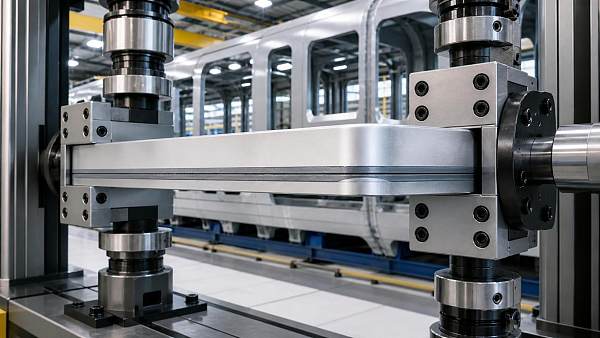
 Aug 28, 2026How to select an epoxy rail vehicle structural adhesive for fatigue loadsEpoxy rail vehicle structural adhesive selection for fatigue loads: evaluate toughness, joint design, surface prep, curing, and rail compliance for durable bonds.
 Aug 25, 2026When does BGA underfill technology for PCB assembly reduce field failures?BGA underfill technology for pcb assembly reduces field failures when thermal cycling, shock, or board flex drive solder fatigue. Learn when it boosts reliability—and when it adds cost without real gains.
 Aug 11, 2026How to Choose Epoxy Adhesive Systems for Metal Bonding Under Heat and VibrationEpoxy adhesive systems for metal bonding: learn how to compare heat resistance, vibration durability, cure profile, and dispensing fit to choose a more reliable solution.
 Aug 10, 2026Industrial Adhesive Technology Analysis: What Drives Bond Strength and Process Stability?Industrial adhesive technology analysis reveals what drives bond strength and process stability—from chemistry and surface prep to curing and dispensing. Learn how to reduce failure risk.
 Aug 05, 2026How to Evaluate Lightweight Structural Bonding for Composites Under Dynamic LoadsLightweight structural bonding for composites under dynamic loads demands more than static strength. Explore fatigue, impact, surface prep, and process factors to choose durable, weight-saving bonds.
 Jul 14, 2026How to Choose Lightweight Structural Bonding for PlasticsLightweight structural bonding for plastics explained: compare adhesive types, joint design, process control, and durability factors to choose lighter, stronger, production-ready assemblies.
 Jul 13, 2026Choosing an Adhesive for Automotive Supplier ProgramsAdhesive for automotive supplier programs affects strength, process stability, compliance, and launch risk. Learn how to choose the right solution for reliable, scalable production.
 Jul 11, 2026Automotive Adhesive Bonding Process: Key Steps That Prevent Bond FailureAutomotive adhesive bonding process essentials: learn the key steps that prevent bond failure, improve durability, and optimize surface prep, dispensing, and cure control in automotive assembly.
 Jul 09, 2026When Structural Adhesives Can Replace Riveting in Metal AssembliesStructural adhesive replacement riveting: learn when bonded metal assemblies can outperform rivets in fatigue, corrosion control, weight reduction, and automation.
 Jul 08, 2026Best Ways to Bond Dissimilar Material Composites Without CrackingDissimilar material bonding composites: learn how to prevent cracks in metal, plastic, battery, and laminate assemblies with smarter adhesive, process, and stress-control strategies.
![]() Jul 07, 2026How Lap Shear Testing Reveals Structural Adhesive Joint Failure RisksLap shear structural adhesive joint testing reveals hidden failure risks before launch. Learn how process conditions, substrates, and aging affect joint reliability.
Jul 07, 2026How Lap Shear Testing Reveals Structural Adhesive Joint Failure RisksLap shear structural adhesive joint testing reveals hidden failure risks before launch. Learn how process conditions, substrates, and aging affect joint reliability. Jul 06, 2026Can Automotive Adhesive Replace Welding in Body Assembly?Automotive adhesive replacement for welding can improve multi-material body assembly with better sealing, lower corrosion risk, and more design flexibility. See where bonding beats welding.
 Jul 04, 2026Structural Bonding for Aluminum: When 2K Epoxy Outperforms Welding and FastenersStructural bonding for aluminum with 2K epoxy can outperform welding and fasteners by reducing distortion, corrosion risk, and weight—see where it delivers stronger ROI.






Editor's Selection
The Archive Newsletter
Critical industrial intelligence delivered every Tuesday. Peer-reviewed summaries of the week's most impactful logistics and market shifts.