
Wind Blade Bonding: How to Reduce Joint Failure Risk
by
Published
Views:
Wind Blade Bonding: How to Reduce Joint Failure Risk
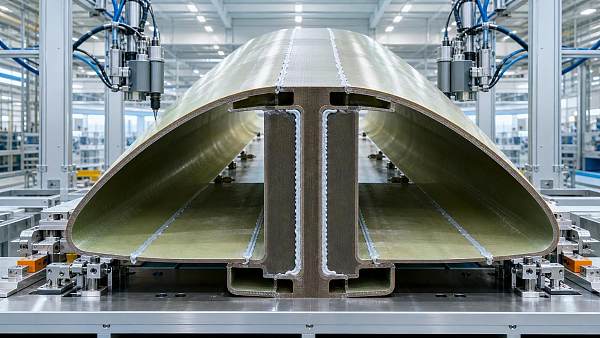
Wind blade bonding sits at the center of blade strength, fatigue life, and field reliability. A weak joint rarely comes from one mistake alone.
More often, failure grows from several small process gaps. Adhesive choice, substrate condition, bondline geometry, cure profile, and production variation all interact.
That is why wind blade bonding should be evaluated as a full manufacturing system, not only as a material selection task.
In practical terms, reducing joint failure risk means identifying where stress concentrates, where adhesion drops, and where process drift hides before blades leave the plant.
This article breaks down the main failure drivers and the checkpoints that make wind blade bonding more consistent under dynamic loading.
Why Wind Blade Bonding Fails in Service
Blade joints see cyclic bending, torsion, temperature swings, moisture exposure, and long service intervals. Wind blade bonding must survive all of them together.
The first common issue is poor load distribution. If the bondline is uneven, some areas carry much higher stress than others.
The second issue is surface inconsistency. Composite skins, spar caps, and shear webs may look similar, yet surface energy and contamination levels can vary a lot.
The third issue is cure mismatch. A resin system may reach handling strength quickly, but still lack the final properties needed for durable wind blade bonding.
Another frequent problem is process variation between shifts, seasons, or factories. This matters because large blades amplify small assembly differences.
In field returns, joint failure usually appears as adhesive cracking, interfacial separation, void-driven weakness, or progressive fatigue damage near stress peaks.
From a technical review perspective, the question is not whether a joint passed one test. The real question is whether wind blade bonding stays stable over years.
Adhesive Selection: Start with the Real Load Case
Material choice is often treated as the main answer. It is important, but only when aligned with the actual service environment.
For wind blade bonding, the adhesive must balance toughness, shear strength, elongation, crack resistance, and workable open time.
Very rigid systems can show strong static numbers, yet perform poorly under fatigue if they cannot absorb strain.
Very soft systems can reduce peak stress, but may create creep or dimensional control issues in large assemblies.
The better approach is to screen candidates against joint geometry, substrate pairings, cure window, and plant takt time.
Key selection checks usually include:
- Lap shear and peel behavior on real composite coupons
- Fatigue resistance under repeated loading
- Tolerance to humidity and thermal cycling
- Gap-filling stability across large bondlines
- Mix ratio sensitivity for two-component systems
- Viscosity behavior during dispensing and placement
In recent projects, a stronger signal is the move toward evaluating wind blade bonding materials together with dispensing behavior, not separately.
That shift helps expose whether a promising adhesive still performs after mixing, transfer, laydown, and cure in production conditions.
Surface Preparation Is Often the Hidden Failure Driver
Many wind blade bonding issues begin before the adhesive is applied. Surface preparation can decide whether the joint fails cohesively or at the interface.
Composite parts may carry dust, release agents, absorbed moisture, or low-energy resin-rich layers. These reduce wetting and lower effective adhesion.
Mechanical abrasion helps, but it must be controlled. Over-sanding can damage fibers, while inconsistent abrasion leaves variable bonding zones.
Cleaning also needs discipline. A solvent can remove contamination, but dirty wipes or poor evaporation control may simply redistribute residues.
For wind blade bonding audits, these are practical checkpoints:
- Define a qualified abrasion method, grit range, and replacement frequency.
- Control cleaning chemistry, wipe material, and drying time.
- Set a maximum delay between preparation and bonding.
- Monitor temperature and humidity in the bonding area.
- Use surface verification methods when failure cost is high.
This may sound basic, yet many joint failures come from uncontrolled waiting time after preparation. Freshly prepared surfaces can degrade faster than expected.
That also means wind blade bonding quality is strongly linked to work instructions, operator discipline, and environmental control.
Bondline Control and Dispensing Precision Matter More on Large Blades
Large structures make bondline control harder. Small variation in bead height or placement can create major stress differences after assembly.
In wind blade bonding, the target is not only enough adhesive volume. The target is repeatable geometry along the full joint path.
If the bead is too thin, squeeze-out may starve the joint. If it is too thick, cure heat, void risk, or movement during clamping can increase.
Automated dispensing systems can help, especially where long seams demand stable output. But automation alone does not guarantee consistency.
The process should verify pump calibration, mix quality, static mixer condition, flow rate, bead profile, and equipment response at start-up and during shifts.
A simple review table can support faster decisions:
In real production, wind blade bonding becomes safer when geometry control is measured, not assumed.
Curing Conditions Can Create Strength or Quietly Remove It
Cure management is a frequent blind spot. A joint may look complete and still be under-cured at the core or at colder plant locations.
For wind blade bonding, cure depends on resin chemistry, section thickness, ambient conditions, and heat transfer through the assembly.
This is especially important with thick bondlines or seasonal temperature changes. Winter production can behave very differently from summer production.
A practical cure review should cover:
- Actual substrate temperature before bonding
- Working life versus real assembly duration
- Exotherm behavior in thick sections
- Time to handling, trimming, and load application
- Verification of full cure by test method or defined proxy
More importantly, cure acceptance should be tied to performance data. Calendar time alone is rarely enough for high-risk wind blade bonding decisions.
How to Build a Better Technical Evaluation Workflow
A useful evaluation process connects lab data with plant reality. That means testing materials, surfaces, and process settings as one package.
For wind blade bonding, a stronger workflow usually follows this sequence:
- Map the joint design, load path, and expected failure modes.
- Screen adhesives on representative composite systems.
- Validate surface preparation under production timing.
- Confirm dispensing repeatability and bondline targets.
- Run fatigue, environmental, and cure-window testing.
- Set shop-floor controls for the highest-risk variables.
This kind of workflow reduces surprises later. It also improves supplier comparison because each candidate is judged against the same risk model.
In business terms, better wind blade bonding assessment supports lower rework, fewer field claims, and more predictable blade life.
Final Checks That Lower Joint Failure Risk
The most reliable wind blade bonding programs do not depend on one high-performance adhesive alone. They depend on controlled execution.
When failure risk must come down, focus on the variables that move together: adhesive behavior, surface readiness, dispensing precision, bondline shape, and cure completion.
A practical next step is to review one blade joint from end to end. Check the material, the method, the timing, and the evidence behind each control point.
That approach turns wind blade bonding from a general quality topic into a measurable engineering system, which is where durable performance usually begins.
Recommended News
 Oct 08, 2026When do automotive adhesive lightweighting applications justify 2K epoxy?Adhesive lightweighting applications automotive: discover when 2K epoxy delivers durable, lightweight structural bonding for mixed-material vehicle designs.
 Sep 28, 2026How material characterization predicts structural adhesive bond durabilityStructural adhesive material characterization reveals how mechanical, thermal, cure, and environmental data predict bond durability—helping engineers select reliable solutions with confidence.
 Sep 25, 2026How to select epoxy structural bonding materials for high-load jointsEpoxy structural bonding materials: learn how to select durable solutions for high-load joints, balancing strength, toughness, surface prep, cure, and environmental resistance.
 Sep 20, 2026When 2K epoxy structural industrial bonding solutions make senseStructural industrial bonding solutions with 2K epoxy help engineers achieve durable, sealed joints for mixed materials. Explore selection, curing, and design insights.
 Sep 18, 2026How bonding applications in wind energy prevent fatigue-related failuresBonding applications in wind energy help prevent fatigue-related failures through durable joint design, crack resistance, cure control, and reliable production processes.
 Sep 23, 2026PCB Underfill Selection Guide for Fine-Pitch Components and Thermal CyclingPCB underfill selection guide for fine-pitch BGAs, CSPs, and flip-chip devices. Compare flow, CTE, modulus, adhesion, curing, and dispensing for reliable thermal cycling performance.
 Sep 23, 2026Circuit Board Level Underfill Market: Growth Drivers and Supply Chain OutlookExplore the electronic circuit board level underfill material market with actionable insights on reliability, dispensing precision, material selection, and supply chain resilience.
 Sep 20, 2026Rail Bonding Solutions for Vibration, Fire Safety, and Long-Term DurabilityBonding solutions for rail: explore proven strategies for vibration resistance, fire safety, durable joints, surface preparation, and production-ready validation.
 Sep 19, 2026Lightweight Adhesives for EVs: Reducing Mass Without Compromising Joint StrengthLight weighting adhesives for EVs help reduce vehicle mass while maintaining joint strength, durability, and production efficiency. Explore smarter bonding solutions for EV designs.
 Sep 15, 2026How fluid control engineering prevents voids in 2K epoxy sealantsFluid control engineering for sealants helps prevent voids in 2K epoxy systems. Explore practical methods for stable metering, mixing, pressure control, and air-free cavity filling.
 Sep 10, 2026When do adhesive lightweighting applications make sense in aerospace?Adhesive lightweighting applications aerospace: learn when bonded joints reduce mass, improve load transfer, and support durable, certifiable aircraft designs.
 Aug 28, 2026How to select an epoxy rail vehicle structural adhesive for fatigue loadsEpoxy rail vehicle structural adhesive selection for fatigue loads: evaluate toughness, joint design, surface prep, curing, and rail compliance for durable bonds.
 Aug 25, 2026When does BGA underfill technology for PCB assembly reduce field failures?BGA underfill technology for pcb assembly reduces field failures when thermal cycling, shock, or board flex drive solder fatigue. Learn when it boosts reliability—and when it adds cost without real gains.
 Aug 11, 2026How to Choose Epoxy Adhesive Systems for Metal Bonding Under Heat and VibrationEpoxy adhesive systems for metal bonding: learn how to compare heat resistance, vibration durability, cure profile, and dispensing fit to choose a more reliable solution.
 Aug 10, 2026Industrial Adhesive Technology Analysis: What Drives Bond Strength and Process Stability?Industrial adhesive technology analysis reveals what drives bond strength and process stability—from chemistry and surface prep to curing and dispensing. Learn how to reduce failure risk.
 Aug 05, 2026How to Evaluate Lightweight Structural Bonding for Composites Under Dynamic LoadsLightweight structural bonding for composites under dynamic loads demands more than static strength. Explore fatigue, impact, surface prep, and process factors to choose durable, weight-saving bonds.
 Jul 14, 2026How to Choose Lightweight Structural Bonding for PlasticsLightweight structural bonding for plastics explained: compare adhesive types, joint design, process control, and durability factors to choose lighter, stronger, production-ready assemblies.
 Jul 13, 2026Choosing an Adhesive for Automotive Supplier ProgramsAdhesive for automotive supplier programs affects strength, process stability, compliance, and launch risk. Learn how to choose the right solution for reliable, scalable production.
 Jul 11, 2026Automotive Adhesive Bonding Process: Key Steps That Prevent Bond FailureAutomotive adhesive bonding process essentials: learn the key steps that prevent bond failure, improve durability, and optimize surface prep, dispensing, and cure control in automotive assembly.
 Jul 09, 2026When Structural Adhesives Can Replace Riveting in Metal AssembliesStructural adhesive replacement riveting: learn when bonded metal assemblies can outperform rivets in fatigue, corrosion control, weight reduction, and automation.
 Jul 08, 2026Best Ways to Bond Dissimilar Material Composites Without CrackingDissimilar material bonding composites: learn how to prevent cracks in metal, plastic, battery, and laminate assemblies with smarter adhesive, process, and stress-control strategies.
![]() Jul 07, 2026How Lap Shear Testing Reveals Structural Adhesive Joint Failure RisksLap shear structural adhesive joint testing reveals hidden failure risks before launch. Learn how process conditions, substrates, and aging affect joint reliability.
Jul 07, 2026How Lap Shear Testing Reveals Structural Adhesive Joint Failure RisksLap shear structural adhesive joint testing reveals hidden failure risks before launch. Learn how process conditions, substrates, and aging affect joint reliability. Jul 06, 2026Can Automotive Adhesive Replace Welding in Body Assembly?Automotive adhesive replacement for welding can improve multi-material body assembly with better sealing, lower corrosion risk, and more design flexibility. See where bonding beats welding.
 Jul 04, 2026Structural Bonding for Aluminum: When 2K Epoxy Outperforms Welding and FastenersStructural bonding for aluminum with 2K epoxy can outperform welding and fasteners by reducing distortion, corrosion risk, and weight—see where it delivers stronger ROI.


Editor's Selection
The Archive Newsletter
Critical industrial intelligence delivered every Tuesday. Peer-reviewed summaries of the week's most impactful logistics and market shifts.